



الصفحة 4
الصفحة 4
Chemolithoautotrophic Bacteria : Biochemistry and Environmental Biology
Covers in detail advances in the biochemistry and physiology of several chemolithoautotrophic bacteria as well as their relationship to certain environments. Included are recent findings regarding the oxidation mechanisms of ammonia, nitrite, sulfur compounds, and ferrous iron by special bacteria. The characteristics of many cytochromes are described to further advance the understanding of bacterial oxidation systems of inorganic compounds. Applications of bacteria, such as in sewage treatment and in biohydometallurgy, among others, are detailed, and bacteria considered closest to the origins of life are discussed in the final chapter.
Characterization of Corrosion Products on Steel Surfaces
It is well known that corrosion products, i.e. rust, on iron and steel surfaces cannot be assigned a typical crystallographic structure with long-range order. In fact, the structure of rust is considered to be very complicated, and some forms of rust are assigned to the amorphous state for this reason. Accurate information about the atomic-scale structure of rust is important to shed light on corrosion mechanisms of metallic materials. And, since life of steel structures is often dominated by environmental degradation or corrosion of the surface, the structure of the rust formed on iron and steel surfaces during prolonged exposure to air is of great interest. This book describes the fundamental aspects of materials characterization for the ferric oxyhydroxides formed on steel surfaces.
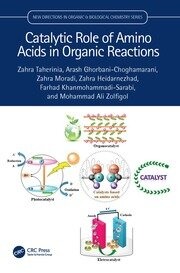
Catalytic role of amino acids in organic reactions
Asymmetric organometallic and organocatalytic processes have attracted great interest. Asymmetric synthesis using both natural and unnatural amino acids has been tremendously important from synthetic as well as industrial viewpoints, and numerous new methodologies have been developed in the last decades. Herein we provide an overview of old and very recent (since 1900 till now) advances and applications in the area of heterogeneous catalysis, homogeneous catalysis, electrocatalysis, photocatalysis, organocatalysis, thermal catalysis using amino acids [proline, glycine, alanine, valine, serine, threonine, cysteine, methionine, asparagine, glutamine, lysine, arginine, histidine, aspartate, glutamate, phenylalanine, and tryptophan], (supported or unsupported), an amino acid containing materials or amino acids derivatives as an essential component of catalysts, this book highlights the most important and recent developments to immobilize or support amino acids on various support materials. This book is suitable as supplementary reading for courses targeting the design, synthesis, and application of chiral catalysts, asymmetric catalysis, and sustainable production.
Catalytic Carbonylation Reactions
Carbonylation reactions are of major importance in both organic and industrial chemistry. Due to the availability, price and reactivity pattern, carbon monoxide is becoming a more and more important building block for fine and bulk chemicals. The major reaction types of carbon monoxide are comprehensively discussed by leading experts from academia and industry. The authors highlight important carbonylation reactions such as hydroformylation, alkoxy-carbonylations, co/olefin-copolymerization, Pauson-Khand reactions and others. They illustrate applications in organic synthesis and give industrial examples.
Bulk Metallic Glasses : An Overview
Bulk Metallic Glasses explores an emerging field of materials known as bulk metallic glasses. It summarizes the rapid development of these materials over the last decade and includes documentation on diverse applications of bulk metallic glasses; from structural applications to microcomponents. Some of the applications covered are pressure sensors, microgears for motors, magnetic cores for power supplies, and nano-dies for replacing next generation DVDs. The chapters cover current theories and recent research including an atomistic theory of local topological fluctuations, atomistic simulations, and unique microstructures of these amorphous materials. Other topics include glass formation, glass forming ability, and the underlying mechanisms and physical insights of these criteria. The mechanical deformation of bulk metallic glasses, fatigue, fracture, and corrosion behaviors of these materials are also reviewed.
Bioorganometallic Chemistry
Bioorganometallic Chemistry has become a mature area of science and is comprehensively covered by leading experts in this book. Naturally occuring bioorganometallic complexes, such as vitamin B12 and recently discovered iron and nickel hydrogenases, including a possible role of the latter in the geochemical theory of the origin of life, are considered.
Biomining
Biomining is the biotechnology that uses microorganisms to recover metals, in particular copper and gold, from ores and concentrates. Having developed from a very simple operational (in terms of both engineering and biology) process, biomining has developed into a multifaceted technology, to the extent that many of the largest industrial stirred tanks and heaps throughout the world are employed for bioprocessing minerals. This book has a strong applied approach and describes emerging and established industrial processes, as well as the underlying theory of the process, and the biology of the microorganisms involved. Chapters have been written by personnel from leading biomining companies, consultants and internationally recognized researchers and academics
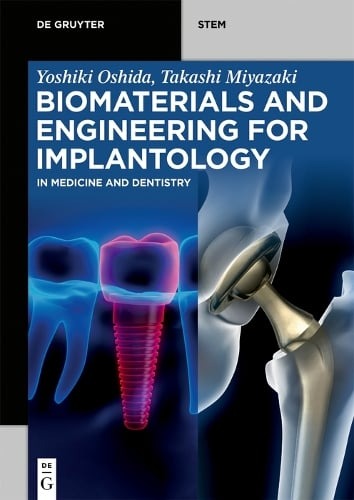
Biomaterials and engineering for implantology: in medicine and dentistry
Biomaterials are composed of metallic materials, ceramics, polymers, composites and hybrid materials. Biomaterials used in human beings require safety regulations, toxicity, allergic reaction, etc. When used as implantable materials their biological compatibility, biomechanical compatibility, and morphological compatibility must be acessed. This book explores the design and requirements of biomaterials for the use in implantology.
Bioinorganic electrochemistry
Interfacial electrochemistry of redox metalloproteins and DNA-based molecules is presently moving towards new levels of structural and functional resolution. This is the result of powerful interdisciplinary efforts. Underlying fundamentals of biological electron and proton transfer is increasingly well understood although with outstanding unresolved issues. Comprehensive bioelectrochemical studies have mapped the working environments for bioelectrochemical electron transfer, supported by the availability of mutant proteins and other powerful biotechnology. Introduction of surface spectroscopy, the scanning probe microscopies, and other solid state and surface physics methodology has finally offered exciting new fundamental and technological openings in interfacial bioelectrochemistry of both redox proteins and DNA-based molecules.

Austenitic TRIP/TWIP steels and steel-zirconia composites : Design of tough, transformation-strengthened composites and structures
This book presents a collection of the most up-to-date research results in the field of steel development with a focus on pioneering alloy concepts that result in previously unattainable materials properties.
Asymmetric organo-metal catalysis : Concepts, principles, and applications
In Asymmetric Organo-Metal Catalysis: Concepts, Principles, and Applications, accomplished chemist Liu-Zhu Gong delivers a comprehensive discussion of how to design efficient organo/metal combined catalyst systems, new cooperatively catalyzed asymmetric reactions, relay catalytic cascades, and multicomponent reactions. The distinguished author covers critical topics, like the combined catalysis of chiral phase transfer catalysts, enamine, iminium, nucleophilic Lewis base, or Bronsted acids with metal complexes, while also covering the cooperative catalysis of photocatalysts and organocatalysts.
Advances in Metallodrugs : Preparation and Applications in Medicinal Chemistry
This book is organized into 12 important chapters that focus on the progress made by metal-based drugs as anticancer, antibacterial, antiviral, anti-inflammatory, and anti-neurodegenerative agents, as well as highlights the application areas of newly discovered metallodrugs. It can prove beneficial for researchers, investigators and scientists whose work involves inorganic and coordination chemistry, medical science, pharmacy, biotechnology and biomedical engineering
Advances in Mechanics of Materials for Environmental and Civil Engineering
Deals with both mathematical modeling and experimental studies related to systems relevant for various civil engineering fields. The book addresses several key topics, including artificial intelligence applied to the control and monitoring of construction site personnel, finite element models for endplate beam-to-column connections under various load conditions, random functionally graded micropolar beams, and many others. The book explores the design and study of microstructures aimed at increasing the toughness and durability of novel materials in building and construction, based also on the re-utilization of residues and wastes of metallurgical industry produces.
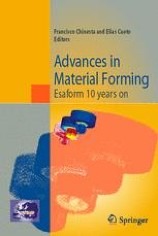
Advances in Material Forming ; Esaform 10 years on
This book groups the main advances in material forming, considering different p- cesses (conventional and non-conventional) focusing in polymers, composites and metals, that are analyzed from the state of the art, describing the most significant recent advances and identifying the present challenges from the experimental, modeling and numerical points of view. Chapters include a large list of references and have been wr- ten by recognized specialists. Special emphasis is devoted to the contributions of the European Scientific Association on Material Forming (ESAFORM) during the last 10 years (1998-2007) and in particular the ones coming from its annual international conference. The first chapter includes an excellent introduction to the Esaform association.
Advances in gingival diseases and conditions
Offers a comprehensive overview of the latest research and clinical innovations in periodontology. Divided into two sections, the book explores the etiology, clinical aspects, and diagnosis of gingival diseases, including biomarkers, metalloproteinases, and the impact of stress. The second section presents cutting-edge treatments, from curcumin therapy and muco-gingival surgery to guided tissue engineering and peri-implant disease management.
Advanced dental metallic materials
Delivers a broad and concise look at advanced metallic materials used for dental applications. This book aims to bring the readers closer to the specific purpose of dental metallic materials meeting specific criteria and materials properties such as biocompatibility, non-toxicity, resistance to corrosion, long-term durability, appropriate strength and toughness, as well as corresponding values of modulus of elasticity.

A Guide to Lead-free Solders : Physical Metallurgy and Reliability
While tin/lead solders have dominated the electronics industry for many years, environmental considerations and new legislation are forcing change. Backed by more than ten years of research in Pb-free solders, many electronics manufacturers are poised for conversion. A Guide to Lead-free Solders is intended as a tool to help industry as it moves into a new era in the production and use of solders. An overview of the principles of soldering technology is provided beginning with the theory underlying each concept. Focusing on the most up-to-date methods for testing and characterization, these theories are then reinforced by experimental examples and industrial applications.
14th International Congress for Applied Mineralogy (ICAM2019) ; Belgorod State Technological University named after V. G. Shukhov, 23–27 September 2019, Belgorod, Russia
This proceedings of the 14th International Council for Applied Mineralogy Congress (ICAM) in Belgorod, Russia cover a wide range of topics including applied mineralogy, advanced and construction materials, ore and industrial minerals, mineral exploration, cultural heritage, etc. It includes contributions to geometallurgy, industrial minerals, oil and gas reservoirs as well as stone artifacts and their preservation. The International Congress on Applied Mineralogy strengthens the relation between the research on applied mineralogy and the industry.
