



الصفحة 4
الصفحة 4

Data-driven BIM for Energy Efficient Building Design
Conceptualises the scale and spectrum of Building Information Modelling (BIM) and Artificial Intelligence (AI) approaches in energy efficient building design and to develop its functional solutions with a focus on four crucial aspects of building envelop, building layout, occupant behaviour and heating, ventilation and air-conditioning (HVAC) systems. Drawn from theoretical development on the sustainability, informatics and optimisation paradigms in built environment, the energy efficient building design will be marked through the power of data and BIM-intelligent agents during the design phase.

Cutting Tool Technology : Industrial Handbook
Cutting Tool Technology provides a comprehensive guide to the latest developments in the use of cutting tool technology. The book covers new machining and tooling topics such as high-speed and hard-part machining, near-dry and dry-machining strategies, multi-functional tooling, ‘diamond-like’ and ‘atomically-modified’ coatings, plus many others.

Construction and Building Automation : From Concepts to Implementation
Intended to be used as a textbook in undergraduate civil engineering and construction courses to introduce cutting edge mechanical, electrical and computer science topics that are needed for civil and construction engineers to collaborate in inter-disciplinary automation projects. Introduces hardware and software needed for automating engineering tasks ; Presents examples of applications in the control of building systems ; Illustrates of the use of automation for improving construction processes ; Provides a lucid introduction to advanced computing concepts, machine learning, artificial intelligence, and control algorithms to construction and engineering students.

Computer-based Design and Manufacturing
This book offers a comprehensive overview of the latest methods and state-of-the-art technologies in intelligent product design. Including but not limited to: - Discussion of applied methods developed in field of the product design - Discussion on the need and solutions for new engineering paradigm and philosophy required for product design - Coverage of advances in information systems and technology in support of CFPD - Discussion of how to use web-based design environments

Computational Textile
This edited book collects a number of representative applications of computational techniques in textile and garment industry. These applications cover the following issues: Textile quality assessment by image analysis, Modeling and simulation of textile structures, Computer aided garment design, Computerized textile management and textile Supply Chain, Textile quality subjective and objective evaluation; Computational thermal bioengineering of textiles and clothing; Computational biomechanical engineering of textiles and clothing.

Computational Methods
Contains the proceeding of the First International Conference on Computational Methods (ICCM04), held in Singapore, December 15-17, 2004. This book covers a range of topics such as meshfree particle methods, Generalized FE and Extended FE methods, inverse analysis and optimization methods.

Computational Engineering : Introduction to Numerical Methods
This book is an introduction to modern numerical methods in engineering. It covers applications in fluid mechanics, structural mechanics, and heat transfer as the most relevant fields for engineering disciplines such as computational engineering, scientific computing, mechanical engineering as well as chemical and civil engineering. The content covers all aspects in the interdisciplinary field which are essential for an ''up-to-date'' engineer.

Computational Contact Mechanics
This is the second edition of the valuable reference source for numerical simulations of contact mechanics suitable for many fields like civil engineering, car design, aeronautics, metal forming, or biomechanics. Boundary value problems involving contact are of great importance in industrial applications in engineering such as bearings, metal forming processes, rubber seals, drilling problems, crash analysis of cars, rolling contact between car tires and the road, cooling of electronic devices... Other applications are related to biomechanical engineering design where human joints, implants or teeth are of consideration. Due to this variety, contact problems are today combined either with large elastic or inelastic deformations including time dependent responses. Thermal coupling also might have to be considered. Even stability behaviour has to be linked to contact.

Materials Handbook : A Concise Desktop Reference
The unique and practical Materials Handbook (second edition) provides quick and easy access to data on the physical and chemical properties of all classes of materials. The second edition has been much expanded to include whole new families of materials while many of the existing families are broadened and refined with new material and up-to-date information. Particular emphasis is placed on the properties of common industrial materials in each class.

Materials for Springs
“Materials for springs” is basically intended for engineers related to spring materials and technologies who graduated from metallurgical or mechanical engineering courses in technical high school, or in other higher engineering schools, as well as those who are related to the purchase or sales of spring materials. The first chapter introduces into the fundamental selection processes of spring materials including the information sources on materials database. It is followed by the basic mechanisms and theories of spring failures such as fatigue fracture, creep/stress relaxation and stress corrosion cracking of metallic materials.
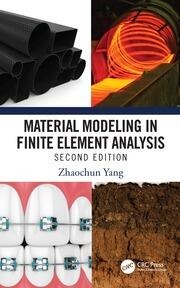
Material Modeling in Finite Element Analysis
Presents some specific problems including the metal-forming process, combustion room, Mullins effect of rubber tires, viscoelasticity of liver soft tissues, small punch test, tunnel excavation, slope stability, concrete slump test, orthodontic wire, and piezoelectric microaccelerometer.
Make and Test Projects in Engineering Design : Creativity, Engagement and Learning
This is a book about the invention and testing of ideas. By describing how to generate engaging problem situations for engineering students to solve it inspires original currents of thought. This is the first book that formalises an important aspect of early learning in engineering design.
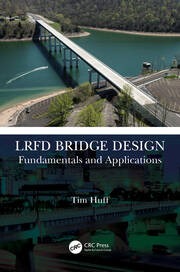
LRFD Bridge Design : Fundamentals and Applications
Examines and explains material from the 9th edition of the AASHTO LRFD Bridge Design Specifications, including deck and parapet design, load calculations, limit states and load combinations, concrete and steel I-girder design, bearing design, and more. With increased focus on earthquake resiliency, two separate chapters– one on conventional seismic design and the other on seismic isolation applied to bridges– will fully address this vital topic. The primary focus is on steel and concrete I-girder bridges, with regard to both superstructure and substructure design. / Includes several worked examples for a project bridge as well as actual bridges designed by the author / Examines seismic design concepts and design details for bridges / Presents the latest material based on the 9th edition of the LRFD Bridge Design Specifications / Covers fatigue, strength, service, and extreme event limit states / Includes numerous solved problems and exercises at the end of each chapter to illustrate the concepts presented
Linearization Methods for Stochastic Dynamic Systems
The aim of this book is to give a systematic introduction to and overview of the relatively simple and popular linearization methods available. The scope is limited to models with continous external and parametric excitations, yet these cover the majority of known approaches. The book contains an application chapter with emphasis on vibration analysis of stochastic mechanical structures as well as a chapter devoted to the assessment of the accuracy of the theoretical methods presented, both with respect to numerical and to experimental studies.

Leonardo´s Lost Robots
Reinterprets Leonardo's legacy of notes, showing that apparently unconnected fragments from dispersed manuscripts actually comprise cohesive designs for functioning automata. Using the rough sketches scattered throughout almost all of Leonardo's notebooks, the author has reconstructed Leonardo's programmable cart, which was the platform for other automata: a Robot Lion, a Robot Knight, and a hydraulically powered automaton for striking a bell.

Lead-Free Electronic Solders : A Special Issue of the Journal of Materials Science : Materials in Electronics
In the last few decades the effect of lead contamination on human health has received significant attention. Based on such concerns, elimination of lead from ceramic glaze, paint, plumbing etc. has been legislated and implemented. However, until recently, solders used in electronics, based on suitability and knowledge-base developed over a long period of time, remained lead-based. Successive rapid advances in microelectronic devices in recent decades make them obsolete within a very short period after their introduction resulting in significant quantities of electronic wastes in landfills. Leaching of toxic lead from such electronic wastes can result in contamination of the human food chain causing serious health hazards. As a consequence, several European and Pacific Rim countries have passed legislations warranting elimination of lead from electronic solders by fast approaching deadlines. Global economic pressures brought on by such legislations have resulted in a flurry of research activities to find suitable lead-free substitutes for the traditional leaded electronic solders.
Lattice Boltzmann Modeling : An Introduction for Geoscientists and Engineers
Lattice Boltzmann models have a remarkable ability to simulate single- and multi-phase fluids and transport processes within them. A rich variety of behaviors, including higher Reynolds numbers flows, phase separation, evaporation, condensation, cavitation, buoyancy, and interactions with surfaces can readily be simulated. This book provides a basic introduction that emphasizes intuition and simplistic conceptualization of processes. It avoids the more difficult mathematics that underlies LB models. The model is viewed from a particle perspective where collisions, streaming, and particle-particle/particle-surface interactions constitute the entire conceptual framework. Beginners and those with more interest in model application than detailed mathematical foundations will find this a powerful "quick start" guide. Example simulations, exercises, and computer codes are included. Working code is provided on the Internet
IUTAM symposium on relations of shell plate beam and 3D models ; Proceedings of the IUTAM Symposium on the relations of shell, plate, beam, and 3D models, Dedicated to the Centenary of Ilia Vekua’s Birth, held in Tbilisi, Georgia, April 23-27, 2007
Contains papers on the main topics reflecting the scientific programme of the symposium: hierarchical, refined mathematical and technical models of shells, plates, and beams; relation of 2D and 1D models to 3D linear, non-linear and physical models; junction problems. In particular, peculiarities of cusped shells, plates, and beams are emphasized and special attention is paid to junction, multibody and fluid-elastic shell (plate, beam) interaction problems and their applications.

Chudley and Greeno's building construction handbook
The principles and processes of construction are explained with the concepts of design included where appropriate. Extensive coverage of building construction practice, techniques and regulations representing both traditional procedures and modern developments are included to provide the most comprehensive and easy to understand guide to building construction.
Charging the Internal Combustion Engine
The purpose of this book is to facilitate a better understanding of the characteristics of superchargers in respect to their physical operating principles, as well as their interaction with piston engines. This applies both to the displacement compressor and toexhaustgas turbocharging systems,whichoftenareverycomplex.
