



الصفحة 4
الصفحة 4

Formal Concept Analysis ; 6th International Conference, ICFCA 2008, Montreal, Canada, February 25-28, 2008. Proceedings
Formal Concept Analysis (FCA) is a mathematical theory of concepts and c- ceptual hierarchyleadingto methods for conceptually analyzing data and kno- edge. The theory itselfstronglyreliesonorder and lattice theory,whichhasbeen studied by mathematicians over decades. FCA proved itself highly relevant in several applications from the beginning , and, over the last years, the range of application shaskept growing. The mainreasonfor this comesfromthe fact that our modern society has turned into an “information” society. After years and years of using computers, companies realized they had stored gigantic amounts of data.

Formal Concept Analysis ; 5th International Conference, ICFCA 2007, Clermont-Ferrand, France, February 12-16, 2007, Proceedings
This book constitutes the refereed proceedings of the 5th International Conference on Formal Concept Analysis, ICFCA 2007. The papers comprise state of the art research from foundational to applied lattice theory and related fields, all of which involve methods and techniques of formal concept analysis such as data visualization, information retrieval, machine learning, data analysis and knowledge management.

Fashion recommender systems
The impact of social networks and the influence that fashion influencers have on the choices people make for shopping is undeniable. For instance, many people use Instagram to learn about fashion trends from top influencers, which helps them to buy similar or even exact outfits from the tagged brands in the post. When traced, customers’ social behavior can be a very useful guide for online shopping websites, providing insights on the styles the customers are really interested in, and hence aiding the online shops in offering better recommendations and facilitating customers quest for outfits.
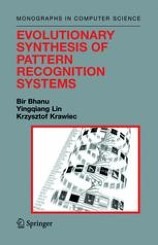
Evolutionary Synthesis of Pattern Recognition Systems
Evolutionary Synthesis of Pattern Recognition Systems presents novel effective approaches based on evolutionary computational techniques, such as genetic programming (GP), linear genetic programming (LGP), coevolutionary genetic programming (CGP) and genetic algorithms (GA) to automate the synthesis and analysis of object detection and recognition systems. The book’s concepts, principles, and methodologies will enable readers to automatically build robust and flexible systems—in a systematic manner—that can provide human-competitive performance and reduce the cost of designing and maintaining these systems. Its content covers all key aspects of object recognition: object detection, feature selection, feature discovery, object recognition, domain knowledge. Basic knowledge of programming and data structures, and some calculus, is presupposed.ing the book’s novel ideas

Evolutionary Computation in Data Mining
This carefully edited book reflects and advances the state of the art in the area of Data Mining and Knowledge Discovery with Evolutionary Algorithms. It emphasizes the utility of different evolutionary computing tools to various facets of knowledge discovery from databases, ranging from theoretical analysis to real-life applications. "Evolutionary Computation in Data Mining" provides a balanced mixture of theory, algorithms and applications in a cohesive manner, and demonstrates how the different tools of evolutionary computation can be used for solving real-life problems in data mining and bioinformatics.

Euro-Par 2006 Parallel Processing ; 12th International Euro-Par Conference, Dresden, Germany, August 28-September 1, 2006, Proceedings
This book constitutes the refereed proceedings of the 12th International Conference on Parallel Computing, Euro-Par 2006. parallel and distributed databases, data mining and knowledge discovery; grid and cluster computing: models, middleware and architectures; parallel computer architecure and instruction-level parallelism.

Euro-Par 2005 Parallel Processing ; 11th International Euro-Par Conference, Lisbon, Portugal, August 30 - September 2, 2005, Proceedings
This book constitutes the refereed proceedings of the 11th International Conference on Parallel Computing, Euro-Par 2005, held in Lisbon, Portugal, in August/September 2005. The 120 revised papers presented together with 4 invited papers were carefully reviewed and selected from 388 submissions. The papers are organized in topical sections on support tools and environments, performance prediction and evaluation, scheduling and load balancing, compilers for high performance, parallel and distributed databases, data mining and knowledge discovery, grid and cluster computing: models, middleware and architectures, parallel computer architecture and instruction distributed systems and algorithms, parallel programming: models, methods, and languages, parallel numerical algorithms.

E-Service Intelligence : Methodologies, Technologies and Applications
Business organizations and governments are nowadays developing and providing internet based electronic services (e-services) featuring various intelligent functions. E-Service Intelligence integrates intelligent techniques into e-service systems for realizing intelligent internet information searching, presentation, provision, recommendation, online system design, implementation, and assessment to internet users. This book offers a thorough introduction and systematic overview of the new field and covers the state-of-the-art of the research and development in E-Service Intelligence ranging from e-services and/or intelligent techniques to web information presentation, search, and mining, to personalization, privacy, and trust in e-services, to e-service evaluation, optimization and knowledge discovery, and to intelligent e-service system developments.

Engineering Knowledge in the Age of the Semantic Web ; 15th International Conference, EKAW 2006, Podebrady, Czech Republic, October 6-10, 2006, Proceedings
The 15th International Conference on Knowledge Engineering and Knowledge Management (2006), held on October 6-10, 2006 in Pod? ebrady,Czech Republic, followed a long tradition of European Knowledge Acquisition Workshops (from 1987),whicheventuallyacquiredtheformatofconference(in2000)whilekeeping their open-minded and interactive spirit. During the nearly 20 year lifespan of the series, the discipline of knowledge engineering (KE) evolved greatly. While knowledge acquisition (KA) techniques dominated in the very ?rst years, formal approaches to knowledge-based inf- ence and variousnew streamssuch as knowledgediscoveryfrom data/textslater cameinto play. During thelate1990sandafterwards,EKAWbecamea founding community for ontology and Semantic Web Research, which was also re?ected in the sub-titles of the 2002 and 2004 editions: “Ontologies and the Semantic Web” and “Engineering Knowledge in the Age of the Semantic Web,” resp- tively.

Emerging Technologies in Knowledge Discovery and Data Mining ; PAKDD 2007 International Workshops, Nanjing, China, May 22-25, 2007, Revised Selected Papers
The objective of this volume is to offer the excellent presentations to the public, and to promote the study exchange among researchers worldwide.The first part of this volume contains industrial track. This track was organized to attract papers on new technology trends and real-world solutions in different industry sectors. The succeeding chapters include Data Mining for Biomedical Applications aimed at attracting top researchers, practitioners and students from around the world to discuss data mining applications in the field of bioinformatics

Efficient Learning Machines : Theories, Concepts, and Applications for Engineers and System Designers
Machine learning techniques provide cost-effective alternatives to traditional methods for extracting underlying relationships between information and data and for predicting future events by processing existing information to train models. Efficient Learning Machines explores the major topics of machine learning, including knowledge discovery, classifications, genetic algorithms, neural networking, kernel methods, and biologically-inspired techniques.

E-Commerce and Web Technologies ; 9th International Conference, EC-Web 2008 Turin, Italy, September 3-4, 2008 Proceedings
This book constitutes the refereed proceedings of the 9th International Conference on Electronic Commerce and Web Technologies, EC-Web 2008, held in Turin, Italy, in September, 2008 in conjunction with Dexa 2008.
Discovery Science ; Vol. 4265 ; 9th International Conference, DS 2006, Barcelona, Spain, October 7-10, 2006, Proceedings
This LNAI volume, containing the proceedings of the 9th International C- ference onDiscoveryScience, is structured in three parts. The ?rstpart contains the papers/abstracts of the invited talks, the second part contains the accepted long papers, and the third part the accepted regular (short) papers. Out of 87 submitted papers, 23 were accepted for publication as long papers, and 18 as regular papers. All the submitted papers were reviewed by two or three ref- ees. In addition to the presentations of accepted papers, the DS 2006 conference program consisted of three invited talks, two tutorials, the collocated ALT 2006 conference and the Pascal Dialogues workshop.

Discovery Science ; 11th International Conference, DS 2008, Budapest, Hungary, October 13-16, 2008. Proceedings
This book constitutes the refereed proceedings of the 11th International Conference on Discovery Science, DS 2008, held in Budapest, Hungary, in October 2008, co-located with the 19th International Conference on Algorithmic Learning Theory, ALT 2008.

Discovery Science ; 10th International Conference, DS 2007 Sendai, Japan, October 1-4, 2007. Proceedings
This volume consists of three parts. The first part contains the papers/abstracts of the invited talks, the second part contains the accepted long papers, and the third part contains the accepted regular papers.
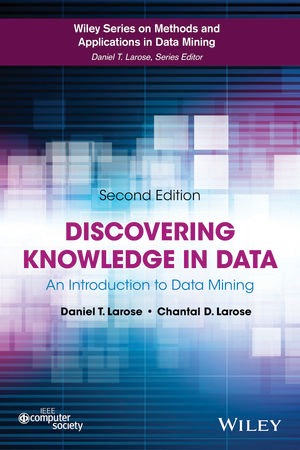
Discovering Knowledge in Data : An Introduction to Data Mining
Provides the tools needed to thrive in today’s big data world. Demonstrates how to leverage a company’s existing databases to increase profits and market share, and carefully explains the most current data science methods and techniques. The reader will “learn data mining by doing data mining”.

Digital Libraries : Universal and Ubiquitous Access to Information ; 11th International Conference on Asian Digital Libraries, ICADL 2008, Bali, Indonesia, December 2-5, 2008. Proceedings
This book constitutes the refereed proceedings of the 11th International Conference on Asian Digital Libraries, ICADL 2008, held in Bali, Indonesia, in December 2008.

Databases, Information Systems, and Peer-to-Peer Computing ; International Workshops, DBISP2P 2005/2006, Trondheim, Norway, August 28-29, 2006, Revised Selected Papers
The P2P paradigm lends itself to constructing large-scale, complex, adaptive, autonomous and heterogeneous database and information systems, endowed with clearly specified and difierential capabilities to negotiate, bargain, coordinate and self-organize the information exchanges in large-scale networks. This vision will have a radical impact on the structure of complex organizations (business, sci- tific or otherwise) and on the emergence and the formation of social communities, and on how the information is organized and processed. The P2P information paradigm naturally encompasses static and wireless connectivity and static and mobile architectures. Wireless connectivity combined with the increasingly small and powerful mobile devices and sensors poses new challenges as well as opp- tunities to the database community. Information becomes ubiquitous, highly distributed and accessible anywhere and at any time over highly dynamic, - stable networks with very severe constraints on the information management and processing capabilities.

Database Systems for Advanced Applications ; 13th International Conference, DASFAA 2008, New Delhi, India, March 19-21, 2008. Proceedings
This book constitutes the refereed proceedings of the 13th International Conference on Database Systems for Advanced Applications, DASFAA 2008, held in New Delhi, India, in March 2008.

Database and expert systems applications ; DEXA 2020 International workshops BIOKDD, IWCFS and MLKgraphs, Bratislava, Slovakia, September 14–17, 2020, Proceedings
This volume constitutes the refereed proceedings of the three workshops held at the 31st International Conference on Database and Expert Systems Applications, DEXA 2020, held in September 2020: The 11th International Workshop on Biological Knowledge Discovery from Data, BIOKDD 2020, the 4th International Workshop on Cyber-Security and Functional Safety in Cyber-Physical Systems, IWCFS 2020, the 2nd International Workshop on Machine Learning and Knowledge Graphs, MLKgraphs2019. Due to the COVID-19 pandemic the conference and workshop were held virtually. The 10 papers were thoroughly reviewed and selected from 15 submissions, and discuss a range of topics including: knowledge discovery, biological data, cyber security, cyber-physical system, machine learning, knowledge graphs, information retriever, data base, and artificial intelligent.
