



الصفحة 4
الصفحة 4
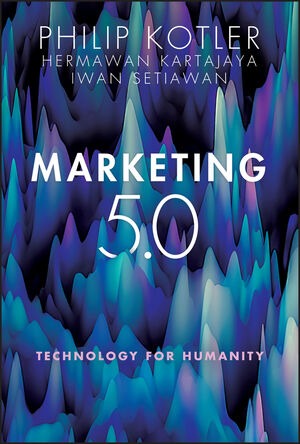
Marketing 5.0 : Technology for Humanity
Explains the greatest problem facing marketers today how to integrate three major movements that are changing global markets and customer behavior: Dramatic advances in technology such as AI, Sensors, and the Internet of Things, which are enabling extreme forms of customer targeting and personalization; Dramatic shifts in customer behavior, such as Whatever-Whenever-Wherever (WWW) and the differences between Generations X, Y, Z, and Alpha; And dramatic shifts in business models such as Everything as a Service, Physical/Digital business models.

Manual of Digital Earth
This book offers a summary of the development of Digital Earth over the past twenty years. By reviewing the initial vision of Digital Earth, the evolution of that vision, the relevant key technologies, and the role of Digital Earth in helping people respond to global challenges, this publication reveals how and why Digital Earth is becoming vital for acquiring, processing, analysing and mining the rapidly growing volume of global data sets about the Earth.
Managing Distributed Cloud Applications and Infrastructure : A Self-Optimising Approach
The emergence of the Internet of Things (IoT), combined with greater heterogeneity not only online in cloud computing architectures but across the cloud-to-edge continuum, is introducing new challenges for managing applications and infrastructure across this continuum.
Machine Learning for Cyber Physical Systems : Selected papers from the International Conference ML4CPS 2020
Presents new approaches to Machine Learning for Cyber Physical Systems, experiences and visions. It contains selected papers from the fifth international Conference ML4CPS – Machine Learning for Cyber Physical Systems, which was held in Berlin, March 12-13, 2020.

Machine Learning for Cyber Physical Systems : Selected papers from the International Conference ML4CPS 2018
Presents new approaches to Machine Learning for Cyber Physical Systems, experiences and visions. Cyber Physical Systems are characterized by their ability to adapt and to learn: They analyze their environment and, based on observations, they learn patterns, correlations and predictive models. Typical applications are condition monitoring, predictive maintenance, image processing and diagnosis. Machine Learning is the key technology for these developments.
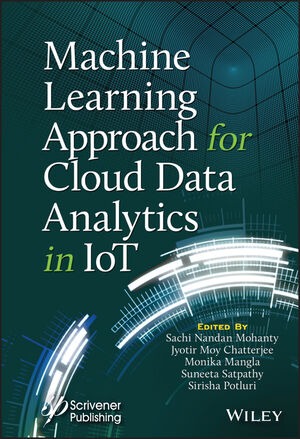
Machine learning approach for cloud data analytics in IoT
Covers the multidimensional perspective of machine learning through the perspective of cloud computing and Internet of Things ranging from fundamentals to advanced applications. Elucidates some of the best practices and their respective outcomes in cloud and fog computing environments. It focuses on all the various research issues related to big data storage and analysis, large-scale data processing, knowledge discovery and knowledge management, computational intelligence, data security and privacy, data representation and visualization, and data analytics. The featured technologies presented in the book optimizes various industry processes using business intelligence in engineering and technology. Light is also shed on cloud-based embedded software development practices to integrate complex machines so as to increase productivity and reduce operational costs. The various practices of data science and analytics which are used in all sectors to understand big data and analyze massive data patterns are also detailed in the book.
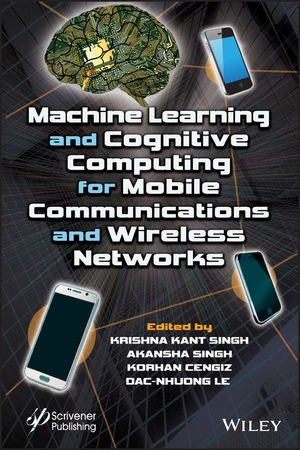
Machine Learning and Cognitive Computing for Mobile Communications and Wireless Networks
Communication and network technology has witnessed recent rapid development and numerous information services and applications have been developed globally. These technologies have high impact on society and the way people are leading their lives. The advancement in technology has undoubtedly improved the quality of service and user experience yet a lot needs to be still done. Some areas that still need improvement include seamless wide-area coverage, high-capacity hot-spots, low-power massive-connections, low-latency and high-reliability and so on. Thus, it is highly desirable to develop smart technologies for communication to improve the overall services and management of wireless communication. Machine learning and cognitive computing have converged to give some groundbreaking solutions for smart machines. With these two technologies coming together, the machines can acquire the ability to reason similar to the human brain. The research area of machine learning and cognitive computing cover many fields like psychology, biology, signal processing, physics, information theory, mathematics, and statistics that can be used effectively for topology management. Therefore, the utilization of machine learning techniques like data analytics and cognitive power will lead to better performance of communication and wireless systems.
Challenges and Solutions for Sustainable Smart City Development
Discusses advances in smart and sustainable development of smart environments. The authors discuss the challenges faced in developing sustainable smart applications and provide potential solutions. The solutions are aimed at improving reliability and security with the goal of affordability, safety, and durability. Topics include health care applications, sustainable smart transportation systems, intelligent sustainable wearable electronics, and sustainable smart building and alert systems. Authors are from both industry and academia and present research from around the world. Addresses problems and solutions for sustainable development of smart cities; Includes applications such as healthcare, transportation, wearables, security, and more ; Relevant for scientist and researchers working on real time smart city development.

Blockchains For Network Security : Principles, technologies and applications
Blockchain technology is a powerful, cost-effective method for network security. Essentially, it is a decentralized ledger for storing all committed transactions in trustless environments by integrating several core technologies such as cryptographic hash, digital signature and distributed consensus mechanisms. Over the past few years, blockchain technology has been used in a variety of network interaction systems such as smart contracts, public services, Internet of Things (IoT), social networks, reputation systems and security and financial services. With its widespread adoption, there has been increased focus on utilizing blockchain technologies to address network security concerns and vulnerabilities as well as understanding real-world security implications.
Blockchain, artificial intelligence, and the internet of things : Possibilities and opportunities
Provides basic concepts and deep knowledge about various security mechanisms that can be implemented in IoT through Blockchain technology. This book aids readers in gaining insight and knowledge about providing security and solutions to different challenges in IoT using Blockchain technology. This book primarily focuses on challenges to addressing the integration of the IoT with Blockchain with respect to potential benefits for IoT. This book gives descriptive analysis of Blockchain integrated with IoT applications and platforms for the development of IoT solutions along with possible topologies to that integration. Several application examples are included in a variety of industries / Provides the latest on secure IIoT communication using Blockchain technology for Industry 4.0 / Includes updates on using Blockchain technology in secure vehicular communication (VANET), healthcare, retail, and gaming / Provides the latest on secure IIoT communication using Blockchain technology for Industry 4.0
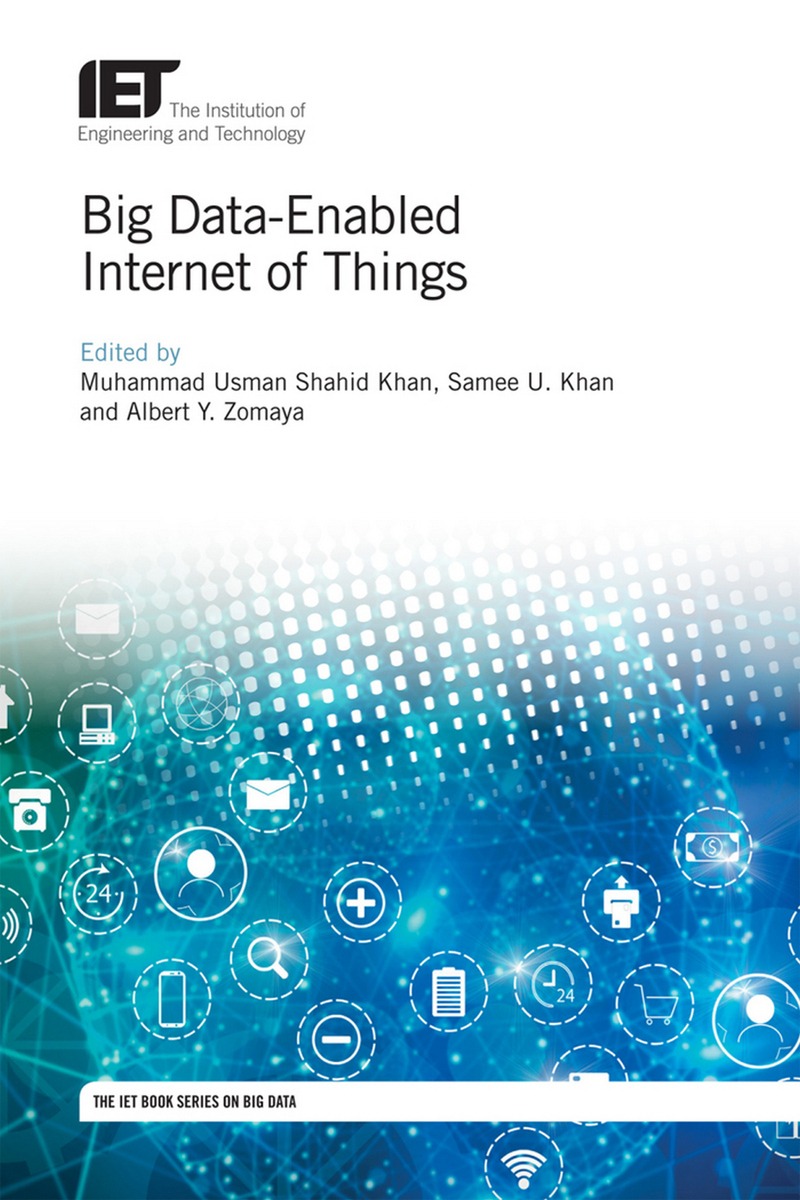
Big data-enabled internet of things
Covers analytical techniques for handling the huge amount of data generated by the Internet of Things, from architectures and platforms to security and privacy issues, applications, and challenges as well as future directions. The fields of Big Data and the Internet of Things (IoT) have seen tremendous advances, developments, and growth in recent years. The IoT is the inter-networking of connected smart devices, buildings, vehicles and other items which are embedded with electronics, software, sensors and actuators, and network connectivity that enable these objects to collect and exchange data. The IoT produces a lot of data. Big data describes very large and complex data sets that traditional data processing application software is inadequate to deal with, and the use of analytical methods to extract value from data. This edited book covers analytical techniques for handling the huge amount of data generated by the Internet of Things, from architectures and platforms to security and privacy issues, applications, and challenges as well as future directions.
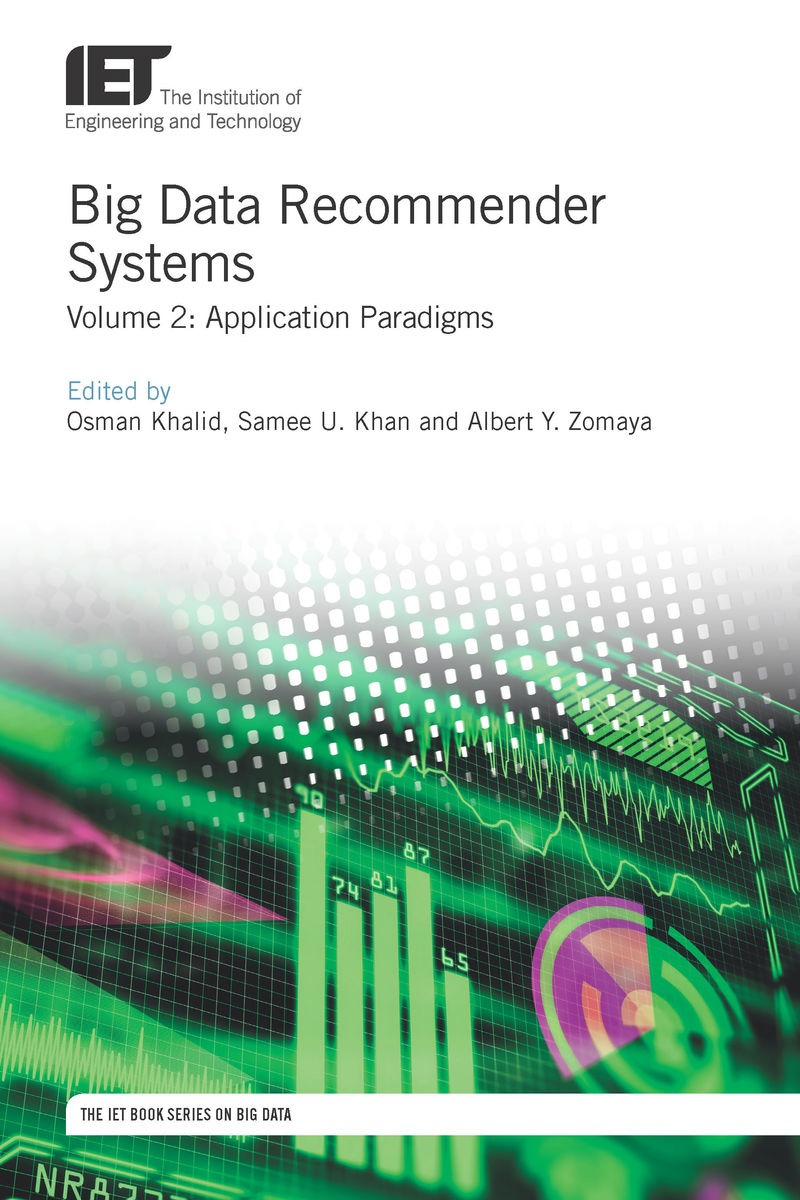
Big Data Recommender Systems ; Vol.2 : Application Paradigms
Combines experimental and theoretical research on big data recommender systems to help computer scientists develop new concepts and methodologies for complex applications. It includes original scientific contributions in the form of theoretical foundations, comparative analysis, surveys, case studies, techniques and tools. First designed to generate personalized recommendations to users in the 90s, recommender systems apply knowledge discovery techniques to users’ data to suggest information, products, and services that best match their preferences. In recent decades, we have seen an exponential increase in the volumes of data, which has introduced many new challenges. recommender systems. Volume 2 covers a broad range of application paradigms for recommender systems over 22 chapters
Big Data Recommender Systems ; Vol.1 : Algorithms, Architectures, Big Data, Security and Trust
Combines experimental and theoretical research on big data recommender systems to help computer scientists develop new concepts and methodologies for complex applications. It includes original scientific contributions in the form of theoretical foundations, comparative analysis, surveys, case studies, techniques and tools.
Big data analytics and machine intelligence in biomedical and health informatics : Concepts, methodologies, tools and applications
Provides coverage of developments and state-of-the-art methods in the broad and diversified data analytics field and applicable areas such as big data analytics, data mining, and machine intelligence in biomedical and health informatics. Covers the latest advances and developments in health informatics, data mining, machine learning, and artificial intelligence. They have been organized with respect to the similarity of topics addressed, ranging from issues pertaining to the Internet of Things (IoT) for biomedical engineering and health informatics, computational intelligence for medical data processing, and Internet of Medical Things??(IoMT).
Autonomous control for a reliable internet of services : Methods, models, approaches, techniques, algorithms, and tools
This open access book was prepared as a Final Publication of the COST Action IC1304 “Autonomous Control for a Reliable Internet of Services (ACROSS)”. The book contains 14 chapters and constitutes a show-case of the main outcome of the Action in line with its scientific goals. It will serve as a valuable reference for undergraduate and post-graduate students, educators, faculty members, researchers, engineers, and research strategists working in this field. The objective of this book is, by applying a systematic approach, to assess the state-of-the-art and consolidate the main research results achieved in this area.
Artificial intelligence-based Internet of things systems
Discusses the evolution of future generation technologies through Internet of Things (IoT) in the scope of Artificial Intelligence (AI). The main focus of this volume is to bring all the related technologies in a single platform, so that undergraduate and postgraduate students, researchers, academicians, and industry people can easily understand the AI algorithms, machine learning algorithms, and learning analytics in IoT-enabled technologies. This book uses data and network engineering and intelligent decision support system-by-design principles to design a reliable AI-enabled IoT ecosystem and to implement cyber-physical pervasive infrastructure solutions. This book brings together some of the top IoT-enabled AI experts throughout the world who contribute their knowledge regarding different IoT-based technology aspects. Addresses the complete functional framework workflow in AI-enabled IoT ecosystem; Presents intelligent object identification and object discovery through the IoT ecosystem and its implications to the real world ;Explores security and privacy issues and trustworthy machine learning related to data-intensive technologies in AI-based IoT ecosystems.

Artificial intelligence techniques in hydrology and water resources management
The sustainable management of water cycles is crucial in the context of climate change and global warming. It involves managing global, regional, and local water cycles, as well as urban, agricultural, and industrial water cycles, to conserve water resources and their relationships with energy, food, microclimates, biodiversity, ecosystem functioning, and anthropogenic activities. Hydrological modeling is indispensable for achieving this goal, as it is essential for water resources management and the mitigation of natural disasters. In recent decades, the application of artificial intelligence (AI) techniques in hydrology and water resources management has led to notable advances. In the face of hydro-geo-meteorological uncertainty, AI approaches have proven to be powerful tools for accurately modeling complex, nonlinear hydrological processes and effectively utilizing various digital and imaging data sources, such as ground gauges, remote sensing tools, and in situ Internet of Things (IoT) devices.
Artificial Intelligence for Cloud and Edge Computing
Discusses the future possibilities of AI with cloud computing and edge computing. Aims to conduct analyses, implementation and discussion of many tools (of artificial intelligence, machine learning and deep learning and cloud computing, fog computing, and edge computing including concepts of cyber security) for understanding integration of these technologies. Readers can quickly get an overview of these emerging topics and get many ideas of the future of AI with cloud, edge, and in many other areas. Topics include machine and deep learning techniques for Internet of Things based cloud systems; security, privacy and trust issues in AI based cloud and IoT based cloud systems; AI for smart data storage in cloud-based IoT; blockchain based solutions for AI based cloud and IoT based cloud systems.This book is relevent to researchers, academics, students, and professionals. Presents fusion of cloud computing services and AI technology for bringing a significant change in the technology industry; Includes self-assessment problems for increasing knowledge of real world problems, i.e., how AI and cloud/edge computing can change business for the better; Provides innovative results of integrations of AI in other applications such as healthcare, finance, manufacturing, transportation, agriculture, etc.

Artificial intelligence and security ; 6th International Conference, ICAIS 2020, Hohhot, China, July 17–20, 2020, Proceedings, Part II
This two-volume set LNCS 12239-12240 constitutes the refereed proceedings of the 6th International Conference on Artificial Intelligence and Security, ICAIS 2020, which was held in Hohhot, China, in July 2020. The conference was formerly called “International Conference on Cloud Computing and Security” with the acronym ICCCS. The total of 142 full papers presented in this two-volume proceedings was carefully reviewed and selected from 1064 submissions. The papers were organized in topical sections as follows: Part I: Artificial intelligence and internet of things. Part II: Internet of things, information security, big data and cloud computing, and information processing.
Artificial intelligence and security ; 6th International Conference, ICAIS 2020, Hohhot, China, July 17–20, 2020, Proceedings, Part I
This two-volume set LNCS 12239-12240 constitutes the refereed proceedings of the 6th International Conference on Artificial Intelligence and Security, ICAIS 2020, which was held in Hohhot, China, in July 2020. The conference was formerly called “International Conference on Cloud Computing and Security” with the acronym ICCCS. The total of 142 full papers presented in this two-volume proceedings was carefully reviewed and selected from 1064 submissions. The papers were organized in topical sections as follows: Part I: Artificial intelligence and internet of things. Part II: Internet of things, information security, big data and cloud computing, and information processing.
