



الصفحة 4
الصفحة 4

Chance Discoveries in Real World Decision Making : Data-based Interaction of Human intelligence and Artificial Intelligence
For this book, the editors invited and called for contributions from indispensable research areas relevant to "chance discovery," which has been defined as the discovery of events significant for making a decision, and studied since 2000. From respective research areas as artificial intelligence, mathematics, cognitive science, medical science, risk management, methodologies for design and communication, the invited and selected authors in this book present their particular approaches to chance discovery. The chapters here show contributions to identifying rare or hidden events and explaining their significance, predicting future trends, communications for scenario development in marketing and design, identification effects and side-effects of medicines, etc.

Cancer drug resistance : methods and protocols
Discusses the latest techniques used to identify cancer drug resistance determinants at the molecular, cellular, and functional levels. Chapters in this book cover up-to-date topics including tumor-microenvironment cell co-culture methods and microfluidics systems; workflows for functional assessment of drug resistance in vitro and in vivo; quantitative techniques for identifying quiescent blood-flow circulating cells; and single-cell characterization methods, such as mass cytometry.

Blind smart helmet
The Smart Helmet for the Blind is a project aimed at providing solutions for the challenges faced by blind individuals in their daily lives. The problem of detecting objects, identifying obstacles and distances, knowing the current location, and using a mobile application is a common issue for blind people. To address these problems, the Smart Helmet project was created, utilizing advanced technology and artificial intelligence to provide real-time assistance to the wearer. The helmet is connected to a Raspberry Pi 4, which processes information from the helmet's cameras and AI algorithms to analyze and predict the surrounding environment for a blind person.

Biometric Authentication ; International ECCV 2002 Workshop Copenhagen, Denmark, June 1, 2002 Proceedings
Biometric authentication refers to identifying an individual based on his or her distinguishing physiological and/or behavioral characteristics. It associates an individual with a previously determined identity based on that individual s appearance or behavior. Because many physiological or behavioral characteristics (biometric indicators) are distinctive to each person, biometric identifiers are inherently more reliable and more capable than knowledge-based (e.g., password) and token-based (e.g., a key) techniques in differentiating between an authorized person and a fraudulent impostor. For this reason, more and more organizations are looking to automated identity authentication systems to improve customer satisfaction, security, and operating efficiency as well as to save critical resources.
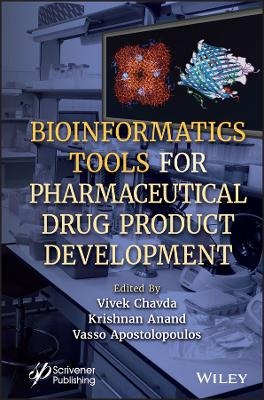
Bioinformatics tools for pharmaceutical drug product development
Presents the latest information on bioinformatics tools, artificial intelligence, machine learning, computational methods, protein interactions, peptide-based drug design, and omics technologies. And include bioinformatics tools for the pharmaceutical sector and the healthcare sector. Bioinformatics brings a new era in research to accelerate drug target and vaccine design development, improving validation approaches as well as facilitating and identifying side effects and predicting drug resistance. As such, this will aid in more successful drug candidates from discovery to clinical trials to the market, and most importantly make it a more cost-effective process overall.

Benefits realisation : The change-driven approach to project success
In Benefits Realisation: The Change-Driven Approach to Project Success, renowned benefits realisation expert, speaker, and consultant Rasmus Rytter introduces a new approach to change projects where benefits realisation defines the design of the project and how it’s led. Once the project’s benefits have been defined, the key question for the project to answer is: ‘How might we help our colleagues change their behaviour? Thus, identifying behavioural change as the key driver of benefit realisation.
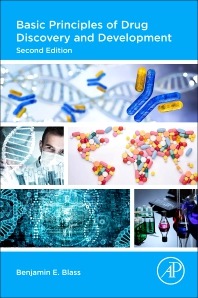
Basic principles of drug discovery and development ; 2nd ed.
Presents the multifaceted process of identifying a new drug in the modern era, which requires a multidisciplinary team approach with input from medicinal chemists, biologists, pharmacologists, drug metabolism experts, toxicologists, clinicians, and a host of experts from numerous additional fields. Enabling technologies such as high throughput screening, structure-based drug design, molecular modeling, pharmaceutical profiling, and translational medicine are critical to the successful development of marketable therapeutics. Given the wide range of disciplines and techniques that are required for cutting edge drug discovery and development, a scientist must master their own fields as well as have a fundamental understanding of their collaborator’s fields.

Bacterial secretion systems : Methods and protocols
Cover techniques used to study secretion systems. Chapters focus on identifying and localizing the different subunits, defining interactions within subunits, monitoring conformational changes, purifying and imaging of large complexes, defining the assembly pathway by fluorescence microscopy and the role of energy during assembly and/or secretion, identifying secreted effectors as well as using reporters to follow effector transport. Written in the highly

Automated multi-camera surveillance : Algorithms and practice
This book discusses and proposes techniques for development of an automated multi-camera surveillance system for outdoor environments, while identifying the important issues that a system needs to cope with in realistic surveillance scenarios. The goal of the research presented in this book is to build systems that can deal effectively with these realistic surveillance needs.

Assessment of syrian physicians’ knowledge and management of dental trauma – combined survey
Dental trauma (traumatic dental injury, TDI) encompasses injuries to teeth, periodontium, and surrounding tissues, with significant physical, psychological, and socioeconomic consequences. Despite its high prevalence, particularly among children, many physicians lack adequate training in TDI management. This cross-sectional survey assessed Syrian physicians’ knowledge, practices, and confidence in managing dental trauma, identifying gaps and barriers to optimal care.
Assessing Race, Ethnicity and Gender in Health
Where there are patients, clients, or study participants, there are data. And when data involve personal variables of race, ethnicity, gender, and/or sexual orientation, questions of relevance and marginalization often arise. Assessing Race, Ethnicity, and Gender in Health brings needed clarity to the debate by identifying the ethical issues as well as the technical challenges inherent in measuring these elusive concepts.
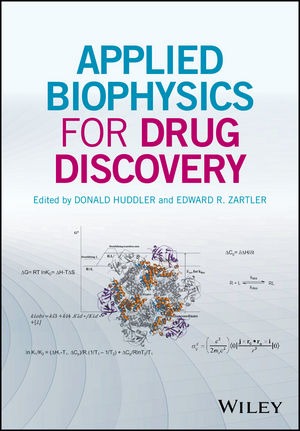
Applied biophysics for drug discovery
It is a guide to new techniques and approaches to identifying and characterizing small molecules in early drug discovery. Biophysical methods are reasserting their utility in drug discovery and through a combination of the rise of fragment-based drug discovery and an increased focus on more nuanced characterisation of small molecule binding, these methods are playing an increasing role in discovery campaigns.

Anomaly Detection : Techniques and Applications
When information in the data warehouse is processed, it follows a definite pattern. An unexpected deviation in the data pattern from the usual behavior is called an anomaly. The anomaly in the data is also referred to as noise, outlier, spammer, deviations, novelties and exceptions. Identification of the rare items, events, observations, patterns which raise suspension by differing significantly from the majority of data is called anomaly detection. With progress in the technologies and the widespread use of data for the purpose for business the increase in the spams faced by the individuals and the companies are increasing day by day. This noisy data has boomed as a major problem in various areas such as Internet of Things, web service, Machine Learning, Artificial Intelligence, Deep learning, Image Processing, Cloud Computing, Audio processing, Video Processing, VoIP, Data Science, Wireless Sensor etc. Identifying the anomaly data and filtering them before processing is a major challenge for the data analyst. This anomaly is unavoidable in all areas of research. This book covers the techniques and algorithms for detecting the deviated data.

Advancing Strategy through Behavioural Psychology : Create Competitive Advantage in Relentlessly Changing Markets
The realisation of strategy is entirely dependent on employee behaviour, so in order to achieve business results it is vital that managers and leaders develop an understanding of human behaviour. Advancing Strategy through Behavioural Psychology shows that by identifying which behaviours should be measured and encouraged, organizations can succeed in implementing strategies for continuous adaptation in a rapidly changing business environment.

Advances in Material Forming ; Esaform 10 years on
This book groups the main advances in material forming, considering different p- cesses (conventional and non-conventional) focusing in polymers, composites and metals, that are analyzed from the state of the art, describing the most significant recent advances and identifying the present challenges from the experimental, modeling and numerical points of view. Chapters include a large list of references and have been wr- ten by recognized specialists. Special emphasis is devoted to the contributions of the European Scientific Association on Material Forming (ESAFORM) during the last 10 years (1998-2007) and in particular the ones coming from its annual international conference. The first chapter includes an excellent introduction to the Esaform association.

Advances in Mass Data Analysis of Signals and Images in Medicine, Biotechnology and Chemistry ; International Conference, MDA 2006/2007, Leipzig, Germany, July 18, 2007, Selected Papers
The automatic analysis of images and signals in medicine, biotechnology, and chemistry is a challenging and demanding field. Signal-producing procedures by microscopes, spectrometers, and other sensors have found their way into wide fields of medicine, biotechnology, economy, and environmental analysis. With this arises the problem of the automatic mass analysis of signal information. Signal-interpreting systems which generate automatically the desired target statements from the signals are therefore of compelling necessity. The continuation of mass analyses on the basis of classical procedures leads to investments of proportions that are not feasible. New procedures and system architectures are therefore required. The goals of this: Provide a forum for identifying important contributions and opportunities for research on mass data analysis on microscopic images Promote the systematic study of how to apply automatic image analysis and interpretation procedures to that field Show case applications of mass data analysis in biology, medicine, and chemistry Topics of interest include (but are not limited to): Techniques and developments of signal and image producing procedures Object matching and object tracking in microscopic and video microscopic images 1D, 2D, and 3D shape analysis and description
Advanced Techniques in Knowledge Discovery and Data Mining
This explosion is a result of the growing use of electronic media. But what is data mining (DM)? A Web search using the Google search engine retrieves many (really many) definitions of data mining. We include here a few interesting ones. One of the simpler definitions is: “As the term suggests, data mining is the analysis of data to establish relationships and identify patterns” [1]. It focuses on identifying relations in data. Our next example is more elaborate: An information extraction activity whose goal is to discover hidden facts contained in databases. Using a combination of machine learning, statistical analysis, modeling techniques and database technology, data mining finds patterns and subtle relationships in data and infers rules that allow the prediction of future results. Typical applications include market segmentation, customer profiling, fraud detection, evaluation of retail promotions, and credit risk analysis .
Adaptive Nonlinear System Identification : The Volterra and Wiener Model Approaches
Adaptive Nonlinear System Identification: The Volterra and Wiener Model Approaches introduces engineers and researchers to the field of nonlinear adaptive system identification. The book includes recent research results in the area of adaptive nonlinear system identification and presents simple, concise, easy-to-understand methods for identifying nonlinear systems. These methods use adaptive filter algorithms that are well known for linear systems identification. They are applicable for nonlinear systems that can be efficiently modeled by polynomials.After a brief introduction to nonlinear systems and to adaptive system identification, the author presents the discrete Volterra model approach. This is followed by an explanation of the Wiener model approach. Adaptive algorithms using both models are developed. The performance of the two methods are then compared to determine which model performs better for system identification applications.
