



الصفحة 4
الصفحة 4

Meaning and Use
The second Jerusalem Philosophical Encounter was held in Jerusalem on April 25-28, 1976, The topic of the symposiumwas Meaning and Use. For Bar-Hillel, the question 'meaning or use?' was of great importance, one which he took as a question of priorities. Which approach to natural language is prior: the formal, semantical approach, which accords a central position to the truth functional concept of meaning and to the theory of reference, or rather the alternative approach which accords the central position to linguistic commu nication and prefers dealing with speech acts to dealing with Statements? Bar Hillel's answer to this question, in his later years, can be summed up by our title, meaning and use: neither approach deserves priority, each is equally necessary, and they both complement each other.
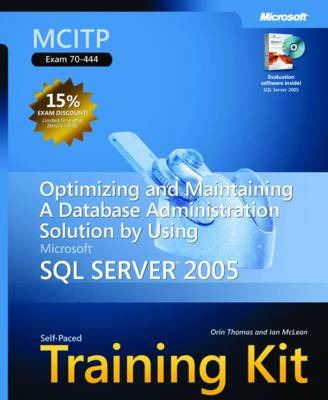
MCITP self-paced training Kit (Exam 70-444) : Optimizing and maintaining a database administration solution microsoft SQL server 2005
Designed to help you make the most of your study time. Maximize your performance on the exam by learning to: * Monitor and troubleshoot queries, databases, and servers * Help defend against injection attacks, denial of service attacks, worms, and viruses * Manage security strategies and perform audits * Detect and resolve data conflicts * Diagnose faults and recover from database failures and disasters * Optimize database availability with failover clustering, database mirroring, log shipping, and replication * Customize a maintenance strategy and automate routine tasks * Build, debug, and deploy SQL Server Integration Services packages PRACTICE TESTS Assess your skills with practice tests on CD. You can work through hundreds of questions using multiple testing modes to meet your specific learning needs. You get detailed explanations for right and wrong answers-including a customized learning path that describes how and where to focus your studies. Your training kit includes: Details inside. * Official self-paced study guide. * Practice tests with multiple, customizable testing options and a learning plan based on your results. *400+ practice and review questions. * Case scenarios, practice exercises, and best practices. *180-day evaluation version of Microsoft SQL Server 2005 Enterprise Edition. * Fully searchable eBook of this guide.

Mathematics and the Aesthetic : New Approaches to an Ancient Affinity
The essays in this book explore the ancient affinity between the mathematical and the aesthetic, focusing on the fundamental connections between these two modes of reasoning and communicating. From historical, philosophical and psychological perspectives, with particular attention to certain mathematical areas such as geometry and analysis, the authors examine the ways in which the aesthetic is ever present in mathematical thinking and contributes to the growth and value of mathematical knowledge.

Mathematics and Politics : Strategy, Voting, Power and Proof
Mathematics and Politics requires no prerequisites in either subject. The underlying philosophy involves minimizing algebraic computations while focusing on the conceptual aspects of mathematics in the context of real-world questions in political science. This new addition has an added co-author, Allison Pacelli, and covers six major topics: social choice, yes-no voting systems, political power, game-theoretic models of international conflict, fairness, and escalation. In addition to having two new chapters (treating apportionment and conflict resolution), the text has been extensively reorganized and the number of exercises increased to over 300.

Mathematical Problems from Applied Logic II : Logics for the XXIst Century
Mathematical Problems from Applied Logic II presents chapters from selected, world renowned, logicians. Important topics of logic are discussed from the point of view of their further development in light of requirements arising from their successful application in areas such as Computer Science and AI language. Fields covered include: logic of provability, applications of computability theory to biology, psychology, physics, chemistry, economics, and other basic sciences; computability theory and computable models; logic and space-time geometry; hybrid systems; logic and region-based theory of space.

Mathematical Models of Distribution Channels
In Chapters 1 and 2 the authors provide an introduction to the current, analytical literature on distribution channels, and they present an intuitively appealing prologue to the Channel Myths that are developed rigorously in later Chapters. In Chapters 3, 4, and 10 they extend the literature by ascertaining the relationship between the manufacturer-optimal wholesale-price strategy and channel breadth. Specific analyses include multiple, non-competing retailers, multiple states-of-nature, and multiple, competing retailers. In Chapters 5-7 the authors determine the profitability of various wholesale-price strategies; this analysis culminates in Chapters 8 and 9 with the determination of the (very limited) conditions under which channel coordination can be optimal for the manufacturer. In Chapter 11 they prove that existing methods of measuring the effect of a change in the degree of inter-retailer substitutability are totally misleading. They then develop an original, theoretical basis for measuring the impact of a change in the degree of inter-retailer substitutability that yields insightful, intuitively appealing results. In Chapter 12 the authors set forth an agenda for future research based on a meta-model that embraces all existing models in the literature. They also issue an appeal for creation of a "Unifying Theory of Distribution Channels" that will enable researchers to work independently and yet to contribute toward the common goal of deepening the marketing science professions’ understanding of distribution channels.

Islamic Philosophy and Occidental Phenomenology on the Perennial Issue of Microcosm and Macrocosm
this volume are reviving the perennial positioning of the human condition in the play of forces within and without the human being. This theme has run from Plato through the Middle Ages, Renaissance and Modernity, and has been ignored by contemporaries. It now acquires a new pertinence and striking significance due to the scientific discoveries into the "infinitely small" in life, on the one hand, and the prodigious technological discoveries of the "infinitely great" on the other. Both open up undreamt-of prospects for the continuing conquest of cosmic forces.

Investigations Into the Phenomenology and the Ontology of the Work of Art : What are Artworks and How Do We Experience Them?
This book investigates the nature of aesthetic experience and aesthetic objects. Written by leading philosophers, psychologists, literary scholars and semioticians, the book addresses two intertwined issues. The first is related to the phenomenology of aesthetic experience: The understanding of how human beings respond to artworks, how we process linguistic or visual information, and what properties in artworks trigger aesthetic experiences. The examination of the properties of aesthetic experience reveals essential aspects of our perceptual, cognitive, and semiotic capacities. The second issue studied in this volume is related to the ontology of the work of art: Written or visual artworks are a specific type of objects, containing particular kinds of representation which elicit a particular kind of experience.

Intuition and the Axiomatic Method
All of Hilbert, Gödel, Poincaré, Weyl and Bohr thought that intuition was an indispensable element in describing the foundations of science. They had very different reasons for thinking this, and they had very different accounts of what they called intuition. But they had in common that their views of mathematics and physics were significantly influenced by their readings of Kant. In the present volume, various views of intuition and the axiomatic method are explored, beginning with Kant’s own approach. By way of these investigations, we hope to understand better the rationale behind Kant’s theory of intuition, as well as to grasp many facets of the relations between theories of intuition and the axiomatic method,

Introduction to the theory of computation
Gain a solid understanding of the fundamental mathematical properties of computer hardware, software, and applications with a blend of practical and philosophical coverage and mathematical treatments, including advanced theorems and proofs.

Introduction to Logic and Theory of Knowledge : Lectures 1906/07
This course on logic and theory of knowledge fell exactly midway between the publication of the Logical Investigations in 1900-01 and Ideas I in 1913. It constitutes a summation and consolidation of Husserl’s logico-scientific, epistemological, and epistemo-phenomenological investigations of the preceding years and an important step in the journey from the descriptivo-psychological elucidation of pure logic in the Logical Investigations to the transcendental phenomenology of the absolute consciousness of the objective correlates constituting themselves in its acts in Ideas I. In this course Husserl began developing his transcendental phenomenology as the genuine realization of what had only been realized in fragmentary form in the Logical Investigations.

Introduction to design theory : philosophy, critique, history and practice
Introduces a comprehensive, systematic, and didactic outline of the discourse of design. Designed both as a course book and a source for research, this textbook methodically covers the central concepts of design theory, definitions of design, its historical milestones, and its relations to culture, industry, body, ecology, language, society, gender and ideology.

Introduction to Biosemiotics : The New Biological Synthesis
This book is addressed to students, researchers and academics who have barely heard of the emerging young science of Biosemiotics, and who want to know more about it. Written by many of the field’s major contributors, it provides a highly qualified introduction to Biosemiotics and illustrates the most recent views in its background and development.

Intervening in the Brain : Changing Psyche and Society
The present book subjects the whole range of questions associated with these problems to a thorough exploration. Extensive state-of-the-art accounts of the relevant clinical and theoretical neurosciences are followed by an in-depth philosophical analysis of the problems of personal identity and a comprehensive disquisition on legal and ethical questions posed by present and foreseeable future practices of neuroenhancement. A concluding chapter presents the study’s main results as recommendations, addressing clinical practitioners and researchers in the field as well as to politicians, legislators, law courts, philosophers, lawyers, and anybody fascinated by or concerned about the dawning era of intervening in the brain.

International Public Health Policy and Ethics
Public Health Policy and Ethics brings together philosophers and practitioners to address the foundations and principles upon which public health policy may be advanced—especially in the international arena.

International legal theory and the cognitive turn
Significant changes in social sciences often herald changes in legal theory, including in international legal theory. In light of the cognitive turn in social sciences, this volume seeks to explore the implications of this ‘turn’ for international legal theories. Cognitive and behavioural studies are making inroads into international law literature and international policy-making,

International labour organization and global social governance
This book explores the role of the ILO (International Labour Organization) in building global social governance from multiple and mutually complementary perspectives. It explores the impact of this UN´s oldest agency, founded in 1919, on the transforming world of work in a global setting, providing insights into the unique history and functions of the ILO as an organization and the evolution of workers’ rights through international labour standards stemming from its regulatory mechanism.

International Bibliography of Sikh Studies
The International Bibliography of Sikh Studies brings together all books, composite works, journal articles, conference proceedings, theses, dissertations, project reports, and electronic resources produced in the field of Sikh Studies until June 2004, making it the most complete and up-to-date reference work in the field today.This monumental work lists over 10,000 English-language publications under almost 30 subheadings.

Interior Design Concept : Critical Practices, Processes and Explorations in Interior Architecture and Design
Combines a comprehensive introduction to design concept, with a reflective examination upon the various ways it can be understood, harnessed, and implemented. Within interior architecture and design, the power of conceptual thinking to fuel creativity, innovation, and collaboration is evident in the use of design concept. Broadly accepted as an essential component in the design process, design concept is a notoriously elusive topic which has, until now, received little critical attention. This book offers a reevaluation of current academic ideas about design methodologies and the nature of inspiration, alongside brand-new data from an international research study to help clarify what creativity really means in the modern world.

Interdisciplinary Perspectives on Mortality and its Timings : When is Death?
This volume provides a series of illuminating perspectives on the timings of death, through in-depth studies of Shakespearean tragedy, criminal execution, embalming practices, fears of premature burial, rumours of Adolf Hitler’s survival, and the legal concept of brain death. In doing so, it explores a number of questions, including: how do we know if someone is dead or not? What do people experience at the moment when they die? Is death simply a biological event that comes about in temporal stages of decomposition, or is it a social event defined through cultures, practices, and commemorations? In other words, when exactly is death? Taken together, these contributions explore how death emerges in a series of stages that are uncertain, paradoxical, and socially contested.
