



الصفحة 4
الصفحة 4

Eating disorders
What is an Eating Disorder (ED)? Eating disorders are a type of serious mental health condition characterized by severe disturbances in eating behaviors and related to persistent eating behaviors that negatively impact your health, your emotions and your ability to function in important areas of life. Most eating disorders involve focusing too much on your weight, body shape and food, leading to dangerous eating behaviors. These behaviors can significantly impact your body's ability to get appropriate nutrition. Eating disorders can harm the heart, digestive system, bones, and teeth and mouth, and lead to other diseases. Eating disorders affect several million people at any given time, ED often develop in the teen and young adult years, although they can develop at other ages. Eating disorders can affect people of all genders, ages, races, religions, ethnicities, sexual orientations, body shapes, and weights.

Early Public Libraries and Colonial Citizenship in the British Southern Hemisphere
This Pivot book is a comparative study of six early colonial public libraries in nineteenth-century Australia, South Africa, and Southeast Asia. Drawing on networked conceptualisations of empire, transnational frameworks, and ‘new imperial history’ paradigms that privilege imbricated colonial and metropolitan ‘intercultures’, it looks at the neglected role of public libraries in shaping a programme of Anglophone civic education, scientific knowledge creation, and modernisation in the British southern hemisphere. The book’s six chapters analyse institutional models and precedents, reading publics and types, book holdings and catalogues, and regional scientific networks in order to demonstrate the significance of these libraries for the construction of colonial identity, citizenship, and national self-government as well as charting their influence in shaping perceptions of social class, gender, and race. Using primary source material from the recently completed ‘Book Catalogues of the Colonial Southern Hemisphere’ digital archive, the book argues that public libraries played a formative role in colonial public discourse, contributing to broader debates on imperial citizenship and nation-statehood across different geographic, cultural, and linguistic borders.

Disability, Health and Human Development
Introduces the human development model to define disability and map its links with health and wellbeing, based on Sen’s capability approach. The author uses panel survey data with internationally comparable questions on disability for Ethiopia, Malawi, Tanzania and Uganda. It presents evidence on the prevalence of disability and its strong and consistent association with multidimensional poverty, mortality, economic insecurity and deprivations in education, morbidity and employment. It shows that disability needs to be considered from multiple angles including aging, gender, health and poverty. Ultimately, this study makes a call for inclusion and prevention interventions as solutions to the deprivations associated with impairments and health conditions.

Differential Undercounts in the U.S. Census : Who is Missed?
This book describes the differences in US census coverage, also referred to as “differential undercount”, by showing which groups have the highest net undercounts and which groups have the greatest undercount differentials, and discusses why such undercounts occur. In addition to focusing on measuring census coverage for several demographic characteristics, including age, gender, race, Hispanic origin status, and tenure, it also considers several of the main hard-to-count populations, such as immigrants, the homeless, the LBGT community, children in foster care, and the disabled. However, given the dearth of accurate undercount data for these groups, they are covered less comprehensively than those demographic groups for which there is reliable undercount data from the Census Bureau. This book is of interest to demographers, statisticians, survey methodologists, and all those interested in census coverage.

Development, Sexual Cultural Practices and HIV/AIDS in Africa
This book introduces the theoretical frameworks and academic debates concerning sexual cultural practices and HIV/AIDS in Africa. It shows how these frameworks have been applied in a practical sense in Africa to investigate sexual cultural practices and their link with HIV/AIDS. The author provides an overview of both the field of study and the methods used during fieldwork. Finally, it assesses the implications of the findings for the conceptualization and provision of current and future HIV/AIDS policies and programs in Africa. This monograph will appeal to policy makers and practitioners working in the field of HIV/AIDS in the Global South as well as academics and students.

Development of breast cancer therapy and gender
Breast cancer is a disease in which abnormal cells in the breast tissues multiply and form an invasive (or malignant) tumor. Such tumors can invade and damage the tissue around them and spread to other parts of the body through the lymphatic or vascular systems. We will describe in our study several types of breast cancer, since they are classified into two main categories: “invasive” and “non-invasive,” or in situ. While invasive cancer has spread from the breast ducts or glands to other parts of the breast, non-invasive cancer has not spread from the original tissue. Our study will focus on the best tests that examine the breasts which are used to detect and diagnose breast cancer: Physical exam and health history, Clinical breast exam (CBE), Mammogram, Ultrasound exam, MRI (magnetic resonance imaging), Blood chemistry studies and Biopsy. We will include the value of such tests after breast cancer has been diagnosed, to find out if cancer cells have spread within the breast or to other parts of the body.

Depression in latinos : Assessment, treatment, and prevention
In this concise yet comprehensive volume, leading clinicians, researchers, and academics offer extensive research and clinical findings, literature reviews (e.g., an in-depth chapter on the Mexican American Prevalence and Services Survey), and insights gathered from first-hand experience in clinical practice. Perceptive information is offered on the most urgent and complex issues on depression in this diverse and dynamic population

Cultural representations of gender vulnerability and resistance : A Mediterranean approach to the Anglosphere
This book considers the cultural representation of gender violence, vulnerability and resistance with a focus on the transnational dimension of our contemporary visual and literary cultures in English. Contributors address concepts such as vulnerability, resilience, precarity and resistance in the Anglophone world through an analysis of memoirs, films, TV series, and crime and literary fiction across India, Ireland, Canada, Australia, the US, and the UK. Chapters explore literary and media displays of precarious conditions to examine whether these are exacerbated when intersecting with gender and ethnic identities, thus resulting in structural forms of vulnerability that generate and justify oppression, as well as forms of individual or collective resistance and/or resilience. Substantial insights are drawn from Animal Studies, Critical Race Studies, Human Rights Studies, Post-Humanism and Postcolonialism.

Cultural heritage and human rights
The volume addresses a deeply political aspect of heritage preservation and management as it relates to human rights. Social and community advocates assert that heritage is necessary for the articulation and preservation of cultural identity. The display of heritage monuments and performance can be a strategy for asserting minority identity in the face of majority pressure – as well as a tool for resistance and the expression of difference.

Criminal law : Cases and materials
Provides the reader with both critical race and critical feminist theory perspectives on criminal law while following a traditional format. All of the usual subject areas are covered, but the book is unique in highlighting the cultural context of substantive criminal law. The book seamlessly integrates issues of race, gender.

COVID-19 in Alzheimer's disease and dementia
COVID-19 in Alzheimer’s Disease and Dementia crucially summarizes the current status of the coronavirus in patients suffering from these conditions, describing why they are a common cause of morbidity among those with COVID-19. The first section includes chapters that provide a general description of COVID-19, including SARS-CoV-2 structure, function, and biology, and its impact on the elderly with chronic conditions include hypertension, diabetes, obesity, kidney disease, respiratory illnesses, and infectious diseases. Also discussed are effects of the virus on the immune system. The second section shifts to the impact of COVID-19 on those with dementia or Alzheimer’s disease, with special emphasis on age, gender, ethnic background, and lifestyle.

Cognitive Aspects of Bilingualism
A unique feature of this book is that chapters favor that line of cognitive linguistics which makes a clear distinction between real world and projected world. Information conveyed by language must be about the projected world. Both the experimental results and the systematic claims in this volume call for a weak form of whorfianism. Also, chapters add some relatively unexplored issues of bilingualism to the well-known ones, such as gender systems in the bilingual mind, context and task, synergic concepts, blending, the relationship between lexical categorization and ontological categorization among others.
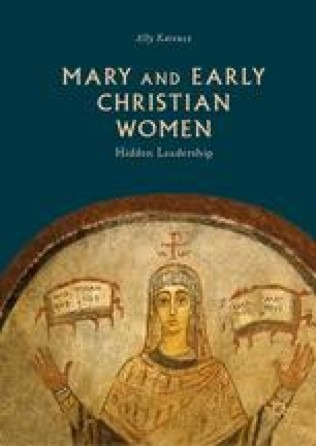
Mary and Early Christian Women : Hidden Leadership
This book reveals exciting early Christian evidence that Mary was remembered as a powerful role model for women leaders—women apostles, baptizers, and presiders at the ritual meal. Early Christian art portrays Mary and other women clergy serving as deacon, presbyter/priest, and bishop. In addition, the two oldest surviving artifacts to depict people at an altar table inside a real church depict women and men in a gender-parallel liturgy inside two of the most important churches in Christendom—Old Saint Peter’s Basilica in Rome and the second Hagia Sophia in Constantinople. Dr. Kateusz’s research brings to light centuries of censorship, both ancient and modern, and debunks the modern imagination that from the beginning only men were apostles and clergy.
Longer Life and Healthy Aging
Focuses on theoretical issues and empirical findings related to trends and determinants of healthy aging, including factors related to "healthy longevity" of the oldest-old, aged 80 and over. The group is the most rapidly increasing elderly sub-population and is most likely to need assistance in daily living in all countries. Chapters include both longitudinal and cross-sectional data from North America, Europe, and Asia in country-specific studies and cross-national comparisons. Part I focuses on the definition, components, concepts, measurements, and determinants of healthy aging, and discusses the trends and patterns of disability and healthy life expectancy at the macro level. Part II addresses individual healthy aging, including its biological and socio-demographic aspects. Part III focuses on issues concerning the family and healthy aging, and Part IV explores formal and informal care for healthy aging through governmental policy interventions and community service programs.
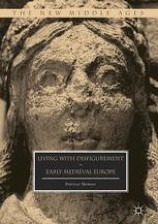
Living with Disfigurement in Early Medieval Europe
Examines social and medical responses to the disfigured face in early medieval Europe, arguing that the study of head and facial injuries can offer a new contribution to the history of early medieval medicine and culture, as well as exploring the language of violence and social interactions. Despite the prevalence of warfare and conflict in early medieval society, and a veritable industry of medieval historians studying it, there has in fact been very little attention paid to the subject of head wounds and facial damage in the course of war and/or punitive justice. The impact of acquired disfigurement —for the individual, and for her or his family and community—is barely registered, and only recently has there been any attempt to explore the question of how damaged tissue and bone might be treated medically or surgically..
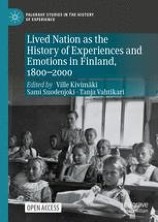
Lived Nation as the History of Experiences and Emotions in Finland, 1800-2000
It revolves around the following questions: What kinds of experiences have engendered national mobilization and feelings of national belonging? How have political and societal conflicts turned into new communities of experience and emotion? What kinds of experiences have been integrated into, or excluded from, the national context in different instances? How have people internalized or contested the nation as a context for their personal, family and minority-group experiences? In what ways has the nation entered and affected people’s intimate spheres of life? How have “national” experiences been transmitted to children in the renewal of the nation? This edited collection points to the histories of experience and emotions as a novel way of studying nations and nationalism. Building on current debates in nationalism studies, it offers a theoretical framework for analyzing the historical construction of “lived nations,” and introduces a number of new methodological approaches to understand the experiences of the nation, extending from the investigation of personal reminiscences and music records to the study of dreams and children’s drawings.
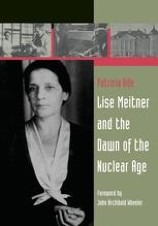
Lise Meitner and the Dawn of the Nuclear Age
Documenting the extraordinary life of an aspiring woman scientist whose life was filled with adversity. Surviving both World Wars and gender discrimination, Meitner was a pioneer at the forefront of her discipline involving the study of radio-elements and nuclear fission.
Learning through Community : Exploring Participatory Practices
A collection of case studies that explore the learning that people do through community engagement. Developed within a network of Canadian researchers and their community partners, it explores learning that is organized by the learners themselves, collectively, rather than as individuals. Reflecting the contributors’ political priorities, the volume begins with groups that are highly marginalized in our society: immigrant women, sex trade workers, senior citizens, garment workers, women doing community economic development, and people who identify with disability and anti-poverty movements.
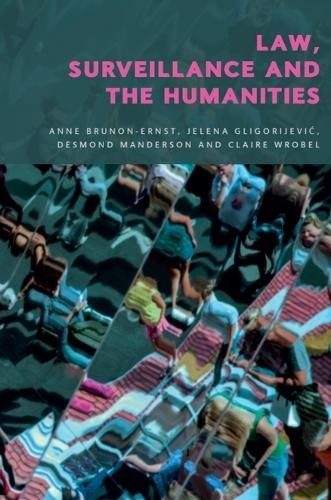
Law, surveillance and the humanities
Explores key issues such as the use and legitimacy of surveillance to address a global health crisis, the role of surveillance in the experience of indigenous peoples in post-colonial societies, how surveillance interacts with gender, race, ethnicity, and social class, and the interaction between technology, surveillance, and changing attitudes to expression. how philosophy and sociology can help to correct biases and law and politics can offer new approaches to the legitimacy, use and implications of surveillance.
Latinas/os in the United States : Changing the Face of América
This book also addresses important theoretical and methodological issues related to the study of Latinas/os and presents in-depth analyses (both quantitative and qualitative) of substantive issues relevant to this population, including migration, demographic patterns and processes, education, health, citizenship, political participation, religion, gender and sex roles, literary and cultural production, and the media. The authors seek to educate and increase awareness of the diversity that exists among the Latina/o population, and to carefully examine the social, economic, demographic, cultural, and political impacts and contributions that this growing population has had in the United States. The edited volume presents a holistic and multidisciplinary perspective of this group, and it critically documents how Latinas and Latinos have changed and will continue to change the face of América.
