



الصفحة 4
الصفحة 4

Myosins : A Superfamily of Molecular Motors
Application of state-of-the-art cellular and molecular biological, structural biological, genetic, biochemical and biophysical techniques has provided and continues to provide critical information regarding the structure–function relationship; and the cellular roles of various myosins in organisms as diverse as protozoa, yeast, plants and higher animals. The association of myosins with diseases including neurological disorders, immu- deficiencies, cardiomyopathies, hearing and vision loss testify to the importance of understanding the biochemical properties and cellular roles of myosins. The 16 chapters in this volume summarize the tremendous progress made in studying members of the myosin superfamily in recent years and offer critical insight into what future research will yield.

Museum of the future
متحف المستقبل هو معلم ثقافي وتقني يهدف إلى استكشاف مستقبل الابتكار والتكنولوجيا والتصميم ويعتبر منصة لعرض الأفكار والمشاريع التي تساهم في تشكيل المستقبل. يعرض المتحف أحدث الابتكارات في مجالات الذكاء الاصطناعي، الروبوتات والتقنيات المستدامة. يعكس المتحف رؤية مستقبلية تسعى إلى أن تكون رائدة في مجالات التكنولوجيا والابتكار.
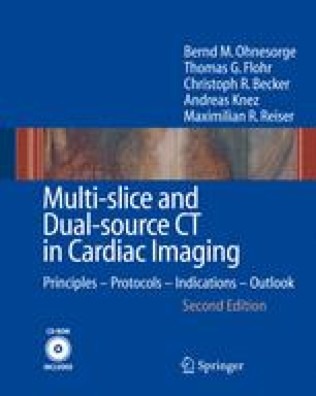
Multi-slice and Dual-source CT in Cardiac Imaging : Principles - Protocols - Indications - Outlook
Cardiac diseases, and in particular coronary artery disease, are the leading cause of death and morbidity in industrialized countries. The development of non-invasive imaging techniques for the heart and the coronary arteries has been considered a key element in improving patient care. A breakthrough in cardiac imaging using CT occurred in 1998, with the introduction of multi-slice computed tomography (CT). Since then, amazing advances in performance have taken place with scanners that acquire up to 64 slices per rotation. This book discusses the state-of-the-art developments in multi-slice CT for cardiac imaging as well as those that can be anticipated in the future

Multiple Stressors : A Challenge for the Future
This book publishes the Proceedings of the NATO Advanced Research Workshop on Multipollution Exposure and Risk Assessment, Ecotoxiclogical risk from multiple stressors covers any situation where org- isms are exposed to a combination of environmental stressors. These include physical and chemical pollutants as well as other stressors such as parasites and environmental impact (e. g. , climate change or habitat loss). The combi- tion of stressors can result in increased risk to organisms (either additive or synergistic effects) or decreased effects (protective or antagonistic effects). The multiple stressor challenge is an international, multi-disciplinary problem requiring an international, multi-disciplinary approach. The c- rent approach to multiple stressors is to examine one stressor at a time and assume additivity.
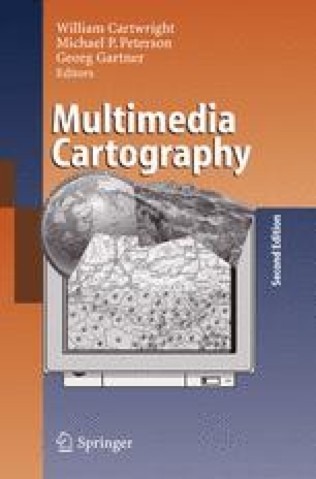
Multimedia Cartography
The various sections of this book cover the theoretical backgrounds, applications and future developments of Multimedia Cartography. This second edition of Multimedia Cartography includes updated applications areas that are Internet-focussed. Since the release of Edition 1 in 1999 the focus of the delivery of Multimedia Cartography applications now includes the World Wide Web and mobile services, as well as discrete media. New chapters in the book reflect this. As well, the book includes additional chapters on 3D applications and Virtual Reality applications.

Multigenic and Induced Systemic Resistance in Plants
This comprehensive volume consists of a series of up-to-date reviews, each incorporating current models and knowledge related to mechanisms of resistance either expressed constitutively or induced systemically in plants. Each chapter covers a topic related to the phenomenon of plant resistance to fungal and bacterial pathogens, insects, nematodes, viruses or abiotic stress in plants, as well as the application of this knowledge to protect crops now and in the future. Researchers, upper-level undergraduate and graduate students, and those teaching courses in plant physiology, entomology and plant pathology will find this volume a much needed asset.

Multifunctional Land Use : Meeting Future Demands for Landscape Goods and Services
The book contributes to the scientific basis for future land development strategies and helps supporting land use decision making on the political, planning and management level. In this publication they (i) analyse general principles of land use multifunctionality, (ii) highlight the specific requirements and approaches of implementing multifunctional land use from different disciplinary viewpoints, (iii) report on success stories of multifunctional land use from different geographic and political settings, and (iv) discuss modelling and monitoring approaches to scientifically assess the impact of mutlifunctional land use implementation.

Multi-dimensional Approaches Towards New Technology : Insights on Innovation, Patents and Competition
This open access edited book captures the complexities and conflicts arising at the interface of intellectual property rights (IPR) and competition law. To do so, it discusses four specific themes: (a) policies governing functioning of standard setting organizations (SSOs), transparency and incentivising future innovation; (b) issue of royalties for standard essential patents (SEPs) and related disputes; (c) due process principles, procedural fairness and best practices in competition law; and (d) coherence of patent policies and consonance with competition law to support innovation in new technologies.

Multidetector-Row Computed Tomography : Scanning and Contrast Protocols
Multidetector-row computed tomography (MDCT) has advanced the approach to diagnostic assessment of many pathologies and now plays an integral role in imaging of both abdominal and cardiovascular diseases. The possibility to acquire diagnostic images with shorter scan duration, longer scan ranges, and/or thinner sections, MDCT has facilitated the opening of new horizons, such as interventional MDCT and functional imaging in stroke and oncology. In addition, advanced postprocessing techniques now permit high quality volumetric imaging in combination with maximum intensity projections, volume rendering, curved planar reformations and multiplanar reconstructions. This volume gathers contributions by internationally renowned specialists in the field who, through presenting their clinical experience, provide a thorough overview not only of MDCT and its practical applications, but also of workflow management in everyday clinical practice. Focussing on scanning and contrast protocols, the current advantages and disadvantages of non-enhanced vs. enhanced MDCT are discussed, along with insights into likely future developments. The volume represents an up-to-date source of technical and practically-oriented clinical information which should prove of great benefit to all who wish to improve or consolidate their knowledge and expertise in MDCT.

Multi-Agent Programming : Languages, Platforms and Applications
Part I describes four approaches that are based on computational logic or process algebra--Jason, 3APL, IMPACT, and CLAIM/SyMPA. These programming languages have formal semantics and use heavy machinery based on formal methods, but also provide working platforms for the development of multi-agent systems. Part II presents agent languages and platforms that extend or are based on Java--JADE, Jadex, and JACKTM. Although these have no formal semantics, the languages are well documented and the platforms provide a variety of tools that have been extensively used in practice. Part III provides two significant industry specific applications--The DEFACTO System for coordinating human-agent teams for the future of disaster response, and the ARTIMIS rational dialogue agent technology. The book also features seven appendices, summarising each of the agent programming languages, hence facilitating comparison of the approaches. In particular, Appendix A describes the criteria used for comparing the agent languages and platforms.

Multiagent based Supply Chain Management
The authors takes a close look at what has been done recently in the field of supply chain management using agent technology and more specifically multiagent systems. The book contains sixteen chapters organized in four main parts; Introductory Papers; Multiagent Based Supply Chain Modeling, Collaboration and Coordination Between Agents in a Supply Chain and Multiagent Based Supply Chain Management: Applications. This book is intended as reference material for researchers, graduate students, and practitioners alike who are interested in pursuing research and development in this area, and who need for that, a comprehensive view of the existing literature, and some ideas for future directions.

MSCs and Innovative Biomaterials in Dentistry
Presents the modern concepts of mesenchymal stem cells (MSCs) and biomaterials as they pertain to the dental field. The book is organized around three main topics: MSCs biology, advanced biomaterials, and clinical applications. The chapters present basic information on stem cell biology and physiology, modern biomaterials that improve bone tissue regeneration, the biomatrices like platelet-rich fibrin (PRF) used to functionalize the biomaterials surface, the strategic and safe intraoral seats of harvesting, the new sources for MSCs, as well as the future perspectives and new challenges in these exciting fields.

MR Imaging in White Matter Diseases of the Brain and Spinal Cord
Comprises a series of comprehensive and up-to-date reviews on the use of MR imaging in these major neurological conditions. The diverse available MR techniques, such as magnetization transfer MRI, diffusion-weighted MRI, MR spectroscopy, functional MRI, cell-specific MRI, perfusion MRI, and microscopic imaging with ultra-high field MRI, offer an extraordinarily powerful means of gaining fundamental in vivo insights into disease processes. The strengths and weaknesses of all these techniques in the study of multiple sclerosis and other relevant diseases are extensively considered. After an introductory section on neuroimaging technology, subsequent sections address disorders of myelination, demyelinating diseases, immune-mediated disorders, and white matter disorders related to aging and other conditions. This book provides a valuable summary of the state of the art in the field, and defines important areas for future research.

Motivational Aspects of Prejudice and Racism
Motivational Aspects of Prejudice and Racism examines the cognitive processes as well as the motivational forces that create and sustain social hierarchies based on racial categories. A panel of top scholars analyzes the subtle and explicit manifestations of bias within and across racial groups, while refuting the idea that race has lost its power as a social concept. Chapter authors review the evolution of the psychological understanding of racism and its effects, pinpoint emerging trends in racism research, and illuminate the experience of prejudice from minority group members’ perspectives. Well-known psychosocial phenomena as the cross-race identification effect, social identity, and majority culture members' conflicting attitudes regarding race, are explored, with the underlying ideologies that nurture them. The volume concludes with a realistic assessment of the future, and possible elimination, of racism. Readers are challenged to re-think self and social identities and self-concepts—particularly relevant ideas as America grows more diverse, and potentially more divided.

Molluscs : From Chemo-ecological Study to Biotechnological Application
Marine molluscs are very promising candidates for a wide range of biotechnological applications. For example, they possess analgesic drugs more potent than morphine and very effective anticancer agents. The present book gives an up-to-date overview of the main classes of bioactive compounds from molluscs, moving from ecological observations, to chemical characterization, to biosynthesis, to large-scale synthesis, and to pharmacological applications. A truly outstanding international panel of experts from all continents provides complete coverage of the most stimulating topics related to molluscs. This knowledge of their history and current studies provides an open door to the future.

Molecular Targeting in Oncology
In Molecular Targeting in Oncology, authors present an overview of the development of targeted therapies for the treatment of cancer with an emphasis on clinical application. The volume covers the complexity of the rapidly developing area of targeted therapies for the treatment of patients with cancer and is structured in a way so readers may begin with chapters that most interest them and work through the rest of the chapters in the order of their choice. The volume is divided into five sections that cover the most important elements of drug development. The first section focuses on approaches using targeted therapies to inhibit cell growth. The second section describes how clinicians are evaluating targeted therapies in specific organ systems. The third section illustrates how various classes of pharmacologic and immunologic agents are developed for individual molecular targets. The fourth section details new drugs that have novel mechanisms of action. The final section looks to the future of targeted therapeutics and includes chapters on appropriate patient selection, use of combination therapy, dealing with tumor cell resistance, and more. Comprehensive and cutting-edge, Molecular Targeting in Oncology is an essential reference for those working in the field.

Molecular Markers of Brain Tumor Cells : Implications for Diagnosis, Prognosis and Anti-Neoplastic Biological Therapy
Childhood brain tumors are a diverse group of diseases characterized by the abnormal growth of tissue contained within the skull. Other than leukemia and lymphoma, brain tumors are the most common type of neoplasms that occur in children. The leading cause of death from childhood neoplasms among persons up to 19 years is brain tumors. As such, this book is a review of the most recent molecular biological research concerning brain tumors with references and comparisons to a variety of neoplastic disorders. The book then uses this information to foreshadow the direction that future anti-neoplastic therapies will take. Because of the wide spectrum of the objectives of the book, any individual involved in cancer research will greatly benefit from the work. Histopathologists, neuropathologists, clinical and research oncologists, and medical students will find this book to be an invaluable resource as a reference guide. Patients and their families will also find the book useful as it offers a comprehensive update on new, non-classical therapeutic modality options and contains a detailed description and analysis of brain tumors. Such an endeavor has yet to be undertaken by any other book and may prove to be the most comprehensive book on brain tumors thus far.

Molecular Marker Systems in Plant Breeding and Crop Improvement
Successful release of new and better crop varieties increasingly requires genomics and molecular biology. This volume presents basic information on plant molecular marker techniques from marker location up to gene cloning. The text includes a description of technical approaches in genome analysis such as comparison of marker systems, positional cloning, and array techniques in 19 crop plants. A special section focuses on converting this knowledge into general and specific breeding strategies, particularly in relation to biotic stress. Theory and practice of marker assisted selection for QTL, gene pyramiding and the future of MAS are summarized and discussed for maize, wheat, and soybean. Furthermore, approaches in silviculture on the examples of Fagus, Populus, Eucalyptus, Picea and Abies are presented. The volume ends with a comprehensive review of the patents relevant for using molecular markers and marker assisted selection.
Molecular genetics, structures, mechanisms, and functions : Principles of gene manipulation and genomics ; Vol.1
Provides an overview of the future of genetic engineering and delves into the role of biotechnology and its applications in genetic engineering. It discusses the tools of recombinant technology, which have brought about revolution in our understanding of various complex biological phenomena. Chapters cover mutagenesis, construction, and sequencing of DNA libraries along with applications of genetic engineering for improving health, preventing genetic diseases, enhancing food resources, managing environmental bioremediation, and more. Topics include genetic engineering tools for restriction enzymes and vectors, gene and cell division, mutation detection and screening in plants, population genetics, sexuality in bacteria, and more. Several chapters focus on the tools of recombinant technology, such as restriction enzymes, vectors, etc., that have paved the way for creating organisms of choice and opened new horizons in the field of medicine, agriculture, and industry for human welfare.

Molecular Gels : Materials with Self-Assembled Fibrillar Networks
Molecular gels and fibrillar networks – a comprehensive guide to experiment and theory Molecular Gels: Materials with Self-Assembled Fibrillar Networks provides a comprehensive treatise on gelators, especially low molecular-mass gelators (LMOGs), and the properties of their gels. The structures and modes of formation of the self-assembled fibrillar networks (SAFINs) that immobilize the liquid components of the gels are discussed experimentally and theoretically. The spectroscopic, rheological, and structural features of the different classes of LMOGs are also presented. Many examples of the application of the principal analytical techniques for investigation of molecular gels (including SANS, SAXS, WAXS, UV-vis absorption, fluorescence and CD spectroscopies, scanning electron, transmission electron and optical microscopies, and molecular modeling) are presented didactically and in-depth, as are several of the theories of the stages of aggregation of individual LMOG molecules leading to SAFINs. Several actual and potential applications of molecular gels in disparate fields (from silicate replication of nanostructures to art conservation) are described. Special emphasis is placed on perspectives for future developments.
