



الصفحة 4
الصفحة 4
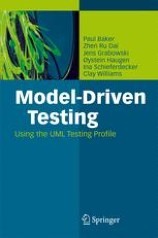
Model-Driven Testing : Using the UML Testing Profile
Written by the original members of this standardization group, this book shows you how to use UML to test complex software systems. The authors introduce UTP step-by-step, using a case study that illustrates how UTP can be used for test modeling and test specification. You’ll learn how UTP concepts can be used for functional and non-functional testing, with example applications and best practices for user-interfaces and service oriented architectures. In addition, the authors demonstrate how to apply UTP using frameworks like TTCN-3 and the JUnit test framework for Java.
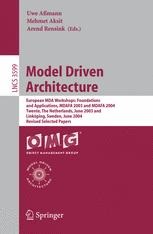
Model Driven Architecture ; European MDA Workshops : Foundations and Applications, MDAFA 2003 and MDAFA 2004, Twente, The Netherlands, June 26-27, 2003, and Linköping, Sweden, June 10-11, 2004, Revised Selected Papers
Model-Driven Architecture (MDA) is an initiative proposedby the Object M- agement Group (OMG) for platform-generic software development. MDA s- arates the specification of system functionality from the implementation on a specific platform. It is aimed at making software assets more resilient to changes caused by emerging technologies. While stressing the importance of modeling, the MDA initiative covers a wide spectrum of research areas. Further efforts are required to bring them into a coherent approach based on open standards and supported by matured tools and techniques. This volume contains the selected papers of two workshops on “Model-Driven Architecture – Foundations and Applications” (MDAFA): MDAFA 2003 held at the University of Twente, Twente, The Netherlands, June 26–27, 2003, and MDAFA 2004 held at Linko ¨ping University, Link¨ oping, Sweden, June 10–11, 2004. The goal of the workshops was to understand the foundations of MDA, to share experience in applying MDA techniques and tools, and to outline future research directions. The workshops organizers encouraged authors of accepted papers to re-submit their papers to a post-workshop reviewing process; 15 of these papers were accepted to appear in this volume on MDA.
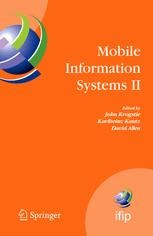
Mobile Information Systems II ; IFIP Working Conference on Mobile Information Systems, MOBIS 2005, Leeds, UK, December 6-7, 2005
Contains the proceedings of the second IFIP TC8 Working Conference on Mobile Information Systems which was held in December 2005 in Leeds, UK and sponsored by the International Federation of Information Processing (IFIP). Mobile Information Systems II aims to: · Clarify differences and similarities between the development of mobile and more traditional information systems. · Investigate the organizational impact of mobile information systems. · Investigate the 'e to m shift' , for example in m-Commerce relative to e-Commerce. · Investigate mobile commerce applications combined with the advantages of mobile communications technologies, the drivers of which have been identified as ubiquity, accessibility, security, convenience, localization, instant connectivity, and personalization. · Evaluate existing and newly developed approaches for the analysis, design, implementation, and evolution of mobile information systems. · Investigate technical issues and the constraints they impose on mobile information systems functionalities and design.
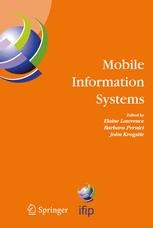
Mobile Information Systems ; Vol. 158 : IFIP TC 8 Working Conference on Mobile Information Systems (MOBIS) 15-17 September 2004, Oslo, Norway
This book contains the proceedings of the IFIP TC8 Working Conference on Mobile Information Systems, which was held in September 2004 in Oslo, Norway and sponsored by the International Federation for Information Processing (IFIP). Mobile Information Systems aims to: Clarify differences and similarities between the development of mobile vs. more traditional information system. Investigate the organizational impact of mobile information systems Investigate mCommerce relative to eCommerce Investigate mobile commerce applications combined with the advantages of mobile communications technologies, the drivers of which have been identified as ubiquity, reachability, security, convenience, localization, instant connectivity and personalization. Evaluate existing and newly developed approaches for analysis, design, implementation, and evolution of mobile information systems. Investigate technical issues and the constraints they pose on mobile information systems functionalities and design

Microsoft Visual C# Step by Step
Guide to Microsoft Visual C# fundamentals with Visual Studio. Expand your expertiseand teach yourself the fundamentals of programming with the latest version of Visual C# with Visual Studio. If you are an experienced software developer, you'll get all the guidance, exercises, and code you need to start building responsive, scalable, cloud-connected applications that can run almost anywhere. Discover how to: Quickly start creating Visual C# code and projects with Visual Studio Work with variables, operators, expressions, methods, and program flow Build more robust apps with error, exception, and resource management Spot problems fast with the Visual Studio debugger Make the most of improvements to C# methods, parameters, and switch statements Master the C# object model, and create your own functional data structures Leverage advanced properties, indexers, generics, and collection classes Create Windows 10 apps that share data, collaborate, and use cloud services Integrate Cortana to voice-enable your applications Perform complex queries over object collections with LINQ

Microorganisms in soils : Roles in genesis and functions
The following key topics are covered: Microorganisms in bioerosion, humification, mineralization and soil aggregation; Microbial energetics and microbes in biogeochemical processes such as carbon and nitrogen cycles and phosphorus bio-availability; Interactions in the mycorrhizosphere, e.g. between mycorrhizal fungi and bacteria; Impact of microbes on plant nutrient cycling and the possible effects of transgenic rhizospheres on soil fungi; Functions of microbes in specific soil compartments such as soil surface or toxic metal polluted soils; Regulation of microbial activities in functional domains that are influenced by biotic or abiotic factors; Use of marker genes and isotopes as examples for modern techniques in soil microbiology.

Micronutrients and macronutrients as nutraceuticals
Explains in detail the properties of micronutrients and macronutrients and their diverse uses as nutraceuticals for their beneficial properties, such as their antioxidant activity and immunity-boosting properties and how they can be incorporated into the human diet for optimum health, for growing beneficial bacteria in the gut, and inhibition of pathogens. Interestingly, the authors look at how disease-promoting habits often unfold in childhood, even prenatally, and employing nutrigenomics early on goes a long way toward curbing these chronic diseases later on in life.

Micromanufacturing and Nanotechnology
Micromanufacturing and Nanotechnology is an emerging technological infrastructure and process that involves manufacturing of products and systems at the micro and nano scale levels. Development of micro and nano scale products and systems are underway due to the reason that they are faster, accurate and less expensive. Moreover, the basic functional units of such systems possesses remarkable mechanical, electronic and chemical properties compared to the macro-scale counterparts. Since this infrastructure has already become the prefered choice for the design and development of next generation products and systems it is now necessary to disseminate the conceptual and practical phenomenological know-how in a broader context. This book incorporates a selection of research and development papers. Its scope is the history and background, underlynig design methodology, application domains and recent developments.

Microlithography/Molecular Imprinting
The series presents critical reviews of the present and future trends in polymer and biopolymer science including chemistry, physical chemistry, physics and material science. It is addressed to all scientists at universities and in industry who wish to keep abreast of advances in the topics covered.Molecular recognition is central to how biological systems work. The molecular imprinting technique is a valuable polymerisation method for preparing synthetic materials able to mimic the molecular recognition phenomena present in living systems. A molecule that acts as a template is associated with functional monomers to form a complex by means of covalent linkages or noncovalent interactions. A polymerisation-crosslinking reaction is then performed around this complex. Upon removal of the template species, functionalised cavities, that have memorized the special features and bonding preferences of the template, are left inside the polymer network.

Microflows and Nanoflows : Fundamentals and Simulation
This book provides a comprehensive summary of these changes describing fluid flow in micro and nano configurations. Where as in their previous book entitled Microflows: Fundamentals and Simulation. In this new book they discuss length scales from angstroms to microns (and beyond). While still maintaining the emphasis on fundamental concepts with a mix of semianalytical, experimental, and numerical results, this book outlines their relevance to modeling and analyzing functional devices.

Microcirculation in Cardiovascular Diseases
This book offers an extensive review of the most recent data on the pathophysiological role of structural and functional alterations in the microcirculation, particularly focusing on hypertension and diabetes. It covers several relevant and innovative aspects, including the possible mechanisms involved in the development of microvascular remodeling and rarefaction, the technical approaches available for the detection of microvascular alterations, including non-invasive evaluations, the prognostic role of changes in small resistance artery structure, the possibility of preventing or regressing such alterations with appropriate treatment, and the potential clinical advantages of such intervention.

Microbial nutraceuticals : Products and processes
Discussion of the recent advances in the application of microbial nutraceuticals and their implementation in the health, food, and agriculture sectors. The book begins with an overview of microbial nutraceuticals before moving on to discussions of more specific topics, including microbial cell factories for the production of essential amino acids, microbial production of dietary short-chain fatty acids, and microbial sources for bioactive peptides conferring health benefits.

Metodi Matematici della Fisica = Mathematical Methods of Physics
This text draws its origin from my old notes, prepared for the course of Mathematical Methods of Physics and gradually arranged, refined and updated over the course of many years of teaching. The aim has always been to provide as simple and direct a presentation as possible of the mathematical methods relevant to Physics: Fourier series, Hilbert spaces, linear operators, functions of complex variables, Fourier and Laplace transforms, distributions. In addition to these basic topics, a brief introduction to the first notions of group theory, Lie algebras and symmetries in view of their applications to Physics is presented in the Appendix.

Methods of nonlinear analysis : Applications to differential equations
In this book, fundamental methods of nonlinear analysis are introduced, discussed and illustrated in straightforward examples. Every method considered is motivated and explained in its general form, but presented in an abstract framework as comprehensively as possible. Applications and generalizations are shown. In particular, a large number of methods is applied to boundary value problems for partial differential equations.
Methods in Nonlinear Analysis
Nonlinear analysis has developed rapidly in the last three decades. Theories, techniques and results in many different branches of mathematics have been combined in solving nonlinear problems. This book collects and reorganizes up-to-date materials scattered throughout the literature from the methodology point of view, and presents them in a systematic way. It contains the basic theories and methods with many interesting problems in partial and ordinary differential equations, differential geometry and mathematical physics as applications.There are five chapters that cover linearization, fixed-point theorems based on compactness and convexity, topological degree theory, minimization and topological variational methods. Each chapter combines abstract, classical and applied analysis. Particular topics included are bifurcation, perturbation, gluing technique, transversality, Nash–Moser technique, Ky Fan's inequality and Nash equilibrium in game theory, setvalued mappings and differential equations with discontinuous nonlinear terms, multiple solutions in partial differential equations, direct method, quasiconvexity and relaxation, Young measure, compensation compactness method and Hardy space, concentration compactness and best constants, Ekeland variational principle, infinite-dimensional Morse theory, minimax method, index theory with group action, and Conley index theory.

Metathesis Polymerization
Clearly illustrated and demonstrated by the entire series of Advances in Polymer Science., the area of polymer science is a rapidly developing and growing field, strongly influencing other areas of chemistry. Among other polymerization techniques, those based on metathesis polymerization have experienced significant progress. With a rapidly developing armory of initiators on hand, one is now capable of polymerizing various types of functional monomers by metathesis-based techniques.The latest developments in all these areas of metathesis-based polymerizations are summarized in this book. It is designed to attract equally students and advanced scientists working in the areas of polymer science, physical, and organometallic chemistry by providing both extensive background information and up-to-date interdisciplinary knowledge. Special consideration has been given to the literature sections in order to facilitate further reading.

Metal Oxide Nanoparticles : Formation, Functional Properties, and Interfaces ; 2 Volume Set
Metal oxide nanoparticles are integral to a wide range of natural and technological processes—from mineral transformation to electronics. Additionally, the fields of engineering, electronics, energy technology, and electronics all utilize metal oxide nanoparticle powders. Metal Oxide Nanoparticles: Formation, Functional Properties, and Interfaces presents readers with the most relevant synthesis and formulation approaches for using metal oxide nanoparticles as functional materials. It covers common processing routes and the assessment of physical and chemical particle properties through comprehensive and complementary characterization methods.

Metal Catalysed Reactions in Ionic Liquids
Metal Catalysed Reactions in Ionic Liquids is the first non-edited book on the subject of metal catalysed reactions in ionic liquids and covers the literature from its origins until early 2005.The book begins with a general introduction to the field of biphasic/multiphasic catalysis and describes the synthesis, functionalisation and fundamental properties of ionic liquids relevant to catalysis.This book is an invaluable resource for all those working in catalysis, green chemistry, and advanced synthetic methods,

Metabolomics : A powerful tool in systems biology
This book brings together the latest results in the field of metabolomics. It comprehensively presents the current state of the metabolomics field by underscoring experimental methods, analysis techniques, standardization practices, and advances in specific model systems. As a result, it significantly broadens our perspective on the principles and strategies underpinning this emerging field.

Men’s care center
"سين" مركزٌ للعافية والاسترخاء، مصمم بمزيج فريد من العناصر الطبيعية والهندسة المعمارية الحديثة ليمنح الزوار تجربة حسية متكاملة. يدمج المشروع المساحات الخضراء الداخلية والإضاءة الهادئة وخطوط التصميم المعاصرة لخلق بيئة فاخرة وهادئة. تشمل المساحات الرئيسية الحديقة الداخلية، والحمام التركي التقليدي، وغرف كبار الشخصيات، ومنطقة الاستقبال - جميعها مُرتبة بعناية لتعزيز الهدوء والتوازن. يركز التصميم على التفاصيل المعمارية والوظيفية، موفرًا للضيوف ملاذًا من ضغوط الحياة اليومية. خضعت التصاميم الداخلية والخارجية لدراسة دقيقة لضمان تجربة راقية وشاملة. “Sén” is a wellness and re laxation center designed with a unique blend of natural elements and modern architecture to provide visitors with a complete sensor experience. The project integrates indoor greenery, calming lighting, and con temporary design lines to create a luxurious and peaceful environment. Key spaces include the indoor garden, traditional hammam, VI P rooms, and reception area — all carefully arranged to promote tranquility and balance. The design focuses on architectural and functional details, offering guests a retreat from the stresses of everyday life. Both interior and exterior designs were carefully studied to ensure a refined and holistic experience.
