



الصفحة 4
الصفحة 4

Inquiry-Based Learning – Undergraduate Research : The German Multidisciplinary Experience
This book provides a systematic overview of experiences with Inquiry-Based Learning (IBL) and undergraduate research (UR) in German universities, covering both research universities (Universitäten) and universities of applied sciences (Fachhochschulen). Divided into three parts, the book starts with the principles and common practices of IBL/UR at all universities. Part Two discusses the implementation of IBL/UR for twenty-one individual disciplines, ranging from architecture to theology. Part Three discusses the potential of IBL/UR in relation to several topics including diversity, digitalisation, different forms of universities, and the national job market. The book summarises the project of the German network of UR,

Inorganic and Organometallic Polymers
This book has its origins in courses taught by the author to various und- graduate and graduate students at the Indian Institute of Technology, K- pur, India. The diversity of inorganic chemistry and its impact on polymer chemistry has been profound. This subject matter has grown considerably in the last decade and the need to present it in a coherent manner to young minds is a pedagogic challenge. The aim of this book is to present to the students an introduction to the developments in Inorganic and - ganometallic polymers. This book is divided into eight chapters. Chapter 1 provides a general overview on the challenges of Inorganic polymer synthesis. This is f- lowed by a survey of organic polymers and also includes some basic f- tures of polymers. Chapters 3-8 deal with prominent families of inorganic and organometallic polymers. Although the target group of this book is the undergraduate and graduate students of chemistry, chemical engineering and materials science it is also hoped that chemists and related scientists in industry would find this book useful.

Innovative comparative methods for policy analysis : Beyond the quantitative-qualitative divide
Innovative Comparative Methods for Policy Analysis aims to provide a decisive push to the further development and application of innovative and specific comparative methods for the improvement of policy analysis. To take on this challenge, this volume brings together methodologists and specialists from a broad range of social scientific disciplines and policy fields.

Informatics in the Future ; Proceedings of the 11th European Computer Science Summit (ECSS 2015), Vienna, October 2015
This volume discusses the prospects and evolution of informatics (or computer science), which has become the operating system of our world, and is today seen as the science of the information society. Its artifacts change the world and its methods have an impact on how we think about and perceive the world. Classical computer science is built on the notion of an “abstract” machine, which can be instantiated by software to any concrete problem-solving machine, changing its behavior in response to external and internal states, allowing for self-reflective and “intelligent” behavior. However, current phenomena such as the Web, cyber physical systems or the Internet of Things show us that we might already have gone beyond this idea, exemplifying a metamorphosis from a stand-alone calculator to the global operating system of our society.

Inevitable Aging? : Contributions to Evolutionary-Demographic Theory
Aging is inevitable: this is gerontological dogma. And humans do inevitably grow old, which is probably why it seems so unlikely to us that other forms of life could escape aging. Escaping aging is not escaping death. Death is an inherent part of life, and it can strike any time. But the question is whether death necessarily becomes more likely as life proceeds. And it does not. The theoretical results in this monograph indicate that life provides alternative strategies. While some organisms will deteriorate over adult ages, for others mortality appears to fall or remain constant, at least over an extended period of life after reproductive maturity. This is empirically observed especially for species that keep on growing during adult ages. Perhaps the diversity of aging matches the diversity of life. My thesis, the central insight of this monograph, is: to deeply understand why some species age it is necessary to understand why other species do not.

Indian Agriculture Towards 2030 : Pathways for Enhancing Farmers’ Income, Nutritional Security and Sustainable Food and Farm Systems
The book comprises of ten contributions. Apart from the overview chapter on transformational change and the concluding chapter on pathways for 2030, there are eight thematic chapters on topics such as transforming Indian agriculture, dietary diversity for nutritive and safe food; climate crisis and risk management; water in agriculture; pests, pandemics, preparedness and biosecurity natural farming; agroecology and biodiverse futures; science, technology and innovation in agriculture; and structural reforms and governance.

Increasing climate variability and change : Reducing the vulnerability of agriculture and forestry
One of the major challenges facing humankind is to provide an equitable standard of living for this and future generations: adequate food, water and energy, safe shelter and a healthy environment. Human-induced climate change, and increasing climate variability, as well as other global environmental issues such as land degradation and loss of biological diversity, threaten our ability to meet these basic human needs. It is undisputed that the last two decades have been the warmest this century, and likely to be the warmest for the last 1000 years, sea level is rising, rain and snowfall patterns are changing.

In Vitro Culture of Mycorrhizas
biologists have made important progress in understanding better the functioning of AM fungi. An in vitro technique has been developed using mycorrhizal root organ cultures, which made it possible to investigate the genetics, cell biology and physiology of AM fungi. We can now be objective enough to critically evaluate the impacts the in vitro technique has had to improve our knowledge on mycorrhizal symbiosis.

Implementing Strategic Environmental Assessment
More countries are now using Strategic Environmental Assessment (SEA) than ever before. This timely and comprehensive Handbook describes the implementation of SEA in 18 countries around the world, as well as a critical analysis of different SEA methodologies. The Handbook starts by introducing key SEA principles and the legal requirements of the new European SEA Directive (which became law in 2004). It then describes the implementation of SEA in 11 European Union countries, as well as the USA, Canada and New Zealand. This is contrasted with SEA requirements of four developing countries. The Handbook explores public participation issues and the wide-range of SEA methodologies used in terms of resources (soils, water and biodiversity) and sectors of activity (transport, agriculture, waste management and industry). The Handbook concludes with a discussion on best practice, capacity building and the future of SEA.

Immunogenetics of Autoimmune Disease
Utoimmunity is the downstream outcome of a rather extensive and coordinated series of events that include loss of self-tolerance, peripheral lymphocyte Aactivation, disruption of the blood-systems barriers, cellular infiltration into the target organs and local inflammation. Cytokines, adhesion molecules, growth factors, antibodies, and other molecules induce and regulate critical cell functions that perpetuate inflammation, leading to tissue injury and clinical phenotype. The nature and intensity of this response as well as the physiological ability to restore homeostasis are to a large extent conditioned by the unique amino acid sequences that define allelic variants on each of the numerous participating mol ecules. Therefore, the coding genes in their germline configuration play a primary role in determining who is at risk for developing such disorders, how the disease progresses, and how someone responds to therapy. Although genetic components in these diseases are clearly present, the lack of obvious and homogeneous modes of transmission has slowed progress by prevent ing the full exploitation of classical genetic epidemiologic techniques. Furthermore, autoimmune diseases are characterized by modest disease risk heritability and m- tifaceted interactions with environmental influences. Yet, several recent discoveries have dramatically changed our ability to examine genetic variation as it relates to human disease. In addition to the development of large-scale laboratory methods and tools to efficiently recognize and catalog DNA diversity, over the past few years there has been real progress in the application of new analytical and data-manage ment approaches

Immunity boosting medicinal plants of the Western Himalayas
Presents a comprehensive guide to traditional immunity-boosting medicinal plants of the Himalayas, their traditional uses, phytochemistry, pharmacology, diversity, conversation, biotechnology, toxicology, as well as future prospective. All the chapters cover the latest advances in ethnobotany, phytochemistry, biochemistry, and biotechnology.

Immune receptors : Methods and protocols
Explores immune cell receptors that are used in the detection of microbes, either by binding directly to non-self molecules or through indirectly sensing microbe-associated cellular disturbances. The covers methods for studying receptor-ligand interactions at both molecular and cellular levels; methods to create and characterize novel antibody reagents; and methods to characterize the molecular processes that lead to adaptive receptor maturation. This book also contains chapters that look at high-throughput strategies that describe the diversity of immune receptors and cells. Written in the highly successful Methods in Molecular Biology series format, chapters include introductions to their respective topics, lists of the necessary materials and reagents, step-by-step, readily reproducible laboratory protocols, and tips on troubleshooting and avoiding known pitfalls.

Human-Nature Interactions : Exploring Nature’s Values Across Landscapes
Highlights how humans value nature, the opportunities and challenges in changing socio-ecological systems / Provides insights into concepts and methods to study human-nature relationships, designed for a broad audience / Focus on integrative approaches exploring interactions across different scales, intensity levels and landscapes

Human Resource Management in Consulting Firms
This book presents insider reports from high-profile international consultancies which allow practitioners, scholars and graduates to gain an authentic insight into the people management in business consulting. Additionally to the overview of existing hr systems, the book provides details of practices dealing with issues such as value oriented corporate culture, gender diversity management, employability, leadership development, knowledge management and employer branding.

Human resource management : An update
Human resource management - an update deals with the major theoretical and practical issues of managing people in different kinds of businesses in different countries around the world. chapters address such topics as theoretical bases for human resource management in the new work age, performance management and organizational management, leadership and job analysis, diversity, work–life balance, and sexual harassment, among others.

Human Exploitation and Biodiversity Conservation
The sustainable use of biodiversity is one of the three key objectives of the 1992 "Convention on Biological Diversity". To achieve this, sound conservation practice has to be recognized as beneficial and implemented by all who access, or use it – from subsistence farmers to skiers and pharmaceutical bioprospectors. At the same time, indigenous peoples necessarily utilize enormous numbers of plants, fungi, and fish, particularly for foods and medicines. This book gathers together a wide range of contributions addressing diverse aspects of front-line human involvement in biodiversity exploitation and conservation. Its scope is broad, the organisms explored ranging from birds, invertebrates and mammals – both terrestrial and aquatic – to crops and medicinal plants. Meanwhile, the issues addressed include land use changes, the importance of gardens, hedges and green lanes, housing developments, hunting, invasive species, local community involvement, sacred groves, socioeconomic factors and trade.

Healthy Minds in the Twentieth Century : In and Beyond the Asylum
This book contributes a new dimension to the study of mental health and psychiatry in the twentieth century. It takes the present literature beyond the ‘asylum and after’ paradigm to explore the multitude of spaces that have been permeated by concerns about mental well-being and illness.
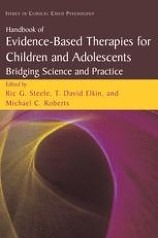
Handbook of Evidence-Based Therapies for Children and Adolescents : Bridging Science and Practice
Growing numbers of young people—some 10% to 20% of school-age populations—have mental health problems requiring intervention, and current policy initiatives identify evidence-based therapies as the most effective and relevant forms of treatment. By reviewing evidence-based treatments (EBTs) across a wide spectrum of conditions, the Handbook of Evidence-Based Therapies for Children and Adolescents: Bridging Science and Practice closes the gaps between children’s needs and services as well as those between research, training, and practice, Several EBT options, both proved and promising, are offered for each covered disorder and are bolstered by case examples, tables, and reference lists. Features include chapters on implementation issues such as diversity, family treatment, assessment strategies, and community settings, and step-by-step guidance for the researcher looking to gather empirical support for therapies.

Handbook of education policy studies : School/University, curriculum, and assessment ; Vol.2
This handbook brings together the latest research from a wide range of internationally influential scholars to analyze educational policy research from international, historical and interdisciplinary perspectives. By effectively breaking through the boundaries between countries and disciplines, it presents new theories, techniques and methods for contemporary education policy, and illustrates the educational policies and educational reform practices that various countries have introduced to meet the challenges of continuous change.

Handbook of Diabetes Management
Over 18 million Americans are afflicted. Nearly as many are at risk. Diabetic conditions account for one-fifth of the nation’s chronic health care burden. A public health crisis of this magnitude demands professional resources that apply evidence-based practical knowledge and anticipate the challenges that lie ahead. The Handbook of Diabetes Management is one such reference, addressing the complexity of the disease, the diversity of the populations it affects, and the continued improvement of care systems.
