



الصفحة 4
الصفحة 4

Interactive drink machine company - (IDM company)
This project is a continuation of our previous project for a hot drink machine by adding the capability for electronic payment and developing the company's management system and making the hot drink machine linkable with the company's server via the Internet and more interactive with the customer through the development of this project according to several aspects. On the software level: An integrated system that allows recording customer requests and executed operations, in addition to information about users, including their personal information, current balance, and executed requests. On the level of employees, their personal information, their work tasks and the operations carried out by them (Receipt and delivery of materials and servicing of machines).

Intelligent Interactive multimedia systems for e-healthcare applications
It looks at how the latest technologies (artificial intelligence, deep learning, machine learning, big data, IoT, smart device, etc.) help to manage health data, diagnose health issues, monitor treatment, predict pandemic diseases, and more. It covers several important applications of multimedia in healthcare, including for data visualization purposes, for computer vision for elder healthcare monitoring, for detection of lung nodules, for health monitoring and management systems using machine learning techniques, and for fusion applications in medical image processing. The book goes into detail on the various methods and techniques for supporting multimedia systems for e-healthcare.

Integrated Urban Water Resources Management
Growing populations and rising standards of living exert stress on water supply and the quality of drinking water. In wastewater management, new challenges are caused by new chemicals of concern, including endocrine disrupters, pharmaceuticals, hormones, and personal care products, which often pass through wastewater treatment plants unabated, but may cause serious impacts on receiving aquatic ecosystems. Advanced wastewater treatment leads to production of biosolids, which are processed in various ways, including on-land applications in agriculture. Municipal effluents, combined with increasing withdrawals of water, lead to the worsening of receiving water quality. Expert opinions indicate that the only way to deal with the current urban water management dilemmas is by integrated management and innovative delivery of water services. This book presents important aspects of Challenges in Management of Urban Water Resources, Challenges in Urban Water Supply, Urban Drainage and Water Bodies, Wastewater Treatment and Security, and Wastewater Treatment and Reuse.

Integrated pharmaceutics : Applied preformulation, product design, and regulatory science
Provides a comprehensive introduction to the creation and manufacture of effective dosage forms for drug delivery. It presents its subject following the principles of physical pharmacy, product design, and drug regulations. This tripartite structure allows readers to move from theory to practice, beginning from a firm foundation ...

Integrated diagnostics and theranostics of thyroid diseases
Provides basic concepts on Integrated Diagnostics and Theranostics with special emphasis on different human thyroid diseases. Thyroid diseases are increasingly detected (incidentally in many cases) but are clinically negligible in a significant proportion of patients. Accordingly, it is urgent to move from the simple disease detection to a reliable disease characterization in order to concentrate efforts on patients in need of tailored disease management.

Innovative dosage forms : Design and development at early stage
Provides information that is essential for the drug development effort Presents the latest advances in the field and describes in detail innovative formulations, such as nanosuspensions, micelles, and cocrystals Describes current approaches in early pre-formulation to achieve the best in vivo results Addresses regulatory and safety aspects, which are key considerations for pharmaceutical companies Includes case studies from recent drug development programs to illustrate the practical challenges of preformulation design

Innovative bioceramics in translational medicine II : Surgical applications
Highlights the latest advances in innovative bioceramics applied in the highly interdisciplinary area referred to as “translational medicine”. This volume predominantly written by surgeons in the fields of craniomaxillofacial, orthopedics, and spinal surgery, examines the translation of innovative bioceramics and bioceramics-based composite from the laboratory to a personalized surgical environment for the repair of damaged and diseased bone tissues.

Informatics for the Clinical Laboratory : A Practical Guide
This series is directed to healthcare professionals who are leading the tra- formation of health care by using information and knowledge. Launched in 1988 as Computers in Health Care, the series offers a broad range of titles: some addressed to specific professions such as nursing, medicine, and health administration; others to special areas of practice such as trauma and radi- ogy. Still other books in the series focus on interdisciplinary issues, such as the computer-based patient record, electronic health records, and networked healthcare systems. Renamed Health Informatics in 1998 to reflect the rapid evolution in the discipline now known as health informatics, the series will continue to add titles that contribute to the evolution of the field. In the series, eminent - perts, serving as editors or authors, offer their accounts of innovations in health informatics. Increasingly, these accounts go beyond hardware and so- ware to address the role of information in influencing the transformation of healthcare delivery systems around the world. The series also increasingly focuses on “peopleware” and the organizational, behavioral, and societal changes that accompany the diffusion of information technology in health services environments.

Inflammation and natural products ; 1st ed.
Brings together research in the area of the natural products and their anti-inflammatory action in medical, nutraceutical and food products, addressing specific chronic inflammatory diseases like cancer and the mechanistic aspects of the mode of action of some key natural products. Inflammation is a complicated process, driven by infection or injury or genetic changes, which results in triggering signalling cascades, activation of transcription factors, gene expression, increased levels of inflammatory enzymes, and release of various oxidants and pro-inflammatory molecules in inflammatory cells. Excessive oxidants and inflammatory mediators have a harmful effect on normal tissue, including toxicity, loss of barrier function, abnormal cell proliferation, inhibiting normal function of tissues and organs and finally leading to systemic disorders. The emerging development of natural product formulations utilizing the unique anti-inflammatory compounds such as polyphenols, polysaccharides, terpenes, fatty acids, proteins and several other bioactive components has shown notable successes.

Infection control in the dental office in the era of COVID-19
Discusses the treatment of dental patients in the post-COVID pandemic years and the required compliance with recommended infection control practices to ensure the safe delivery of oral health care.

In Vitro Drug Release Testing of Special Dosage Forms
Covers the in vitro release testing of: lipid based oral formulations; chewable oral drug products; injectables; drug eluting stents; inhalation products; transdermal formulations; topical formulations; vaginal and rectal delivery systems and ophthalmics. The book concludes with a look at regulatory aspects. Covers both oral and non-oral dosage forms Describes current regulatory conditions for in vitro drug release testing Features contributions from well respected global experts in dissolution testing

In situ NMR Methods in Catalysis
In Situ NMR Methods in Catalysis is part of the Springer series Topics in Current Chemistry. The book contains five chapters and a helpful author and subject index. Chapter by chapter, the individual contributions are well written and structured . The book presents an excellent resource for the reader who is interested in a delivery of topics related to homogenous catalysis, some of which can be investigated by NMR.This will be a must-have work for scientists and practitioners in any field related to modern chemical research. It will also be highly useful for many workers in industry who are required to keep up-to-date with the latest news in chemistry and applied chemistry. So much is covered here in critical review, from the present position of developing research to future trends.

Improvement in the Quality of Delivery of Electrical Energy using Power Electronics Systems
Electrical power is ubiquitous and continuously increasing in demand, with the result that power systems often operate close to their stability and thermal ratings. In order to tackle this problem, extraordinary changes are now taking place in the electrical supply industry worldwide, and conventional electromechanical technologies are becoming replaced by power electronics equipment. Improvement in the Quality of Delivery of Electrical Energy using Power Electronics Systems provides a detailed review of power electronics systems, covering both Flexible AC Transmissions Systems (FACTS) and Custom Power Systems (CUPS).

Imaging Technologies and Transdermal Delivery in Skin Disorders
This important, timely book covers the latest understanding about today's major skin disorders, the development of imaging technologies for skin diagnosis, and the applications of micro/nano-technologies for the treatment of skin complications. It also places great emphasis on the critical role that interdisciplinary science occupies to achieve the requisite level of understanding of skin conditions and their management, which is essential to creating technologies that work.

Ibuprofen : Clinical Pharmacology, Medical Uses and Adverse Effects
Presents topical research in the study of the clinical pharmacology, medical uses, and adverse effects of ibuprofen. Topics discussed include the occurrence, ecotoxicity and water remediation technologies of ibuprofen in the aquatic environment; associated adverse drug reaction in ibuprofen use; hybrid multifunctional ibuprofen drugs; a pharmaceutical nanotechnology approach to ibuprofen delivery; vibrational dynamics and chiral properties of racemate and pure enantiomers of ibuprofen complexed in cyclodextrins; therapeutic effects of ibuprofen on transgenic mice models of neurodegenerative diseases; and the use of ibuprofen for pain relief in gynecology.

Hydrogels : Design, Synthesis and Application in Drug Delivery and Regenerative Medicine
Hydrogels are crosslinked, macromolecular polymeric materials arranged in a three-dimensional network, which can absorb and retain large amounts of water. Hydrogels are commonly used in clinical practice and experimental medicine for a wide range of applications, including drug delivery, tissue engineering and regenerative medicine, diagnostics, cellular immobilization, separation of biomolecules or cells, and barrier materials to regulate biological adhesions.

Human microbiome : Clinical implications and therapeutic interventions
The human microbiome refers to the complete microorganisms inhabiting the human body sites including skin, ear, nose, oral cavity, the genital, gastrointestinal and respiratory tracts, and body fluids such as breast milk, saliva, and urine. It is a significant and essential organ recognized for the body and has an established involvement in the host wellbeing, in terms of nutritional requirements and immunomodulation. Talks about how alteration and imbalance in the same can have clinical implications associated with a multitude of gastrointestinal, lifestyle-associated, and neurodegenerative disorders. How the proliferation of specific groups of bacteria and their metabolic activities, as a result of intestinal dysbiosis leads to the 'leaky gut' condition thereby influences brain activity via the bidirectional gut-brain axis. It also coves the importance of microbial seeding and how it can be influenced by the mode of delivery, nutrition, and medication. This book also provides various therapeutic interventions such as the establishment of stool banks and Faecal microbiota transplantation (FMT) that have recently proved promising in the treatment of ASD, Inflammatory Bowel Disease, and Ulcerative Colitis. This book provides a deeper understanding of the development of the human gut microbiome and the factors driving its dysbiosis. This book is a valuable read for health professionals, medical students, nutritionists, and scientific research communities who are eager to update themselves with recent trends in microbiome research. It will also aid gastroenterologists and nutritionists to make well-informed choices regarding therapeutic regimes.

Hugo and Russell's pharmaceutical microbiology
Microbiology is one of the essential pharmaceutical sciences upon which the study and practice of pharmacy is built. It has a bearing on all aspects of the manufacture of medicines and sterile products, from their design and development to their delivery as quality products. Few interventions are more central to modern medicine than the treatment of infection, where antibiosis, vaccination and hygienic practices have essential roles to play. The COVID-19 pandemic, the appearance of new pathogens and the rise of antibiotic resistance have demonstrated most completely the need for pharmaceutical practitioners, researchers and industrial scientists to be fully conversant with this field. The 9th edition of Hugo and Russell’s Pharmaceutical Microbiology has been updated to meet this need. Having long served as the sole comprehensive textbook covering this subject, it has now been adapted to a critical new period in the advancement of medical and pharmaceutical research and development. Its experienced editors have incorporated contributions from subject experts and created a text which will serve the next generation of pharmacy students, pharmaceutical industry scientists and researchers.
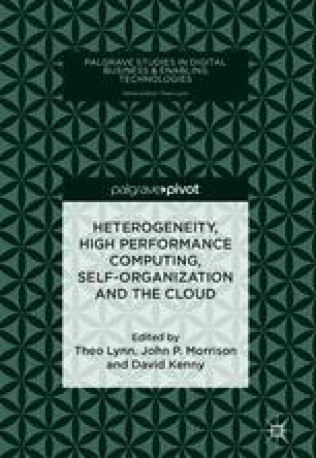
Heterogeneity, high performance computing, self-organization and the cloud
Addresses the most recent developments in cloud computing such as HPC in the Cloud, heterogeneous cloud, self-organising and self-management, and discusses the business implications of cloud computing adoption. Establishing the need for a new architecture for cloud computing, it discusses a novel cloud management and delivery architecture based on the principles of self-organisation and self-management. This focus shifts the deployment and optimisation effort from the consumer to the software stack running on the cloud infrastructure. It also outlines validation challenges and introduces a novel generalised extensible simulation framework to illustrate the effectiveness, performance and scalability of self-organising and self-managing delivery models on hyperscale cloud infrastructures. It concludes with a number of potential use cases for self-organising, self-managing clouds and the impact on those businesses.

Herbal pharmacopeia : Nanotechnology and advancing drug
Explores the intersection between traditional herbal medicine and cutting-edge nanotechnology. The chapters introduce modern techniques used in herbal extraction and analysis. The principles of drug discovery from plants are discussed, with a focus on the identification and development of bioactive compounds that have therapeutic potential. It discusses the pharmacological properties, biotechnological approaches in drug development, and challenges in the formulation and standardization of herbal medicines. Emerging trends and applications of nanotechnology in herbal pharmacotherapy, such as nanoparticle synthesis, enhanced bioavailability using nanocarriers, safety assessments, novel and targeted delivery systems, and regulatory considerations, are thoroughly discussed. Additionally, it includes a comparative analysis of traditional and nano-formulated approaches and their implementation in clinical settings. Towards the end, the book reviews the regulatory considerations for herbal products and future perspectives in herbal pharmacopeia. This book is intended for researchers, clinicians, and professionals in herbal medicine, pharmacology, and nanotechnology.
