



الصفحة 4
الصفحة 4

Counter-Terrorism Policing : Community, Cohesion and Security
This book charts these opportunities and challenges through unprecedented access to the police and diverse communities in Australian regional and metropolitan contexts. It locates these developments in an international comparison with like jurisdictions in the US, UK, and Canada and in light of former conflicts in Northern Ireland and South Africa. It examines the nature and impact of counter-terrorism on policing, diverse communities, legislation and policy and on the media. The book concludes by posing questions for the future of counter-terrorism policing in liberal democracies.

Contemporary Sociological Theory : An Integrated Multi-Level Approach
This book covers the major theoretical orientations that have been influential in American sociology since the mid-twentieth century. These include symbolic interaction, phenomenological sociology and ethnomethodology, social exchange and rational choice theories, sociology of emotions, functionalism and neofunctionalism, conflict and critical theory, selected feminist theories, structuration theory, systems theory, sociobiology, selected sociology of culture perspectives, and major themes from postmodern orientations.

Conflicts Between Generalization, Rigor, and Intuition : Number Concepts Underlying the Development of Analysis in 17th-19th Century France and Germany
Conflicts Between Generalization, Rigor, and Intuition undertakes a historical analysis of the development of two mathematical concepts -negative numbers and infinitely small quantities, mainly in France and Germany, but also in Britain, and the different paths taken there.This book not only discusses the history of the two concepts, but it also introduces a wealth of new knowledge and insights regarding their interrelation as necessary foundations for the emergence of the 19th century concept of analysis. The historical investigation unravels several processes underlying and motivating conceptual change: generalization (in particular, algebraization as an agent for generalizing) and a continued effort of intuitive accessibility which often conflicted with likewise desired rigor. The study focuses on the 18th and the 19th centuries.The book provides a productive unity to a large number of historical sources.

Conflict prevention in project management : Strategies, methods, checklists, and case studies
This handbook is about the handling of external conflicts in international technical projects written for Project Managers and Engineers, Sales Managers, Executives and Legal Managers as seen from the client's as well as from the contractor's side. It is also for students seeking to become leaders in these disciplines and not to reproduce mistakes that others have made before them. The book does not try to give legal advice, but it helps engineers and project managers how to plan and execute their project in order to avoid major conflicts during the project.

Computational conflict research
This book brings together a set of original studies that use cutting-edge computational methods to investigate conflict at various geographic scales and degrees of intensity and violence.

Cold War Civil Defence in Western Europe : Sociotechnical Imaginaries of Survival and Preparedness
This edited collection brings together established and new perspectives on Cold War civil defence in Western Europe within a common analytical framework that also facilitates comparative and transnational dimensions. The current interest in creating disaster-resilient societies demands new histories of civil defence. Historical contextualization is essential in order to understand what is at stake in preparing, devising, and implementing forms of preparedness, protection, and security that are specifically targeted at societies and citizens. Applying the concept of sociotechnical imaginaries to civil defence history, the chapters of this volume cover a range of new themes, from technology and materiality to media, memory, and everyday experience.
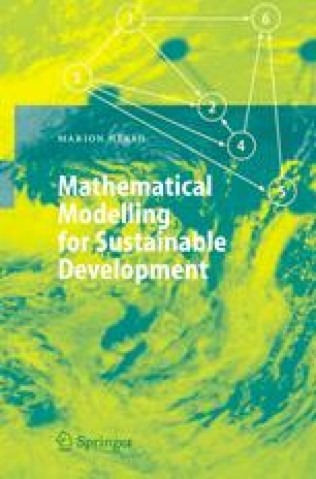
Mathematical Modelling for Sustainable Development
Mathematics needs Sustainable Development. When science was gradually reinvented in European medieval societies, it was legitimised as contributing to the disclosure of God’s divine creation. The conflicts that emerged became well known as a result of the clash between Galileo and the Church. Science found a new legitimacy through recognition that it was a powerful force against superstition. In the Enlightenment the argument was pushed forward by attributing Progress to the advancement of science: science could produce a better world by promoting rationality. In our modern society, science has become intimately linked to technology. Science for its own sake unfortunately rarely has positive outcomes in terms of research grant applications. Meanwhile, science and technology, and the progress they are supposed to produce, meet with wide scale scepticism. We all know of the current global problems: climate change, resource depletion, a thinning ozone layer, space debris, declining biodiversity, malnutrition, dying ecosystems, global inequity, and the risk of unprecedented nuclear wars

Managing Multiple Projects : How Project Managers Can Balance Priorities, Manage Expectations and Increase Productivity
Develop the skills and knowledge to juggle multiple projects, deal with conflicting priorities and manage expectations while avoiding burnout.

Managing Innovation and Standards : A Case in the European Heating Industry
This book provides an in-depth study of the management of standards and regulation in sustainable and radical innovation development. It considers the case of micro Combined Heat and Power (mCHP) technology. The developers of this radical innovation in the European heating sector encountered major conflicts when attempting to create or adapt standards when bringing the technology to market. Utilising rich research data and interviews with key actors, the author uses this case to derive a grounded theory on the management of standards and regulation during an innovation process. The results also have important implications for innovators, which are reflected in clear advice for practice.
Managing Humans : More Biting and Humorous Tales of a Software Engineering Manage
Expands on the previous editions’ explorations of management essentials including handling stress, building diverse teams, running inclusive meetings, and how to lead in times of crisis. The education of a great leader never stops, and Lopp applies crucial insights to help continue your never-ending leadership education. Whether it is approaching a myriad of engineering personalities or handling unexpected conflict, you will come away with the wisdom to handle any team situation.
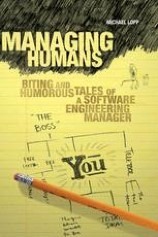
Managing Humans : Biting and Humorous Tales of a Software Engineering Manager
Managing Humans is a selection of the best essays from Michael Lopp's web site, Rands in Repose. Drawing on Lopp's management experiences at Apple, Netscape, Symantec, and Borland, this book is full of stories based on companies in the Silicon Valley where people have been known to yell at each other. It is a place full of dysfunctional bright people who are in an incredible hurry to find the next big thing so they can strike it rich and then do it all over again. Among these people are managers, a strange breed of people who through a mystical organizational ritual have been given power over your future and your bank account.
Managing Diversity in Intergovernmental Organisations
Intensifying worldwide environmental changes as well as political, cultural, religious, and economic crises have made intergovernmental organisations (IGOs) important instruments in international and global cooperation. In order to cope with their diverse stakeholders, it is more imperative than ever for intergovernmental organisations to engage in personnel policy on an international scale. Successful diversity management is an essential prerequisite for organisational performance, conflict management, and dynamics of IGOs. Björn A. Peters examines the challenges of diversity and managing diversity in IGOs on the basis of the Mekong River Commission case study.
Managing Complexity : Insights, Concepts, Applications
Each chapter in Managing Complexity focuses on analyzing real-world complex systems and transferring knowledge from the complex-systems sciences to applications in business, industry and society. The interdisciplinary contributions range from markets and production through logistics, traffic control, and critical infrastructures, up to network design, information systems, social conflicts and building consensus. They serve to raise readers' awareness concerning the often counter-intuitive behavior of complex systems and to help them integrate insights gained in complexity research into everyday planning, decision making, strategic optimization, and policy.

Managing Business Interfaces : Marketing and Engineering Issues in the Supply Chain and Internet Domains
Within companies and organizations there is an increased emphasis on making different functional areas work together seamlessly. These developments have led to an increased emphasis on research and practice in business that integrate the functional areas within and between business entities. The research community has recognized the importance of addressing these different, and often conflicting, business perspectives. This has led to research streams that address issues characterizing the domain of business interfaces. These include the benefits of coordination, new product development, product portfolio management, supply chain coordination, and partnerships and collaboration in the Internet space.
Location, Transport and Land-Use : Modelling Spatial-Temporal Information
Shows the use of statistical tools for forecasting and analyzing implications of land-use decisions. The idea is that la- use on a map is necessarily a consequence of individual, and often conflicting, siting decisions over time.
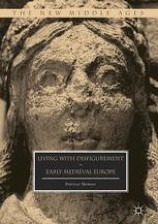
Living with Disfigurement in Early Medieval Europe
Examines social and medical responses to the disfigured face in early medieval Europe, arguing that the study of head and facial injuries can offer a new contribution to the history of early medieval medicine and culture, as well as exploring the language of violence and social interactions. Despite the prevalence of warfare and conflict in early medieval society, and a veritable industry of medieval historians studying it, there has in fact been very little attention paid to the subject of head wounds and facial damage in the course of war and/or punitive justice. The impact of acquired disfigurement —for the individual, and for her or his family and community—is barely registered, and only recently has there been any attempt to explore the question of how damaged tissue and bone might be treated medically or surgically..

Lived Nation as the History of Experiences and Emotions in Finland, 1800-2000
It revolves around the following questions: What kinds of experiences have engendered national mobilization and feelings of national belonging? How have political and societal conflicts turned into new communities of experience and emotion? What kinds of experiences have been integrated into, or excluded from, the national context in different instances? How have people internalized or contested the nation as a context for their personal, family and minority-group experiences? In what ways has the nation entered and affected people’s intimate spheres of life? How have “national” experiences been transmitted to children in the renewal of the nation? This edited collection points to the histories of experience and emotions as a novel way of studying nations and nationalism. Building on current debates in nationalism studies, it offers a theoretical framework for analyzing the historical construction of “lived nations,” and introduces a number of new methodological approaches to understand the experiences of the nation, extending from the investigation of personal reminiscences and music records to the study of dreams and children’s drawings.

Limits to the European Union’s Normative Power in a Post-conflict Society : EULEX and Peacebuilding in Kosovo
Investigates the EU’s peacebuilding activities in that country, in the light of the normative power theory in the post-conflict setting and peacebuilding theory. Ten years after the massive engagement of the EU in the country torn by war, the authors critically assess the effects of the EU projecting its normative power – the enforcement of its standards, ‘good’ or ‘bad’ – through the EULEX mission, taking into consideration also the local aspects, so far neglected in this field of research. Inspecting thoroughly the EULEX activities in the police, customs and judiciary sector.This open access book offers a comprehensive assessment of the EULEX mission, based on two Horizon2020 research projects: IECEU - Improving the Effectiveness of Capabilities in EU Conflict Prevention, and KOSNORTH – The European Union and its Normative Power in a Post-conflict Society: A Case Study of Northern Kosovo (Marie Sklodowska-Curie Individual Fellowship).

Lewis Fry Richardson : His Intellectual Legacy and Influence in the Social Sciences
A pioneer in meteorology and peace research and remains a towering presence in both fields. This edited volume reviews his work and assesses its influence in the social sciences, notably his work on arms races and their consequences, mathematical models, the size distribution of wars, and geographical features of conflict
Leibniz : What Kind of Rationalist?
The chapters of the book are the result of intense discussion in the course of an international conference focused on the title question of this book, and were selected in view of their contribution to this topic. They are clustered in thematically organized parts. No effort has been made to hide the controversies underlying the different interpretations of Leibniz’s “rationalism” – in each particular domain and as a whole. On the contrary, the editor firmly believes that only through a variety of conflicting interpretive perspectives can the multi-faceted nature of an oeuvre of such a magnitude and variety as Leibniz’s be brought to light and understood as it deserves.
