



الصفحة 4
الصفحة 4

Ferro- and Antiferroelectricity : Order/Disorder versus Displacive
Solid-state systems are frequently classi?ed according to their physical, str- tural or chemical properties. Such schemes are extremely helpful since pr- erties related to any such classi?cation are typically known and facilitate id- tifying solids with special material classes. The best-known examples of these schemes are conductivity or resistivity measurements by means of which m- als are easily distinguishable from insulators. However, frequently clear-cut decisions between material classes are not possible, since anisotropy, chemical composition, binding forces and local effects wash out distinct properties and lead to competition or coexistence. Such unresolved situations are especially typical for transition metal oxides that exhibit a variety of ground-state properties in a fascinating way.

Fast Reactions in Energetic Materials : High-Temperature Decomposition of Rocket Propellants and Explosives
Modern energetic materials include explosives, blasting powders, pyrotechnic m- tures and rocket propellants [1, 2]. The study of high-temperature decomposition of condensed phases of propellants and their components (liquid, solid and hybrid) is currently of special importance for the development of space-system engineering [3, 4]. To better understand the burning mechanisms (stationary, nonstationary, - steady) of composite solid propellants and their components, information about the macrokinetics of their high-temperature decomposition is required [5]. To be able to evaluate the ignition parameters and conditions of safe handling of heat-affected explosives, one needs to know the kinetic constants of their high-temperature - composition. The development of new composite solid propellants characterized by high performance characteristics (high burning rates, high thermal stability, stability to intrachamber perturbations, and other aspects) is not possible without quanti- tive data on the high-temperature decomposition of composite solid propellants and their components [6].

Extracting Methods of Essential laurel oil and Fixed oil, Their effects on bacteria
Laurus nobilis is an evergreen plant belonging to the Lauraceae family, native to Southern Europe and the Mediterranean area. This is the report on the composition and bioactivity of laurel essential oil (EO) from leaves and extraction essential oil by two solvents (water and ethanol 69%) using by two devices (Clevenger and evaporator) then we apply the effect of oil and extract on the bacteria. there are some differences between the extraction by water and ethanol . The antibacterial properties of laurel EOs were examined according to the agar well diffusion method The leaf EO showed antibacterial activities against almost all strains of the microorganisms tested, whereas the twig EO was only able to inhibit Staphylococcus aurous and Escherichia coli were the bacterial strains that showed the highest resistance to the laurel EO. The results can benefit the EO industry and bio pesticide development.

Explainable AI with Python
This book provides a full presentation of the current concepts and available techniques to make “machine learning” systems more explainable. The approaches presented can be applied to almost all the current “machine learning” models: linear and logistic regression, deep learning neural networks, natural language processing and image recognition, among the others.

Exosomes based drug delivery strategies for brain disorders
Provides a comprehensive overview of the role of exosomes in brain diseases, including stroke, multiple sclerosis, Parkinson's disease, Alzheimer's disease, epilepsy, and depression. It covers the basics of exosome biogenesis, composition, and synthesis, as well as the therapeutic potential of exosomes in brain disorders. The correlation between exosomes and neuroinflammation, the challenges of using exosomes as a novel carrier, and engineered exosomes to deliver therapeutic protein are covered well in this book. Use of radiolabelled exosomes as a diagnostic tool and the toxicity studies of exosomes with potential overcome approaches. It is an essential resource for researchers, clinicians, and healthcare professionals working in the field of exosome research, especially on its applications in brain disorders.

Essentials of Sports Nutrition and Supplements
Millions of consumers want to lose body fat, gain muscle mass, and/or improve exercise performance. In addition to an exercise program, they often look to sports supplements as ‘tools’ to help them reach their goals. This book, the culmination of years of work by the thought leaders in the sports nutrition field will help the consumer, student, scientist, and sports nutrition professional sift through the huge volume of information and come up with reasonable and scientifically-based ideas and conclusions about sports nutrition.

Essentials of creatine in sports and health
This book unifies the sum of information on how creatine affects body composition, exercise performance, and health. Because the body of data on creatine is ample and constantly growing, a book such as this is a timely and important resource for the clinician, the coach, and the sports scientist.

Environmental and Microbial Relationships
After the publication of Volume IV in 1997, the introduction of molecular methods into ecology led to significant new findings. Emphasizing these advances, the chapters for the second edition have been completely updated and revised. This volume provides insight into current research on fungal populations and communities. It focuses on fungal responses to the physical environment, interactions with other fungi, microorganisms and invertebrates, the role of fungi in ecosystem processes such as decomposition and nutrient cycling, and aspects of biogeography and conservation. Several chapters deal with various applications in, e.g. biological pest control, natural products discovery, and the degradation of toxic organic compounds. This is an invaluable source of information both for scientists who wish to update their knowledge of current progress and for graduate students interested in obtaining a first overview of this field of research.

Emerging Web Services Technology ; Vol. II
This book contains papers from the 2007 European Conference on Web Services and the Workshop on Emerging Web Services Technology. Coverage includes grid-based computing, mobility issues for web services, dynamic web services, and model driven engineering.

Emerging Web Services Technology ; Vol. I
As Web services technology is becoming widely established in enterprise computing applications, Web services research is a very important and still very productive research domain. This book gives a timely report on the leading edge of this area by covering a wide spectrum of active research topics like Model Driven Engineering for SOA, Mobility and Services, Dynamic Web Service Discovery and Composition, Service Management, and Semantic Web.

Emergent architectural territories in east asian cities
Presents current developments in city planning and architecture in East Asia. It describes the many neighborhoods in which the region’s large cities are modernizing or expanding with innovative structures and advanced construction projects. It combines a typology of public structures with an analysis of the compositional principles of urban environments. Thus, it finally connects new developments in city planning with new developments in architecture, and considers examples such as CCTV, Lujiazui, Kansai Airport, Xinyi, Taipei 101, Chek Lap Kok, Cheonggyecheon, Roppongi Hills, Da Shanzi, Shahe, Omotesando, and Marina Bay from a new perspective.And the new perspectives presented here are not just theoretical: some forty full-page bird’s eye views prepared especially for this volume show these future urban settings in highly detailed images of breathtaking beauty.

Elastic Multibody Dynamics : A Direct Ritz Approach
This textbook is an introduction to and exploration of a number of core topics in the field of applied mechanics: On the basis of Lagrange's Principle, a Central Equation of Dynamics is presented which yields a unified view on existing methods. From these, the Projection Equation is selected for the derivation of the motion equations of holonomic and of non-holonomic systems. The method is applied to rigid multibody systems where the rigid body is defined such that, by relaxation of the rigidity constraints, one can directly proceed to elastic bodies. A decomposition into subsystems leads to a minimal representation and to a recursive representation, respectively, of the equations of motion.

Effect of Clove essential oil and Rosemary aqueous extract for future promising triple acting gel
In this study, antimicrobial properties of rosemary essential oil (Rosmarinus officinalis-REO), rosemary aqueous extract, clove essential oil (Syzygium aromaticum-CEO) and their mixtures (REO/CEO) at 10% and 20% concentration for each one have been evaluated. The agar well diffusion method has been used for screening the antimicrobial activity against Staphylococcus aureus, Staphylococcus albus, Streptococcus, Enterococcus Salmonella, Escherichia coli, Acinetobacter, Pseudomonas aeruginosa, Candida albicans In Staph. Aureus, Salmonella, E.coli, Acinetobacter and p.aeruginosa...

Edible Plants in Health and Diseases ; Vol.1 : Cultural, Practical and Economic Value
Provides significant information on some of the promising edible medicinal plants and how these possess both nutritive as well as medicinal value. The significance of these edible plants in traditional medicine, their distribution in different regions and the importance of their chemical constituents are discussed systematically concerning the role of these plants in ethnomedicine in different regions of the world. The current volume focuses on the economic and culturally important medicinal uses of edible plants and a detailed survey of the literature on scientific researches of pharmacognostical characteristics, traditional uses, scientific validation, and phytochemical composition, and pharmacological activities. This book is a single-source scientific reference to explore the specific factors that contribute to these potential health benefits, as well as discussing how to maximize those potential benefits. Chemists, food technologists, pharmacologists, phytochemists as well as all professionals involved with quality control and standardization will find in this book a valuable and updated basis for their work.

Dynamic Population Models
The book is well organized and clearly written so that it is accessible to those with only a minimal knowledge of calculus. It begins with a review of fixed rate population models, from the basic life table to multistate stable populations. The process of convergence to stability is described, and the regularities underlying change in the size and composition of any population are explored. Techniques for estimating rates from multistate population distributions are presented, and new multi-age, multistate dynamic models are developed.
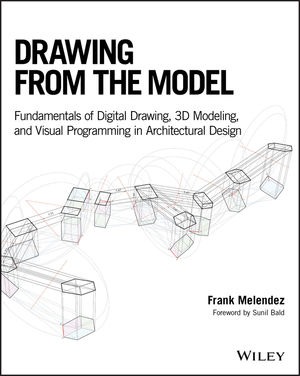
Drawing from the model : Fundamentals of digital drawing, 3D modeling, and visual programming in architectural design
Bridges traditional and contemporary methods of creating architectural design drawings and 3D models through digital tools and computational processes.

Domain Decomposition Methods in Science and Engineering XVII
This volume contains a selection of papers presented at the 17th International Conference on Domain Decomposition Methods in Science and Engineering held at St. Wolfgang / Strobl, Austria, July 3 - 7, 2006. Domain decomposition is an active, interdisciplinary research area concerned with the development, analysis, and implementation of coupling and decoupling strategies in mathematical and computational models. Domain decomposition techniques provide efficient tools for treating problems in all Computational Sciences. The reader will become familiar with the newest domain decomposition technologies and their use for modeling and simulating of complex problems from different fields of applications.

Domain Decomposition Methods in Science and Engineering XVI
The present volume sets forth new contributions in areas of numerical analysis, computer science, scientific and industrial applications, and software development.

Domain Decomposition Methods in Science and Engineering
Domain decomposition is an active, interdisciplinary research area that is devoted to the development, analysis and implementation of coupling and decoupling strategies in mathematics, computational science, engineering and industry.This book special focus has been on numerical analysis, computational issues,complex heterogeneous problems, industrial problems, and software development.

Domain Decomposition Methods for the Numerical Solution of Partial Differential Equations
Domain decomposition methods are divide and conquer methods for the parallel and computational solution of partial differential equations of elliptic or parabolic type. They include iterative algorithms for solving the discretized equations, techniques for non-matching grid discretizations and techniques for heterogeneous approximations. This book serves as an introduction to this subject, with emphasis on matrix formulations. The topics studied include Schwarz, substructuring, Lagrange multiplier and least squares-control hybrid formulations, multilevel methods, non-self adjoint problems, parabolic equations, saddle point problems (Stokes, porous media and optimal control), non-matching grid discretizations, heterogeneous models, fictitious domain methods, variational inequalities, maximum norm theory, eigenvalue problems, optimization problems and the Helmholtz scattering problem. Selected convergence theory is included.
