



الصفحة 4
الصفحة 4

Information security applications ; 8th International Workshop, WISA 2007, Jeju Island, Korea, August 27-29, 2007, Revised Selected Papers
Complete with Springer's trademark online files and updates, this fascinating text constitutes the refereed proceedings of the 8th International Workshop on Information Security Applications, WISA 2007, held in Jeju Island, Korea, in August 2007.
Information security and privacy ; 6th Australasian Conference, ACISP 2001, Sydney, Australia, July 11-13, 2001. Proceedings
A Few Thoughts on E-Commerce.- New CBC-MAC Forgery Attacks.- Cryptanalysis of a Public Key Cryptosystem Proposed at ACISP 2000.- Improved Cryptanalysis of the Self-Shrinking Generator.- Attacks Based on Small Factors in Various Group Structures.- On Classifying Conference Key Distribution Protocols.- Pseudorandomness of MISTY-Type Transformations and the Block Cipher KASUMI.- New Public-Key Cryptosystem Using Divisor Class Groups.- First Implementation of Cryptographic Protocols Based on Algebraic Number Fields.- Practical Key Recovery Schemes.- Non-deterministic Processors.- Personal Secure Booting.- Evaluation of Tamper-Resistant Software Deviating from Structured Programming Rules.- A Strategy for MLS Workflow.- Condition-Driven Integration of Security Services.- SKETHIC: Secure Kernel Extension against Trojan Horses with Informat ion-Carrying Codes.- Secure and Private Distribution of Online Video and Some Related Cryptographic Issues.- Private Information Retrieval Based on the Subgroup Membership Problem.

Information security and cryptology ; Vol. 3822 ; 1st SKLOIS Conference, CISC 2005, Beijing, China, December 15-17, 2005, Proceedings
The first SKLOIS Conference on Information Security and Cryptography(CISC 2005) was organized by the State Key Laboratory of Information Security of the Chinese Academy of Sciences. It was held in Beijing, China, December 15-17, 2005 and was sponsored by the Institute of Software, the Chinese Academy of Sciences, the Graduate School of the Chinese Academy of Sciences and the National Science Foundation of China. The conference proceedings, represe- ing invited and contributed papers, are published in this volume of Springer’s Lecture Notes in Computer Science (LNCS) series. The area of research covered by CISC has been gaining importance in recent years, and a lot of fundamental, experimental and applied work has been done, advancing the state of the art. The program of CISC 2005 covered numerous ?elds of research within the general scope of the conference.

Information Security and Cryptology - ICISC 2007 ; 10th International Conference, Seoul, Korea, November 29-30, 2007, Proceedings
This book constitutes the refereed proceedings of the 10th International Conference on Information Security and Cryptology, ICISC 2007, held in Seoul, Korea, November 29-30, 2007.

Information Security and Cryptology - ICISC 2004 ; 7th International Conference, Seoul, Korea, December 2-3, 2004, Revised Selected Papers
The 7th International Conference on Information Security and Cryptology was organized by the Korea Institute of Information Security and Cryptology (KIISC) and was sponsored by the Ministry of Information and Communi- tion of Korea. The conference received 194 submissions, and the Program Committee - lected 34 of these for presentation. The conference program included two invited lectures.MikeReiterspokeon“Securityby,andfor,ConvergedMobileDevices.” And Frank Stajano spoke on “Security for Ubiquitous Computing.” We would like to ?rst thank the many researchers from all over the world who subm- ted their work to this conference. An electronic submission process was ava- able. The submission review process had two phases. In the ?rst phase, Program Committeememberscompiledreports(assisteda...

Information Security ; Vol. 4176 ; 9th International Conference; ISC 2006, Samos Island, Greece, August 30 - September 2, 2006, Proceedings
th This volume contains the papers presented at the 9 Information Security Conference (ISC 2006) held on Samos Island, Greece, during August 30 – September 2, 2006. The Conference was organized by the University of the Aegean, Greece. ISC was first initiated as a workshop, ISW in Japan in 1997, ISW 1999 in Mal- sia, ISW 2000 in Australia and then changed to the current name ISC when it was held in Spain in 2001 (ISC 2001). The latest conferences were held in Brazil (ISC 2002), UK (ISC 2003), USA (ISC 2004), and Singapore (ISC 2005). ISC 2006 provided an international forum for sharing original research results and application experiences among specialists in fundamental and applied problems of - formation security. In response to the Call for Papers, 188 papers were submitted. Each paper was - viewed by three members of the PC, on the basis of their significance, novelty, and technical quality. Of the papers submitted, 38 were selected for presentation, with an acceptance rate of 20%.

Information Hiding ; 9th International Workshop, IH 2007, Saint Malo, France, June 11-13, 2007, Revised Selected Papers
This book constitutes the thoroughly refereed post-proceedings of the 9th International Workshop on Information Hiding, IH 2007, held in Saint Malo, France, in June 2007.
Information Hiding ; 8th International Workshop, IH 2006, Alexandria, VA, USA, July 10-12, 2006, Revised Seleceted Papers
This volume constitutes the refereed post-proceedings of the 8th International Workshop on Information Hiding held in Alexandria, Virginia, in July 2006.
Information hiding ; 6th International Workshop, IH 2004, Toronto, Canada, May 23-25, 2004, Revised selected papers
All papers were divided into eight sessions: digital media watermarking, steganalysis, digital forensics, steganography, software watermarking, security and privacy, anonymity, and data hiding in unusual content. This year, the workshop included a one-hour rump session that offered an opportunity to the delegates to share their work in progress and other brief but interesting contributions.

Information and Communications Security ; Vol. 4307 ; 8th International Conference, ICICS 2006, Raleigh, NC, USA, December 4-7, 2006, Proceedings
It is our great pleasure to welcome you to the Eighth International Conference on Information and Communications Security (ICICS 2006), held in Raleigh, North Carolina, USA, December 4–7, 2006. The ICICS conference series is an established forum that brings together researchersand scholars involved in m- tiple disciplines of Information and Communications Security in order to foster exchangeof ideas. The past sevenICICS conferences wereheld in Beijing, China (ICICS 1997); Sydney, Australia (ICICS 1999); Xi’an China (ICICS 2001); S- gapore (ICICS 2002); Hohhot City, China (ICICS 2003); Malaga, Spain (ICICS 2004); and Beijing, China (ICICS 2005). The conference proceedings of the past seven events have been published by Springer in the Lecture Notes in Computer Science series, in LNCS1334,LNCS1726,LNCS2229,LNCS 2513,LNCS 2836, LNCS 3269, and LNCS 3783, respectively. This year we received a total of 119 submissions on various aspects of - hoc and sensor network security. The Program Committee selected 22 regular papers and 17 short papers that cover a variety of topics, including security protocols, applied cryptography and cryptanalysis, access control in distributed systems, privacy, malicious code, network and systems security, and security implementations. Putting together ICICS 2006 was a team e?ort. First of all, we would like to thank the authors of every paper, whether accepted or not, for submitting their papers to ICICS 2006. We would like to express our gratitude to the Program Committee members and the external reviewers, who worked very hard in - viewing the papers and providing suggestions for their improvements.

Industrial steel building
The project is a design for a metal facility, which is a biscuit factory within the city of Damascus. The building consists of two floors, the first floor is offices and the second floor is for storage. The study was conducted according to the European code and the Syrian Arab code.
Implementing distributed systems with Java and CORBA
This book provides graduate students and practitioners with knowledge of the CORBA standard and practical experience of implementing distributed systems with CORBA's Java mapping. With tested code examples that will run immediately.

Illustrated C# 2008
The unique, visual format of Illustrated C# 2008 has been specially created by author and teacher of development methods, Daniel Solis. The concise text, use of tables to clarify language features, frequent figures and diagrams, as well as focused code samples all combine to create a unique approach that will help you understand and get to work with C# fast. It was while teaching numerous seminars on various programming languages that the author realized the immense power that diagrams have in explaining programming language concepts. Most people learn quicker and retain information better when the material is presented in a clean, simple, visual format. To achieve this result in his book, Solis uses concise text and bulleted lists, tables to clarify and summarize language features, as well as his renowned and ubiquitous figures and diagrams.
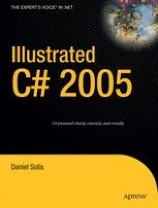
Illustrated C# 2005
Illustrated C# 2005 presents the C# programming language in a unique visual manner. The book uses three techniques to achieve this: concise text, tables that clarify and summarize language features, and frequent figures and diagrams. Each feature is also illustrated with concise, focused code samples.

Ibuprofen : Pharmacology, Therapeutics and Side Effects
Ibuprofen is one of the most successful drugs used worldwide for the treatment of mild to moderate pain and various inflammatory conditions. Over the past 40 years, ibuprofen has been proven to be as safe or even safer and also as effective as the established non-steroidal anti-inflammatory drugs (NSAIDs) and the coxibs. This well-written book reviews the pharmacology, clinical uses and the various adverse effects of Ibuprofen, the disposition and unique modes of action in relation to clinical effects of the drug as well as various formulations. The use of combinations with other drugs (e.g. paracetamol, codeine, caffeine) are critically assessed and the impact of natural products and Chinese Medicines on the safety of ibuprofen.

Hybrid Methods of Molecular Modeling
Hybrid Methods of Molecular Modeling is a self-contained advanced review volume. It provides a step by step derivation of the consistent theoretical picture of hybrid modeling methods and a thorough analysis of the concepts and current practical methods of hybrid modeling based on this theory. The book presents its material sequentially, paying attention both to the physical soundness of the approximations used and to the mathematical rigor necessary for the practical development of the robust modeling code.

How to engineer software : A model-based approach
The book promotes development scalability through domain partitioning and subdomain partitioning. It also explores software documentation that specifically and intentionally adds value for development and maintenance. Contains many illustrative examples of model-based software engineering, from semantic model all the way to executable code Explains how to derive verification (acceptance) test cases from a semantic model Describes project estimation, along with alternative software development and maintenance processes Shows how to develop and maintain cost-effective software that solves real-world problems

How to Code .NET : Tips and Tricks for Coding .NET 1.1 and .NET 2.0 Applications Effectively
How to Code .NET: Tips and Tricks for Coding .NET 1.1 and .NET 2.0 Applications Effectively provides solutions to certain problems. That is, specific problems. This book provides detailed, authoritative explanations of good .NET coding techniques.

How to Build a Modern Tontine : Algorithms, Scripts and Tips
This book introduces the modern tontine and its applications in retirement and decumulation. Personal financial management in the later stages of life presents unique challenges, and renowned retirement planning expert Dr. Milevsky proposes the modern tontine as a solution. With the goal of guiding professionals and retirees in more efficient decumulation, the book demonstrates how to build a modern tontine. It is technically oriented, employing a cookbook format, featuring R code, and examining retirement planning through a statistical lens.

Honeypots for Windows
Installing a honeypot inside your network as an early warning system can significantly improve your security. Currently, almost every book and resource about honeypots comes from a Unix background, which leaves Windows administrators still grasping for help. But Honeypots for Windows is a forensic journeyhelping you set up the physical layer, design your honeypot, and perform malware code analysis. You'll discover which Windows ports need to be open on your honeypot to fool those malicious hackers, and you'll learn about numerous open source tools imported from the Unix world. Install a honeypot on your DMZ or at home and watch the exploits roll in! Your honeypot will capture waves of automated exploits, and youll learn how to defend the computer assets under your control.
