



الصفحة 4
الصفحة 4

Conceptual density functional theory : Towards a new chemical reactivity theory
This two-volume reference book shows how conceptual density functional theory can reconcile empirical observations within silico calculations using density functional theory, molecular orbital theory, and valence bond theory. The ability to predict properties like electronegativity, acidity/basicity, strong covalent and weak intermolecular interactions as well as chemical reactivity makes DFT directly applicable to almost all problems in applied chemistry, from synthetic chemistry to catalyst design and materials characterization.

Conception optimale de structures = Optimal structural design
Optimal Structural Design deals with all aspects of shape optimization, parametric, geometric and topological, and gives a large place to numerical algorithms, gradient methods and stochastic methods (with an original contribution by Marc Schoenauer for this last point). In particular, most of the structural optimization algorithms have been implemented in the FreeFem ++ finite element software and the programs are freely available on the web. Optimal structural design is devoted to structural or shape optimization and is intended for a mixed audience of applied mathematicians and mechanicians. It discusses parametric, geometric and topology optimization and gives deterministic and stochastic numerical algorithms (implemented in the FreeFem ++ finite element software).

Computer simulation studies in condensed-matter physics XVI ; Proceedings of the Seventeenth Workshop, Athens, GA, USA, February 16-20, 2004
This status report features the most recent developments in the field, spanning a wide range of topical areas in the computer simulation of condensed matter/materials physics. Both established and new topics are included, ranging from the statistical mechanics of classical magnetic spin models to electronic structure calculations, quantum simulations, and simulations of soft condensed matter. The book presents new physical results as well as novel methods of simulation and data analysis. Highlights of this volume include various aspects of non-equilibrium statistical mechanics, studies of properties of real materials using both classical model simulations and electronic structure calculations, and the use of computer simulations in teaching.

Computer Aided Bridge Engineering : Detail Design of Pre-Stressed Concrete I-Girder / Box-Girder Bridges
Real project design calculations for a deck-girder superstructure are presented along with the design of an abutment and pier with pile foundation as the bridge substructure. The book is proposed to be read in association with processing the design work by using the computer software ASTRA Pro as referred to in the book. The book describes two essential facets of the work, which are 'Analysis of the Grillage Model of the Deck-Girder Superstructure' and the subsequent 'Design of Deck Slab and PSC I-Girder'. The software provides three facets of the work: first is the 'Analysis of the Grillage Model of the Deck-Girder Superstructure', second is the 'Design of Deck Slab and PSC I-Girder, Abutment, Piers along with Pile Foundation', and the third is a 'Set of Sample Editable CAD Drawings for the work'. The drawings may be modified as per the design work and be submitted as required for the construction. The drawings contain information on dimensions, structural detailing, bar-bending schedules, pre-stressing details and construction guides.

Computational studies of RNA and DNA
Computational Studies of RNA and DNA includes, in an integrated way, modern computational studies of nucleic acids, ranging from advanced electronic structure quantum chemical calculations through explicit solvent molecular dynamics (MD) simulations up to mesoscopic modelling, with the main focus given to the MD field. It gives an equal emphasis to the leading methods and applications while successes as well as pitfalls of the computational techniques are discussed.The systems and problems studied include: Accurate calculations of base pairing energies / Electronic properties of nucleic acids and electron transfer, through various types of nucleic acid / Calculating DNA elasticity

Computational Probability : Algorithms and Applications in the Mathematical Sciences
Computational probability encompasses data structures and algorithms that have emerged over the past decade that allow researchers and students to focus on a new class of stochastic problems. COMPUTATIONAL PROBABILITY is the first book that examines and presents these computational methods in a systematic manner. The techniques described here address problems that require exact probability calculations, many of which have been considered intractable in the past. The first chapter introduces computational probability analysis, followed by a chapter on the Maple computer algebra system. The third chapter begins the description of APPL, the probability modeling language created by the authors. The book ends with three applications-based chapters that emphasize applications in survival analysis and stochastic simulation.

Computational Mechanics of the Classical Guitar
This book performs a state-of-the-art finite-difference calculation of the complete geometry of the classical guitar as a time-stepping application. It provides insight into the overall behaviour as well as the finite structure mechanisms of this musical instrument. Fundamental problems of coupling, nonlinearities, noise or time reversion, complex modelling solutions, and modern signal processing tools are discussed. Also musicologists, musicians or instrument builders can find explanations and may also be inspired by aspects of musical timbre, the sounding and time-dependent qualities of the different guitar parts. The work helps to suggest new geometrical and timbral solutions in modern guitar performance.

Computational Materials Chemistry : Methods and Applications
As a result of the advancements in algorithms and the huge increase in speed of computers over the past decade, electronic structure calculations have evolved into a valuable tool for characterizing surface species and for elucidating the pathways for their formation and reactivity. It is also now possible to calculate, including electric field effects, STM images for surface structures. To date the calculation of such images has been dominated by density functional methods, primarily because the computational cost of - curate wave-function based calculations using either realistic cluster or slab models would be prohibitive. DFT calculations have proven especially valuable for elucidating chemical processes on silicon and other semiconductor surfaces. However, it is also clear that some of the systems to which DFT methods have been applied have large non-dynamical correlation effects, which may not be properly handled by the current generation of Kohn-Sham-based density functionals. For example, our CASSCF calculations on the Si(001)/acetylene system reveal that at some geometries there is extensive 86 configuration mixing. This, in turn, could signal problems for DFT cal- lations on these systems.

Mathematica for Theoretical Physics : Electrodynamics, Quantum Mechanics, General Relativity, and Fractals
Mathematica for Theoretical Physics: Electrodynamics, Quantum Mechanics, General Relativity, and Fractals This second edition of Baumann's Mathematica® in Theoretical Physics shows readers how to solve physical problems and deal with their underlying theoretical concepts while using Mathematica® to derive numeric and symbolic solutions. Each example and calculation can be evaluated by the reader, and the reader can change the example calculations and adopt the given code to related or similar problems. The second edition has been completely revised and expanded into two volumes: The first volume covers classical mechanics and nonlinear dynamics. Both topics are the basis of a regular mechanics course. The second volume covers electrodynamics, quantum mechanics, relativity, and fractals and fractional calculus. New examples have been added and the representation has been reworked to provide a more interactive problem-solving presentation. This book can be used as a textbook or as a reference work, by students and researchers alike. A brief glossary of terms and functions is contained in the appendices.
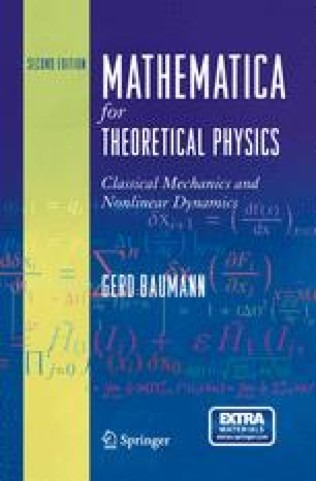
Mathematica for Theoretical Physics : Classical Mechanics and Nonlinear Dynamics
Mathematica for Theoretical Physics: Classical Mechanics and Nonlinear Dynamics This second edition of Baumann's Mathematica® in Theoretical Physics shows readers how to solve physical problems and deal with their underlying theoretical concepts while using Mathematica® to derive numeric and symbolic solutions. Each example and calculation can be evaluated by the reader, and the reader can change the example calculations and adopt the given code to related or similar problems. The second edition has been completely revised and expanded into two volumes: The first volume covers classical mechanics and nonlinear dynamics. Both topics are the basis of a regular mechanics course. The second volume covers electrodynamics, quantum mechanics, relativity, and fractals and fractional calculus. New examples have been added and the representation has been reworked to provide a more interactive problem-solving presentation. This book can be used as a textbook or as a reference work, by students and researchers alike. A brief glossary of terms and functions is contained in the appendices.

Math for business and economics : Compedium of essential formulas
This mathematical formulary is presented in a practice-oriented, clear, and understandable manner, as it is needed for meaningful and relevant application in global business, as well as in the academic setting and economic practice. The topics presented include but are not limited to mathematical signs and symbols, logic, arithmetic, algebra, linear algebra, combinatorics, and financial mathematics, including an international comparison between different national methods used in the calculation of interest, optimization of linear models, functions, differential calculus, integral calculus, elasticities, annuity calculation, economic functions, and the Peren Theorem.

Materials Fundamentals of Gate Dielectrics
This book presents materials fundamentals of novel gate dielectrics that are being introduced into semiconductor manufacturing to ensure the continuous scalling of the CMOS devices. This is a very fast evolving field of research so we choose to focus on the basic understanding of the structure, thermodunamics, and electronic properties of these materials that determine their performance in device applications. Most of these materials are transition metal oxides. Ironically, the d-orbitals responsible for the high dielectric constant cause sever integration difficulties thus intrinsically limiting high-k dielectrics. Though new in the electronics industry many of these materials are wel known in the field of ceramics, and we describe this unique connection. The complexity of the structure-property relations in TM oxides makes the use of the state of the art first-principles calculations necessary. Several chapters give a detailed description of the modern theory of polarization, and heterojunction band discontinuity within the framework of the density functional theory. Experimental methods include oxide melt solution calorimetry and differential scanning calorimetry, Raman scattering and other optical characterization techniques, transmission electron microscopy, and x-ray photoelectron spectroscopy.

Matematica generale con il calcolatore
By introducing mathematical objects, it teaches students how to use a computer to perform numerical and symbolic calculations, define a function and calculate its values, plot and explore graphs, and execute simple algorithms. The course is rich in examples, applications, and models, drawn from economics, physics, biology, statistics, and mathematics itself. The analysis of these models constitutes, in a certain sense, the true purpose of the mathematical theory covered. Automatic calculation tools (mathematics software, spreadsheets) are used extensively to explore and illustrate concepts and properties. Mathcad® software, in particular, was used, both as a calculation tool and as a simple yet powerful programming language. Considerable space is devoted to approximation, emphasizing the distinction between numerical and symbolic calculation; to algorithms as a synthesis of the syntactic and semantic aspects of mathematical objects; and to computer simulation, interpreted as a "physical" experiment and a source of conjecture. The ability to use a calculator marks a sort of "democratization" of mathematics: even complex results, which have always required a broad background of knowledge and laborious calculations, are now quickly accessible to anyone who understands the meaning of mathematical objects and knows how to use the syntax.
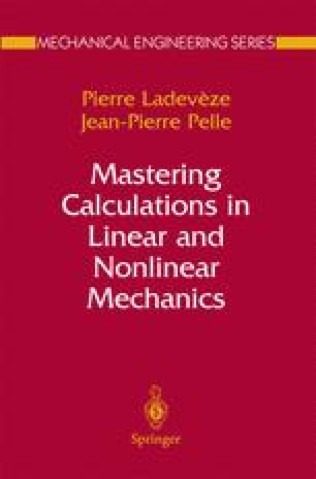
Mastering Calculations in Linear and Nonlinear Mechanics
Mastering Calculations in Linear and Nonlinear Mechanics is concerned with the management of calculations in linear and nonlinear mechanics. In the last twenty years The accent is on the concept of error in constitutive relation. An important part of this work is also devoted to the utilization of the error estimators involved in a calculation.

Market segmentation analysis : Understanding it, doing it, and making It useful
Offers something for everyone working with market segmentation: practical guidance for users of market segmentation solutions; organisational guidance on implementation issues; guidance for market researchers in charge of collecting suitable data; and guidance for data analysts with respect to the technical and statistical aspects of market segmentation analysis. Even market segmentation experts will find something new, including a vast array of useful visualisation techniques that make interpretation of market segments and selection of target segments easier. The book talks the reader through every single step, every single potential pitfall, and every single decision that needs to be made to ensure market segmentation analysis is conducted as well as possible. All calculations are accompanied not only with a detailed explanation, but also with R code that allows readers to replicate any aspect of what is being covered in the book using R, the open-source environment for statistical computing and graphics.

Magnetic Functions Beyond the Spin-Hamiltonian
Using the spin-Hamiltonian formalism the magnetic parameters are introduced through the components of the Lambda-tensor involving only the matrix elements of the angular momentum operator. The energy levels for a variety of spins are generated and the modeling of the magnetization, the magnetic susceptibility and the heat capacity is done. Theoretical formulae necessary in performing the energy level calculations for a multi-term system are prepared with the help of the irreducible tensor operator approach. The goal of the programming lies in the fact that the entire relevant matrix elements (electron repulsion, crystal field, spin-orbit interaction, orbital-Zeeman, and spin-Zeeman operators) are evaluated in the basis set of free-atom terms. The modeling of the zero-field splitting is done at three levels of sophistication. The spin-Hamiltonian formalism offers simple formulae for the magnetic parameters by evaluating the matrix elements of the angular momentum operator in the basis set of the crystal-field terms. The magnetic functions for dn complexes are modeled for a wide range of the crystal-field strengths.
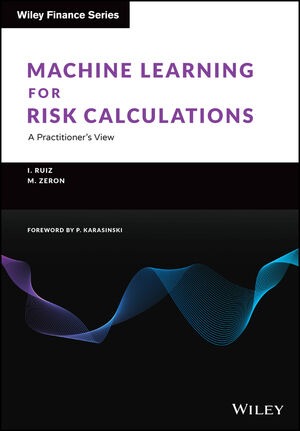
Machine learning for risk calculations : A practitioner's view
Fundamental Approximation Methods. Machine Learning -- Deep Neural Nets -- Chebyshev Tensors -- The toolkit - plugging in approximation methods. Introduction: why is a toolkit needed -- Composition techniques -- Tensors in TT format and Tensor Extension Algorithms -- Sliding Technique -- The Jacobian projection technique -- Hybrid solutions - approximation methods and the toolkit.
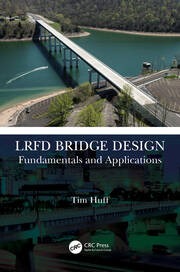
LRFD Bridge Design : Fundamentals and Applications
Examines and explains material from the 9th edition of the AASHTO LRFD Bridge Design Specifications, including deck and parapet design, load calculations, limit states and load combinations, concrete and steel I-girder design, bearing design, and more. With increased focus on earthquake resiliency, two separate chapters– one on conventional seismic design and the other on seismic isolation applied to bridges– will fully address this vital topic. The primary focus is on steel and concrete I-girder bridges, with regard to both superstructure and substructure design. / Includes several worked examples for a project bridge as well as actual bridges designed by the author / Examines seismic design concepts and design details for bridges / Presents the latest material based on the 9th edition of the LRFD Bridge Design Specifications / Covers fatigue, strength, service, and extreme event limit states / Includes numerous solved problems and exercises at the end of each chapter to illustrate the concepts presented
Le raisonnement bayésien : Modélisation et inférence = Bayesian reasoning : Modeling and inference
Describes in detail the practice of the Bayesian statistical approach using many examples chosen for their educational interest. The first part gives the general principles of statistical modeling making it possible to supervise but also to come to the aid of the imagination of the apprentice modeler. By examining examples of increasing difficulty, the reader forges the keys to building their own model. The second part presents the most useful calculation algorithms for estimating the unknowns of the model. Each inference method is presented and illustrated by numerous application cases.
Lattice Hadron Physics
This series of lectures draws upon the developments made in recent years in implementing chirality on the lattice via the overlap formalism. These developments exploit chiral effective field theory in order to extrapolate lattice results to physical quark masses, new forms of improving operators to remove lattice artefacts, analytical studies of finite volume effects in hadronic observables, and state-of-the-art lattice calculations of excited resonances. This volume is designed to assist those outside the field who want quickly to becoming literate in these topics. So it is intended for graduate students and experienced researchers in other areas of hadronic physics to provide the background through which they can appreciate, if not become active in, contemporary lattice gauge theory and its applications to hadronic phenomena.
