



الصفحة 4
الصفحة 4

Herbal pharmacopeia : Nanotechnology and advancing drug
Explores the intersection between traditional herbal medicine and cutting-edge nanotechnology. The chapters introduce modern techniques used in herbal extraction and analysis. The principles of drug discovery from plants are discussed, with a focus on the identification and development of bioactive compounds that have therapeutic potential. It discusses the pharmacological properties, biotechnological approaches in drug development, and challenges in the formulation and standardization of herbal medicines. Emerging trends and applications of nanotechnology in herbal pharmacotherapy, such as nanoparticle synthesis, enhanced bioavailability using nanocarriers, safety assessments, novel and targeted delivery systems, and regulatory considerations, are thoroughly discussed. Additionally, it includes a comparative analysis of traditional and nano-formulated approaches and their implementation in clinical settings. Towards the end, the book reviews the regulatory considerations for herbal products and future perspectives in herbal pharmacopeia. This book is intended for researchers, clinicians, and professionals in herbal medicine, pharmacology, and nanotechnology.

Handbook of research on nano-drug delivery and tissue engineering : Guide to strengthening healthcare systems
Provides an important and valuable collection of research accomplishments in nanomedicine, drug delivery, tissue engineering, processing, formulations, and their applications. Addresses topical issues in nano-drug delivery and nanotechnological approaches to tissue engineering. The first section offers research on a variety of diverse nano-based drug delivery systems, along with discussions of their efficacy, safety, toxicology, and applications for different purposes. Focusing on nanotechnology approaches to tissue engineering, part two of the volume considers the use of hydrogel systems, nanoceria and micro- and nano-structured biomaterials for bone tissue engineering, mesenchymal stem cells, and more. This volume is a systematic scientific reference of the novel research developments specifically in this area. The editors give special emphasis on the new trends and developments in the field of nanomedicine that will be very helpful for pharmaceutical and medical researchers, scientists, faculty, and students.

Handbook of Bioentrepreneurship
Providing an important and timely overview of research in the field of entrepreneurship in biotechnology, The Handbook of Bioentrepreneurship examines one of the most promising industries of the 21st century. While genetically engineered foods and biopharmaceuticals have made biotechnology part of our everyday lives, launching a bioventure is among the most complex and risky entrepreneurial undertakings, given long development cycles, high levels of technological and market uncertainty, and extraordinary capital requirements. Featuring unparalleled, in-depth analysis from experts around the world, the Handbook sheds light on emerging business models and strategies, geographical and regional networks, cooperation between firms and universities, legal frameworks, and policy issues that influence the context in which biotech ventures are established and the conditions under which they may flourish. biotechnology.
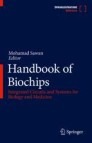
Handbook of Biochips : Integrated Circuits and Systems for Biology and Medicine
This book provides a broad survey of the field of biochips, including fundamentals of microelectronics and biomaterials interaction with various, living tissues, as well as numerous, diverse applications. Although a wide variety of biochips will be described, there will be a focus on those at the brain-machine interface. Analysis is included of the relationship between different categories of biochips and their interactions with the body and coverage includes wireless remote control of biochips and arrays of microelectrodes, based on new biomaterials.

Green gene technology : Research in an area of social conflict
Green gene technology(GGT), understood as apart of modernbiotechnology, has been on a steady, triumphal progression over the last ten years (ISAAA 2007, see thecontribution byEinsele in thisissue). This volume, jointly edited byProf. Fiechterandme, dealswithsomeactualscienti?candsocio-economic aspects with regard to genetically modi?ed plants (GMP). Worldwide more than 100 million hectares of agronomical land are covered by GMP. This - cludes some prominent industrialised Western countries like the USA and Canada, aseriesofthresholdcountrieslikeArgentina, Brazil, IndiaandChina, and a number of developing countries.

Genomics of Tropical Crop Plants
Genomics of Tropical Crop Plants summarizes recent progress on genomic research, including the development of molecular markers, genomic and cDNA libraries, expressed sequence tags (ESTs), genetic and physical maps, gene expression profiles, and whole genome sequences for 20 tropical crop plants. It offers background information about the evolutionary origin and environments of tropical crop species, international programs that are addressing the needs of tropical agriculture, and the potential for new technologies to increase the productivity and value of tropical crops. This book provides new dimensions to growing information concerning temperate crops and their morphology, physiology, and parallel evolution in diverse plant lineages.

Genome editing in neurosciences
Innovations in molecular biology are allowing neuroscientists to study the brain with unprecedented resolution, from the level of single molecules to integrated gene circuits. Chief among these innovations is the CRISPR-Cas genome editing technology, which has the precision and scalability to tackle the complexity of the brain. This Colloque Médecine et Recherche has brought together experts from around the world that are applying genome editing to address important challenges in neuroscience, including basic biology in model organisms that has the power to reveal systems-level insight into how the nervous system develops and functions as well as research focused on understanding and treating human neurological disorders.

Genetic Democracy : Philosophical Perspectives
GENETIC DEMOCRACY involves an in-depth analysis of the ethical, social and philosophical issues related to modern genetic research and gene technology. The aim of the book is to introduce systematic research on the social and ethical impacts of the use and development of genetically modified organisms (GMOs) as well as the acquisition, use and storage of human genetic information (HGI). The book contributes into enhancing public discussion and reaching fair and democratic decision-making practices in GMO and HGI use and development both on local and global level.

Genes on the Menu : Facts for Knowledge-Based Decisions
Only little more than a decade ago the term "genetic engineering" was hardly known outside research laboratories. Today it regularly makes headlines in the news. Supporters and opponents as well tell us that it could change our lives more than any other technological advance. This book delivers the state-of-the-art facts in order to empower the public to make knowledge-based decisions about plant biotechnology and GM crops and GM food, in particular. It discusses the hot topics of the present debate in a neutral manner and will function as a personal reference book for the interested public, for decision maker, and managers of consumer organisations.

Gene Therapy and Gene Delivery Systems
Advances in Biochemical Engineering/Biotechnology reviews actual trends in modern biotechnology. Its aim is to cover all aspects of this interdisciplinary technology where knowledge, methods and expertise are required for chemistry, biochemistry, micro-biology, genetics, chemical engineering and computer science

Gender and migration : IMISCOE short reader
This short reader offers a critical review of the debates on the transformation of migration and gendered mobilities primarily in Europe, though also engaging in wider theoretical insights. Building on empirical case studies and grounded in an analytical framework that incorporates both men and women, masculinities, sexualities and wider intersectional insights, this reader provides an accessible overview of conceptual developments and methodological shifts and their implications for a gendered understanding of migration in the past 30 years. It explores different and emerging approaches in major areas, such as: gendered labour markets across diverse sectors beyond domestic and care work to include skilled sectors of social reproduction; the significance of families in migration and transnational families.

Fundamentals of biochemical engineering
Enzyme Kinetics Immobilized Enzyme Industrial Applications of Enzymes Cell Cultivations Cell Kinetics and Fermenter Design Genetic Engineering Sterilization Agitation and Aeration Downstream Processing.

Functional Properties of Nanostructured Materials
Nanostructured materials are becoming of major significance, and their investigations require a comprehensive approach. The fundamental properties of these materials are remarkably altered as the size of their constituent grains or phases decreases to the nanometer scale. These novel materials made of nanosized building blocks offer unique and entirely different electrical, optical, mechanical, and magnetic properties compared to conventional micro- or millimetre-size materials owing to their distinctive size, shape, topology, surface properties, etc.

Functional Hydrogels in Drug Delivery : Key Features and Future Perspectives
Deals with the synthesis and characterization of hydrogels specifically used as drug delivery systems. Each chapter includes the most recent updates about the different starting materials employed--whether natural and synthetic--and the improvement, such as modifications of synthetic approach and polymerization technique, of their physicochemical and biological properties to synthetize high performing carriers for specific uses, i.e. stimuli-responsive materials, molecularly imprinted polymers, mucoadhesive materials, carrier for the delivery of high molecular weight drugs, and gene-delivery.

Functional Biomaterials : Drug Delivery and Biomedical Applications
Explores in depth a wide range of functional biomaterials-based systems for drug, gene delivery, and biomedical aspects. The chapters cover newer technologies such as polymeric micelle, pH-responsive biomaterials, stimuli-responsive hydrogels, silk fibroin, inorganic biomaterials, synthetic biomaterials, 3D printed biomaterials, metallic biomaterials, ceramic and hybrid biomaterials. It also describes the theranostic approaches for cancer therapy, the biomaterials-based nanofibers scaffolds in tissue engineering, as well as the strategies applications of metallic biomaterials for the medical and dental prosthetic field.
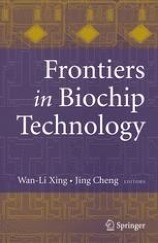
Frontiers in Biochip Technology
This comprehensive collection covers emerging technologies and cutting –edge research in the field of biochip technology, with all chapters written by the international stars of this evolving field. Key topics and current trends in biochip technology covered include: -microarray technology and its applications - microfluidics - drug discovery - detection technology - lab-on-chip technology and bioinformatics.

From herbs to healing : Pharmacognosy - phytochemistry - phytotherapy - biotechnology
Demonstrates the place of phytotherapy in healing, the role of herbs in complementary and traditional therapy, and research strategies for the development of drugs of natural plant origin. This book is primarily designed for scientific researchers, but is also very useful for undergraduate and postgraduate students in their professional training. As this book discusses herbs from all over the world, it is specifically drafted to be useful not only in Hungary and Europe, but also for people in other continents as an English language encyclopaedia of medicinal plants and their biologically active compounds.

Food nanotechnology
Nanotechnology is increasingly being utilized within the food industry to create innovative products with new or improved properties. This book introduces the history of nanotechnology applications in the food industry. It then discusses the key physicochemical and structural characteristics of the different kinds of nanoparticles found in foods, as well as showing how these characteristics lead to their unique functional attributes. Applications of nanotechnology in the food and agricultural industries are then covered, including the creation of nanopesticides, nanofertilizers, nutrient delivery systems, functional ingredients, smart packaging materials, nanofilters, and sensors, as well as for the conversion of waste materials into value-added products. Finally, the potential toxicity of both organic and inorganic nanoparticles found in foods is critically assessed. The author is a Distinguished Professor of food science who uses physics, chemistry, and biology to improve the quality, safety, and healthiness of foods. He has published over a thousand scientific articles and numerous books in this area and is currently the most highly cited food scientist in the world. He has won numerous awards for his scientific achievements.

Food Engineering : Integrated Approaches
Food Engineering: Integrated Approaches presents an up-to-date review of important food engineering concepts, issues and recent advances in the field. Distinguished food engineers and food scientists from key institutions worldwide have contributed chapters that provide a deep analysis of their particular subjects. At the same time, each topic is framed within the context of a broader more integrated approach, demonstrating its relationship and interconnectedness to other areas. The premise of this work, therefore, is to offer both a comprehensive understanding of food engineering as a whole and a thorough knowledge of individual subjects. This approach appropriately conveys the basic fundamentals, state-of-the-art technology, and applications of the involved disciplines.

Food Biotechnology in Ethical Perspective
Agrifood biotechnology—the genetic transformation of plants and animals through recombinant means—has created controversy in the food system for more than twenty years. The new edition reflects lessons from the hotly contested debates over those issues in the intervening decade, and includes wholly new discussions on ethical issues associated with livestock cloning, the Precautionary Principle, and the transatlantic debate between United States and European perspectives on biotechnology.
