



الصفحة 4
الصفحة 4

Objects, Components, Models and Patterns ; 46th International Conference, TOOLS EUROPE 2008, Zurich, Switzerland, June 30 - July 4, 2008. Proceedings
This book constitutes the thoroughly refereed proceedings of the 46th International Conference on Objects, Components, Models and Patterns, TOOLS EUROPE 2008, held in Zurich, Switzerland, in June/July 2008.TOOLS played a major role in the spread of object-oriented and component technologies. It has now broadened its scope beyond the original topics of object technology and component-based development to encompass all modern, practical approaches to software development.

Object-Oriented Software Engineering Using UML Patterns and Java
Shows students how to use both the principles of software engineering and the practices of various object-oriented tools, processes, and products. Using a step-by-step case study to illustrate the concepts and topics in each chapter, Bruegge and Dutoit emphasize learning object-oriented software engineer through practical experience: students can apply the techniques learned in class by implementing a real-world software project. The third edition addresses new trends, in particular agile project management (Chapter 14 Project Management) and agile methodologies (Chapter 16 Methodologies).
Object-Oriented Programming Languages : Interpretation
This comprehensive examination of the main approaches to object-oriented language explains the key features of the languages in use today. Class-based, prototypes and Actor languages are all looked at and compared in terms of their semantic concepts. In providing such a wide-ranging comparison, this book provides a unique overview of the main approaches to object-oriented languages.
Object-Oriented Programming and Java
Object-Oriented Programming and Java presents two important topics in contemporary software development: object-oriented programming and Java. This book takes a different teaching approach from most available literature, it begins with the description of real-world object interaction scenarios and explains how they can be translated, represented and executed using object-oriented programming paradigm.
Object-oriented metrics in practice : Using software metrics to characterize, Evaluate, and Improve the design of object-oriented systems
The combination of theoretically sound results and practically tested procedures and solution paths makes this book an ideal companion for professional software architects, developers and quality engineers. The pattern-oriented description of disharmonies offers easy access to detecting shortcomings and applying solution strategies. "This well-written book is an important piece of work that takes the seemingly forgotten art of object-oriented metrics to the next level in terms of relevance and usefulness."

Object-Oriented ActionScript for Flash 8
Object-Oriented ActionScript For Flash 8 teaches the theory and practice of OOP with ActionScript. You do not need any extensive prior programming experience, you just need to want to go beyond the usual Flash interfaces. Authors and working Flash developers Peter Elst and Todd Yard take you through the complete development cycle of a series of related applications, using numerous step-by-step instructions. You'll be able to develop highly reusable applications and services that leverage the dynamic features in Flash. This book demonstrates professional OOP skills and techniques that are completely transferable to other programming languages and technologies, including Inheritance, Polymorphism, managing classes, component development, consuming web services, and much more. It also includes some cutting edge ActionScript programming techniques, and animation and effects classes.

Objective information theory
Objective Information Theory (OIT) is proposed to represent and compute the information in a large-scale complex information system with big data in this monograph. To formally analyze, design, develop, and evaluate the information, OIT interprets the information from essential nature, measures the information from mathematical properties, and models the information from concept, logic, and physic. As the exemplified applications, Air Traffic Control System (ATCS) and Smart Court SoSs (System of Systems) are introduced for practical OITs.
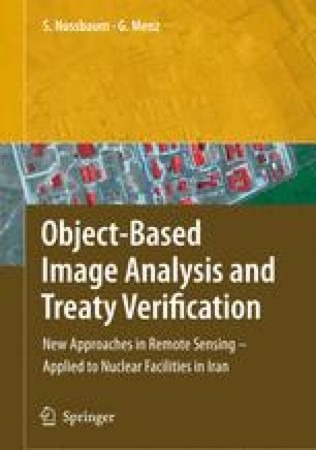
Object-Based Image Analysis and Treaty Verification : New Approaches in Remote Sensing – Applied to Nuclear Facilities in Iran
This book describes recent progress in object-based image interpretation, and also presents many new results in its application to verification of nuclear non-proliferation. A comprehensive workflow and newly developed algorithms for object-based high resolution image (pre-) processing, feature extraction, change detection, classification and interpretation are developed, applied and evaluated. The entire analysis chain is demonstrated with high resolution imagery acquired over Iranian nuclear facilities.
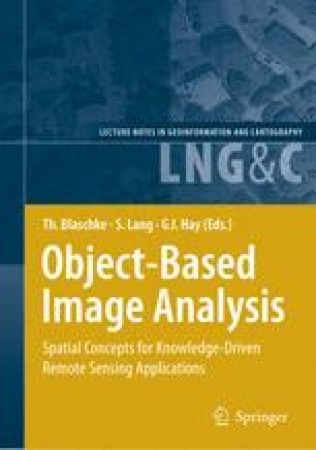
Object-Based Image Analysis : Spatial Concepts for Knowledge-Driven Remote Sensing Applications
This book discusses means, technologies and approaches related to the processing and analysis of multi-sensor, multi-resolution data with a focus on the generation, modelling and classification of objects. The applications also address the integration of Geographic Information and the concurrent developments of GIScience and vanquish limitations of pixelwise image processing by exploiting image information context-driven and "intelligently".
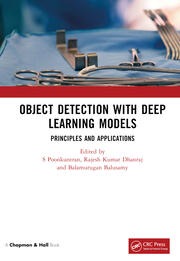
Object detection with deep learning models : Principles and applications
Discusses recent advances in object detection and recognition using deep learning methods, which have achieved great success in the field of computer vision and image processing. It provides a systematic and methodical overview of the latest developments in deep learning theory and its applications to computer vision, illustrating them using key topics, including object detection, face analysis, 3D object recognition, and image retrieval / A structured overview of deep learning in object detection / A diversified collection of applications of object detection using deep neural networks / Emphasize agriculture and remote sensing domains / Exclusive discussion on moving object detection

Obesity Management in Family Practice
With guidelines backed by the best scientific data, the book is about application, not just theory. The reader is given the commonsense tools that patients need in order to have ownership of their disease. Ultimately, patients are empowered to control their obesity, resulting in positive interaction between providers and patients.

Nuucleic acids in medicinal chemistry and chemical biology : Drug development and clinical applications
Delivers a comprehensive overview of the chemistry and biology of nucleic acids and their therapeutic applications. The book emphasizes the latest research in the field, including new technologies like CRISPR that create novel possibilities to edit mutated genes at the genomic DNA level and to treat inherited diseases and cancers. The authors explore the application of modified nucleosides and nucleotides in medicinal chemistry, a variety of current topics on nucleic acid chemistry and biology, nucleic acid drugs used to treat disease, and more. They also probe new domains of pharmaceutical research, offering the reader a wealth of new drug discovery opportunities emerging in this dynamic field

Nutrition, Health and Disease : A Lifespan Approach
Delivers an easy-to-read and student-friendly textbook on the changing demands for nutrients made by the body throughout the human lifespan.

Nutrition and diet in health: Principles and applications
Food provides us with essential nutrients involved in many physiological activities and biological processes in the body including growth and development, metabolism, immune function, and overall well-being. Nutrition and Diet in Health: Principles and Applications reviews and discusses the issues related to the roles of nutrition and diets in human health and diseases. The book contains two sections - one section features principles, the other, covers applications. Part One provides information on sustainable use of nutrition and diets in health and diseases; advanced biotechnological approaches to improve nutritional content of food; trace elements in nutrition; drug and nutrient interactions; functional foods and nutraceuticals in health maintenance; and Bio markers of functional foods and nutraceuticals in health maintenance. Part Two discusses the significance of nutrition in selected human diseases, including cardiovascular diseases, cancer, infection, neurodegenerative diseases, and metabolic co-morbidities. It also discusses optimal nutrition for wellness, fitness, pregnancy, mental health, aging, and longevity.

Nutraceuticals in obesity management and control
Provides detailed information on nutraceuticals that can be helpful in the control and management of obesity. It clarifies key aspects of nutraceuticals that include sources, extraction, chemistry, mechanisms of action, pharmacology, bioavailability, safety, and various applications. Beginning with a concise overview of the prevalence of obesity, complications related to obesity, and current treatment regimens, the volume delves into the roles of functional foods and nutraceuticals for the management of body weight and for alleviating obesity comorbidities. It goes on to discuss the effect of some of the most commonly and frequently used naturally occurring nutraceutical substances, along with their mechanisms of action in controlling obesity. The volume looks at the role of nutraceutical fruits as well as the beneficial aspects of carotenoids in fruits and vegetables and explores antioxidant-rich nutraceuticals, the role of vitamins and supplements, the use of green tea, and the potential of pseudocereals and spices in the management of metabolic syndrome.

Nutraceuticals for the treatment and prevention of sexual disorders
Covers diverse aspects of sexual dysfunctions and the role of nutraceutical therapeutics, applying both traditional knoweldge and modern evidence-based research. The new book focuses on the use of nutraceuticals on sexual disorders, highlighting the working solutions as well as open problems and future challenges in the use of nutraceuticals in sexual disorder research. Disucssing state-of-the-art developments and trends in this field, the book covers the use of antioxidants in stress-induced male infertility, the role of nutraceuticals in prostate cancer, male sex hormone disturbances, and the impact of nutraceuticals on male accessory organs. The book also addresses the use of nutraceuticals on female sexual disorders and remedial measures in treating breast cancer, cervical complications, pregnancy health and disorders, menstrual disturbances, female sex hormones, female infertility, and prevention of vaginal infections. The book also covers the use of nutraceuticals to combat general sexual disorders such as urinogenital complications, geriatric sexual functions, traditional nutraceuticals use for sexual disorders, the use of nutritional spices for sexual disorders, and the role of nutraceuticals on transgendered individuals.

Nutraceuticals : Sources, processing methods, properties, and applications
Explores the impact of nutraceutical compounds on human health and their main pharmacological contributions. Organized into three parts, this book addresses nutraceutical production, applications for disease prevention and treatment, and current trends, especially the role of nutraceuticals in cosmeceutical. Nutraceuticals are a class of products that can help people improve their health, reduce the risk of disease, extend their lives, and control the structure and functioning of their bodies. However, due to multiple hurdles that prevent nutraceuticals from circulating in an active form in the body, their use is associated with diminished therapeutic efficacy. Recognizing this problem, the book explores the root of the nutraceutical delivery system and its codelivery methods with a focus on medicines. With contributions from experienced nutraceutical experts, this book serves as a valuable reference for nutrition researchers, food scientists, pharmacologists, and those who are researching and studying in related areas.

Numerical Treatment of Partial Differential Equations
In 1988 we started work on the frst German edition of our book, which appeared in 1992. Our aim was to give students a textbook that contained the basic concepts and ideas behind most numerical methods for partial di?er- tial equations. The success of this frst edition and the second edition in 1994 encouraged us, ten years later, to write an almost completely new version, taking into account comments from colleagues and students and drawing on the enormous progress made in the numerical analysis of partial di?erential equations in recent times. The present English version slightly improves the third German edition of 2005: we have corrected some minor errors and added additional material and references.

Numerical Techniques for Chemical and Biological Engineers Using MATLAB® : A Simple Bifurcation Approach
This book addresses the bifurcation characteristics of chemical and biological processes as the general case and treats systems with a unique steady state as special cases. It uses a system approach which is the most efficient for knowledge organization and transfer. The book develops mathematical models for many commercial processes utilizing the mass-, momentum-, and heat-balance equations coupled to the rates of the processes that take place within the boundaries of the system. The models are solved numerically through MATLAB codes with emphasis on the design and optimization of the chemical and biological industrial equipment and plants.

Numerical solution of Variational Inequalities by Adaptive Finite Elements
Franz-Theo Suttmeier describes a general approach to a posteriori error estimation and adaptive mesh design for finite element models where the solution is subjected to inequality constraints. This is an extension to variational inequalities of the so-called Dual-Weighted-Residual method (DWR method) which is based on a variational formulation of the problem and uses global duality arguments for deriving weighted a posteriori error estimates with respect to arbitrary functionals of the error. In these estimates local residuals of the computed solution are multiplied by sensitivity factors which are obtained from a numerically computed dual solution. The resulting local error indicators are used in a feed-back process for generating economical meshes which are tailored according to the particular goal of the computation.
