



الصفحة 4
الصفحة 4

Esterification of Polysaccharides
Polysaccharide esters (cellulose and starch) are among the first polymeric materials applied commercially. The way of producing these technically relevant derivatives, mainly the carboxylic acid esters of C2 to C4 acids, have not been changed significantly during their history of manufacture. The investigation of new acylation methods and strategies of analysis was revived during the last decade by the search for tailored, biocompatible, material for specific fields of application, e.g., biotechnology, sensor technique and medicine. Unconventional solvents were developed for completely homo-geneous acylation reaction applying state of the art techniques of modern organic chemistry for polysaccharide modification. This book will provide a first comprehensive summary of acylation methods in a very practical manner. Detailed structure analysis is indispensable for the evaluation of structure-property-relationships. Spectroscopic methods in particular FTIR- and NMR spectroscopy including two dimensional methods are of increasing importance.

Enzymatic and Chemical Synthesis of Nucleic Acid Derivatives
The book covers enzymatic (including chemo-enzymatic) methods, with a focus on the synthesis and incorporation of modified nucleosides. The authors also offer a review of innovative approaches for the non-enzymatic chemical synthesis of nucleic acids and their analogs and derivatives, highlighting especially challenging species. The book offers a concise review of the methods that prepare novel and heavily modified polynucleotides in sufficient amount and purity for most clinical and research applications.

Encyclopedia of Genetics, Genomics, Proteomics and Informatics
It includes about 56% more words than the 1,392-page 2nd edition of 2003. The number of illustrations increased to almost 2,000 and their quality has improved by design and four colors. Cross-references among entries are expanded. The statements are supported by references; more than 14,000 journal papers and more than 3,000 books are listed. The book includes ~1,800 current databases and web servers. Retractions and corrigenda are pointed out.It covers the basics and the latest in genomics, proteomics, genetic engineering, small RNAs, transcription factories, chromosome territories, stem cells, genetic networks, epigenetics, prions, hereditary diseases, patents, etc. Similar integrated information is not available in textbooks or on the Internet. The journal reviews called it the best, high-quality resource for researchers, instructors and students of basic and applied biology, as well as for physicians and lawyers or even for interested laymen because of the clarity of presentation.

Emergent Computation : Emphasizing Bioinformatics
Emergent Computation is concerned with recent applications of Mathematical Linguistics or Automata Theory. This subject has a primary focus upon ""Bioinformatics"" (the Genome and arising interest in the Proteome), but the closing chapter also examines applications in Biology, Medicine, Anthropology, etc. The book is composed of an organized examination of DNA, RNA, and the assembly of amino acids into proteins. Rather than examine these areas from a purely mathematical viewpoint (that excludes much of the biochemical reality), the author uses scientific papers written mostly by biochemists based upon their laboratory observations. Thus while DNA may exist in its double stranded form, triple stranded forms are not excluded. Similarly, while bases exist in Watson-Crick complements, mismatched bases and abasic pairs are not excluded, nor are Hoogsteen bonds. Just as there are four bases naturally found in DNA, the existence of additional bases is not ignored, nor amino acids in addition to the usual complement of 20. Can there be more than ""64"" possible codons? RNA is examined from the point of view of Nussinov plots.

Efficacy of absorbable gelfoam soaked by tranexamic acid in controlling bleeding, pain, and dry socket following surgical extraction of third molar
Bleeding, pain, and dry socket are common complications following third molar surgical extractions. This study aimed to evaluate the efficacy of Gelfoam Soaked by Tranexamic Acid in reducing bleeding, managing pain, and preventing dry socket in patients undergoing third molar surgical extractions. Additionally, the role of Gelfoam in supporting the surgical flap during suturing was also examined.

Early Life Origins of Health and Disease
Early Life Origins of Health and Disease is a new book which presents and discusses the many factors that may have impact on normal development. In a concise and readable manner, the authors consider both the proven and suggestive evidence that the high prevalence of hypertension, diabetes, obesity and, in some populations, kidney disease, may not be all due to genetics or adult environment alone. There is good evidence that stress and more subtle dietary deficiencies, as well as placental malfunction, may increase the risk that the offspring will develop these problems in later life. Finally, new and emerging evidence for other areas of human health and disease such a motor control and mental health is critically reviewed for the first time. The book is a ‘must’ for all scientists interested in researching these areas, as there is a critical evaluation of the methodology used and suggestions for the ‘optimal’ way in which to investigate these phenomena.

Drop acid
Our most respected scientific literature is bursting with evidence that elevated uric acid levels lie at the root of many pervasive health conditions, but mainstream medicine for the most part remains unaware of this connection. This is especially alarming because many people don’t know they are suffering from sky-high levels, putting them at risk for developing or exacerbating potentially life-threatening illnesses.

DNA manipulation and analysis
Details technologies on recombinant DNA and nucleic acid manipulation that underpin much of the biological sciences and instructions on how to conduct them successfully. Chapters guide the reader through the basics of oligonucleotide synthesis and DNA sequencing; recombinant DNA plasmid work; cell-free experiments and the latest developments in CRISPR approaches to genome modification.

DNA damage detection : Methods and protocols
Explores techniques in DNA damage analysis, important not only for understanding cellular health after exposure to genotoxic agents but also for assessing cellular ability of genome maintenance. The book explores traditional DNA damage measurement methods, as well as modern fluorescence-based analysis and high throughput automatic analysis methods. Written for the highly successful Methods in Molecular Biology series, chapters include introductions to their respective topics, lists of the necessary materials and reagents, step-by-step and readily reproducible laboratory protocols, and tips on troubleshooting and avoiding known pitfalls.

DNA Binders and Related Subjects
advances in technology and the application of new methods to outstanding problems have played a major part in the development of ideas about drug-nucleic acid recognition. The field has undergone an explosive diversification as wider and wider problems became accessible to study using the new ideas and techniques. This volume reflects that diversification by offering accounts of selected areas that illustrate recent advances in the study of ligand–nucleic acid binding over disparate areas of the subject. There are chapters dealing specifically with the invention and application of new methodology, and a particularly thoughtful essay on the interpretation of X-ray diffraction data which may not be as straightforward as is often imagined. Other chapters illustrate the diversity and complexity of drug-DNA binding from several perspectives, referring to particular groups of related compounds or the potential attractions of the less-preferred DNA major groove as a target for nucleotide sequence recognition by ligands.

Dissecting the Molecular Anatomy of Tissue
The book provides an updated overview of molecular analysis of human tissues, and the impact this analysis has on diagnosis and prognosis of human diseases. Special emphasis is placed on human cancer and the future directions of the field. Methods of handling clinical tissue samples, including the impact of handling on subsequent molecular analysis, are also discussed. In addition, detailed protocols for molecular analysis of DNA, RNA and protein, with special emphasis on molecular analysis of highly complex human tissue samples containing mixtures of cell populations, are provided.

Discovering Biomolecular Mechanisms with Computational Biology
In this anthology, leading researchers present critical reviews of methods and high-impact applications in computational biology that lead to results that also non-bioinformaticians must know to design efficient experimental research plans. Discovering Biomolecular Mechanisms with Computational Biology also summarizes non-trivial theoretical predictions for regulatory and metabolic networks that have received experimental confirmation. Discovering Biomolecular Mechanisms with Computational Biology is essential reading for life science researchers and higher-level students that work on biomolecular mechanisms and wish to understand the impact of computational biology for their success.

Directory of microbicides for the protection of materials : A handbook
This edition is divided into two parts. In Part One 23 contributions of worldwide selected experts present extensively diversified information about: -Microbicides with regard to the relationship between chemical structure and mode of action and activity, -Research and development in consideration of registration procedures,Legislative aspects,The use of microbicides in the major application areas (18) which are described in detail.The Microbicide Data is organized into 21 substance classes (e.g. alcohols, aldehydes, acids, amides, etc.) and collected in Part Two.

Development of trans-free lipid systems and their use in food products
Encompasses the work of leading researchers discussing, from a scientific and technological perspective, the latest and most innovative approaches to structure edible oils without the use of trans fats. Additionally, the authors discuss practical uses and technical limitations associated with the use of "structured edible oils" in different food systems. Appealing to researchers and professionals working in lipid science, food chemistry and fat metabolism, it fills the gap in the literature for a book in this fast-changing field.

Developing Organogel of CoEnzyme Q10
Coenzyme Q10 is a small lipophilic molecule composed of a benzoquinone ring and a hydrophobic isoprenoid tail and is present in all cell membranes. It is also an antioxidant. It plays a substantial role in energy production by acting as a mobile electron carrier in the electron transport chain. It has poor intestinal absorption and is prepared in topical forms. Organogel is a non-crystalline, non-glassy thermoreversible (thermoplastic) solid material and viscoelastic system can be regarded as a semi-solid preparation which has an immobilized external apolar phase, it is compatible with high molecular weight ingredients. The objective of present work is to prepare new dosage form with studying of different factors and conditions affecting preparation. Materials and methods: stearic acid and Flaxseed oil organogel was prepared by three methods and confirmed by quality assessment methods including: transparency, structure analysis, inverted tube test, kinetic of organogalation and stability test.

Data Mining in Bioinformatics
8. 1. 1 Protein Subcellular Location The life sciences have entered the post-genome era where the focus of biological research has shifted from genome sequences to protein functionality. Withwhole-genomedraftsofmouseandhumaninhand,scientistsareputting more and more e?ort into obtaining information about the entire proteome in a given cell type. The properties of a protein include its amino acid sequences, its expression levels under various developmental stages and in di?erent tissues, its3Dstructure and activesites,its functionalandstructural binding partners, and its subcellular location. Protein subcellular location is important for understanding protein function inside the cell. For example, the observation that the product of a gene is localized in mitochondria will support the hypothesis that this protein or gene is involved in energy metabolism. Proteins localized in the cytoskeleton are probably involved in intracellular tra?cking and support.

Current Developments in Solid-state Fermentation
Over the period of last two decades, there has been significant resurgence in solid-state fermentation due to the numerous benefits it offers, especially in the engineering and environmental aspects. SSF has shown much promise in the development of several bioprocesses and products. This resurgence gained further momentum during the last 5-6 years with the developments in fundamental and applied aspects. A good deal of information has been generated in published literature and patented information. Several commercial ventures have come up based on SSF in different parts of the world. The contents are organized into four parts: Part 1 deals with the General and Fundamentals aspects of SSF; Part 2 deals with the production of bulk chemicals and products such as enzymes, organic acids, spores and mushrooms in SSF; Part 3 is on the use of SSF for specialty chemicals such as gibberellic acid, antibiotics and other pharmaceutically valuable secondary metabolites, pigments, and aroma compounds; Part 4 deals with the use of SSF miscellaneous application such as SSF for food and feed applications, agro-industrial residues as substrates in SSF and the production of silage and vermicompost.

CRP and the relation with heart disease
Cardiovascular diseases are the leading causes of mortality and morbidity in industrialized and developing countries. Many efforts have been undertaken during the last decades to identify environmental, behavioral and genetic factors modulating the risk of cardiovascular diseases.It will explain the role of CRP - an acute-phase protein- as indicator of potential cardiovascular disease as well as a predictor of the risk for heart disease and future heart attack

Conceptual density functional theory : Towards a new chemical reactivity theory
This two-volume reference book shows how conceptual density functional theory can reconcile empirical observations within silico calculations using density functional theory, molecular orbital theory, and valence bond theory. The ability to predict properties like electronegativity, acidity/basicity, strong covalent and weak intermolecular interactions as well as chemical reactivity makes DFT directly applicable to almost all problems in applied chemistry, from synthetic chemistry to catalyst design and materials characterization.
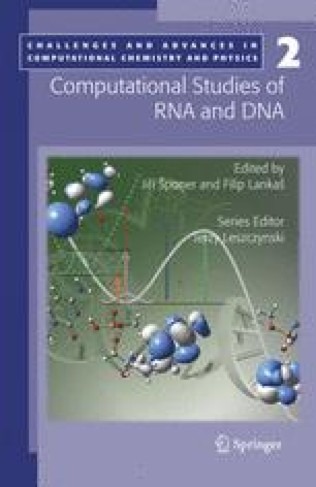
Computational studies of RNA and DNA
Computational Studies of RNA and DNA includes, in an integrated way, modern computational studies of nucleic acids, ranging from advanced electronic structure quantum chemical calculations through explicit solvent molecular dynamics (MD) simulations up to mesoscopic modelling, with the main focus given to the MD field. It gives an equal emphasis to the leading methods and applications while successes as well as pitfalls of the computational techniques are discussed.The systems and problems studied include: Accurate calculations of base pairing energies / Electronic properties of nucleic acids and electron transfer, through various types of nucleic acid / Calculating DNA elasticity
