



الصفحة 39
الصفحة 39

ISSE/SECURE 2007 securing electronic business processes : Highlights of the information security solutions Europe/SECURE 2007 Conference
Presents the most interesting talks given at ISSE/SECURE 2007 - the forum for the interdisciplinary discussion of how to adequately secure electronic business processes. Adequate information security is one of the basic requirements of all electronic business processes. It is crucial for effective solutions that the possibilities offered by security technology can be integrated with the commercial requirements of the applications.

ISSE 2006 — Securing Electronic Busines Processes : Highlights of the Information Security Solutions Europe 2006 Conference
Presents the most interesting talks given at ISSE 2006 - the forum for the interdisciplinary discussion of how to adequately secure electronic business processes. The topics include: Smart Token and e-ID-Card Developments and their Application - Secure Computing and how it will change the way we trust computers - Risk Management and how to quantify security threats - Awareness raising, Data Protection and how we secure corporate information. Adequate information security is one of the basic requirements of all electronic business processes. It is crucial for effective solutions that the possibilities offered by security technology can be integrated with the commercial requirements of the applications. The reader may expect state-of-the-art: best papers of the Conference ISSE 2006.
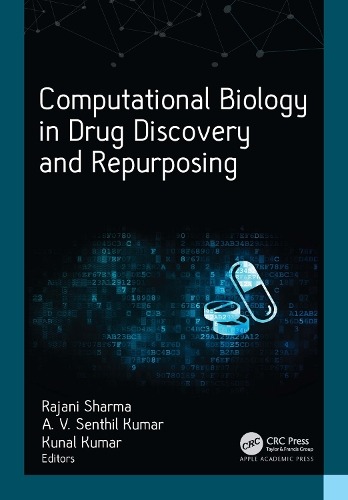
Computational biology in drug discovery and repurposing
Takes an in-depth look at the emerging and prospective field of computational biology and bioinformatics, which possesses the ability to analyze large accumulated biological data collected from sequence analysis of proteins and genes and cell population with an aim to make new predictions pertaining to drug discovery and new biology. The book explains the basic methodology associated with a bioinformatics and computational approach in drug designing. It then goes on to cover the implementation of computational programming, bioinformatics, pharmacophore modeling, biotechnological techniques, and pharmaceutical chemistry in designing drugs. The major advantage of intervention of computer language or programming is to cut down the number of steps and costs in the field of drug designing, reducing the repeating steps and saving time in screening the potent component for drug or vaccine designin
Compressor Instability with Integral Methods
Compressor Instability with Integral Methods" is a book, to bring together the quick integral approaches and advances in the field for the prediction of stall and surge problem in compressor. This book is useful for people involved in the flow analysis, design and testing of rotating machinery. For students, it can be used as a specialized topic of senior undergraduate or graduate study. The book can also be served as a self-study material to those who keen to acquire this knowledge. In brief, this book focuses on the numerical/computational analysis for the effect of distorted inlet flow propagation on the rotating stall and surge in axial compressors. It gains insight into the basic phenomena controlling these flow instabilities, and reveals the influence of inlet parameters on rotating stall and surge.

Comprehensive biochemistry for dentistry : Textbook for dental students
Combines fundamental concepts of biochemistry and the dental sciences to provide an authentic, coherent and comprehensive text for dental students. It describes in simple language the intricate pathophysiology of biomolecules in health and in diseases of dental and oral tissues. This book also describes the evolution of biochemistry in a chronological order, provides information about the fundamental chemical structure, classification and biological significance of biomolecules, vitamins and hormones, enriched with flow charts and diagrams for easy understanding and quick reference. It includes chapters on nucleic acids, nutrition and serum enzymes and organ function tests, and offers an innovative approach to familiarize dental students with the biochemical composition of enamel, dentine, cementum and saliva, explaining the biochemical basis of dental caries, periodontal diseases, role of fluorides in caries prophylaxis, fluoride toxicity, and the role of amino acids as anti-hypersensitive agents
Comprehensive applied basic sciences : For MDS students
All the questions are answered as per the type of question (long | short) and with “to the point” answers to make it more interesting. Answers are selected authentically from standard textbooks commonly referred to by the students to avoid confusion during examinations. Each answer is explained in heading and subheadings to break the continuous text. Written in a simple, well structured and point-wise format with a comprehensive examination-oriented description along with the diagrammatic representation. An indispensable book for the ‘last minute’ revision while preparing for the examinations and for quick reference throughout the course duration.
Composite Systems Decisions
Composite decisions consist of interconnected parts or subdecisions and correspond to a composite (composable, modular, decomposable) system. Composite Systems Decisions describes an educational approach that is based on systems engineering and considered modular design of composite decisions. Divided into four parts, this book contains descriptions of basic systems approaches and examines basic ‘technological’ problems for composite systems, including: modular hierarchical design; multistage design; multistage planning; redesign/improvement/adaptation; evaluation; and, combinatorial evolution/development.
Complex Scheduling
This book deals with such complex scheduling problems and methods to solve them. It consists of three parts: The ?rst part (Chapters 1 and 2) contains a description of basic scheduling models with applications and an introduction into discrete optimization (covering complexity, shortest path algorithms, linear programming, network ?ow algorithms and general optimization methods). In the second part (Chapter 3) resource-constrained project scheduling problems are considered. Especially, methods like constraint propagation, branch-a- bound algorithms and heuristic procedures are described. Furthermore, lower bounds and general objective functions are discussed.
Complex Geometry : An Introduction
Complex geometry studies (compact) complex manifolds. It discusses algebraic as well as metric aspects. The subject is on the crossroad of algebraic and differential geometry. Recent developments in string theory have made it an highly attractive area, both for mathematicians and theoretical physicists. The book contains detailed accounts of the basic concepts and the many exercises illustrate the theory. Appendices to various chapters allow an outlook to recent research directions.

Complete color harmony : Expert color information for professional color results
A colour reference for all types of designers, artists and anyone who used colour in their work or creative pursuits. Along with some basic colour theory, the guide provides hundreds of one, two, and three-colour combinations selected to reflect a range of moods and adjectives. It includes information on creating special effects using metallic and fluorescent colour palettes, as well as a section devoted to the psychology of colour. The authors help readers determine their best colours and suggest why some colours may inspire creativity while others don't. The book also includes two colour palette sections reflecting black and white as the colour base, along with an expanded and updated colour trends sections that discusses trends and how they are predicted, giving advice on how to be a trend spotter.

Compartment Syndrome : A Guide to Diagnosis and Management
Compartment syndrome is a complex physiologic process with significant potential harm, and though an important clinical problem, the basic science and research surrounding this entity remains poorly understood. This book fills the gap in the knowledge of compartment syndrome, re-evaluating the current state of the art on this condition. The current clinical diagnostic criteria are presented, as well as the multiple dilemmas facing the surgeon. Pathophysiology, ischemic thresholds and pressure management techniques and limitations are discussed in detail. The main surgical management strategy, fasciotomy, is then described for both the upper and lower extremities, along with wound care. Compartment syndrome due to patient positioning, in children and polytrauma patients, and unusual presentations are likewise covered. Novel diagnosis and prevention strategies, as well as common misconceptions and legal ramifications stemming from compartment syndrome, round out the presentation.
Community-Acquired Pneumonia
Community-acquired pneumonia (CAP) is a disease associated with high morbidity and mortality, with at least one third of cases requiring hospitalization, exceeding the numbers admitted for myocardial infarction and stroke. Despite a broad armamentarium of antimicrobials available, it remains an important cause of death in industrialized countries. CAP is caused by a variety of pathogens with their order of importance dependent on the location and population studied. Despite the importance of CAP, reliable data and a recommended evidence-based therapy are lacking, and basic research must be improved. The goal of this volume is to present state-of-the-art knowledge on epidemiology, clinical presentation, immunology, pathology, and diagnosis including the identification of "new pathogens". Therapeutic approaches, antibiotics resistance, disease management and vaccination strategies are also covered. The volume is of interest to researchers and clinicians in virology, epidemiology and biomedicine.
Communities of practice to actively manage best practices
Stefano Borzillo examines a large variety of CoPs by means of six success factors and identifies three basic types: innovating strategic, operational excellence, and social and productive space CoPs.

Communicating European Research 2005 ; Proceedings of the Conference, Brussels, 14-15 November 2005
The book covers the main aspects of science and technology communication today and addresses topical questions such as: Is science journalism necessary at all? Should communication become one of the basic skills of scientists, as compulsory as thinking, testing and experimenting? Should our schools of the future put scientific literacy at the top of the science curriculum? Do we need science critics? Does the coverage of science in the media reflect the choice of the editors or does it accurately mirror the public’s interest? How does one capture the public’s attention when promoting science on local, commercial or entertainment radio? Why would we need standards in science communication? How can we remove any obstacles to communication among researchers and between researchers?
Common Eye Diseases and their Management
There have been significant advances in the diagnosis and management of eye disease since the last edition of Common Eye Diseases and their Management was published. The specialty has developed more subspecialties, and the referring doctor has to have a good knowledge of these in order to make appropriate referrals. An increased emphasis on screening has made it necessary for the primary care doctor to have a basic knowledge of eye diseases. This applies particularly to glaucoma and diabetic eye disease. The management of eye conditions in the elderly is also an important and increasing primary care problem.
Clinical Neuroanatomy : A Neurobehavioral Approach
This book begins with a traditional review of the basic internal and external morphology, major nerve and fiber tracts, behavioral correlates, and clinical syndromes associated with spinal cord, brain stem, and cerebellum designed to reacquaint students and practicing clinicians with the functional anatomy of the subtentorial central nervous system. However, as the text was specifically geared to meet the needs of those practitioners whose primary interest is in what might be termed "higher order cognitive-behavioral function," the main focus of the text is on the brain itself. Borrowing heavily from a Lurian tradition, the central chapters reflect an attempt to offer more detailed, integrated, and, at times, theoretical models of cortical systems and their internal organization. Additional chapters highlight vascular anatomy and associated pathology, as well as neurochemical systems and their potential clinical relevance.
Clinical Implantology
Provides all the new and relevant information of basic to advanced implantology for the undergraduate as well as postgraduate dental students. Current concepts of implantology are beautifully presented with illustrations and clinical cases making this book a complete literature for the dentists to learn the basic science and various advanced techniques of implantology like sinus grafting, nasal floor grafting, block grafting, ridge splitting, distraction osteogenesis, soft tissue grafting, ‘all-on-4’/‘all-on-6’ techniques and many more.

Clinical guide to oral implantology : step by step procedures
Guides dentists through the complete surgical process, from basic techniques, impressions and sinus grafting, to complete denture stabilisation, implant aesthetics, suturing, and more. Complete chapters are dedicated to complications and their management, and a selection of challenging cases. Key points Practical guide to oral implantology for dental surgeons Covers basic surgery and more complex issues including complications and their management
Clinical Guide to Accelerated Orthodontics : Wth a Focus on Micro-Osteoperforations
A complete reference for all clinicians who are interested in incorporating into their daily practice the techniques available to reduce the duration of orthodontic treatment and to overcome other treatment limitations. It focuses especially on micro-osteoperforations (MOPs) as the most conservative, efficient, and versatile approach to increase the rate of tooth movement.

Clinical Blood Pool MR Imaging
MR Angiography covers the basic techniques, safety, efficacy, image processing and pharmaco-economic details to successfully implement a new level of MRA image quality with this new contrast agent.
