



الصفحة 38
الصفحة 38
Managing Information Systems Security and Privacy
The book deals with the management of information systems security and privacy, based on a model that covers technological, organizational and legal views. This is the basis for a focused and methodologically structured approach that presents "the big picture" of information systems security and privacy, while targeting managers and technical profiles. The book addresses principles in the background, regardless of a particular technology or organization. It enables a reader to suit these principles to an organization's needs and to implement them accordingly by using explicit procedures from the book. Additionally, the content is aligned with relevant standards and the latest trends.
Management models of digital transformation : Analysis and definition of success factors for the development of a management framework
Analyses and integrates existing approaches to managing and coordinating a digital transformation in order to identify relevant success factors of a digital transformation, serving as a basis for the development of a systematic framework for a management model of digital transformation. The analysis reveals ten success-critical focus areas of a digital transformation, which comprise numerous success factors: ‘Vision, goals, and strategies’, ‘Leadership’, ‘Communication’, ‘Digital culture and mindset’, ‘Digital platform’, ‘Partnership network’, ‘Capabilities, talents, and skills’, ‘Organization, coordination, and roles’, ‘Management methodologies’, and ‘Governance’.
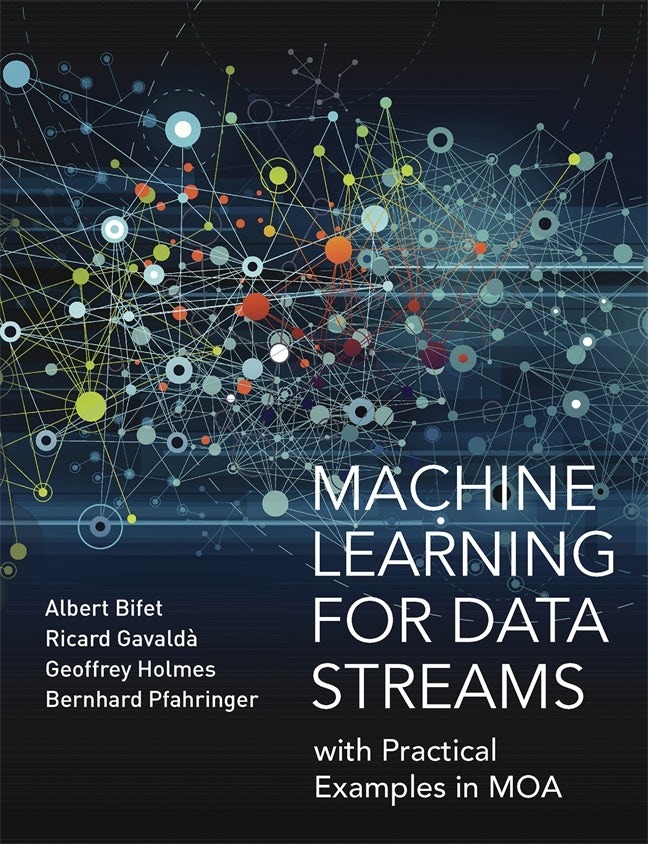
Machine learning for data streams : With practical examples in MOA
The book first offers a brief introduction to the topic, covering big data mining, basic methodologies for mining data streams, and a simple example of MOA. More detailed discussions follow, with chapters on sketching techniques, change, classification, ensemble methods, regression, clustering, and frequent pattern mining. Most of these chapters include exercises, an MOA-based lab session, or both. Finally, the book discusses the MOA software, covering the MOA graphical user interface, the command line, use of its API, and the development of new methods within MOA.
Machine learning for civil and environmental engineers : A practical approach to data-driven analysis, explainability, and causality
Introduces engineers and engineering students to the applications of artificial intelligence (AI), machine learning (ML), and machine intelligence (MI) in relation to civil and environmental engineering projects and problems, presenting state-of-the-art methodologies and techniques to develop and implement algorithms in the engineering domain.
Machine learning for brain disorders
Organized into five parts. Part One presents the fundamentals of ML. Part Two looks at the main types of data used to characterize brain disorders, including clinical assessments, neuroimaging, electro- and magnetoencephalography, genetics and omics data, electronic health records, mobile devices, connected objects and sensors. Part Three covers the core methodologies of ML in brain disorders and the latest techniques used to study them. Part Four is dedicated to validation and datasets, and Part Five discusses applications of ML to various neurological and psychiatric disorders.

Machine Learning and Knowledge Extraction ; 5th IFIP TC 5, TC 12, WG 8.4, WG 8.9, WG 12.9 International Cross-Domain Conference, CD-MAKE 2021, Virtual Event, August 17–20, 2021, Proceedings
Constitutes the refereed proceedings of the 5th IFIP TC 5, TC 12, WG 8.4, WG 8.9, WG 12.9 International Cross-Domain Conference, CD-MAKE 2021, held in virtually in August 2021. The 20 full papers and 2 short papers presented were carefully reviewed and selected from 48 submissions. The cross-domain integration and appraisal of different fields provides an atmosphere to foster different perspectives and opinions; it will offer a platform for novel ideas and a fresh look on the methodologies to put these ideas into business for the benefit of humanity.

Low Power Uwb Cmos Radar Sensors
Low Power UWB CMOS Radar Sensors deals with the problem of designing low cost CMOS radar sensors. The radar sensor uses UWB signals in order to obtain a reasonable target separation capability, while maintaining a maximum signal frequency below 2 GHz. This maximum frequency value is well within the reach of current CMOS technologies. The use of UWB signals means that most of the methodologies used in the design of circuits and systems that process narrow band signals, can no longer be applied. Low Power UWB CMOS Radar Sensors provides an analysis between the interaction of UWB signals, the antennas and the processing circuits.
Low Power Methodology Manual : For System-on-Chip Design
"Tools alone aren't enough to reduce dynamic and leakage power in complex chip designs - a well-planned methodology is needed. Following in the footsteps of the successful Reuse Methodology Manual (RMM), authors from ARM and Synopsys have written this Low Power Methodology Manual (LPMM) to describe [such] [a] low-power methodology with a practical, step-by-step approach." "Excellent compendium of low-power techniques and guidelines with balanced content spanning theory and practical implementation. The LPMM is a very welcome addition to the field of low power SoC implementation that has for many years operated in a largely ad-hoc fashion."
Logics of Specification Languages
Dedicated chapters address : the use of ASM (Abstract State Machines) in the classroom; the Event-B modelling method; a methodological guide to CafeOBJ logic; CASL, the Common Algebraic Specification Language; the Duration Calculus; the logic of the RAISE specification language (RSL); the specification language TLA+; the typed logic of partial functions and the Vienna Development Method (VDM); and Z logic and its applications. Each chapter is self-contained, with references, and symbol and concept indexes. Finally, in a unique feature, the book closes with short commentaries on the specification languages written by researchers closely associated with their original development.

Logical approaches to computational barriers ; 2nd Conference on Computability in Europe, CiE 2006, Swansea, UK, June 30-July 5, 2006, Proceedings
The sources of new ideas and methods include practical developments in areas such as neural networks, quantum computation, natural computation, molecular computation, and computational learning. Applications are everywhere, especially, in algebra, analysis and geometry, or data types and programming. This volume, Logical Approaches to Computational Barriers, is the proce- ings of the second in a series of conferences of CiE that was held at the Depa- ment of Computer Science, Swansea University, 30 June - 5 July, 2006.

Liver carcinogenesis : Methods and protocols
Discusses the latest advancements in modern methodologies used to study liver carcinogenesis. The first half of this book describes pertinent preclinical models of hepatocellular carcinoma (HCC) and cholangiocarcinoma (CCA), established either through orthotopic induction of ectopic implantation. The second half of this book covers a diverse array of techniques applied to characterize the biochemical and cellular composition of hepatic malignancies that operate at the single-cell and histological levels. Written in the highly successful Methods in Molecular Biology series format, chapters include introductions to their respective topics, lists of the necessary materials and reagents, step-by-step, readily reproducible laboratory protocols, and tips on troubleshooting and avoiding known pitfalls.

Lived Nation as the History of Experiences and Emotions in Finland, 1800-2000
It revolves around the following questions: What kinds of experiences have engendered national mobilization and feelings of national belonging? How have political and societal conflicts turned into new communities of experience and emotion? What kinds of experiences have been integrated into, or excluded from, the national context in different instances? How have people internalized or contested the nation as a context for their personal, family and minority-group experiences? In what ways has the nation entered and affected people’s intimate spheres of life? How have “national” experiences been transmitted to children in the renewal of the nation? This edited collection points to the histories of experience and emotions as a novel way of studying nations and nationalism. Building on current debates in nationalism studies, it offers a theoretical framework for analyzing the historical construction of “lived nations,” and introduces a number of new methodological approaches to understand the experiences of the nation, extending from the investigation of personal reminiscences and music records to the study of dreams and children’s drawings.

Life System Modeling and Simulation; International Conference on Life System Modeling, and Simulation, LSMS 2007, Shanghai, China, September 14-17, 2007. Proceedings
The International Conference on Life System Modeling and Simulation (LSMS) was formed to bring together international researchers and practitioners in the field of life system modeling and simulation as well as life system-inspired theory and methodology. The arrival of the 21st century has been marked by a resurgence of research interest both in arriving at a systems-level und- standing of biology and in applying such knowledge in complex real-world appli- tions. Consequently, computational methods and intelligence in systems, biology, as well as bio-inspired computational intelligence, have emerged as key drivers for new computational methods. For this reason papers dealing with theory, techniques and real-world applications relating to these two themes were especially solicited.

Leveraging Applications of Formal Methods ; 1st International Symposium, ISoLA 2004, Paphos, Cyprus, October 30 - November 2, 2004, Revised Selected Papers
This book constitutes the thoroughly refereed post-proceedings of the First International Symposium on Leveraging Applications of Formal Methods, ISoLA 2004, held in Paphos, Cyprus in October/November 2004. The 12 revised full papers presented were carefully selected from more than 70 submissions. The papers discuss issues related to the adoption and use of rigorous tools and methods for the specification, analysis, verification, certification, construction, test, and maintenance of systems. In particular, by discussing common problems, requirements, algorithms, methodologies, and practices, ISoLA aims at supporting researchers in their quest to improve the utility, reliability, flexibility, and efficiency of tools for building systems, and users in their search for adequate solutions to their problems.
Legal Programming : Designing Legally Compliant RFID and Software Agent Architectures for Retail Processes and Beyond
LEGAL PROGRAMMING: Designing Legally Compliant RFID and Software Agent Architectures for Retail Processes and Beyond provides a process-oriented discussion of the legal concerns presented by agent-based technologies, processes and programming. It offers a general outline of the potential legal difficulties that could arise in relation to them, focusing on the programming of negotiation and contracting processes in a privacy, consumer and commercial context. The authors will elucidate how it is possible to create form of legal framework and design methodology for transaction agents, applicable in any environment and not just in a specific proprietary framework, that provides the right level of compliance and trust. Key elements considered include the design and programming of legally compliant methods, the determination of rights in respect of objects and variables, and ontologies and programming frameworks for agent interactions. Examples are used to illustrate the points made and provide a practical perspective.
Learning at speed : How to upskill and reskill your workforce at pace to drive business performance
Learning at Speed is a practical book which brings together the best from lean and agile methodologies to show how they can be applied to learning and development (L&D) to improve individual and organizational performance. This provides a people development framework which can be used to deconstruct a learning strategy and optimise each element for improved results. It shows how to identify learning barriers and possible solutions, leverage company data to understand learning needs and how to assess the most effective learning resources and delivery channels.
Law and the Semantic Web : Legal Ontologies, Methodologies, Legal Information Retrieval, and Applications
As part of this objective, ICT (information and communication technologies) services should become available for every citizen, and for all schools, homes and businesses. The book you have in front of you is about Semantic Web technology and law. Law is something omnipresent; all citizens — at some points in their lives — have to deal with it. In addition, law involves a large group of professionals, and is a mul- billion business world wide. Information technology is important because it that can improve citizens’ interaction with law, as well as improve legal professionals’ work environment. Legal professionals dedicate a significant amount of their time to finding, reading, analyzing and synthesizing information in order to take decisions, and prepare advice and trials, among other tasks. As part of the “Semantic-Based Knowledge and Content Systems” Strategic Objective, the European Commission is funding projects to construct technology to make the Semantic Web vision come true. 1 The articles in this book are related to two current foci of the Strategic Objective : • Knowledge acquisition and modelling, capturing knowledge from raw information and multimedia content in webs and other distributed repositories to turn poorly structured information into machi- processable knowledge.

Latinas/os in the United States : Changing the Face of América
This book also addresses important theoretical and methodological issues related to the study of Latinas/os and presents in-depth analyses (both quantitative and qualitative) of substantive issues relevant to this population, including migration, demographic patterns and processes, education, health, citizenship, political participation, religion, gender and sex roles, literary and cultural production, and the media. The authors seek to educate and increase awareness of the diversity that exists among the Latina/o population, and to carefully examine the social, economic, demographic, cultural, and political impacts and contributions that this growing population has had in the United States. The edited volume presents a holistic and multidisciplinary perspective of this group, and it critically documents how Latinas and Latinos have changed and will continue to change the face of América.

LASER 2004; Proceedings of the 6th International Workshop on Application of Lasers in Atomic Nuclei Research (LASER 2004) held in Poznan, Poland, 24-27 May, 2004
6th International Workshop on Application of Lasers in Atomic Nuclei Research, LASER 2004, held in Poznan, Poland, 24-27 May, 2004 Researchers and graduate students interested in the Mössbauer Effect and its applications will find this volume indispensable. The volume presents the most recent developments in the methodology of Mössbauer spectroscopy.

Languages, Methodologies and Development Tools for Multi-Agent Systems ; 1st International Workshop, LADS 2007, Durham, UK, September 4-6, 2007. Revised Selected Papers
Constitutes the thoroughly refereed post-workshop proceedings of the First International Workshop on Languages, Methodologies and Development Tools for Multi-Agent Systems, LADS 2007, held in Durham, UK, in September 2007. The workshop was part of MALLOW 2007, a federation of workshops on Multi-Agent Logics, Languages, and Organizations.
