



الصفحة 38
الصفحة 38
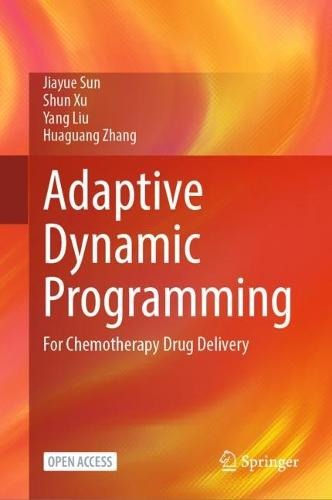
Adaptive dynamic programming for chemotherapy drug delivery
Focuses on the practical application of Adaptive Dynamic Programming (ADP) in chemotherapy drug delivery, taking into account clinical variables and real-time data. ADP's ability to adapt to changing conditions and make optimal decisions in complex and uncertain situations makes it a valuable tool in addressing pressing challenges in healthcare and other fields. As optimization technology evolves, we can expect to see even more sophisticated and powerful solutions emerge.
Actors and the Art of Performance : Under Exposure
Actors and the Art of Performance: Under Exposure combines the author's two main biographical paths: her professional commitment to the fields of both theatre and philosophy. The art of acting on stage is analysed here not only from the theoretical perspective of a spectator, but also from the perspective of the actor. The author draws on her experience as both a theatre actor and a university professor whose teachings in the art of acting rely heavily on her own experience and also on her philosophical knowledge. The book is unique not only in terms of its content but also in terms of its style. Written in a multiplicity of voices, the text oscillates between philosophical reasoning and narrative forms of writing, including micro-narratives, fables, parables, and inter alia by Carroll, Hoffmann and Kleist. Hence the book claims that a trans-disciplinary dialogue between the art of acting and the art of philosophical thinking calls for an aesthetical research that questions and begins to seek alternatives to traditionally established and ingrained formats of philosophy.

Actin-Binding Proteins and Disease
This volume, written by experts in the field, is the first to deal with the relationship between human disease and the actin cytoskeleton. It provides overviews of actin and selected actin-binding proteins, and then focuses on diseases that involve these proteins. Specific chapters deal with actin, cofilin, profilin, gelsolin and thymosin ¾4. Other chapters discuss the roles of multiple actin-binding proteins in cancer and metastasis, leukocyte disorders, and heart failure, and there is a chapter that describes how intracellular pathogens use the host actin cytoskeleton. This seminal volume is intended for researchers, clinicians, physicians, and graduate students in the fields of biochemistry, cell biology, microbiology, immunology, and genetics.

A Time for Metabolism and Hormones
Recent years have seen spectacular advances in the field of circadian biology. These have attracted the interest of researchers in many fields, including endocrinology, neurosciences, cancer, and behavior. By integrating a circadian view within the fields of endocrinology and metabolism, researchers will be able to reveal many, yet-unsuspected aspects of how organisms cope with changes in the environment and subsequent control of homeostasis. This field is opening new avenues in our understanding of metabolism and endocrinology. A panel of the most distinguished investigators in the field gathered together to discuss the present state and the future of the field. The editors trust that this volume will be of use to those colleagues who will be picking up the challenge to unravel how the circadian clock can be targeted for the future development of specific pharmacological strategies toward a number of pathologies.

A Modern Theory of Factorial Design
Factorial design plays a fundamental role in efficient and economic experimentation with multiple input variables and is extremely popular in various fields of application, including engineering, agriculture, medicine and life sciences. Factorial experiments are often used in case studies in quality management and Design for Six Sigma (DFSS).Factorial design plays a fundamental role in efficient and economic experimentation with multiple input variables and is extremely popular in various fields of application, including engineering, agriculture, medicine and life sciences. Factorial experiments are often used in case studies in quality management and Design for Six Sigma (DFSS).
A History of Atmospheric CO2 and Its Effects on Plants, Animals, and Ecosystems
The authors address the future role of atmospheric CO2 and its likely effects on ecosystems. This book incorporates the advances of various earth science, environmental, and ecological fields into an overall account of global change and the changing dynamics of life on Earth.

A Field Guide to Algebra
Focuses on the structure of fields and is intended for a second course in abstract algebra. Besides providing proofs of the transcendance of pi and e, the book includes material on differential Galois groups and a proof of Hilbert's irreducibility theorem. The reader will hear about equations, both polynomial and differential, and about the algebraic structure of their solutions. In explaining these concepts, the author also provides comments on their historical development and leads the reader along many interesting paths. In addition, there are theorems from analysis: as stated before, the transcendence of the numbers pi and e, the fact that the complex numbers form an algebraically closed field, and also Puiseux's theorem that shows how one can parametrize the roots of polynomial equations, the coefficients of which are allowed to vary. There are exercises at the end of each chapter, varying in degree from easy to difficult. To make the book more lively, the author has incorporated pictures from the history of mathematics, including scans of mathematical stamps and pictures of mathematicians.

A Changing World : Challenges for Landscape Research
"Written primarily for researchers and advanced students in environmental and social sciences, this latest book in Springer’s Landscape Series looks at some of the emerging fields and new challenges in landscape research. These include: the role of value systems in perceiving, appreciating, and managing landscapes / the ‘space’ and ‘place’ concept in landscape research GIS and remote sensing techniques for gathering and processing spatially and temporally explicit land cover, vegetation, and land use data / methods of landscape history / landscape genetics and genetic methods to test landscape connectivity and dispersal of plant and animal species"
3rd Kuala Lumpur International Conference on Biomedical Engineering 2006 ; Biomed 2006, 11-14 December 2006, Kuala Lumpur, Malaysia
The Kuala Lumpur International Conference on Biomedical Engineering (Biomed 2006) was held from 11 to 14 December 2006 at the Palace of the Golden Horses, Kuala Lumpur, Malaysia. This international conference was jointly organised by the Department of Biomedical Engineering, University of Malaya, Malaysia; Department of Biomedical Engineering, Inje University, Korea; and Malaysian Society of Medical and Biological Engineering. The papers presented at Biomed 2006 cover the following areas: artificial intelligence, biological effects of non-ionising electromagnetic fields, biomaterials, biomechanics, biomedical sensors, biomedical signal analysis, biotechnology, clinical engineering, human performance engineering, imaging, medical informatics, medical instruments and devices, physiological modelling, simulation, and control, prostheses and artificial organs, regulations and organisations, rehabilitation engineering, telemedicine, tissue engineering, and virtual reality in medicine.
3D Printing in Oral Health Science : Applications and Future Directions
Equips readers with a sound understanding of contemporary clinical applications in all fields of dentistry and their future directions. In the last few years, the development of 3D printing for medical and dental applications has increased tremendously. Advancements in 3D printing create the possibility of customized products, savings on small-scale productions, ease of sharing and processing of patient image data, and educational up-gradation. Looking at the dental specialties, it is evident that 3D printing has applications in all aspects of oral health science including prosthodontics, oral surgery, periodontics, endodontics, and orthodontics. This book will cover all major fields in dentistry and will help the practitioner in the process of decision-making and apply concepts in clinical or laboratory practice. It is based on current scientific evidence to provide readers with an up-to-date contemporary underst
3-D Computer vision : Principles, algorithms and applications
Offers advanced content on computer vision (basic content can be found in its prerequisite textbook, “2D Computer Vision: Principles, Algorithms and Applications”), including the basic principles, typical methods and practical techniques. It is intended for graduate courses on related topics, e.g. Computer Vision, 3-D Computer Vision, Graphics, Artificial Intelligence, etc. The book is mainly based on my lecture notes for several undergraduate and graduate classes I have offered over the past several years, while a number of topics stem from my research publications co-authored with my students. This book takes into account the needs of learners with various professional backgrounds, as well as those of self-learners. Furthermore, it can be used as a reference guide for practitioners and professionals in related fields.
