



الصفحة 38
الصفحة 38

Mobility, data mining and privacy : Geographic knowledge discovery
This book assesses this research frontier from a computer science perspective, investigating the various scientific and technological issues, open problems, and roadmap. The editors manage a research project called GeoPKDD, Geographic Privacy-Aware Knowledge Discovery and Delivery, funded by the EU Commission and involving 40 researchers from 7 countries, and this book tightly integrates and relates their findings in 13 chapters covering all related subjects, including the concepts of movement data and knowledge discovery from movement data; privacy-aware geographic knowledge discovery; wireless network and next-generation mobile technologies; trajectory data models, systems and warehouses; privacy and security aspects of technologies and related regulations; querying, mining and reasoning on spatiotemporal data; and visual analytics methods for movement data.

Mobilities of Knowledge
This collection of essays examines how spatial mobilities of people and practices, technologies and objects, knowledge and ideas have shaped the production, circulation, and transfer of knowledge in different historical and geographical contexts. Targeting an interdisciplinary audience, Mobilities of Knowledge combines detailed empirical analyses with innovative conceptual approaches. The first part scrutinizes knowledge circulation, transfer, and adaption, focussing on the interpersonal communication process, early techniques of papermaking, a geographical text, indigenous knowledge in exploration, the genealogy of spatial analysis, and different disciplinary knowledges about the formation of cities, states, and agriculture.

Mobile World : Past, Present and Future
Key reading for all those involved with the future of mobile communications, this book is a valuable resource, particularly for advanced undergraduate and postgraduate students on Mobile Technology courses, practitioners, and researchers working in mobile communications, CSCW and HCI. This volume is a sequel to Brown et al: Wireless World: Social and Interactional Aspects of the Mobile Age, also in the CSCW series. "This book presents a rich insight into how and why the mobile has become so important in today’s society. It explores the strong emotional attachment that people have to these devices, and argues that it is people and not the technology that developers must put at the heart of future mobile offerings. A valuable book for industry and academics alike."

Mobile Robots : The Evolutionary Approach
The design and control of autonomous intelligent mobile robotic systems operating in unstructured changing environments includes many objective difficulties. There are several studies about the ways in which, robots exhibiting some degree of autonomy, adapt themselves to fit in their environments. The application and use of bio-inspired and intelligent techniques such as reinforcement learning, artificial neural networks, evolutionary computation and so forth in the design and improvement of robot designs is an emergent research topic. Researchers have obtained robots that display an amazing slew of behaviours and perform a multitude of tasks. These include perception of environment, planning and navigation in rough terrain, pushing boxes, negotiating an obstacle course, etc.
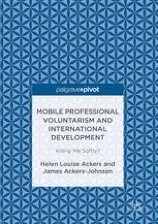
Mobile Professional Voluntarism and International Development : Killing Me Softly?
This book explores the impact that professional volunteers have on the low resource countries they choose to spend time in. Whilst individual volunteering may be of immediate benefit to individual patients, this intervention may have detrimental effects on local health systems; distorting labour markets, accentuating dependencies and creating opportunities for corruption. Improved volunteer deployment may avoid these risks and present opportunities for sustainable systems change. The empirical research presented in this book stems from a specific volunteering intervention funded by the Tropical Health Education Trust and focused on improving maternal and newborn health in Uganda.

Mobile Information Systems : Infrastructure and Design for Adaptivity and Flexibility
The book is divided into three parts: core technologies for mobile information systems (e.g., adaptive middleware and flexible e-services), enabling technologies (like data management on small devices or adaptive low-power hardware architectures or wireless networks), and methodological aspects of mobile information systems design (such as service profiling or user interface and e-service design for context-aware applications). It provides researchers in academia and industry with a comprehensive vision on innovative aspects which can be used as a basis for the development of new frameworks and applications.

Mobile health technologies for ambient assisted living and healthcare
The use of telemedicine and mobile devices is growing, and sensors might aid in creating creative solutions. Developing these solutions is crucial for monitoring senior citizens, lifestyles, and medical procedures. The development of assistive technology for various users to follow sports and other activities is strongly tied to this study area. Data protection is crucial, and the development of these solutions for medical uses should be verified. The security and privacy of the information may be tied to other recognized research projects for their acceptability. ICT research has considerably improved quality of life and has fully assimilated all citizens into society through medical rehabilitation and assistive technology. The technologies and research fields that influence medical informatics include databases, networking, graphical user interfaces, data mining, machine learning, intelligent decision support systems, and specialized programming languages.

Mobile Edge Computing
It offers comprehensive, self-contained knowledge on Mobile Edge Computing (MEC), which is a very promising technology for achieving intelligence in the next-generation wireless communications and computing networks. The book starts with the basic concepts, key techniques and network architectures of MEC. Then, we present the wide applications of MEC, including edge caching, 6G networks, Internet of Vehicles, and UAVs. In the last part, we present new opportunities when MEC meets blockchain, Artificial Intelligence, and distributed machine learning (e.g., federated learning). We also identify the emerging applications of MEC in pandemic, industrial Internet of Things and disaster management.

Mobile computing, applications, and services ; 11th EAI International Conference, MobiCASE 2020, Shanghai, China, September 12, 2020, Proceedings
This book constitutes the thoroughly refereed post-conference proceedings of the 11th International Conference on Mobile Computing, Applications, and Services, MobiCASE 2020, held in Shanghai, China, in September 2020. The conference was held virtually due to the COVID-19 pandemic. The 15 full papers were carefully reviewed and selected from 49 submissions. The papers are organized in topical sections on mobile application and framework; mobile application with data analysis; and AI application.

Mobile Communications : Re-negotiation of the Social Sphere
Mobile Communications: Renegotiation of the Social Sphere surveys some of the broader issues associated with the adoption and use of mobile communication, and explores developing areas of inquiry. Mobile communications are looked at in the context of other types of mediated interaction (e-mail, instant messaging, Wi-Fi, landline telephone etc.), thus demonstrating the uniqueness of this form of communication and how it is influencing the renegotiation of the social sphere. A truly international set of contributors consider how mobile communication has impacted on society and reflect on how it is used (and sometimes resented) in various public and private spaces. They provide an in-depth analysis of specific areas which complement our understanding of the phenomena including: • The psychological dimensions of mobile communication (addiction, proclivity to be disturbed by others use of the mobile phone), • The linguistics of mobile communication, and • The understanding of mobile communication’s commercialisation. This book will be a valuable addition to any researcher’s or professional’s reading material in the area of interaction of technology and society, providing the reader with a broad insight and specific knowledge of how mobile communication is reformulating the social sphere.

Mobile and Wireless Network Security and Privacy
Mobile and Wireless Network Security and Privacy analyzes important security and privacy problems in the realms of wireless networks and mobile computing. The material includes a report to the National Science Foundation of the United States which will be used by program managers for the foundation in setting priorities for research directions in this area. In the following chapters field experts expand upon the report and provide further information about important research directions in the fields of wireless networks and mobile computing. The chapters are written by the leading international researchers and professionals in thes fields. Each chapter represents state-of-the-art research and includes several influential contributions. A multitude of valuable discussions on relevant concepts, such as the various approaches that define emerging security and privacy in mobile and wireless environment, are featured.

Mobile and Wireless Communications with Practical Use-Case Scenarios
While wireless technologies had a spectacular evolution over the past years, the present trend is to adopt a global heterogeneous network of shared standards that enables the provisioning of Quality of Service and Quality of Experience to the end-user. To this end, enabling technologies like Machine Learning, Internet of Things, Digital Twins, are seen as promising solutions for next generation networks that will enable an intelligent adaptive interconnected environment with support for prediction and decision making so that the heterogeneous applications and users requirements can be highly satisfied. The aim of this textbook is to provide the readers with a comprehensive technical foundation of the mobile communication systems and wireless network design, operations and applications of various radio access technologies. Additionally, it also introduces the reader to the latest advancements in technologies in terms of Internet of Things ecosystem, Machine Learning and Digital Twins for IoT-enabled intelligent environments. Furthermore, this textbook also includes practical use-case scenarios using Altair WinProp Software as well as Phyton, TensorFlow and Jupiter as support for practice-based laboratory sessions"

Mobile and Wireless Communications Networks ; IFIP TC6 / WG6.8 Conference on Mobile and Wireless Communication Networks (MWCN 2004) October 25-27, 2004 Paris, France
Mobile Ad hoc NETworks (MANETs) has attracted great research interest in recent years. A Mobile Ad Hoc Network is a self-organizing multi-hop wireless network where all hosts (often called nodes) participate in the routing and data forwarding process. The dependence on nodes to relay data packets for others makes mobile ad hoc networks extremely susceptible to various malicious and selfish behaviors. This point is largely overlooked during the early stage of MANET research. Many works simply assume nodes are inherently cooperative and benign. However, experiences from the wired world manifest that the reverse is usually true; and many works [3] [10] [9] [8] [12] [19] have pointed out that the impact of malicious and selfish users must be carefully investigated. The goal of this research is to address the cooperation problem and related security issues in wireless ad hoc networks. As a rule of thumb, it is more desirable to include security mechanisms in the design phase rather than continually patching the system for security breaches. As pointed out in [2] [1], there can be both selfish and malicious nodes in a mobile ad hoc network. Selfish nodes are most concerned about their energy consumption and intentionally drop packets to save power. The purpose of malicious nodes, on the other hand, is to attack the network using various intrusive techniques. In general, nodes in an ad hoc network can exhibit Byzantine behaviors.

Mobile and Wireless Communication Networks; IFIP 19th World Computer Congress, TC-6, 8th IFIP/IEEE Conference on Mobile and Wireless Communications Networks, August 20-25, 2006, Santiago, Chile
International Federation for Information Processing The IFIP series publishes state-of-the-art results in the sciences and technologies of information and communication. The scope of the series includes: foundations of computer science; software theory and practice; education; computer applications in technology; communication systems; systems modeling and optimization; information systems; computers and society; computer systems technology; security and protection in information processing systems; artificial intelligence; and human-computer interaction. Proceedings and post-proceedings of referred international conferences in computer science and interdisciplinary fields are featured. These results often precede journal publication and represent the most current research. The principal aim of the IFIP series is to encourage education and the dissemination and exchange of information about all aspects of computing.

MKTG13 : Principles of marketing
Learn Marketing YOUR Way with MKTG and MindTap! MKTG s easy-reference, paperback textbook presents course content through visually engaging chapters. Read or listen to your textbook, complete assignments, and study, all in one place. Track your scores and stay motivated toward your goals. Whether you have more work to do or are ahead of the curve, you ll know where you need to focus your efforts.

Mixed-criticality industrial wireless networks
Introduces criticality to label important data,which is then allocated more transmission resources, ensuring that important data’sQoS requirements can be met to the extent possible.To help readers understand how to apply mixed criticality to industrial wirelessnetworks, the content is divided into four parts. First, we introduce how to integratethe model of mixed-criticality data into industrial wireless networks (Chap. 1).Second, we explain how to analyze the schedulability of mixed-criticality data underexisting scheduling algorithms (Chaps. 2 and 3). Third, we present a range of novelscheduling algorithms for mixed-criticality data (Chaps. 4, 5, and 6). Finally, weconclude this book and discuss future research directions (Chap. 7).

Mixed Hodge Structures
The text of this book has its origins more than twenty- ve years ago. In the seminar of the Dutch Singularity Theory project in 1982 and 1983, the second-named author gave a series of lectures on Mixed Hodge Structures and Singularities, accompanied by a set of hand-written notes. The publication of these notes was prevented by a revolution in the subject due to Morihiko Saito: the introduction of the theory of Mixed Hodge Modules around 1985. Understanding this theory was at the same time of great importance and very hard, due to the fact that it uni es many di erent theories which are quite complicated themselves: algebraic D-modules and perverse sheaves. The present book intends to provide a comprehensive text about Mixed Hodge Theory with a view towards Mixed Hodge Modules.

Mixed Finite Elements, Compatibility Conditions, and Applications : Lectures given at the C.I.M.E. Summer School held in Cetraro, Italy June 26–July 1, 2006
Since the early 70's, mixed finite elements have been the object of a wide and deep study by the mathematical and engineering communities. The fundamental role of this method for many application fields has been worldwide recognized and its use has been introduced in several commercial codes. An important feature of mixed finite elements is the interplay between theory and application. Discretization spaces for mixed schemes require suitable compatibilities, so that simple minded approximations generally do not work and the design of appropriate stabilizations gives rise to challenging mathematical problems.

Mitral valve diseases
The heart is a pump consisting of 4 chambers:2 atria and 2 ventricles and 4 valves one of them is mitral valve which is located betweenthe left atrium and the left ventricle and prevents the backward flow of blood.Ithas several unique features: Mitral annulus, two leaflets, the chordae tendineaeand papillary muscles. The mitral valve may become stenotic or may regurgitate. Regurgitation(or leakage of the valve): When the valve (s) do not close completely. Stenosis (or narrowing of the valve): When the valve (s) opening becomes narrowed. Mitral stenosis is categorized as mild, moderate or severe it is typically causedby (Rheumatic fever, A congenital heart, Calcium deposits .....) and it caused severalsymptoms such as: dyspnea, hemoptysis, fatigue, Chest pain and others Where as the Signs and symptoms of mitral valve regurgitation, can include: Abnormal heart sound, Shortness of breath, Heart palpitations, Fatigue, edma, Coughing.

Mitochondria and the Heart
The function of the heart is highly dependent on oxidative energy that is generated in mitochondria. Defects in mitochondrial structure and function can be found in association with cardiovascular diseases. Mitochondria and the Heart discusses the role that mitochondria plays in cardiovascular disease, including biogenesis and function of cardiac mitochondria during normal growth, development and aging. In addition, nonbioenergetic, biogenesis and degradation pathways are explored. Understanding these pathways and the effects that mitochondrial defects have in cardiac pathology is extremely important in establishing the diagnosis and treatment of mitochondrial-based cardiac diseases.
