



الصفحة 38
الصفحة 38
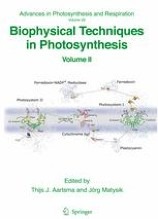
Biophysical Techniques in Photosynthesis ; Vol. II
Since the first volume on Biophysical Techniques in Photosynthesis Research, published in 1996, new experimental techniques and methods have been devised at a rapid pace. The present book is a sequel which complements the first volume (Volume 3 in the Series) by providing a comprehensive overview of the most important new techniques developed over the past ten years, especially those that are relevant for research on the mechanism and fundamental aspects of photosynthesis. The contributions are written by leading scientists in their field. The book has 5 sections: Imaging; Structure; Optical and laser spectroscopy; Magnetic resonance; Theory. Each chapter describes the basic concepts of the technique, practical applications and scientific results. Possibilities and limitations from a technical as well as a scientific point of view are addressed, allowing the reader not only to recognize the potential of a particular method for his/her own quest, but also to assess the resources that are required for implementation. The book is intended for use by graduate students and researchers in photosynthesis as well as in (bio)physics, (bio)chemistry and biology in general.
Biopharmaceutics applications in drug development
This book introduces fundamental concepts, methods, and advances in the areas of dissolution, absorption, and permeability and their key applications in dosage form performance. Case studies are used to discuss the applications of biopharmaceutic strategies in the development of successful drugs, with a specific focus on the applications of biopharmaceutic strategies in the development of successful drugs. The book presents an integrated view in linking pharmaceutic to the biological consequences of drug products and leverages those for decision making in drug development.
Biomimetic neural learning for intelligent robots : Intelligent systems, cognitive robotics, and neuroscience
This book presents research performed as part of the EU project on biomimeticmultimodal learning in a mirror neuron-based robot (MirrorBot) and contribu-tions presented at the International AI-Workshop on NeuroBotics. The over-all aim of the book is to present a broad spectrum of current research intobiomimetic neural learning for intelligent autonomous robots. In this book we show the development of newtechniques using cell assemblies, associative neural networks, and Hebbian-typelearning in order to associate vision, language and motor concepts. We havedeveloped biomimetic multimodal learning and language instruction in a robotto investigate the task of searching for objects. As well as the research performedin this area for the MirrorBot project, the second part of this book incorporatessignificant contributions from other research in the field of biomimetic robotics.This second part of the book concentrates on the progress made in neuroscienceinspired robotic learning approaches (in short: NeuroBotics). We hope that this book stimulates and encourages new research in this in-teresting and dynamic area.
Biomarkers as targeted herbal drug discovery : A pharmacological approach to nanomedicines
Looks at the applications of biomarkers as important tools for herbal drug discovery, presenting research on phytoconstituents with advanced nanotechnological applications for healthcare benefits. Herbal drug discovery based on biomarkers is an emerging area in complementary and alternative medicine that has tremendous potential in healthcare. Conventional medications have limited efficacy and high toxicity, whereas herbal drugs are said to provide wide structural diversity that is not usually seen with conventional/synthetic drug molecules. Recognition of various herbal constituents, such as terpenoids, fatty acids, flavonoids and steroids, are well explored in the management and treatment of various disorders in this volume. These agents target various biomarkers such as nitric oxide (NO), cytokines, chemokines, adhesion molecules, NF- kβ, lipoxygenase (LOX), and arachidonic acid. Reviews the literature on inflammatory biomarkers in the treatment of diseases Looks at the development of herbal drug discovery based on biomarkers Explores emerging concepts of nanomedicines for herbal drug delivery Takes an interdisciplinary approach, with application to disciplines related to medical, pharmaceutical, biotechnological, Ayurvedic, Unani and biomedical engineering fields
Biology of orthodontic tooth movement : current concepts and applications in orthodontic practice
Presents the current knowledge and understanding of the biological processes involved in the orthodontic movement of teeth and discusses recent progress in the field. It links research advances to their immediate clinical applications and offers researchers and clinicians a state of the art reference on topical issues relating to orthodontic tooth movement.
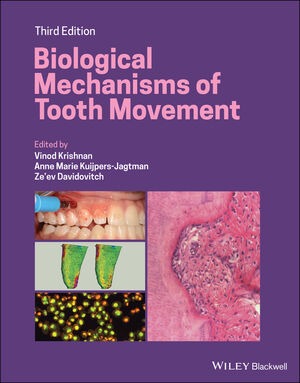
Biological mechanisms of tooth movement ; 3rd ed.
Cover subjects such as: The development of biological concepts in orthodontics, including the cellular and molecular biology behind orthodontic tooth movement Mechanics meets biology, including the effects of mechanical loading on hard and soft tissues and cells, and biological reactions to temporary anchorage devices Inflammation and orthodontics, including markers for tissue remodeling in the gingival crevicular fluid and saliva Personalized diagnosis and treatment based on genomic criteria, including the genetic influences on orthodontic tooth movement Rapid orthodontics, including methods to accelerate or decelerate orthodontic tooth movement Perfect for residents and PhD students of orthodontic and periodontal programs, Biological Mechanisms of Tooth Movement is also useful to academics, clinicians, bone biologists, and researchers with an interest in the mechanics and biology of tooth movement.
Biological and medical data analysis ; Vol. 3745 ; 6th International symposium, ISBMDA 2005, Aveiro, Portugal, November 10-11, 2005, Proceedings
The 6th International Symposium on Biological and Medical Data Analysisaimed to become a place where researchersinvolved in these diverse but increas-ingly complementary areas could meet topresent and discuss their scientificresults.The papers in this volume discuss issues from statistical models to archi-tectures and applications to bioinformatics and biomedicine. They cover bothpractical experience and novel research ideas and concepts.
Bioinformatics technologies
Solving modern biological problems requires advanced computational methods. Bioinformatics evolved from the active interaction of two fast-developing disciplines, biology and information technology. The central issue of this emerging field is the transformation of often distributed and unstructured biological data into meaningful information. This book describes the application of well-established concepts and techniques from areas like data mining, machine learning, database technologies, and visualization techniques to problems like protein data analysis, genome analysis and sequence databases. Chen has collected contributions from leading researchers in each area. The chapters can be read independently, as each offers a complete overview of its specific area, or, combined, this monograph is a comprehensive treatment that will appeal to students, researchers, and R&D professionals in industry who need a state-of-the-art introduction into this challenging and exciting young field.
Bioelectromagnetics current concepts : The mechanisms of the biological effect of extremely high power pulses
Proceedings of the NATO Advanced Research Workshop on The Mechanisms of the Biological Effect on Extra High Power Pulses (EHPP), Yerevan, Armenia 3 - 5 March 2005
Bioeconomy : Shaping the transition to a sustainable, biobased economy
This book defines the new field of "Bioeconomy" as the sustainable and innovative use of biomass and biological knowledge to provide food, feed, industrial products, bioenergy and ecological services. The chapters highlight the importance of bioeconomy-related concepts in public, scientific, and political discourse. Using an interdisciplinary approach, the authors outline the dimensions of the bioeconomy as a means of achieving sustainability.
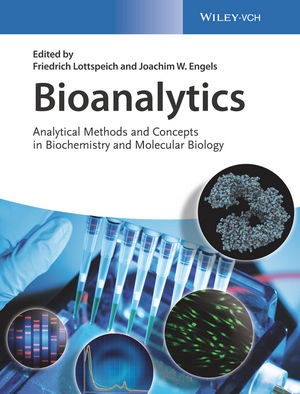
Bioanalytics : Analytical methods and concepts in biochemistry and molecular biology
Analytical methods are the essential enabling tools of the modern biosciences. This book presents a comprehensive introduction into these analytical methods, including their physical and chemical backgrounds, as well as a discussion of the strengths and weakness of each method. It covers all major techniques for the determination and experimental analysis of biological macromolecules, including proteins, carbohydrates, lipids and nucleic acids.
Bioactive egg compounds
Hen eggs have exceptional potential as an inexhaustible source for a variety of products with unique properties. These products are valuable to human health and nutrition and can be used as raw materials for diverse purposes in the cosmetics and pharmaceutical industries. Bioactive Egg Compounds presents the latest results and concepts in the biotechnological use of egg compounds. Following an introduction to the different compounds of egg white, yolk and shell, the nutritive value of egg compounds is discussed. Procedures for processing egg compounds to improve their nutritive value are described, including the concept of so-called enriched eggs. Also described is the isolation and application of egg compounds with special properties, such as antibiotic action.
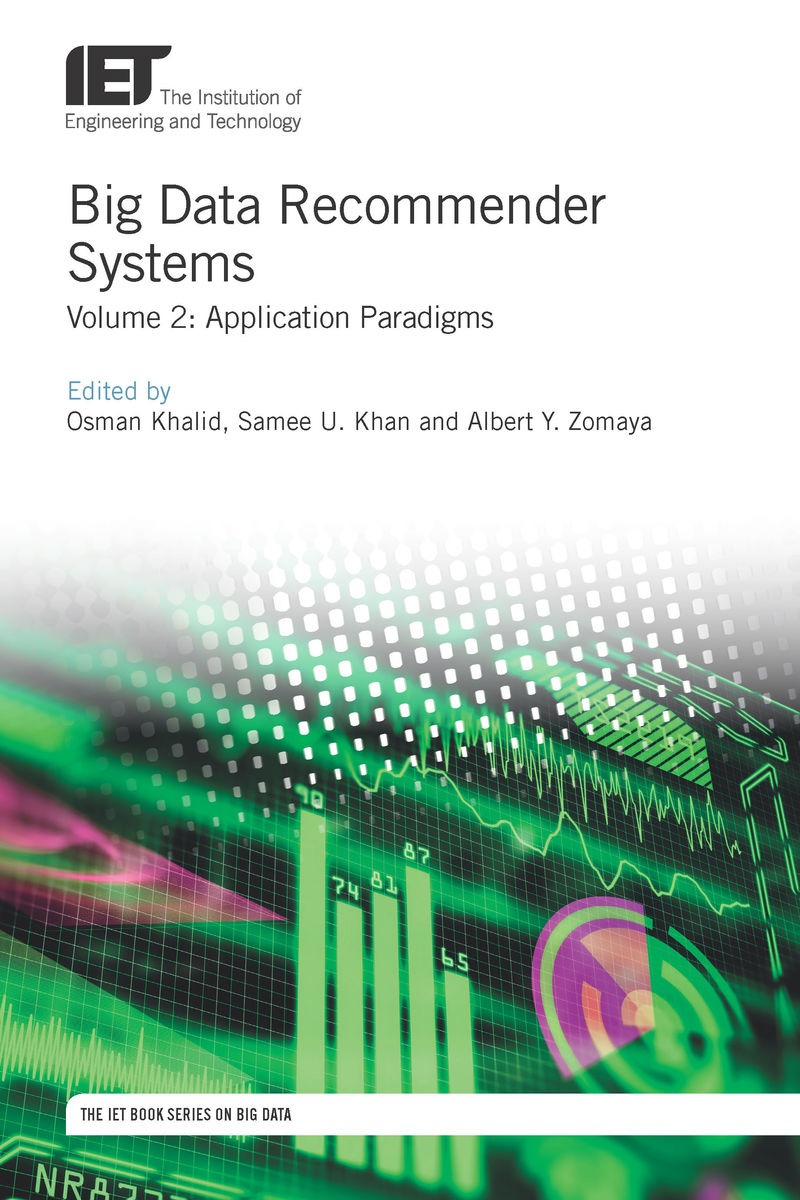
Big Data Recommender Systems ; Vol.2 : Application Paradigms
Combines experimental and theoretical research on big data recommender systems to help computer scientists develop new concepts and methodologies for complex applications. It includes original scientific contributions in the form of theoretical foundations, comparative analysis, surveys, case studies, techniques and tools. First designed to generate personalized recommendations to users in the 90s, recommender systems apply knowledge discovery techniques to users’ data to suggest information, products, and services that best match their preferences. In recent decades, we have seen an exponential increase in the volumes of data, which has introduced many new challenges. recommender systems. Volume 2 covers a broad range of application paradigms for recommender systems over 22 chapters
Big Data Recommender Systems ; Vol.1 : Algorithms, Architectures, Big Data, Security and Trust
Combines experimental and theoretical research on big data recommender systems to help computer scientists develop new concepts and methodologies for complex applications. It includes original scientific contributions in the form of theoretical foundations, comparative analysis, surveys, case studies, techniques and tools.
Big data analytics and machine intelligence in biomedical and health informatics : Concepts, methodologies, tools and applications
Provides coverage of developments and state-of-the-art methods in the broad and diversified data analytics field and applicable areas such as big data analytics, data mining, and machine intelligence in biomedical and health informatics. Covers the latest advances and developments in health informatics, data mining, machine learning, and artificial intelligence. They have been organized with respect to the similarity of topics addressed, ranging from issues pertaining to the Internet of Things (IoT) for biomedical engineering and health informatics, computational intelligence for medical data processing, and Internet of Medical Things??(IoMT).
Biased technical change and economic conservation laws
Makes use of Lie groups to shed new light on the analysis of economic conservation laws. Economic conservation laws are not simply abstract concepts; this book shows that they are tools of empirical analysis that can be applied to such topics as analyses of macro performance and corporate efficiency.
Bernoulli potential in superconductors : How the electrostatic field helps to understand superconductivity
The motion of electrons in superconductors seems to defy our imagination based on daily experience with Newtonian mechanics. This book shows that the classical concepts, such as the balance of forces acting on electrons, are useful for understanding superconductivity. The electrostatic field plays a natural part in this balance as it mediates forces between electrons at long distances. Due to its classical interpretation, the theory presented in this book is suitable for introductory courses.
Beginning Python : From novice to professional
Ten different projects illustrate the concepts introduced in the book. You will learn how to create a P2P file-sharing application and a web-based bulletin board, and how to remotely edit web-based documents and create games. Author Magnus Lie Hetland is an authority on Python and previously authored Practical Python. He also authored the popular online guide, Instant Python Hacking, on which both books are base

Beginning PyQt : A hands-on approach to GUI programming with PyQt6
Learn GUI application development from the ground up by building simple projects that teach the fundamentals of using PyQt6. This 2nd edition includes updated code, programs, and new chapters to get you started using the newest version. Taking a practical approach, each chapter will gradually teach more advanced and diverse concepts to aid you in designing and customizing interesting and professional applications. Using this knowledge, you’ll be able to build a photo editor, games, a text editor, a working web browser, and an assortment of other GUIs. In the end, this book will guide you through the process of creating UIs to help you bring your own ideas to life. Find out what you need to begin making your own applications with PyQt! You will: Develop cross-platform UIs with PyQt and Python / Use PyQt’s many widgets and apply them by building real applications / Build larger applications through a step-by-step approach and break the code into smaller chunks for deeper understanding / Work with more complex applications in PyQt, covering SQL databases, multithreading, web browsers, and more / Create modern-looking UIs with Qt Quick and QtQml using the latest version of PyQt
Beginning Java Objects : From concepts to code
Learning to design objects effectively with Java is the goal of Beginning Java Objects: From Concepts to Code, Second Edition. Plenty of titles dig into the Java language in massive detail, but this one takes the unique approach of stepping back and looking at fundamental object concepts first. Mastery of Java—from understanding the basic language features to building complete industrial-strength Java applications—emerges only after a thorough tour of thinking in objects. The first edition of Beginning Java Objects has been a bestseller; this second edition includes material on the key features of J2SE 5, conceptual introductions to JDBC and J2EE, and an in-depth treatment of the critical design principles of model-data layer separation and model-view separation.
