



الصفحة 37
الصفحة 37

Adaptive Hypermedia and Adaptive Web-Based Systems ; Second International Conference, AH 2002 Malaga, Spain, May 29 - 31, 2002 Proceedings
This book constitutes the refereed proceedings of the Second International Conference on Adaptive Hypermedia and Adaptive Web-Based Systems, AH 2002, held in Malaga, Spain, in May 2002.The 33 revised full papers and 23 short papers presented were carefully reviewed and selected from 109 submissions. Also included are three invited contributions, 30 posters, and 5 presentations given at the associated doctoral constortium. Among the topics covered are adaptive hypertext and hypermedia, user modeling, adaptive learning, adaptive tutoring systems, information retrieval, educational hypermedia systems, Web adaption, adaptive navigation, adaption and personalization.
Acute Ischemic Stroke : Imaging and Intervention
Acute Ischemic Stroke: Imaging and Intervention is a comprehensive presentation of the state-of-the-art in the diagnosis and treatment of acute ischemic stroke. This book offers a practical review of recent advances in stroke neuroimaging, and the latest therapeutic options for this disease.

Active mining ; 2nd International workshop, AM 2003, Maebashi, Japan, October 28, 2003, revised selected papers
"This volume contains the papers selected for presentation at the 2nd Inter- tional Workshop on Active Mining (AM 2003) which was organized in conju- tion with the 14th International Symposium on Methodologies for Intelligent Systems (ISMIS 2003), The workshop was organized by the Maebashi Institute of Technology for shed light on the future development of active mining. "This volume contains : Topics Database Management / Artificial Intelligence / Algorithm Analysis and Problem Complexity / Health Informatics / Bioinformatics
Abstraction, Reformulation, and Approximation ; 7th International Symposium, SARA 2007, Whistler, Canada, July 18-21, 2007, Proceedings
This volume contains the proceedings of SARA 2007, the seventh symposium, held at Whistler Village, British Columbia, Canada, July 18-21. Three distinguished speakers were invited to give keynote presentations, and their abstracts are included herein,It has been recognized since the inception of artificial intelligence that abstractions, problem reformulations and approximations (AR&A) are central to human common-sense reasoning and problem solving and to the ability of systems to reason effectively in complex domains.AR&A techniques have been used in a variety of problem-solving settings, including automated reasoning, cognitive modelling.
Abstraction, refinement and proof for probabilistic systems
Probabilistic techniques are increasingly being employed in computer programs and systems because they can increase efficiency in sequential algorithms, enable otherwise nonfunctional distribution applications, and allow quantification of risk and safety in general. This makes operational models of how they work, and logics for reasoning about them, extremely important. Abstraction, Refinement and Proof for Probabilistic Systems presents a rigorous approach to modeling and reasoning about computer systems that incorporate probability. Its foundations lie in traditional Boolean sequential-program logic—but its extension to numeric rather than merely true-or-false judgments takes it much further, into areas such as randomized algorithms, fault tolerance, and, in distributed systems, almost-certain symmetry breaking. The presentation begins with the familiar "assertional" style of program development and continues with increasing specialization: Part I treats probabilistic program logic, including many examples and case studies; Part II sets out the detailed semantics; and Part III applies the approach to advanced material on temporal calculi and two-player games.
Abstract Harmonic Analysis of Continuous Wavelet Transforms
This volume contains a systematic discussion of wavelet-type inversion formulae based on group representations, and their close connection to the Plancherel formula for locally compact groups. The connection is demonstrated by the discussion of a toy example, and then employed for two purposes: Mathematically, it serves as a powerful tool, yielding existence results and criteria for inversion formulae which generalize many of the known results. Moreover, the connection provides the starting point for a – reasonably self-contained – exposition of Plancherel theory. Therefore, the book can also be read as a problem-driven introduction to the Plancherel formula.

A Story of Islamic Art
The book also provides a detailed introduction, maps, timeline, glossary, and guides for further reading. This book offers accessible answers to key questions in the scholarship on Islamic art and architecture from its earliest times to the present. The issues dealt with in each of the stories include iconography, attitudes towards representation, the role of script, the elaboration of geometric decoration, the creation of sacred and secular spaces in architecture, and the socio-cultural context of art production and consumption.
A Software-Defined GPS and Galileo Receiver : A Single-Frequency Approach
Satellite navigation receivers are used to receive, process, and decode space-based navigation signals, such as those provided by the GPS constellation of satellites. There is an increasing need for a unified open platform that will enable enhanced receiver development and design, as well as cost-effective testing procedures for various applications. This book provide hands-on exploration of new technologies in this rapidly growing field. One of the unique features of the work is the interactive approach used, giving readers the ability to construct their own Global Navigation Satellite Systems (GNSS) receivers. To construct such a reconfigurable receiver with a wide range of applications, the authors discuss receiver architecture based on software-defined radio (SDR) techniques. The presentation unfolds in a systematic, user-friendly style and goes from the basics to cutting-edge research.
A Mathematical Introduction to Conformal Field Theory
The first part of this book gives a detailed, self-contained and mathematically rigorous exposition of classical conformal symmetry in n dimensions and its quantization in two dimensions. In particular, the conformal groups are determined and the appearance of the Virasoro algebra in the context of the quantization of two-dimensional conformal symmetry is explained via the classification of central extensions of Lie algebras and groups. The second part surveys some more advanced topics of conformal field theory, such as the representation theory of the Virasoro algebra, conformal symmetry within string theory, an axiomatic approach to Euclidean conformally covariant quantum field theory and a mathematical interpretation of the Verlinde formula in the context of moduli spaces of holomorphic vector bundles on a Riemann surface.
A Linear Systems Primer
Based on a streamlined presentation of the authors' successful work Linear Systems, this textbook provides an introduction to systems theory with an emphasis on control. The material presented is broad enough to give the reader a clear picture of the dynamical behavior of linear systems as well as their advantages and limitations. Fundamental results and topics essential to linear systems theory are emphasized. The emphasis is on time-invariant systems, both continuous- and discrete-time.
A Language of Contemporary Architecture : An Index of Topology and Typology
Provides an index of ideas, theories, projects, and definitions that string into a methodology for evaluating the contemporary language of architecture described as “contemporism” through a review of topology (form) and typology (system and elements). Trying to answer the postmodern question of how to move beyond modernism through a thread of architectural styles that tried to respond to deficiencies from the modern promise and contextual changes. Yet, the question remains, should this ongoing struggle to move beyond modernism be a stylistic battle? Has the present architectural practice ever left the modernist tendencies, and is there a structure for a contemporary language in architecture?. Presents a collection of highly illustrated projects that have worked under these parameters to break away from modernism in order to present a holistic integration of topology and typology as a language for “contemporism.” The index is illustrated with individual spreads, which can be read sequentially or independently, and encourages the reader to make their own connections. It also includes interviews and contributions from Toyo Ito, Anthony Vidler, Ben van Berkel, Christian Kerez, and Greg Lynn.

A History of Male Psychological Disorders in Britain, 1945–1980
Explores the under-researched history of male mental illness from the mid-twentieth century. It argues that statistics suggesting women have been more vulnerable to depression and anxiety are misleading since they underplay a host of alternative presentations of 'distress' more common in men.
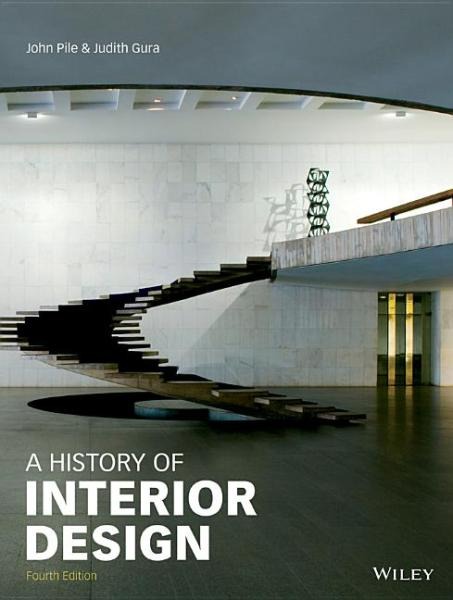
A History of Interior Design ; 4th Ed
Exploring a broad range of design styles and movements, this revised and expanded edition includes coverage of non-Western design and vernacular interior architecture and features 665 photographs and drawings (color and black-and-white). The companion image bank includes an interactive presentation of periods and styles, incorporating more than 100 illustrations.

A History of Abstract Algebra
This presentation provides an account of the intellectual lineage behind many of the basic concepts, results, and theories of abstract algebra.The development of abstract algebra was propelled by the need for new tools to address certain classical problems that appeared unsolvable by classical means. A major theme of the approach in this book is to show how abstract algebra has arisen in attempts to solve some of these classical problems, providing context from which the reader may gain a deeper appreciation of the mathematics involved.
A High-Performance Logical Framework -- All About Maude : How to Specify, Program, and Verify Systems in Rewriting Logic
This book gives a comprehensive account of Maude, a language and system based on rewriting logic. Many examples are used throughout the book to illustrate the main ideas and features of Maude, and its many possible uses. Maude modules are rewrite theories. Computation with such modules is - cient deduction by rewriting. Because of its logical basis and its initial model semantics,aMaude module defines a precise mathematical model.This means that Maude and its formal tool environment can be used in three, mutually reinforcing ways: • as a declarative programming language; • as an executable formal specification language; and • as a formal verification system. Maude’s rewriting logic is simple, yet very expressive. This gives Maude good representational capabilities as a semantic framework to formally represent a wide range of systems, including models of concurrency, distributed al- rithms, network protocols, semantics of programming languages, and models of cell biology. Rewriting logic is also an expressive universal logic,making Maude a fiexible logical framework in which many difierent logics and - ference systems can be represented and mechanized. This makes Maude a useful metatool to build many other tools, including those in its own formal tool environment. Thanks to the logic’s simplicity and the use of advanced semi-compilation techniques, Maude has a high-performance implementation, making it competitive with other declarative programming languages.

A First Course in Statistics for Signal Analysis
This essentially self-contained, deliberately compact, and user-friendly textbook is designed for a first, one-semester course in statistical signal analysis for a broad audience of students in engineering and the physical sciences. The emphasis throughout is on fundamental concepts and relationships in the statistical theory of stationary random signals, explained in a concise, yet fairly rigorous presentation.

A First Course in Modular Forms
This book introduces the theory of modular forms with an eye toward the Modularity Theorem: All rational elliptic curves arise from modular forms. The topics covered include: • elliptic curves as complex tori and as algebraic curves, • modular curves as Riemann surfaces and as algebraic curves, • Hecke operators and Atkin–Lehner theory, • Hecke eigenforms and their arithmetic properties, • the Jacobians of modular curves and the Abelian varieties associated to Hecke eigenforms, • elliptic and modular curves modulo p and the Eichler–Shimura Relation, • the Galois representations associated to elliptic curves and to Hecke eigenforms. As it presents these ideas, the book states the Modularity Theorem in various forms, relating them to each other and touching on their applications to number theory.

A Dressing Method in Mathematical Physics
The monograph is devoted to the systematic presentation of the so called "dressing method" for solving differential equations (both linear and nonlinear) of mathematical physics. The essence of the dressing method consists in a generation of new non-trivial solutions of a given equation from (maybe trivial) solution of the same or related equation.

A Course in Calculus and Real Analysis
Provides a self-contained and rigorous introduction to calculus of functions of one variable. The presentation and sequencing of topics emphasizes the structural development of calculus. At the same time, due importance is given to computational techniques and applications. The authors have strived to make a distinction between the intrinsic definition of a geometric notion and its analytic characterization. It highlight the fact that calculus provides a firm foundation to several concepts and results that are generally encountered in high school and accepted on faith. For example, one can find here a proof of the classical result that the ratio of the circumference of a circle to its diameter is the same for all circles. Also, this book helps get a clear understanding of the concept of an angle and the definitions of the logarithmic, exponential and trigonometric functions together with a proof of the fact that these are not algebraic functions. A number of topics that may have been inadequately covered in calculus courses and glossed over in real analysis courses are treated here in considerable detail. As such, this book provides a unified exposition of calculus and real analysis.

A Computer Scientists Guide to Cell Biology
Provides a succinct treatment of the general concepts of cell biology, furnishing the computer scientist with the tools necessary to read and understand current literature in the field.After a brief introduction to cell biology, the text focuses on the principles behind the most-widely used experimental procedures and mechanisms, relating them to well-understood concepts in computer science. The presentation of the material has been prepared for the reader’s quick grasp of the topic: comments on nomenclature and background notes can be ascertained at a glance, and essential vocabulary is boldfaced throughout the text for easy identification.
