



الصفحة 37
الصفحة 37

Introduction to Engineering Statistics and Six Sigma : Statistical Quality Control and Design of Experiments and Systems
Introduction to Engineering Statistics and Six Sigma contains precise descriptions of all of the many related methods and details case studies showing how they have been applied in engineering and business to achieve millions of dollars of savings. Specifically, the methods introduced include many kinds of design of experiments (DOE) and statistical process control (SPC) charting approaches, failure mode and effects analysis (FMEA), formal optimization, genetic algorithms, gauge reproducibility and repeatability (R&R), linear regression, neural nets, simulation, quality function deployment (QFD) and Taguchi methods. A major goal of the book is to help the reader to determine exactly which methods to apply in which situation and to predict how and when the methods might not be effective.

Introduction to Empirical Processes and Semiparametric Inference
This book provides a self-contained, linear, and unified introduction to empirical processes and semiparametric inference. These powerful research techniques are surprisingly useful for developing methods of statistical inference for complex models and in understanding the properties of such methods. The targeted audience includes statisticians, biostatisticians, and other researchers with a background in mathematical statistics who have an interest in learning about and doing research in empirical processes and semiparametric inference but who would like to have a friendly and gradual introduction to the area. The book can be used either as a research reference or as a textbook. The level of the book is suitable for a second year graduate course in statistics or biostatistics, provided the students have had a year of graduate level mathematical statistics and a semester of probability.
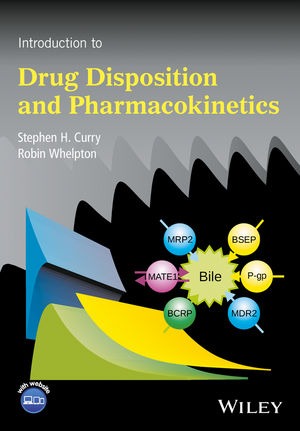
Introduction to Drug Disposition and Pharmacokinetics
The application of knowledge of drug disposition, and skills in pharmacokinetics, are crucial to the development of new drugs and to a better understanding of how to achieve maximum benefit from existing ones. The book takes the reader from basic concepts to a point where those who wish to will be able to perform pharmacokinetic calculations and be ready to read more advanced texts and research papers.

Introduction to Discrete Event Systems
Introduction to Discrete Event Systems is a comprehensive introduction to the field of discrete event systems, offering a breadth of coverage that makes the material accessible to readers of varied backgrounds. The book emphasizes a unified modeling framework that transcends specific application areas, linking the following topics in a coherent manner: language and automata theory, supervisory control, Petri net theory, Markov chains and queueing theory, discrete-event simulation, and concurrent estimation techniques

Introduction to data systems : Building from Python
Encompassing a broad range of forms and sources of data, this textbook introduces data systems through a progressive presentation. Introduction to Data Systems covers data acquisition starting with local files, then progresses to data acquired from relational databases, from REST APIs and through web scraping. It teaches data forms/formats from tidy data to relationally defined sets of tables to hierarchical structure like XML and JSON using data models to convey the structure, operations, and constraints of each data form.

Introduction to Computational Optimization Models for Production Planning in a Supply Chain
In this book we strive to provide models that capture many of the - tails faced by ?rms operating in a modern supply chain, but we stop short of proposing models for economic analysis of the entire multi-player chain. In other words, we produce models that are useful for planning within a supply chain rather than models for planning the supply chain. The usefulness of the models is enhanced greatly by the fact that they have been implemented - ing computer modeling languages. Implementations are shown in Chapter 7, which allows solutions to be found using a computer.

Introduction to Computational Biology : An Evolutionary Approach
Molecular biology has changed dramatically over the past two decades. Until the early 1990s genes were studied one at a time by small teams of researchers; today entire genomes are sequenced by internationally collaborating laboratories. In the bygone gene-centered era the accumulation of data was the rate-limiting step in research. Now that step is often data interpretation. This is increasingly dependent on computational methods and as a consequence, computational biology has emerged in the past decade as a new subdiscipline of biology. This introduction to computational biology is centered on the analysis of molecular sequence data. There are two closely connected aspects to biological sequences: (i) their relative position in the space of all other sequences, and (ii) their movement through this sequence space in evolutionary time. Accordingly, the first part of the book deals with classical methods of sequence analysis: pairwise alignment, exact string matching, multiple alignment, and hidden Markov models. In the second part evolutionary time takes center stage and phylogenetic reconstruction, the analysis of sequence variation, and the dynamics of genes in populations are explained in detail. In addition, the book contains a computer program with a graphical user interface that allows the reader to experiment with a number of key concepts developed by the authors.

Introduction to Central Banking
This book gives a concise introduction to the practical implementation of monetary policy by modern central banks. It describes the conventional instruments used in advanced economies and the unconventional instruments that have been widely adopted since the financial crisis of 2007–2008. Illuminating the role of central banks in ensuring financial stability and as last resort lenders, it also offers an overview of the international monetary framework. A flow-of-funds framework is used throughout to capture this essential dimension in a consistent and unifying manner, providing a unique and accessible resource on central banking and monetary policy, and its integration with financial stability.

Introduction to blender 3.0 : Learn organic and architectural modeling, lighting, materials, painting, rendering, and compositing with blender
Explains modeling, materials, lighting, painting, and more with Blender and other external tools. You will configure a 3D architectural environment and set up the workflow of an art and design project within Blender. You will use Blender's main tools—mesh modeling and sculpting—to create virtual objects and environments. And, you will explore building materials and light scenes, followed by drawing and virtual painting. Chapters cover rendering scenes and transforming them into 2D images or videos. You will learn to use Blender 3.0 for video editing as a compositor and video sequence editor (VSE or sequencer) with a wide range of effects available through the nodal system. You Will Learn : Create objects and architectural buildings with different techniques of 3D modeling / Master creating an environment for your objects and how to light them / Determine how to create node materials and assign them to your Blender objects / Pick up UV unwrapping and texture painting / Get closer to painting and drawing in Blender / Render your scenes and create stunning videos
Introduction to Bayesian Statistics
This is the second and translated edition of the German book “Einf ̈uhrung in die Bayes-Statistik, Springer-Verlag, Berlin Heidelberg New York, 2000”. It has been completely revised and numerous new developments are pointed out together with the relevant literature. The Chapter 5.2.4 is extended by the stochastic trace estimation for variance components. The new Chapter 5.2.6 presents the estimation of the regularization parameter of type Tykhonov regularization for inverse problems as the ratio of two variance components.The reconstruction and the smoothing of digital three-dimensional images is demonstrated in the new Chapter 5.3. The Chapter 6.2.1 on importance sampling for the Monte Carlo integration is rewritten to solve a more general integral. This chapter contains also the derivation of the SIR (sampling-importance-resampling) algorithm as an alternative to the rejection method for generating random samples. Markov Chain Monte Carlo methods are now frequently applied in Bayesian statistics.

Introduction to Bayesian Scientific Computing : Ten Lectures on Subjective Computing
Inverse problems are closely related to statistical inference problems, where the observations are used to infer on an underlying probability distribution. This connection between statistical inference and inverse problems is a central topic of the book. Inverse problems are typically ill-posed: small uncertainties in data may propagate in huge uncertainties in the estimates of the unknowns. To cope with such problems, efficient regularization techniques are developed in the framework of numerical analysis. The counterpart of regularization in the framework of statistical inference is the use prior information.

Introduction to Assembly Language Programming : For Pentium and RISC Processors
Assembly language continues to hold a core position in the programming world because of its similar structure to machine language and its very close links to underlying computer-processor architecture and design. These features allow for high processing speed, low memory demands, and the capacity to act directly on the system’s hardware. This completely revised second edition of the highly successful Introduction to Assembly Language Programming introduces readers to assembly language programming and its role in computer programming and design. It focuses on providing a firm grasp of the main features of assembly programming, and how it can be used to improve a computer's performance. The revised edition covers a broad scope of subjects and adds valuable material on protected-mode Pentium programming, MIPS assembly language programming, and use of the NASM and SPIM assemblers for a Linux orientation. All of the language's main features are covered in depth. The book requires only some basic experience with a structured, high-level language.

Introduction to applied mathematics for environmental science
Introduction to Mathematics for Environmental Science evolved from the author’s 30 years’ experience teaching mathematics to graduate and advanced undergraduate students in the environmental sciences. Its basic purpose is to teach various types of mathematical structures and how they can be applied in a broad range of environmental science subfields. Derivatives and integrals, ordinary and partial differential equations, and linear and non-linear algebraic equations are the basic kinds of structures (types of mathematical models) discussed.

Introduction to Advanced System-on-Chip Test Design and Optimization
SOC test design and its optimization is the topic of Introduction to Advanced System-on-Chip Test Design and Optimization. It gives an introduction to testing, describes the problems related to SOC testing, discusses the modeling granularity and the implementation into EDA (electronic design automation) tools. The book is divided into three sections: i) test concepts, ii) SOC design for test, and iii) SOC test applications.

Introduction pratique aux bases de données relationnelles = A practical introduction to relational databases
Cet ouvrage introduit le lecteur dans le domaine des bases de données relationnelles en présentant une vaste sélection de sujets portant sur la modélisation des données, les langages de base de données, l'architecture des systèmes et l'évolution post-relationnelle. - Notions fondamentales: le modèle relationnel, les composants d’un système de gestion de bases de données, l’organisation de la mise en œuvre d’une base de données, les tâches de gestion des données. - De l'analyse à la base de données : le modèle entité association, la généralisation et l’agrégation, les dépendances et les formes normales,les contraintes d’intégrité. - Aperçu des langages de requête et de manipulation des données: l’algèbre relationnelle, le calcul des prédicats, SQL, QUEL, QBE, le traitement des valeurs nulles, la protection des données. - Les composants de l'architecture d'un système de bases de données : la compilation, l’interprétation et l’optimisation des requêtes, l’environnement multiutilisateur, le concept de transaction et la sérialisation, les méthodes optimiste et pessimiste, les structures de stockage et les méthodes d’accès. L’intégration et la migration des bases de données: l’exploitation des bases de données hétérogènes, les bases de données sur le Web, les règles de conversion pour effectuer l’intégration et la migration, les variantes de migration des bases de données hétérogènes, la planification de l’intégration et de la migration.

Introduction aux méthodes numériques
Au cours de l’histoire, les méthodes de calcul ont été l’expression de pratiques sans cesse renouvelées. Le développement de l’informatique a largement contribué à une rapide progression de l’ensemble des techniques numériques. En moins de cinquante ans, le paysage algorithmique a été complètement transformé. Aujourd’hui, la plupart des logiciels que nous employons font appel à des méthodes de plus en plus efficaces. Dans les simulations, comme dans les modélisations, l’analyse numérique occupe une place centrale. Composants essentiels de la vie scientifique, les méthodes et algorithmes qui sont présentés ici, illustrés par de nombreux exemples, sont mis à la portée de tous. De l’approximation polynomiale à la résolution d’équations aux dérivées partielles par des méthodes de différences, de volumes et d’éléments finis, ce livre offre un large panorama des méthodes numériques actuelles.

Intraseasonal Variability in the Atmosphere-Ocean Climate System
As the first comprehensive and authoritative review of intra-seasonal variability (ISV), this multi-author work balances coverage of observation, theory and modeling and provides a single source of reference for all those interested in this important, multi-faceted natural phenomenon and its relation to major short-term climatic variations. Commencing with an overview of ISV and observations from an historical perspective, the book offers successive chapters that deal with the role of ISV in monsoon variability on the monsoon regions of South Asia, East Asia and South America, in North America, and in the oceans. The coupling between ocean and atmosphere is considered, together with the function of angular momentum and Earth rotation.

Intracranial vascular malformations and aneurysms : From diagnostic work-up to endovascular therapy ; 2nd ed.
This book describes the pathoanatomical, pathophysiological, and imaging features of vascular malformations and aneurysms of the brain and the modern, minimally invasive endovascular methods and techniques employed in their treatment.

Intracranial vascular malformations and aneurysms : From diagnostic work-up to endovascular therapy ; 1st ed.
This book describes the pathoanatomical, pathophysiological, and imaging features of vascular malformations and aneurysms of the brain and the modern, minimally invasive endovascular methods or techniques employed in their treatment. Individual chapters are devoted to venous malformations, capillary telangiectasias and cavernomas, pial arteriovenous malformations, dural arteriovenous malformations, and intracranial aneurysms. Each chapter is subdivided into four principal sections on pathology, clinical presentation, diagnostic imaging, and therapy, ensuring a standardized approach throughout. The book is richly illustrated with numerous informative CT, MR and DSA images.

Interval / Probabilistic Uncertainty and Non-Classical Logics
Contains proceedings of the first international workshop that brought together researchers working on interval and probabilistic uncertainty and on non-classical logics. We hope that this workshop will lead to a boost in the much-needed collaboration between the uncertainty analysis and non-classical logic communities, and thus, to better processing of uncertainty.
