



الصفحة 37
الصفحة 37

Microorganisms in soils : Roles in genesis and functions
The following key topics are covered: Microorganisms in bioerosion, humification, mineralization and soil aggregation; Microbial energetics and microbes in biogeochemical processes such as carbon and nitrogen cycles and phosphorus bio-availability; Interactions in the mycorrhizosphere, e.g. between mycorrhizal fungi and bacteria; Impact of microbes on plant nutrient cycling and the possible effects of transgenic rhizospheres on soil fungi; Functions of microbes in specific soil compartments such as soil surface or toxic metal polluted soils; Regulation of microbial activities in functional domains that are influenced by biotic or abiotic factors; Use of marker genes and isotopes as examples for modern techniques in soil microbiology.

Microorganisms and Bioterrorism
The purpose of this book is to bring together, in a single volume, the most up-to-date information concerning microbes with potential as bioterrorist weapons. The primary audience includes microbiologists, including bacteriologists, virologists and mycologists, in academia, government laboratories and research institutes at the forefront of studies concerning microbes which have potential as bioterrorist weapons, public health physicians and researchers and scientists who must be trained to deal with bioterrorist attacks as well as laboratory investigators who must identify and characterize these microorganisms from the environment and from possibly infected patients.

Micronutrients and macronutrients as nutraceuticals
Explains in detail the properties of micronutrients and macronutrients and their diverse uses as nutraceuticals for their beneficial properties, such as their antioxidant activity and immunity-boosting properties and how they can be incorporated into the human diet for optimum health, for growing beneficial bacteria in the gut, and inhibition of pathogens. Interestingly, the authors look at how disease-promoting habits often unfold in childhood, even prenatally, and employing nutrigenomics early on goes a long way toward curbing these chronic diseases later on in life.

Micronutrient Deficiencies in Global Crop Production
This book provides a valuable guide to the requirements of crops for plant micronutrients and the causes, occurrence and treatment of deficiencies. It is essential reading for many agronomy, plant nutrition and agricultural extension professionals.

Micrometeorites and the Mysteries of Our Origins
This book relates an attempt to decrypt the still-obscure first billion years of history of the young Earth, during a cataclysmic period during which our planet was heavily bombarded by bodies ranging in size from that of Mars to 0.1 mm sized tiny micrometeorites. It was thus found that micrometeorites played an essential role in the formation of the post-lunar atmosphere. They also provided a surprisingly large diversity of reactions in the organic prebiotic chemistry required for the birth of life on our blue planet. The author presents a wide-ranging review of the type of knowledge required to decrypt this history, which provides extensive background information from astronomy, planetary dynamics, planetology, astrobiology and earth sciences. This book will appeal to both the scientist and the general reader. It will be a source of material for lectures, and possibly new investigations, in these fields.

Micrometastasis
Distant metastases are the main cause of cancer-related death. The onset of the metastatic process can now be assessed in cancer patients by the use of immunocytochemical and molecular methods that allow the identification of disseminated carcinoma cells in regional lymph nodes, peripheral blood or distant organs. There is increasing evidence that the detection and characterization of tumor cells present in bone marrow or peripheral blood can provide clinically important information. In this book, leading experts in the area of micrometastasis research provide an overview that summarizes the current state of research on micrometastatic disease in patients with solid tumors. In each chapter, the technical aspect as well as clinical relevance of micrometastasis detection is discussed. The book addresses basic researchers as well as clinicians involved in the treatment of cancer patients.

Micromechanics and Nanosimulation of Metals and Composites : Advanced Methods and Theoretical Concepts
This book provides insight into advanced numerical and experimental investigations of the microstructural aspects of strength and damage of metals and metal-based composites. In particular, atomistic and dislocation models, micromechanical simulations and homogenization techniques, as well as experimental observations in combination with computer simulations, are described. These methods are successfully applied to analyze the mechanical behavior of metals and metal-matrix composites.

Micromechanical Photonics
The purpose of this book is to give the engineering student and the practical engineer a systematic introduction to optical MEMS (Micro electro mechanical systems) and micromechanical photonics through not only theoretical and experimental results, but also by describing various products and their fields of application. After an overview on optical MEMS and micromechanical photonics, the book describes extremely-short-external-cavity laser diodes tunable laser diodes, a resonant sensor and an integrated optical head. It then addresses optical tweezers, the new technology employed to manipulate various types of objects in a variety of research and industrial fields. Coverage progresses through topics on the design and fabrication of an optical rotor and evaluation of mixing performances of micro-liquids for future fluidic applications. In the final chapter, the fundamentals and applications of the near field are described for the future development of micromechanical photonics, as well as near-field features, theoretical analyses, experimental analyses and applications mainly related to optical recording.

Micromanufacturing and Nanotechnology
Micromanufacturing and Nanotechnology is an emerging technological infrastructure and process that involves manufacturing of products and systems at the micro and nano scale levels. Development of micro and nano scale products and systems are underway due to the reason that they are faster, accurate and less expensive. Moreover, the basic functional units of such systems possesses remarkable mechanical, electronic and chemical properties compared to the macro-scale counterparts. Since this infrastructure has already become the prefered choice for the design and development of next generation products and systems it is now necessary to disseminate the conceptual and practical phenomenological know-how in a broader context. This book incorporates a selection of research and development papers. Its scope is the history and background, underlynig design methodology, application domains and recent developments.

Micromachined Thin-Film Sensors for SOI-CMOS Co-Integration
Co-integration of sensors with their associated electronics on a single silicon chip may provide many significant benefits regarding performance, reliability, miniaturization and process simplicity without significantly increasing the total cost. Micromachined Thin-Film Sensors for SOI-CMOS Co-integration covers the challenges and interests and demonstrates the successful co-integration of gas-flow sensors on dielectric membrane, with their associated electronics, in CMOS-SOI technology.
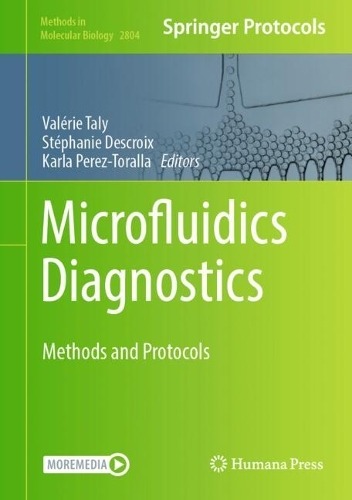
Microfluidics diagnostics : Methods and protocols
Explores a wide range of microfluidic-based approaches that exploit the unique features of microfluidic devices, which hold significant potential in the field of diagnosis. Beginning with a section on microchips for sample preparation, including cell-free DNA, exosomes, and cells, the book continues by covering protein marker analysis and detection, single-cell analysis, analysis of bacteria and viruses, as well as human cell-based culture and analysis. Written for the highly successful Methods in Molecular Biology series, chapters include introductions to their respective topics, lists of the necessary materials and reagents, step-by-step and readily reproducible laboratory protocols, and tips on troubleshooting and avoiding known pitfalls.

Microfinance Investment Funds : leveraging private capital for economic growth and poverty reduction
The surge in new investment funds - nearly 60 funds at last count - is an exciting sign that microfinance is attracting mainstream financial markets. Foreign investors bridge a crucial gap for MFIs and greenfield banks not yet able to attract deposits, debt or equity from local sources. Recognizing the ultimate goal of building those local financial markets that serve the poor, some foreign investors and funds are facilitating local intermediation with incentives like guarantees for local banks to lend to MFIs in local currency. Such contributions to local market building, combined with strengthening governance, increasing transparency and rigor make the new funds potentially very positive forces in microfinance.

Microelectronic Circuits
Devices and basic circuits -- Signals, amplifiers and semiconductors -- Operational amplifiers -- Diodes -- Bipolar junction transistors (BJTS) -- Mos field-effect transistors (MOSFETS) -- Transistor amplifiers -- Analog integrated circuits -- Building blocks of integrated-circuit amplifiers -- Differential and multistage amplifiers -- Frequency response -- Feedback -- Output stages and power amplifiers -- Operational-amplifier circuits -- Filters and oscillators -- Digital integrated circuits -- CMOS digital logic circuits -- Digital Design: Power, Speed, and Area -- Memory and Clocking Circuits

Microbiomes and emerging applications
Covers a range of important topics and recent advances in metagenomics, microbiomes and their emerging applications, including microbiota transplantation and its health implications. It also discusses microbiome composition and development in humans. The contributors of this volume provide detailed information on prebiotics and probiotics for enhanced human health. They also introduce microbiomes as the next frontiers in medicine, agriculture, industry and environment. A chapter is presented that discusses probiotic research studies in Nigeria and Canada that led to the discovery of Lactobacillus pentosus KCA1. The book contains timely knowledge and will be useful reference material for scientists and researchers working in the fields of food and agricultural biotechnology, biopharmaceuticals and medical biotechnology, fermentation technology, environmental biotechnology, microbiomes and microbial biotechnology and health care.

Microbiome
Despite the increasing interest of healthy or fat as well sick people in selecting a suitable diet for them, as nutrition is becoming an interesting area recently, in contrast to that we have noticed that there is almost a rare or no interest in Microbiome field in our country by which we can be much more accurate in selecting a diet based on comparing a map of microbiomein healthy person with ill person individually to provide a patient with the right missing food to improve his immune system, or even for a child since birth, to build the best immune system as we compared the benefits of mother’s milk, and artificial one, therefore we will focus in our study on this new science for two reasons the first is to present it and secondly to integrate it in the practice by interested doctors.
Microbiology of Extreme Soils
This volume provides an excellent introduction to the study of extreme soil micro-biology, and a variety of the challenging and fascinating environments that Earth-bound microbes face. Some are natural, and some are the result of human activity, and all of them have lessons to teach us about life’s adaptations within the “extreme” hori-zons of terrestrial soils. What’s more, each of these chapters (including the chapter on the soils of Mars by Ronald L. Crawford and David A. Newcombe) can give us insights into strategies that may make life possible beyond the safe confines of our present-day biosphere, to other worlds in this solar system and beyond

Microbiologically Influenced Corrosion : An Engineering Insight
Microbiologically-influenced corrosion (MIC) is one of the greatest mysteries of corrosion science and engineering, due to the complexities resulting from the involvement of living things such as bacteria. Bacteria are not only able to affect our health, but are also capable of impacting upon everyday life through a wide range of industrial sectors and the economy. Microbiologically Influenced Corrosion: An Engineering Insight introduces a new approach to the basics of MIC and explains how to recognise, understand, mitigate and/or prevent this type of corrosion. Topics explored include stress corrosion cracking and microbial corrosion, the pros and cons of biocides, the involvement of magnetic bacteria in microbial corrosion, and a new interpretation of cathodic protection based on recent research in microbial environments.

Microbial Sulfur Metabolism
In nature, sulfur occurs in many different oxidation states and is one of the most versatile elements in life. It is an integral part of many important cell constituents, such as the amino acids cysteine and methionine, and many sulfur compounds serve as the basis for energy-related processes in prokaryotes. In recent years, new methods have been applied to study the biochemistry and molecular biology of reactions of the global sulfur cycle, the microorganisms involved and their physiology, metabolism and ecology. These activities have uncovered fascinating new insights for the understanding of aerobic and anaerobic sulfur metabolism.

Microbial Siderophores
"Microbial Siderophores" presents an up-to-date overview of the chemistry, biology and biotechnology of these iron chelators. Following an introduction to the structure, functions and regulation of fungal siderophores, several chapters focus on siderophores of pseudomonads. Here, the technique of siderotyping, which has proved to be a rapid, accurate and inexpensive tool for pseudomonad characterization and identification, is described.

Microbial Root Endophytes
Plant roots may not only be colonized by mycorrhizal fungi, but also by a myriad of bacterial and fungal root endophytes that are usually not considered by the investigators of classic symbioses. This is the first book dedicated to the interactions of non-mycorrhizal microbial endophytes with plant roots. The phenotypes of these interactions can be extremely plastic, depending on environmental factors, nutritional status, genetic disposition and developmental stages of the two partners. The book deals with diversity, life history strategies, interactions, applications in agriculture and forestry, methods for isolation, cultivation, and both conventional and molecular methods for identification and detection of these endophytes. The comprehensive reviews demonstrate the high diversity of interactions and will provoke further studies to better understand the mechanisms which determine whether a plant-microbial interaction remains asymptomatic, leads to disease or to a mutualistic interaction.
