



الصفحة 36
الصفحة 36

Food Biotechnology in Ethical Perspective
Agrifood biotechnology—the genetic transformation of plants and animals through recombinant means—has created controversy in the food system for more than twenty years. The new edition reflects lessons from the hotly contested debates over those issues in the intervening decade, and includes wholly new discussions on ethical issues associated with livestock cloning, the Precautionary Principle, and the transatlantic debate between United States and European perspectives on biotechnology.

Flowering Plants. Eudicots: Asterales
This volume contains a complete systematic treatment of the flowering plant order Asterales, comprising 12 families with approx. 1,720 genera and about 26,300 species. The order includes Compositae as the largest family of flowering plants. Based on traditional studies, several of the constituent families have long been recognized as being closely interrelated. The inclusion in the order of Alseuosmiaceae, Argophyllaceae, Carpodetaceae, Phellinaceae and Rousseaceae is the result mainly of new advances in molecular systematics. Identification keys are provided for all genera, and likely phylogenetic relationships are discussed extensively. The wealth of information contained in this volume makes it an indispensable source for all working in the fields of pure and applied plant sciences.

Flowering Plants. Eudicots : Berberidopsidales, Buxales, Crossosomatales, Fabales p.p., Geraniales, Gunnerales, Myrtales p.p., Proteales, Saxifragales, Vitales, Zygophyllales, Clusiaceae Alliance, Passifloraceae Alliance, Dilleniaceae, Huaceae, Picramniaceae, Sabiaceae
In this volume, the ninth of the series, treatments are offered for 52 families containing 432 genera belonging to 13 eudicot orders, many of which have recently been newly designed; four families remain unassigned to order. Emphasis is on the early-diverging eudicots and basal core eudicots the phylogenetic relationships and diversification of which have recently been in focus and are critically discussed. Systematically relevant information includes descriptions of families and genera, keys to the genera, and references to recent revisions. Introductions to the families provide convenient, in-depth overviews of key aspects of systematics. The wealth and precision of information contained in this volume will make it an important source of reference for both the scholar and the practitioner in the fields of pure and applied plant sciences.
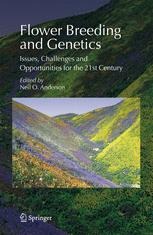
Flower Breeding and Genetics : Issues, Challenges and Opportunities for the 21st Century
This book provides a unique and valuable resource on the many issues and challenges facing flower breeders, as well as the industry at-large. In this volume, the first comprehensive assemblage of its kind, a team of 32 international authorities has contributed to make this book a ‘must-have’ reference to research and develop flower crops for the 21st century consumers. Part 1 of this book (flower breeding program issues) contains unique features of interest to horticultural professionals and students, include coverage of plant protection strategies, cultivar trialing methodology, germplasm collection/preservation, preventing invasiveness, and other timely topics. The collective body of knowledge for 24 flower crops (Part 2: Crop-specific Breeding and Genetics) represents the in-depth science and art of breeding technology available for bedding plants, flowering potted plants, cut flowers, and herbaceous perennials. Each author provides crop-specific history, evolution, biology, taxonomy, state-of-the-art breeding/genetics, classical/molecular technologies, species traits, interspecific hybridization, and directions for future development/enhancement.

Flavours and Fragrances : Chemistry, Bioprocessing and Sustainability
This book is an introduction to the fascinating world of aroma chemicals, essential oils, fragrances and flavour compositions for the food, cosmetics and pharmaceutical industry. The present state-of-the-art technology, the future use of resources and biotechnological approaches for the production of the respective chemical compounds are described. A large section is devoted to the description of the renewable resources of flavours: spice plants, fruits from moderate to tropical climates, vegetables, fermented and heated plants. Analytical methods, such as gas chromatography coupled to human or electronic noses or to a mass spectrometer, are outlined and consumer trends, legal and safety aspects are described. Novel renewable resources come from biotechnology.

Fiscal Equalization : Challenges in the Design of Intergovernmental Transfers
These original essays highlight the state of knowledge in intergovernmental transfer design. They represent creative new thinking about challenging policy issues and offer useful options for policy makers. There is a genuine need for this book; it will become a 'benchmark' reference. I am impressed with its content, organization, readability, and fresh thematic approach.
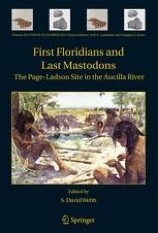
First floridians and last mastodons : The Page-Ladson Site in the Aucilla River
Over the last 20 years the Aucilla River Prehistory Project has been one of the most f- cinating stories unfolding in Florida. This project, uncovering the remains of plants and animals from the end of the last Ice Age and the beginning of Florida’s human oc- pation, is answering questions important to the entire western hemisphere. Questions such as when did people first arrive in the Americas? Were these newcomer scavengers or skillful hunters? Could they have contributed to the extinction of the great Ice Age beasts – animals such as elephants – that were creatures native to Florida for the pre- ous million or so years? And how did these first Florida people survive 12,000 years ago at a time when sea level was so low that this peninsula was double its present size, sprawling hugely into the warm waters of the Caribbean? Much of Florida at that time was almost desert.

Fire Safety for Very Tall Buildings : Engineering Guide
Provides information on special topics that affect the fire safety performance of very tall buildings, their occupants and first responders during a fire. This Guide addresses these topics as part of the overall building design process using performance-based fire protection engineering concepts as described in the SFPE Engineering Guide to Performance Based Fire Protection. This Guide is not intended to be a recommended practice or a document that is suitable for adoption as a code. The Guide pertains to “super tall,” “very tall” and “tall” buildings. Throughout this Guide, all such buildings are called “very tall buildings.” These buildings are characterized by heights that impose fire protection challenges; they require special attention beyond the protection features typically provided by traditional fire protection methods. This Guide does not establish a definition of buildings that fall within the scope of this document.

Financial Distress, Corporate Restructuring and Firm Survival : An Empirical Analysis of German Panel Data
Philipp Jostarndt analyzes the anatomy of financial distress for a large sample of German corporations. He studies distress-induced changes in ownership and control, success factors in distressed equity infusions, and firms’ choice between in- and out-of-court debt restructurings. Moreover, he conducts a survival analysis to examine the determinants of survival, acquisition, and bankruptcy as alternative paths to exit financial distress. He includes both the firm perspective as well as the market valuations of the undertaken restructurings and, where applicable, relates the findings to the microstructure of Germany’s revised bankruptcy legislation.

Field Manual of Techniques in Invertebrate Pathology : Application and Evaluation of Pathogens for Control of Insects and other Invertebrate Pests
The Field Manual of Techniques in Invertebrate Pathology is designed to provide background and instruction on a broad spectrum of techniques and their use in the evaluation of entomopathogens in the field. The second edition of the Field Manual provides updated information and includes two additional chapters and 12 new contributors. The intended audience includes researchers, graduate students, practitioners of integrated pest management (IPM), regulators and those conducting environmental impact studies of entomopathogens. Although it can function as a stand alone reference, the Field Manual is complementary to the laboratory oriented Manual of Techniques in Insect Pathology and to comprehensive texts in insect pathology.

Field Arithmetic ; 3rd ed.
Field Arithmetic explores Diophantine fields through their absolute Galois groups. This largely self-contained treatment starts with techniques from algebraic geometry, number theory, and profinite groups. Graduate students can effectively learn generalizations of finite field ideas. We use Haar measure on the absolute Galois group to replace counting arguments. New Chebotarev density variants interpret diophantine properties. Here we have the only complete treatment of Galois stratifications, used by Denef and Loeser, et al, to study Chow motives of Diophantine statements.

Field Arithmetic ; 2nd ed.
Field Arithmetic explores Diophantine fields through their absolute Galois groups. This largely self-contained treatment starts with techniques from algebraic geometry, number theory, and profinite groups. Graduate students can effectively learn generalizations of finite field ideas. We use Haar measure on the absolute Galois group to replace counting arguments. New Chebotarev density variants interpret diophantine properties. Here we have the only complete treatment of Galois stratifications, used by Denef and Loeser, et al, to study Chow motives of Diophantine statements.Now we know they include valuable Galois extensions of the rationals that present its absolute Galois group through known groups. PAC fields have projective absolute Galois group. Those that are Hilbertian are characterized by this group being pro-free. These last decade results are tools for studying fields by their relation to those with projective absolute group. There are still mysterious problems to guide a new generation: Is the solvable closure of the rationals PAC; and do projective Hilbertian fields have pro-free absolute Galois group (includes Shafarevich's conjecture)?

Fetus abnormalities relating drug
Drugs use in pregnancy remains a major public health problem. Fetal teratogenicity results from the effect of these substances during fetal development, particularly when used in combination. Approximately 3-5% of live births are complicated by a birth defect each year totaling around 120,000 babies. Additionally, more women taking any kind of medication has more than doubled in the last 30 years. Current evidence suggests that between 65%-94 % of women take at least one prescription drug during pregnancy. Nearly 70% of women are taking a medication in the first trimester during organogenesis. On average, women are taking 3 medications in pregnancy with over 50% of women using four or more. This includes over the counter medications and herbal supplements. During pregnancy, drugs are often required to treat certain disorders.
Female Employment and Gender Gaps in China
This book investigates female employment and the gender gap in the labor market and households during China’s economic transition period. It provides the reader with academic evidence for understanding the mechanism of female labor force participation, the determinants of the gender gap in the labor market, and the impact of policy transformation on women’s wages and employment in China from an economics perspective

Fatty acids
Fatty acid metabolism, including the de novo synthesis, uptake, oxidation, and derivation of fatty acids, plays several important roles at cellular and organ levels. Recent studies have identified characteristic changes in fatty acid metabolism in idiopathic pulmonary fibrosis (IPF) lungs, which implicates its dysregulation in the pathogenesis of this disorder. Here, we review the evidence for how fatty acid metabolism contributes to the development of pulmonary fibrosis, focusing on the profibrotic processes associated with specific types of lung cells, including epithelial cells, macrophages, and fibroblasts. We also summarize the potential therapeutics that target this metabolic pathway in treating IPF.

Fast Reactions in Energetic Materials : High-Temperature Decomposition of Rocket Propellants and Explosives
Modern energetic materials include explosives, blasting powders, pyrotechnic m- tures and rocket propellants [1, 2]. The study of high-temperature decomposition of condensed phases of propellants and their components (liquid, solid and hybrid) is currently of special importance for the development of space-system engineering [3, 4]. To better understand the burning mechanisms (stationary, nonstationary, - steady) of composite solid propellants and their components, information about the macrokinetics of their high-temperature decomposition is required [5]. To be able to evaluate the ignition parameters and conditions of safe handling of heat-affected explosives, one needs to know the kinetic constants of their high-temperature - composition. The development of new composite solid propellants characterized by high performance characteristics (high burning rates, high thermal stability, stability to intrachamber perturbations, and other aspects) is not possible without quanti- tive data on the high-temperature decomposition of composite solid propellants and their components [6].

Farming for Health : Green-Care Farming Across Europe and the United States of America
Farming for Health describes the utilization of agricultural farms, farm animals, plants and landscapes as a base for promoting human mental and physical health and social well-being. This book gives an overview of the development of ‘Farming for Health’ initiatives across Europe. This development is a logical result of the changing paradigms in the health-care sector and the demand for new social and financial impulses in agriculture and rural areas.

Farewell to the Internal Clock : A contribution in the field of chronobiology
Nearly everything making up what we call the “environment” of a plant has an infuence on the way it grows. Sunlight, te- perature, moisture contents of soil and atmosphere and vib- tions are all obvious examples of environmental components, and transient variations in their amount or intensity lead the plant to manifest more or less immediate responses. Small changes in carbon dioxide level in the atmosphere can even have effects, but these take a longer time to be registered – at least those that are visible, albeit at the microscopic level. Plants meet the challenges of the environment by means of acclimation. In this respect, plants are notable for the pl- ticity of their development. However, where morphological or physiological plasticity is no longer an option, the responses would be by means of adaptations as a result of genetic - lection or genetic “assimilation” (Waddington 1957).

Extra-coronal restorations : Concepts and clinical application
A clinical guide to contemporary materials and techniques for the restoration of individual teeth and implants. It fully reflects the important developments in the field over the past 15 years, including in particular the shift away from wholesale use of crowns towards adhesive dentistry and less invasive extra-coronal restorations. The book opens by considering the principles and evidence base relating to the longevity of restorations of teeth and implants. Importantly, it explains how to ensure "a healthy start" and manage future risks. Material choice and aesthetic issues are then discussed, before all aspects of the planning and provision of extra-coronal restorations are examined in depth. The coverage also includes the adaptation of crowns to existing partial dentures. In line with modern dental education, each chapter begins with clinically relevant learning objectives, and helpful clinical tips are highlighted.

Exploring medicinal orchids
Orchids are fascinating ornamental flowers with a huge market both as cut flowers and potted plants, but they are also used in the traditional medicine system as they can be rich in phytochemicals with exceptional medicinal properties. This book, Exploring Medicinal Orchids, is a comprehensive guide for medicinally important orchids, their diversity, and their use in traditional and folk medicines. It presents information on secondary metabolites of medicinally active orchid species, pharmaceutical and medicinal applications, and describes advanced techniques of biotechnology in the conservation of medicinal orchids.
