



الصفحة 36
الصفحة 36

Financial Distress, Corporate Restructuring and Firm Survival : An Empirical Analysis of German Panel Data
Philipp Jostarndt analyzes the anatomy of financial distress for a large sample of German corporations. He studies distress-induced changes in ownership and control, success factors in distressed equity infusions, and firms’ choice between in- and out-of-court debt restructurings. Moreover, he conducts a survival analysis to examine the determinants of survival, acquisition, and bankruptcy as alternative paths to exit financial distress. He includes both the firm perspective as well as the market valuations of the undertaken restructurings and, where applicable, relates the findings to the microstructure of Germany’s revised bankruptcy legislation.

Financial Compensation for Victims of Catastrophes : A Comparative Legal Approach
Some countries have created a specific fund solution; others follow a generous ad hoc approach whereby large amounts of compensation are made available on an ex post basis. This book shall pay attention to all of these seemingly quite different solutions. Experts from different countries report on the way catastrophes are dealt with in their particular jurisdiction from the angle of tort law, social security, insurance or alternative compensation mechanisms such as compensation funds. Various possible remedies for victims are critically discussed; attention is also paid to the economic analysis of law.

Financial accounting
Financial Accounting 11e successfully implements a real-world, single focus company approach in every chapter. The companies chosen are engaging and the decision-making focus shows the relevance of financial accounting regardless of if a student has chosen to major in accounting. Libby/Libby/Hodge believes in the building-block approach to teaching transaction analysis.

Field Guide to Meteors and Meteorites
Imagine the unique experience of being the very first person to hold a newly-found meteorite in your hand – a rock from space, older than Earth! "Weekend meteorite hunting" with magnets and metal detectors is becoming ever more popular as a pastime, but of course you can’t just walk around and pick up meteorites in the same way that you can pick up seashells on the beach. Those fragments that survived the intense heat of re-entry tend to disguise themselves as natural rocks over time, and it takes a trained eye – along with the information in this book – to recognize them.

Fiber Concrete : In Construction
Helps the user to correctly use fiber-reinforced concrete as a building material in accordance with its properties in order to create a long-lasting building for the client at low cost. Fiber-reinforced concrete as an extension of concrete offers considerable advantages for building practice, which, based on the material properties, enable a very long service life.Fiber-reinforced concrete is particularly suitable for an aggressive environment such as salt exposure, since corrosion can be completely avoided. Particular attention is also paid to the shrinkage cracks that occur in the concrete and how they can be and how these can be avoided when using fibers.

Feyerabend’s Epistemological Anarchism : How Science Works and its Importance for Science Education
argues that the traditional image of Feyerabend is erroneous and that, contrary to common belief, he was a great admirer of science. It shows how Feyerabend presented a vision of science that represented how science really works. Besides giving a theoretical framework based on Feyerabend´s philosophy of science, offers criteria that can help readers to evaluate and understand research reported in important international science education journals, with respect to Feyerabend’s epistemological anarchism. includes an evaluation of general chemistry and physics textbooks.

Fetal and Neonatal Pathology
The book presenting the same practical approach to the examination of both fetuses and perinatal deaths. It provides essential clinical and pathophysiological information and discusses the pathogenesis of abnormalities as a basis for appropriate methods of investigation. Part 1 deals with the examination of the products of conception after the termination of pregnancy for fetal anomalies. The range of pathological abnormalities is described and their relevance discussed. Special attention is paid to the differences in pathological findings of specific conditions between the second and third trimesters. Part 2 is organised by system, describing and illustrating those pathological problems which are likely to be encountered in the fetus and neonate. Each chapter is introduced by a concise account of the development of the relevant system. There is also a discussion, as appropriate, of changes at birth as well as changes in normal function that may occur during the neonatal period.

Femtosecond laser pulses : Principles and experiments
This is the second edition of this advanced textbook written for scientists who require further training in femtosecond science. Four years after pub- cation of the ?rst edition, femtosecond science has overcome new challenges and new application ?elds have become mature. It is necessary to take into account these new developments. Two main topics merged during this period that support important scienti?c activities: attosecond pulses are now gen- ated in the X-UV spectral domain, and coherent control of chemical events is now possible by tailoring the shape of femtosecond pulses. To update this advanced textbook, it was necessary to introduce these ?elds; two new ch- ters are in this second edition: “Coherent Control in Atoms, Molecules, and Solids”(Chap.11)and“AttosecondPulses”(Chap.12)withwell-documented references. Some changes, addenda, and new references are introduced in the ?rst edition’s ten original chapters to take into account new developments and updatethisadvancedtextbookwhichistheresultofascienti?cadventurethat started in 1991. At that time, the French Ministry of Education decided that, in view of the growing importance of ultrashort laser pulses for the national scienti?c community, a Femtosecond Centre should be created in France and devoted to the further education of scientists who use femtosecond pulses as a research tool and who are not specialists in lasers or even in optics.

Feedforward Amplifiers for Wideband Communication Systems
Feedforward Amplifiers for Wideband Communication Systems has been possible thanks to the research carried out throughout several years in the field of the linearization techniques applied to digital communication systems, particularly to those with high spectral efficient modulation techniques. This challenge is enshrined in one of the present wideband communication systems, but all the recommended design guidelines are perfectly reusable in the future wideband applications.

Fecal Incontinence : Diagnosis and Treatment
Fecal incontinence is a frequent, distressing condition that has a devastating impact on patients’ lives. However, patients are typically embarrassed and reluctant to acknowledge this disability, so they relinquish the possibility of being cured and remain socially isolated. Since fecal incontinence may result from various pathophysiological situations, an accurate diagnostic work-up of each patient is fundamental. Today, a wide range of therapeutic options is available, but making the correct choice is pivotal to the successful management of this condition. This book is aimed at all physicians involved in the assessment and treatment of fecal incontinence. Its main purpose is to review the latest advances in the epidemiologic, socio-economic, psychologic, diagnostic, and therapeutic aspects of fecal incontinence, in order to establish guidelines for effective treatment.

Feasibility studies : An architect's guide
Details the benefits of a feasibility study. Once you’ve secured the commission, how do you ensure you’re following current best practice? Aimed at architects, it identifies the pitfalls involved in undertaking a feasibility study and explains how to set boundaries, organise the process and manage clients’ aspirations. By featuring recent live projects, alongside advice from successful architectural practices, it illustrates how a feasibility study can help achieve positive outcomes and avoid the dangers of a poorly defined brief and service proposal. Presenting the client’s, as well as the architect’s, perspective, this publication highlights why a feasibility study is a sensible way of establishing viability prior to committing to a full-service commission. It underlines the significance of ‘adding value’ as an architect.

Fault Diagnosis and Tolerance in Cryptography ; 3rd International Workshop, FDTC 2006, Yokohama, Japan, October 10, 2006, Proceedings
The sophistication of the underlying cryptographic algorithms, the high complexity of the implementations, and the easy access and low cost of cryptographic devices resulted in increased concerns regarding the reliability and security of crypto-devices. The effectiveness of side channel attacks on cryptographic devices, like timing and power-based attacks, has been known for some time. Several recent investigations have demonstrated the need to develop methodologies and techniques for designing robust cryptographic systems (both hardware and software) to protect them against both accidental faults and maliciously injected faults with the purpose of extracting the secret key. This trend has been particularly motivated by the fact that the equipment needed to carry out a successful side channel attack based on fault injection is easily accessible at a relatively low cost (for example, laser beam technology), and that the skills needed to use it are quite common.

FastSLAM : A Scalable Method for the Simultaneous Localization and Mapping Problem in Robotics
This monograph describes a new family of algorithms for the simultaneous localization and mapping problem in robotics (SLAM). SLAM addresses the problem of acquiring an environment map with a roving robot, while simultaneously localizing the robot relative to this map. This problem has received enormous attention in the robotics community in the past few years, reaching a peak of popularity on the occasion of the DARPA Grand Challenge in October 2005, which was won by the team headed by the authors. The FastSLAM family of algorithms applies particle filters to the SLAM Problem, which provides new insights into the data association problem that is paramount in SLAM. The FastSLAM-type algorithms have enabled robots to acquire maps of unprecedented size and accuracy, in a number of robot application domains and have been successfully applied in different dynamic environments, including the solution to the problem of people tracking.

Fast Simulation of Electro-Thermal MEMS : Efficient Dynamic Compact Models
Fast Simulation of Electro-Thermal MEMS provides the reader with a complete methodology and software environment for creating efficient dynamic compact models for electro-thermal MEMS devices. It supplies the basic knowledge and understanding for using model order reduction at the engineering level. Emphasis is placed on the application of the Arnoldi method for effective order reduction of thermal systems. This tutorial is written for MEMS engineers and is enriched with many case studies which equip readers with the know-how to facilitate the simulation of a specific problem.

Fast Motions in Biomechanics and Robotics : Optimization and Feedback Control
In the past decades, much progress has been made in the field of walking robots. The current state of technology makes it possible to create humanoid robots that nearly walk like a human being, climb stairs, or avoid small - stacles. However, the dream of a robot running as fast and as elegantly as a human is still far from becoming reality. Control of such fast motions is still a big technological issue in robotics, and the maximum running speed of contemporary robots is still much smaller than that of human track runners. The conventional control approach that most of these robots are based on does not seem to be suitable to increase the running speeds up to a biological level.

Farmacognosia applicata : Controllo di qualità delle droghe vegetali
Il processo di identificazione è per una droga vegetale di enorme importanza ai fini dell'efficacia e sicurezza della stessa. Infatti la risposta terapeutica e gli effetti indesiderati sono fortemente condizionati dall'identificazione della droga e dalla presenza di contaminanti botanici. Il testo si compone di due parti; la prima sintetizza gli aspetti diagnostici che indirizzano verso il riconoscimento della droga vegetale, mentre la seconda descrive gli aspetti macro- e microscopici della droga ed i saggi chimici e farmacologici che consentono con certezza l’identificazione della stessa. Infine, l’ultima parte riporta alcuni esempi di cromatogrammi e di tracciati di organi isolati.
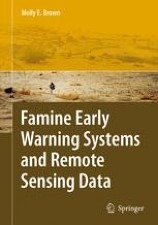
Famine Early Warning Systems and Remote Sensing Data
This book describes the interdisciplinary work of USAID’s Famine Early Warning System Network (FEWS NET) and its in uence on how food security crises are identi ed, documented and the kind of responses that result. The book describes FEWS NET’s systems and methods for using satellite remote sensing to identify and describe how biophysical hazards impact the lives and livelihoods of the po- lation where they occur. It presents several illustrative case studies that will dem- strate the integration of both physical and social science disciplines in its work. FEWS NET’s operational needs have driven science in biophysical remote sensing applications through its collaboration with the US Geological Survey, the National Aeronautics and Space Administration, National Oceanographic and Atmospheric Administration, and US Department of Agriculture, as well as methodologies in the social science domain through its support of the US Agency for International - velopment, UN World Food Program and numerous international non-governmental organizations such as Save the Children, Oxfam and others. Because FEWS NET is an organization that must provide a global picture of food insecurity to decision makers, the information it relies on are by necessity - servable and able to be documented.

Family-Oriented Primary Care
I was a Medical Student in 1966 when the Millis Report on the training of the generalist physician was published,de?ning the concept of primary care. According to the Report, the primary provider has four major responsib- ities or roles. The ?rst role is that of initial contact care of the undiffer- tiated patient. The second is to provide comprehensive care based on the belief that the primary provider should be able to manage the overwhe- ing majority of problems with which patients present. Equally important is the third role—continuity and coordination of care within the health care system. Finally,the primary provider is responsible for demonstrating le- ership in the community. This Report’s description of a primary provider seems as relevant today as it was when it was written. In 1994,the Institute of Medicine’s assessment of primary care added the responsibility of family and community integration of care to the Millis Report description. Without question there are many challenges to a contemporary imp- mentation of this comprehensive description of primary care, beginning with the level of individual patients who so often suffer from complex pr- lems, such as mental disorders and obesity. Treating these conditions in a brief primary care visit is dif?cult. At the level of the larger system, re- bursement is often inadequate and can represent policies that are uns- portive of primary care, such as those that compromise payment for preventive services that help patients to quit smoking or lose weight.

Faith, finance, and economy : Beliefs and economic well-being
This book seeks to foster a multidisciplinary understanding of the ties between faith, financial intermediation, and economic progress by drawing on research across economics, finance, history, philosophy, ethics, theology, public policy, law, and other disciplines.

Failure case studies steel structures
Supplies a summary of the published findings from eight steel structure failure investigations and a valuable collection of references that can be used by civil engineering students and practicing engineers to improve their failure literacy. Engineering professors and students can use these case studies as the basis for class discussions, a starting point for further research, and a reminder that learning from past failures can avoid similar failures in the future and lead to improved engineering practices.
