



الصفحة 36
الصفحة 36

Adaptive Voltage Control in Power Systems : Modeling, Design and Applications
Adaptive Voltage Control in Power Systems, a self-contained blend of theory and novel application, is an in-depth treatment of such adaptive control schemes. The reader moves from power-system-modelling problems through illustrations of the main adaptive control systems (self-tuning, model-reference and nonlinearities compensation) to a detailed description of design methods: Kalman filtering, parameter-identification algorithms and discrete-time controller design are all represented. Case studies address applications issues in the implementation of adaptive voltage control.

Adaptive Techniques for Mixed Signal System on Chip
Adaptive Techniques for Mixed Signal Sytem on Chip discusses the concept of adaptation in the context of analog and mixed signal design along with different adaptive architectures used to control any system parameter. The first part of the book gives an overview of the different elements that are normally used in adaptive designs including tunable elements as well as voltage, current, and time references with an emphasis on the circuit design of specific blocks such as voltage-controlled transconductors, offset comparators, and a novel technique for accurate implementation of on chip resistors. While the first part of the book addresses adaptive techniques at the circuit and block levels, the second part discusses adaptive equalization architectures employed to minimize the impact of ISI (Intersymbol Interference) on the quality of received data in high-speed wire line transceivers. It presents the implementation of a 125Mbps transceiver operating over a variable length of Category 5 (CAT-5) Ethernet cable as an example of adaptive equalizers.
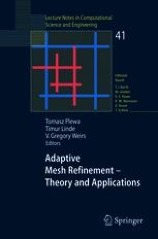
Adaptive Mesh Refinement - Theory and Applications; Proceedings of the Chicago Workshop on Adaptive Mesh Refinement Methods, Sept. 3-5, 2003
Advanced numerical simulations that use adaptive mesh refinement (AMR) methods have now become routine in engineering and science. Originally developed for computational fluid dynamics applications these methods have propagated to fields as diverse as astrophysics, climate modeling, combustion, biophysics and many others. The underlying physical models and equations used in these disciplines are rather different, yet algorithmic and implementation issues facing practitioners are often remarkably similar. Unfortunately, there has been little effort to review the advances and outstanding issues of adaptive mesh refinement methods across such a variety of fields. This book attempts to bridge this gap. The book presents a collection of papers by experts in the field of AMR who analyze past advances in the field and evaluate the current state of adaptive mesh refinement methods in scientific computing.
Adaptive Filtering : Algorithms and Practical Implementation
The book presents basic concepts of adaptive signal processing and filtering in a concise and straightforward manner. It concentrates on on-line algorithms whose adaptation occurs whenever a new sample of each environment signal is available. The material also illustrates block algorithms using a sub-band filtering framework whose adaptation occurs when a new block of data is available.

Ada 2005 Rationale : The Language, The Standard Libraries
The primary goals for this book were to enhance its capabilities particularly in those areas where its reliability and predictability are of great value. Accordingly, a number of intriguing and attractive ideas have been included and implemented in a coherent manner as appropriate to the level of perfection necessary for the diligent maintenance of a language standard.

Achieving the Paris climate agreement goals : Global and regional 100% renewable energy scenarios with non-energy GHG Pathways for +1.5°C and +2°C
Presents detailed pathways to achieve 100% renewable energy by 2050, globally and across ten geographical regions. Based on state-of-the-art scenario modelling, it provides the vital missing link between renewable energy targets and the measures needed to achieve them. Bringing together the latest research in climate science, renewable energy technology, employment and resource impacts, the book breaks new ground by covering all the elements essential to achieving the ambitious climate mitigation targets set out in the Paris Climate Agreement. For example, sectoral implementation pathways, with special emphasis on differences between developed and developing countries and regional conditions, provide tools to implement the scenarios globally and domestically. Non-energy greenhouse gas mitigation scenarios define a sustainable pathway for land-use change and the agricultural sector. Furthermore, results of the impact of the scenarios on employment and mineral and resource requirements provide vital insight on economic and resource management implications.

Achievements in European Research on Grid Systems ; CoreGRID Integration Workshop 2006 (Selected Papers)
Achievements in European Research on Grid Systems comprises the edited proceedings of the 2006 CoreGRID Integration Workshop (CGIW'2006), held October 2006 in Krakow, Poland.
Achievement evaluation of IFI assistance loans to China (1981-2002)
Represents the first comprehensive study done in China to evaluate the overall performance of IFI assistance to China from 1981 to 2002. It analyzes the efficiency of international assistance in contributing to the Chinese economy by investigating the actual implementation of the projects and their economic.
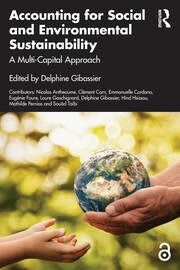
Accounting for social and environmental sustainability : A multi-capital approach
Offers an in‑depth examination of multi‑capital accounting, which has already been integrated within the corporate sustainability reporting directive and will follow on from sustainability reporting. the LIFTS model (limits and foundations towards sustainability accounting model) used in this book combines various scientific and practical contributions to develop budgets for environmental impacts and social obligations on an organisational scale. it proposes an accounting mechanism that enables an organization to manage each of its budgets and measure variances between forecast and actual. it provides an introduction to the principles of this model and its conditions of application and describes its implementation in numerous companies.

Accounting and Financial System Reform in a Transition Economy: A Case Study of Russia
Much has been written about the economic and political problems of countries that are in the process of changing from centrally planned systems to market systems. Most studies have focused on the economic, legal, political and sociological problems these economies have had to face during the transition period. However, not much has been written about the dramatic changes that have to be made to the accounting and financial system of a transition economy. This book was written to help fill that gap. Using Russia as a case study the authors examined all the major aspects of accounting reform, starting with problems of implementation. They also examined the current state of auditing in Russia. They also devote chapters to corporate governance issues, the Russian tax system and the problems Russian enterprises face when they try to attract foreign direct investment.

Access to medicines and vaccines : Implementing flexibilities under intellectual property law
This book is the outcome of a Global Forum on Innovation, Intellectual Property and Access to Medicines held in December 2019 at the Max Plank Instititute in Munich, organised by the South Centre and the Max Plank Institute. The academics and experts from international organisations participating have contributed chapters to this book. The book is for policy makers (in Ministries of Health, Ministries of Trade, Ministries of Foreign Affairs, patent offices), but also relevant for academics (law, trade, public health), on the flexibilities available in the Agreement on Trade Related Aspects of Intellectual Property Rights (TRIPS) of the World Trade Organization to promote access to medicines.

Accelerated Partial Breast Irradiation : Techniques and Clinical Implementation
Accelerated partial breast irradiation (APBI) is being rapidly introduced into the clinical management of early breast cancer. APBI, in fact, encompasses a number of different techniques and approaches that include brachytherapy, intraoperative, and external beam techniques. There is currently no single source that describes these techniques and their clinical implementation. This text will be a concise handbook designed to assist the clinician in the implementation of APBI.
Abstract Computing Machines : A Lambda Calculus Perspective
The book addresses ways and means of organizing computations, highlighting the relationship between algorithms and the basic mechanisms and runtime structures necessary to execute them using machines. It completely abstracts from concrete programming languages and machine architectures, taking instead the lambda calculus as the basic programming and program execution model to design various abstract machines for its correct implementation. The emphasis is on fully normalizing machines based on full-fledged beta-reductions as essential prerequisites for symbolic computations that treat functions and variables truly as first-class objects. Their weakly normalizing counterparts are shown to be functional abstract machines that sacrifice the flavors of full beta-reductions for decidedly simpler runtime structures and improved runtime efficiency. Further downgrading of the lambda calculus leads to classical imperative machines that permit side-effecting operations on the runtime environment.

A Structural Framework for the Pricing of Corporate Securities : Economic and Empirical Issues
This book is the first comprehensive treatment, of structural credit risk models for the simultaneous and consistent pricing of corporate securities. Through the development of a flexible economic framework based on the firm's EBIT, the reader is taken from the economic principles of firm value models to the empirical implementation. Analytical solutions are provided, if EBIT follows an arithmetic or geometric Brownian motion.
A software process model handbook for incorporating peoples capabilities
Offers the most advanced approach to date, empirically validated at software development organizations. This handbook adds a valuable contribution to the much-needed literature on people-related aspects in software engineering. The primary focus is on the particular challenge of extending software process definitions to more explicitly address people-related considerations. The capability concept is not present nor has it been considered in most software process models. The authors have developed a capabilities-oriented software process model, which has been formalized in UML and implemented as a tool. A Software Process Model Handbook for Incorporating People's Capabilities guides readers through the incorporation of the individual’s capabilities into the software process. Structured to meet the needs of research scientists and graduate-level students in computer science and engineering, A Software Process Model Handbook for Incorporating People's Capabilities is also suitable for practitioners in industry.
A Problem-based Approach for Management Education : Preparing Managers for Action
This book is designed to provide both novice and experienced users of PBL with resources for designing and implementing problem-based management education. The book provides the novice with useful theoretical and practical background on how to design a PBL curriculum, use PBL in a classroom, and develop PBL materials. At the same time, the book will challenge experienced users of PBL and case teaching to extend their applications through the use of learning technologies and more systematic approaches to assessment and curriculum design. Finally, the volume includes a set of sample PBL materials that provide readers with in-dept examples of what a PBL unit looks like and how it may be employed in the classroom.

A practical guide on behaviour change support for self-managing chronic disease
Developed under the auspices of the Train4Health project, funded by the Erasmus+ program of the European Union, the book contains six chapters written by international contributors from different disciplines. Chapter one introduces the competencies necessary for delivering effective behavior change support, based on an established program of work, and related learning outcomes. The four following chapters describe how these competencies can be acquired, focusing on concepts and theories, assessing self-management behaviors, implementing change strategies and person-centered communication, using a practical approach.
A Platform-Centric Approach to System-on-Chip (SOC) Design
The book proposes a new methodology for realizing platform-centric design of complex systems, and presents a detailed plan for its implementation. The proposed plan allows component vendors, system integrators and product developers to collaborate effectively and efficiently to create complex products within budget and schedule constraints.
A High-Performance Logical Framework -- All About Maude : How to Specify, Program, and Verify Systems in Rewriting Logic
This book gives a comprehensive account of Maude, a language and system based on rewriting logic. Many examples are used throughout the book to illustrate the main ideas and features of Maude, and its many possible uses. Maude modules are rewrite theories. Computation with such modules is - cient deduction by rewriting. Because of its logical basis and its initial model semantics,aMaude module defines a precise mathematical model.This means that Maude and its formal tool environment can be used in three, mutually reinforcing ways: • as a declarative programming language; • as an executable formal specification language; and • as a formal verification system. Maude’s rewriting logic is simple, yet very expressive. This gives Maude good representational capabilities as a semantic framework to formally represent a wide range of systems, including models of concurrency, distributed al- rithms, network protocols, semantics of programming languages, and models of cell biology. Rewriting logic is also an expressive universal logic,making Maude a fiexible logical framework in which many difierent logics and - ference systems can be represented and mechanized. This makes Maude a useful metatool to build many other tools, including those in its own formal tool environment. Thanks to the logic’s simplicity and the use of advanced semi-compilation techniques, Maude has a high-performance implementation, making it competitive with other declarative programming languages.

A Customer-oriented Manager for B2B Services : Principles and Implementation
A Customer-oriented Manager for B2B Services provides managers with the knowledge and tools necessary to implement customer orientation themselves, with the involvement of their extended team. To this end, this book presents a four-step approach: understand the fundamentals of customer orientation in B2B services, know the customer, make the most of the offer and deliver the service.
