



الصفحة 35
الصفحة 35

Fundamental approaches to software engineering ; 22nd International Conference, FASE 2019, Held as Part of the European Joint Conferences on Theory and Practice of Software, ETAPS 2019, Prague, Czech Republic, April 6–11, 2019, Proceedings
This book cover software verification; model-driven development and model transformation; software evolution and requirements engineering; specification, design, and implementation of particular classes of systems; and software testing.

Fundamental approaches to software engineering ; 11th International Conference, FASE 2008, Held as Part of the Joint European conferences on theory and practice of software, ETAPS 2008, Budapest, Hungary, March 29-April 6, 2008. Proceedings
The fve main conferences received 571 submissions, 147 of which were accepted, giving an overall acceptance rate of less than 26%, with each conference below 27%.Congratulationsthereforetoallthe authorswhomadeittothe alprogramme! I hope that most of the other authors will still have found a way of participating in this exciting event, and that you will all continue submitting to ETAPS and contributing to make of it the best conference in the area،The events that comprise ETAPS address various aspects of the system velopment process,including specifcation, design, implementation, analysis and improvement.

Functional Verification of Programmable Embedded Architectures : A Top-Down Approach
This book presents a top-down validation methodology that complements the existing bottom-up approaches. It leverages the system architect’s knowledge about the behavior of the design through architecture specification using an Architecture Description Language (ADL). The authors also address two fundamental challenges in functional verification: lack of a golden reference model, and lack of a comprehensive functional coverage metric.

Functional verification coverage measurement and analysis
Functional Verification Coverage Measurement and Analysis addresses a means of quantitatively assessing functional verification progress. Without this process, design and verification engineers, and their management, are left guessing whether or not they have completed verifying the device they are designing. Using the techniques described in this book, they will learn how to build a toolset which allows them to know how close they are to functional closure.

Functional Structures in Networks : AMLn - A Language for Model Driven Development of Telecom Systems
The book describes a method for creating models of telecom systems. The method is intended for practicing network architects and designers. This method emphasizes modeling the (very complex) functional structure of networks in a way that is independent of any hardware and software design methodology

Functional Somatic Symptoms in Children and Adolescents : A Stress-System Approach to Assessment and Treatment
This book sets out the stress-system model for functional somatic symptoms in children and adolescents. The book begins by exploring the initial encounter between the paediatrician, child, and family, moves through the assessment process, including the formulation and the treatment contract, and then describes the various forms of treatment that are designed to settle the child’s dysregulated stress system

Functional MRI : Basic principles and clinical applications
This practical and timely volume presents an overview of the principles of fMRI and explains key concepts, including scanning methodologies, experimental research design, and data analysis. Informative discussions cover the technical and clinical challenges associated with fMRI. A neuroanatomical atlas adds to the sensible approach and serves as a useful reference by clearly illustrating normal functioning for important areas of the brain.

Functional Molecular Nanostructures
in This book some recent advances in the structural design of nanoscale assemblies are shown, along with examples from the following areas: supramolecular catalysis, photoactive assemblies, molecular recognition and switches, and electroactive assemblies.The last decade has witnessed an unprecedented pursuit of discrete, nanoscale supramolecular aggregates, built by modern methods of self-assembly strategies. Several efficient new synthetic methods have been developed for engineering spectacular multicomponentsupramolecular aggregates.

Functional Approach to Optimal Experimental Design
The book presents a novel approach for studying optimal experimental designs. The functional approach consists of representing support points of the designs by Taylor series. It is thoroughly explained for many linear and nonlinear regression models popular in practice including polynomial, trigonometrical, rational, and exponential models. Using the tables of coefficients of these series included in the book, a reader can construct optimal designs for specific models by hand. The book is suitable for researchers in statistics and especially in experimental design theory as well as to students and practitioners with a good mathematical background.
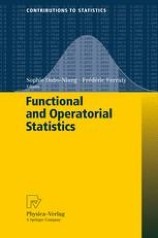
Functional and operatorial statistics
An increasing number of statistical problems and methods involve infinite-dimensional aspects. This is due to the progress of technologies which allow us to store more and more information while modern instruments are able to collect data much more effectively due to their increasingly sophisticated design. This evolution directly concerns statisticians, who have to propose new methodologies while taking into account such high-dimensional data (e.g. continuous processes, functional data, etc.). The numerous applications (micro-arrays, paleo-ecological data, radar waveforms, spectrometric curves, speech recognition, continuous time series, 3-D images, etc.) in various fields (biology, econometrics, environmetrics, the food industry, medical sciences, paper industry, etc.) make researching this statistical topic very worthwhile. This book gathers important contributions on the functional and operatorial statistics fields

Functional aesthetic dentistry : How to achieve predictable aesthetic results using principles of a stable occlusion
This book provides all the information needed by the dentist in order to understand functional occlusion and describes a coherent method that, through application of principles of form and function, allows the delivery of predictable, natural, and long-lasting aesthetic results.

Fun and Games ; 2nd International conference, Eindhoven, The Netherlands, October 20-21, 2008. Proceedings
This book constitutes the refereed proceedings of the Second International Conference on Fun and Games, held in Eindhoven, The Netherlands, in October 2008.The 17 revised full papers, presented together with 2 invited talks were carefully reviewed and selected from a total of 36 submissions. The papers encompass the study of computer games, game development and experiences by researchers from social sciences, computing, electrical engineering, design, etc. Main focus is given to topics such as tightly-coupled embodied control of movement-sensitive mobile devices, hypercomputation and cultural computing, emerging gaming paradigms.

Fully-Depleted SOI CMOS Circuits and Technology for Ultralow-Power Applications
Fully-depleted SOI CMOS Circuits and Technology for Ultralow-Power Applications addresses the problem of reducing the supply voltage of conventional circuits for ultralow-power operation and explains power-efficient MTCMOS circuit design for FD-SOI devices at a supply voltage of 0.5 V. The topics include the minimum required knowledge of the fabrication of SOI substrates; FD-SOI devices and the latest developments in device and process technologies; and ultralow-voltage circuits, such as digital circuits, analog/RF circuits, and DC-DC converters. Each ultra-low-power technique related to devices and circuits is fully explained using figures to help understanding.

Full-Chip Nanometer Routing Techniques
From a manufacturability standpoint, nanometer routers must explicitly deal with the ever increasing design complexity, and be capable of adapting to the constraint requirements of timing, signal integrity, process antenna effect, and new interconnect architecture such as X-architecture. In the nanometer era, we must look into new-generation routing technologies that combine high performance and capacity with the integration of congestion, timing, SI prevention, and DFM algorithms as the best means of getting to design closure quickly. In this book, we present a novel multilevel full-chip router, namely mSIGMA for SIGnal-integrity and MAnufacturability optimization. And these routing technologies will ensure faster time-to-market and time-to-profitability

Fuel Cells II
The concept to utilize an ion-conducting polymer membrane as a solid po- mer electrolyte offers several advantages regarding the design and operation of an electrochemical cell, as outlined in Volume 215, Chapter 1 (L. Gubler, G.G. Scherer). Essentially, the solvent and/or transport medium, e.g., H O, 2 + for the mobile ionic species, e.g., H for a cation exchange membrane, is taken up by and con?ned into the nano-dimensional morphology of the i- containingdomainsofthepolymer.Asaconsequence, aphaseseparationinto a hydrophilic ion-containing solvent phase and a hydrophobic polymer ba- bone phase establishes. Because of the narrow solid electrolyte gap in these cells, low ohmic losses reducing the overall cell voltage can be achieved, even at highcurrent densities.

Fuel Cells I
The concept to utilize an ion-conducting polymer membrane as a solid po- mer electrolyte offers several advantages regarding the design and operation of an electrochemical cell, as outlined in Volume 215, Chapter 1 (L. Gubler, G.G. Scherer). Essentially, the solvent and/or transport medium, e.g., H O, 2 + for the mobile ionic species, e.g., H for a cation exchange membrane, is taken up by and con?ned into the nano-dimensional morphology of the i- containingdomainsofthepolymer.Asaconsequence, aphaseseparationinto a hydrophilic ion-containing solvent phase and a hydrophobic polymer ba- bone phase establishes. Because of the narrow solid electrolyte gap in these cells, low ohmic losses reducing the overall cell voltage can be achieved, even at highcurrent densities.

Fuel Cell Technology : Reaching Towards Commercialization
The Engineering Materials and Processes series focuses on all forms of materials and the processes used to synthesise and formulate them as they relate to the various engineering disciplines.The series deals with a diverse range of materials: ceramics, metals (ferrous and non-ferrous), semiconductors, composites, polymers biomimetics, etc. Each monograph in the series is written by a specialist and demonstrates how enhancements in materials and the processes associated with them can improve performance in the field of engineering in which they are used.

Fuel Cell Electronics Packaging
Today's commercial, medical and military electronics are becoming smaller and smaller. At the same time, these devices are packed with more functions and demand more power. This power requirement is currently met almost exclusively by battery power. A fuel cell is like a battery converting chemical energy directly to electricity. The convergence of fuel cell technology and microelectronics is enabling the new design and manufacturing of fuel cells.Fuel Cell Electronics Packaging presents the latest developments in the technology convergence of microelectronics and fuel cells. Using the well established manufacturing methods used in microelectronics packaging, fuel cells can be further fabricated in smaller sizes with higher energy density, at a faster pace and lower cost.

FSTTCS 2007 : Foundations of software technology and theoretical computer science; 27th International Conference, New Delhi, India, December 12-14, 2007, Proceedings
This book constitutes the refereed proceedings of the 27th International Conference on the Foundations of Software Technology and Theoretical Computer Science, FSTTCS 2007. The papers provide original research results in fundamental aspects of computer science as well as reports from the frontline of software technology and theoretical computer science.

FSTTCS 2005 : Foundations of software technology and theoretical computer science ; 25th International conference, Hyderabad, India, December 15-18, 2005, Proceedings
This year marks a milestone in the history of FST&TCS, which ?rst took place in 1981. We would like to take this opportunity to express our appreciation of the foresight and commitment to excellence shown by the early organizersof the conference. The conference is now organized by IARCS (Indian Association for Researchin Computing Science), and the conference has been the foundation on which the IARCS community has been built. To commemorate the Silver Jubilee of FST&TCS.
