



الصفحة 35
الصفحة 35
Blind Equalization and System Identification : Batch Processing Algorithms, Performance and Applications
Discrete-time signal processing has had a momentous impact on advances in engineering and science over recent decades. The rapid progress of digital and mixed-signal integrated circuits in processing speed, functionality and cost-effectiveness has led to their ubiquitous employment in signal processing and transmission in diverse milieux. Topics covered include: • SISO, MIMO and 2-d non-blind equalization (deconvolution) algorithms. • SISO, MIMO and 2-d blind equalization (deconvolution) algorithms. • SISO, MIMO and 2-d blind system identification algorithms. • algorithm analyses and improvements. • applications of SISO, MIMO and 2-d blind equalization/identification algorithms.
Biosurveillance and biosecurity ; International Workshop, BioSecure 2008, Raleigh, NC, USA, December 2, 2008. Proceedings
This book constitutes the refereed proceedings of the International Workshop on Biosurveillance and Biosecurity, BioSecure 2008, held in Raleigh, NC, USA, in December 2008.

Biophysical characterization of functional peptides
Presents reproducible and step-by-step procedures for the peptide synthesis, their characterization and applications. The volume includes an introductory section on in silico modelling of new peptide molecules, Molecular Dynamics Simulations, Docking, Electrostatic fingerprinting of peptides, and other modelling tools for peptide designing and optimization. Further, it covers protocols for the solid phase peptide synthesis, chromatographic and mass spectrometric characterization of peptides. Importantly, it covers methods for biophysical characterizations of peptides for their potential applications as drug delivery vehicles, peptide nano-assembly, bionanocatalysis, protein aggregation diseases, and peptide-based anti-bacterial.
Biomimicry for Optimization, Control, and Automation
In this book, we focus onhowtousebiomimicryof the functionaloperationofthe “hardwareandso- ware” of biological systems for the development of optimization algorithms and feedbackcontrolsystemsthatextendourcapabilitiestoimplementsophisticated levels of automation. The primary focus is not on the modeling, emulation, or analysis of some biological system. The focus is on using “bio-inspiration” to inject new ideas, techniques, and perspective into the engineering of complex automation systems. There are many biological processes that, at some level of abstraction, can berepresentedasoptimizationprocesses,manyofwhichhaveasa basicpurpose automatic control, decision making, or automation.
Biometrics, Computer Security Systems and Artificial Intelligence Applications
This book presents the most recent achievements in some fascinating and rapidly developing fields within Computer Science. The scientific works presented in this book have been partitioned into three topical groups: Image Analysis and Biometrics, Computer Security Systems, and Artificial Intelligence and Applications. Image Analysis and Biometrics is the branch of Computer Science dealing with the very difficult task of artificial, visual perception of objects and surroundings, as well as the problems connected with it. Computer Security and Safety is at present a very important and intensively investigated branch of Computer Science because of the menacing activity of hackers and computer viruses.
Biomedical Simulation; 4th International Symposium, ISBMS 2008, London, UK, July 7-8, 2008 Proceedings
This book constitutes the refereed proceedings of the 4th International Symposium on Biomedical Simulation, ISBMS 2008, held in London, UK, in July 2008.
Biomedical Simulation ; 3rd International Symposium, ISBMS 2006, Zurich, Switzerland, July 10-11, 2006, Proceedings
This book contains the written contributions to the Third International Sym- sium on Biomedical Simulation (ISBMS), which was held in Zurich, Switzerland, on July 10-11, 2006. The manuscripts are organized around three thematic sections which cover several of the major aspects of our rapidly growing ?eld: anatomical modeling and tissue properties, simulation of biophysical processes, as well as systems and applications. The symposium provided an international forum for researchers interested in using biomedical simulation technology for the improvement of patient care. It was held in the spirit and continuation of the symposia on Surgical Simulation and Soft Tissue Modeling (IS4TM) organized in 2003 by INRIA, and on Medical Simulation (ISMS) in 2004 by CIMIT.
Bio-mechanisms of swimming and flying ; Fluid dynamics, biomimetic robots, and sports science
This book follows "Bio-mechanisms of Animals in Swimming and Flying" published in 2004 including 11 chapters. This time, the book includes 31 chapters on the latest researches into natural autonomous systems and locomotion in both flying and swimming organisms. The area of sports science such as analysis and simulation of human swimming is newly added. The computational frameworks for the modeling, simulation and optimization of animals in swimming and flying demonstrate an important role in the progress of interdisciplinary work in the fields of biology and engineering. An innovative technology is exhibited for the flight of an insect size micro air vehicle. Neuronal science is not only unveiling the locomotion mechanisms of swimming in fish from the aspect of the neuronal activities, but also applied to underwater biomimetic robots. The interdisciplinary works are exhibited in the fields of biology and engineering, yielding real-world benefits in innovative technologies.
Biology and mechanics of blood flows ; Part II : Mechanics and medical aspects
Biology and Mechanics of Blood Flows presents the basic knowledge and state-of-the-art techniques necessary to carry out investigations of the cardiovascular system using modeling and simulation. Part II of this two-volume sequence, Mechanics and Medical Aspects, refers to the extraction of input data at the macroscopic scale for modeling the cardiovascular system, and complements Part I, which focuses on nanoscopic and microscopic components and processes. This volume contains chapters on anatomy, physiology, continuum mechanics, as well as pathological changes in the vasculature walls including the heart and their treatments. Methods of numerical simulations are given and illustrated in particular by application to wall diseases. This authoritative book will appeal to any biologist, chemist, physicist, or applied mathematician interested in the functioning of the cardiovascular system.
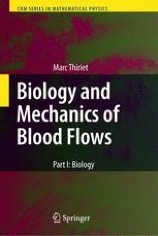
Biology and mechanics of blood flows ; Part I : Biology
Biology and Mechanics of Blood Flows presents the basic knowledge and state-of-the-art techniques necessary to carry out investigations of the cardiovascular system using modeling and simulation. Part I of this two-volume sequence, Biology, addresses the nanoscopic and microscopic scales. The nanoscale corresponds to the scale of biochemical reaction cascades involved in cell adaptation to mechanical stresses among other stimuli. The microscale is the scale of stress-induced tissue remodeling associated with acute or chronic loadings. The cardiovascular system, like any physiological system, has a complicated three-dimensional structure and composition. Its time dependent behavior is regulated, and this complex system has many components.

Bio-inspired computing and communication ; 1st Workshop on Bio-inspired design of networks, BIOWIRE 2007 Cambridge, UK, April 2-5, 2007 Revised Selected Papers
The book constitutes the thoroughly refereed post-workshop proceedings of the First Workshop on Bio-Inspired Design of Networks, BIOWIRE 2007, held in Cambridge, UK, in April 2007.

Bio-inspired computational intelligence and applications ; International conference on life system modeling, and simulation, LSMS 2007, Shanghai, China, September 14-17, 2007. Proceedings
It covers both micro and macro c- ponents ranging from cells, tissues and organs across to organisms and ecologic niches. These interact and evolve to produce an overall complex system whose beh- ior is difficult to comprehend and predict.The arrival of the 21st century has been marked by a resurgence of research interest both in arriving at a systems-level und- standing of biology and in applying such knowledge in complex real-world appli- tions. Consequently, computational methods and intelligence in systems, biology, as well as bio-inspired computational intelligence, have emerged as key drivers for new computational methods. For this reason papers dealing with theory, techniques and real-world applications relating to these two themes were especially solicited.

Bioinformatics research and applications ; 3rd International Symposium,ISBRA 2007, Atlanta, GA, USA, May 7-10, 2007, Proceedings
This book including clustering and classification, gene expression analysis, gene networks, genome analysis, motif finding, pathways, protein structure prediction, protein domain interactions, phylogenetics, and software tools.

Bifurcations, Instabilities, Degradation in Geomechanics
Leading international researchers and practitioners of bifurcations and instabilities in geomechanics debate the developments and applications which have occurred over the last few decades. The topics covered include modeling of bifurcation, structural failure of geomaterials and geostructures, advanced analytical, numerical and experimental techniques, and application and development of generalised continuum models etc. In addition analytical solutions, numerical methods, experimental techniques, and case histories are presented. Beside fundamental research findings, applications in geotechnical, petroleum, mining, and bulk materials engineering are emphasised.
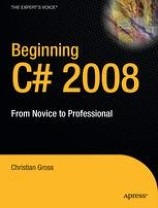
Beginning C# 2008 : From novice to professional
This book is for anyone who wants to write good C# 2008 code—even if you have never programmed before. Beginning C# 2008 has been written to teach you how to use the C# programming language to solve problems. Christian Gross is dedicated to helping his readers understand every detail of Beginning C# 2008.
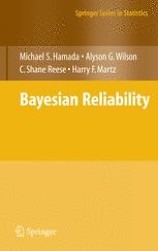
Bayesian reliability
Bayesian Reliability presents modern methods and techniques for analyzing reliability data from a Bayesian perspective. The adoption and application of Bayesian methods in virtually all branches of science and engineering have significantly increased over the past few decades. This increase is largely due to advances in simulation-based computational tools for implementing Bayesian methods. The authors extensively use such tools throughout this book, focusing on assessing the reliability of components and systems with particular attention to hierarchical models and models incorporating explanatory variables. Such models include failure time regression models, accelerated testing models, and degradation models. The authors pay special attention to Bayesian goodness-of-fit testing, model validation, reliability test design, and assurance test planning. Throughout the book, the authors use Markov chain Monte Carlo (MCMC) algorithms for implementing Bayesian analyses--algorithms that make the Bayesian approach to reliability computationally feasible and conceptually straightforward.
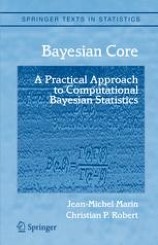
Bayesian core : A practical approach to computational Bayesian statistics
This Bayesian modeling book provides an operational methodology for conducting Bayesian inference, rather than focusing on its theoretical justifications. Special attention is paid to the derivation of prior distributions in each case and specific reference solutions are given for each of the models.
Bayesian computation with R : Introduces Bayesian modeling by use of computation using the R language
R's open source nature, free availability, and large number of contributor packages have made R the software of choice for many statisticians in education and industry. Bayesian Computation with R introduces Bayesian modeling by the use of computation using the R language.
Basics of Aerothermodynamics
The discrete numerical methods of aerodynamics/aerothermodynamics permit now - what was twenty years ago not imaginable - the simulation of high speed flows past real flight vehicle configurations with thermo-chemical and viscous effects, the description of the latter being still handicapped by in sufficient flow-physics models.
Basic pharmacokinetics
Introduces basic pharmacokinetic concepts to beginner learners to help them understand the absorption, distribution, metabolism, and excretion of drugs. Accompanying the book is a website with self-instructional tutorials and pharmacokinetic and pharmacokinetic-pharmacodynamic simulations, allowing visualization of concepts for enhanced comprehension. This learning tool received an award from the American Association of Colleges of Pharmacy for innovation in teaching, making it a valuable supplement to this essential text.
