



الصفحة 35
الصفحة 35
Business modeling and software design ; 10th International Symposium, BMSD 2020, Berlin, Germany, July 6-8, 2020, Proceedings
This book constitutes the refereed proceedings of the 10th International Symposium on Business Modeling and Software Design, BMSD 2020, which took place in Berlin, Germany, in July 2020. BMSD is a leading international forum that brings together researchers and practitioners interested in business modeling and its relation to software design. Particular areas of interest are: Business Processes and Enterprise Engineering; Business Models and Requirements; Business Models and Services; Business Models and Software; Information Systems Architectures and Paradigms; Data Aspects in Business Modeling and Software Development; Blockchain-Based Business Models and Information Systems; IoT and Implications for Enterprise Information Systems.
Business Intelligence for the Real-Time Enterprises ; 1st International Workshop, BIRTE 2006, Seoul, Korea, September 11, 2006, Revised Selected Papers
The book includes different aspects in the lifecycle of business intelligence on very large enterprise-wide operational real-time data sets. In today’s competitive and highly dynamic environment, analyzing data to und- stand how the business is performing, to predict outcomes and trends, and to improve the effectiveness of business processes underlying business operations has become critical. The traditional approach to reporting is not longer adequate; users now - mand easy-to-use intelligent platforms and applications capable of analyzing real-time business data to provide insight and actionable information at the right time. The end goal is to improve the enterprise performance by better and timelier decision making, enabled by the availability of up-to-date, high-quality information.
Business Ethics of Innovation
Firms that operate in a market economy often depend upon innovations in order to achieve competitive advantages that sustainably secure their survival. Business ethics is thus largely concerned with questions about the decisional freedoms involved in innovation processes. Innovations oftentimes raise novel questions about the role of the state or the structure of society. Business ethics needs to provide a framework for balancing the different perspectives, values, and interests at stake. This balance must be achieved at the level of the firm in order to facilitate adequate long term decisions, but it should also be sought at higher, including regulatory, levels. Achieving this balance will require an ethical framework for entrepreneurial action.
Building Physics : Heat, Ventilation, Moisture, Light, Sound, Fire, and Urban Microclimate
Presents the theoretical background of building physics, dealing with the evaluation of physical phenomena related to heat transfer and energy use in buildings, water and water vapour transfer in building structures, daylighting and electric lighting of buildings, sound transmission in building structures and protection against noise, the occurrence and spread of fires in buildings and the thermal response of cities. It contains numerical and computational evaluation methods, numerous computational case studies and examples of experimental analyses. The book demonstrates that the considered physical processes affect the quality of living and working comfort in indoor and outdoor environment.
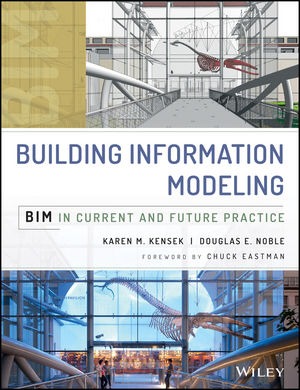
Building information modeling : BIM in current and future practice
"Thought leaders from universities and professional practice composed essays exploring BIM's potential to improve the products and processes of architectural design including the structure and content of the tools themselves. These authors provide insights for assessing the current practice and research directions of BIM and speculate about its future. Design Thinking and BIM / BIM Analytics / Comprehensive BIM / Reasoning with BIM / Professional BIM / BIM Speculations"
Building from waste : Recovered materials in architecture and construction
"Reduce, Reuse, Recycle, and Recover" is the sustainable guideline that has replaced the "Take, Make, Waste" attitude of the industrial age. Based on their background at the ETH Zurich and the Future Cities Laboratory in Singapore, the authors provide both a conceptual and practical look into materials and products which use waste as a renewable resource. It looks into innovative concepts of how materials usually regarded as waste can be processed into new construction elements. The products are organized along the manufacturing processes: densified, reconfigured, transformed, designed and cultivated materials.

Breaking ocean waves : Geometry, structure and remote sensing
This book represents the most comprehensive description of the physical findings of an investigation into the spatio-temporal characteristics of the gravity of breaking waves and the foam activity in open sea by methods and instruments of optical and microwave remote sensing. Much emphasis is placed on the physical aspects of breaking processes necessary to measure the possibilities and limitations of remote sensing methods in specific observation cases of an oceanic surface. Numerous practical applications and illustrations are provided from air-borne, ship-borne and laboratory up-to-date experiments.

Brain Edema XIII
The XIII International Symposium on Brain Edema intracerebral hemorrhage. This volume includes papers pre- day satellite conference on the subject. Brain vestigation focusing primarily on the secondary events edema, in many respects, is a marker of underlying which develop after the hemorrhage. pathological processes which include tissue injury There was considerable enthusiasm to continue the from many diseases.
Brain development in Drosophila melanogaster
The central nervous system (CNS) represents the organ with the highest structural and functional complexity. Accordingly, uncovering the mechanisms leading to cell diversity, patterning and connectivity in the CNS is one of the major challenges in developmental biology. The developing CNS of the fruitfly Drosophila melanogaster is an ideal model system to study these processes. Several principle questions regarding neurogenesis (like stem cell formation, cell fate specification, axonal pathfinding) have been addressed in Drosophila by focusing on the relatively simply structured truncal parts of the nervous system. This book provides an overview of some major facets of recent research on Drosophila brain development.
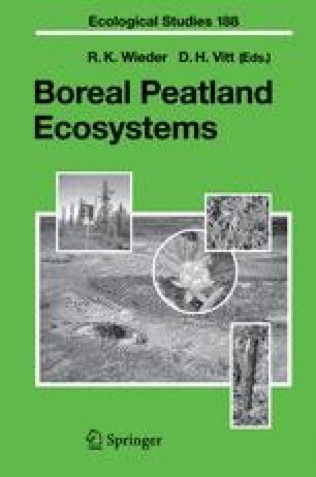
Boreal Peatland Ecosystems
This volume adopts an ecosystems approach to understanding the world's boreal peatlands. It focuses on biogeochemical patterns and processes, production, decomposition, and peat accumulation, and provides additional information on animal and fungal diversity. A recurring theme is the legacy of boreal peatlands as impressive accumulators of carbon as peat over millennia. This carbon legacy is under threat from a wide diversity of disturbances, including wildfire, ongoing climate change, the changing chemistry of atmospheric deposition, and continuing resource exploitation. The volume is of inte.

Blind smart helmet
The Smart Helmet for the Blind is a project aimed at providing solutions for the challenges faced by blind individuals in their daily lives. The problem of detecting objects, identifying obstacles and distances, knowing the current location, and using a mobile application is a common issue for blind people. To address these problems, the Smart Helmet project was created, utilizing advanced technology and artificial intelligence to provide real-time assistance to the wearer. The helmet is connected to a Raspberry Pi 4, which processes information from the helmet's cameras and AI algorithms to analyze and predict the surrounding environment for a blind person.

Bird species : How they arise, modify and vanish
The average person can name more bird species than they think, but do we really know what a bird “species” is? This open access book takes up several fascinating aspects of bird life to elucidate this basic concept in biology. From genetic and physiological basics to the phenomena of bird song and bird migration, it analyzes various interactions of birds – with their environment and other birds. Lastly, it shows imminent threats to birds in the Anthropocene, the era of global human impact.This book brings together various disciplines involved in observing bird species come into existence, modify, and vanish. It is a rich resource for bird enthusiasts who want to understand various processes at the cutting edge of current research in more detail. At the same time it offers students the opportunity to see primarily unconnected, but booming big-data approaches such as genomics and biogeography meet in a topic of broad interest. Lastly, the book enables conservationists to better understand the uncertainties surrounding “species” as entities of protection.

Biotechnology for Odor and Air Pollution Control
An international board of authors from universities, research institutes, and industries describe various biotechnological methods ranging from laboratory, to pilot evaluation and to full-scale process implementation. Topics include bioprocesses for the treatment of odors and air pollutants in wastewater treatment plants, rendering plants, chemical production facilities, and food and flavor manufacturing facilities. In addition to the basic microbiological and engineering aspects, the design, modeling and control of bioreactors are also presented.
Biostatistics and microbiology : A survival manual
This book presents a step-by-step manner that eliminates the greatest obstacle to the learner, which is applying the many processes that comprise a statistical method. The author counters the fear of statistical methods by describing early in the book a step-by-step procedure to perform a statistical method - a process that we will term "the six-step procedure." All of the testing will be performed adhering to six well-defined steps, which will greatly simplify the statistical process. Each step in the sequence must be completed before moving on to the next step.
Biosolids treatment processes ; Vol.6
The past 30 years have seen the emergence of a growing desire worldwide to take positive actions to restore and protect the environment from the degrading effects of all forms of pollution: air, noise, solid waste, and water. The Handbook of Environmental Engineering series guides readers to answer the fundamental questions facing pollution in the modern era – How serious is pollution? Is the technology needed to abate it not only available, but feasible? Among the topics included in this, the sixth edition, are: biosolids, flotation thickening, anaerobic and aerobic digestion, pressurized ozonation, lime stabilization, elutriation and polymer conditioning, and animal waste treatment.

Bioremediation of Soils Contaminated with Aromatic Compounds
Environmental biotechnology, which was in its infancy in the early 80's, has evolved thanks to the revolution brought about by molecular biology. Multiple successes in the biological cleanup of civil and industrial wastewater and of hydrocarbon soil pollution, demonstrate the vast power of clean technologies. In addition, the buildup of information on the activities of microorganisms as catalysts in all sorts of natural, industrial and animal environments has flourished. There is a continuing realization of the critical role of microbial processes in biological, industrial and geological systems. Since environmental biotechnology has matured, it is ready to tackle bigger challenges: the scaling up of many bioremediation systems still in progress, the search for novel biocatalysts for industrial applications, the continuing effort against common human life-threatening processes such as antibiotic resistance, the accumulation of hormone-mimicking substances (endocrine disrupters), the deposition of air-borne pesticides in the environment and, the degradation of recalcitrant contaminants. These endeavors will help prevent the contamination of food chains, protect human life and allow for human activity and economic development that do not compromise environmental sustainabijity.
Biophysical Aspects of Transmembrane Signaling
Transmembrane signaling is one of the most significant cell biological events in the life and death of cells in general and lymphocytes in particular. Until recently biochemists and biophysicists were not accustomed to thinking of these processes from the side of a high number of complex biochemical events and an equally high number of physical changes at molecular and cellular levels at the same time. Both types of researchers were convinced that their findings are the most decisive, having higher importance than the findings of the other scientist population. Both casts were wrong. Life, even at cellular level, has a number of interacting physical and biochemical mechanisms, which finally build up the creation of an "excited" cell that will respond to particular signals from the outer or inner world.
Biophotonics ; Optical science and engineering for the 21st century
Biophotonics: Optical Science and Engineering in the 21st Century serves as an ideal aid to the research and development of these areas integrating light, photonics, and biological systems.Key topics include: Fluctuation Correlation Spectroscopy in Cells: Determination of Molecular Aggregation ,Using GFP and FRET Technologies for Studying Signaling Mechanisms of Apoptosis in a Single Living Cell, Study on Protein-Protein Interaction in Single Living Cells, Functional Optical Coherence Tomography: Simultaneous In Vivo Imaging of Tissue Structure and Physiology, Imaging –Photo- and Sonodynamic Diagnosis of Cancer Mediated by Chemiluminescence Probes, Biophotonic Analysis of Spontaneous Self-Organizing Oxidative Processes in Aqueous Systems, Biophoton Emission and Defense Systems in Plants
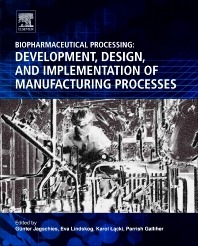
Biopharmaceutical processing : Development, design, and Implementation of manufacturing processes
Biopharmaceutical Processing: Development, Design, and Implementation of Manufacturing Processes covers bioprocessing from cell line development to bulk drug substances. The methods and strategies described are essential learning for every scientist, engineer or manager in the biopharmaceutical and vaccines industry. The integrity of the bioprocess ultimately determines the quality of the product in the biotherapeutics arena, and this book covers every stage including all technologies related to downstream purification and upstream processing fields. Economic considerations are included throughout, with recommendations for lowering costs and improving efficiencies.
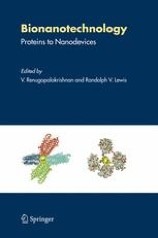
Bionanotechnology : Proteins to Nanodevices
Bionanotechnology is the key integrative technology of the 21st century and aims to use the knowledge, gathered from the natural construction of cellular systems, for the advancement of science and engineering. Investigating the topology and communication processes of cell parts can lead to invention of novel biological devices with exciting applications. Though microscale to nanoscale research offers an excellent space for the development of futuristic technologies, a number of challenges must be overcome. Due to paucity of a dedicated literature on the protein based nanodevices we bring you this monograph that combines collective research works of scientists probing into this fascinating universe of bionanotechnology. The monograph has been written with an aim of surveying engineering design principles of biomolecular nanodevices, prototype nanodevices based on redox proteins, bacteriorhodopsins and natural fibers, and touching upon the future developments in the field.
