



الصفحة 35
الصفحة 35

Marine Biotechnology II
This volume of Advances in Biochemical Engineering/Biotechnology illustrates several topics in line with the following broad objectives: thinking of marine biotechnology as the controlled production and use of marine organisms and molecules for useful purposes, firstly by exploring aspects of marine biodiversity and exploitation of biomass, then considering the identification, production and processing of marine products.

Marine Biotechnology I
Oceans, which occupy up to two thirds of the surface of our planet, were not really approached from scientific point of view until the second half of the 19th century and even the 20th with regard to microbial and unicellular life. Today, the importance of marine biodiversity has been fully recognized. It is, indeed, one of the aspects which, over the two past decades, have made a major contribution to our knowledge and vision of the living planetThis volume of Advances in Biochemical Engineering/Biotechnology illustrates several topics in line with the following broad objectives: thinking ofmarine biotechnology as the controlled production and use of marine organisms and molecules for useful purposes, firstly by exploring aspects of marine biodiversity and exploitation of biomass, then considering the identification, production and processing of marine products.

Marijuana and the Cannabinoids
Although primarily used today as one of the most prevalent illicit leisure drugs, the use of Cannabis sativa L., commonly referred to as marijuana, for medicinal purposes has been reported for more than 5000 years. Marijuana use has been shown to create numerous health problems, and, consequently, the expanding use beyond medical purposes into recreational use (abuse) resulted in control of the drug through international treaties. Much research has been carried out over the past few decades following the identification of the chemical structure of THC.The purpose of Marijuana and the Cannabinoids is to present in a single volume the comprehensive knowledge and experience of renowned researchers and scientists. Each chapter is written independently by an expert in his/her field of endeavor, ranging from the botany, the constituents, the chemistry and pharmacokinetics, the effects and consequences of illicit use on the human body, to the therapeutic potential of the cannabinoids.

Marginality : Addressing the Nexus of poverty, exclusion and ecology
In this volume economists, ecology experts, geographers, agronomists, sociologist, and business experts come together to address marginality. The inter-disciplinary research offers conceptual innovations and presents the dimensions of marginality in developing countries. Economic, political, and environmental drivers are assessed and mapped globally and in detail for countries in Africa and Asia, especially Ethiopia, India, Bangladesh, China, Indonesia. Economic growth especially in rural areas remains and farming communities is central to poverty reduction but needs to be complemented with specific actions to reach those at the margins.

March's Advanced Organic Chemistry : Reactions, Mechanisms, and Structure
The opening chapters of March's Advanced Organic Chemistry deal with the structure of organic compounds and discuss important organic chemistry bonds, fundamental principles of conformation, and stereochemistry of organic molecules, and reactive intermediates in organic chemistry. Further coverage concerns general principles of mechanism in organic chemistry, including acids and bases, photochemistry, sonochemistry and microwave irradiation. The relationship between structure and reactivity is also covered.

Mapping Sustainability : Knowledge e-Networking and the Value Chain
Our underlying objectives are to contribute to the provision, mana- ment, and sharing of knowledge, and to enhance the value of knowledge and its uses by different constituencies in diverse contexts and at different stages of development. The central theme of this book, connecting its different parts, is about ways of transcending critical barriers to the effective uses of knowledge and e-networking. Of special relevance is the development of new approaches to the provision and transmission – from local sources to global networks and from global sources to local networks. In many ways, this is a book of theory and methods, as well as policy and performance.
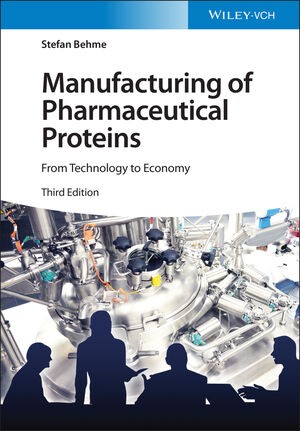
Manufacturing of Pharmaceutical Proteins: From Technology to Economy
Manufacturing of Pharmaceutical Proteins: From Technology to Economy, renowned chemical engineer Dr. Stefan Behme delivers a comprehensive text covering all aspects of biopharmaceutical manufacturing, including legal and regulatory considerations, production facility design, quality assurance, supply chain management, emerging market regulations, and cost control.

Mantle Plumes : A Multidisciplinary Approach
In this book, a group of experts review these advances in plume research and present a general overview on recent plume studies.

Mannitol : Chemistry, Uses and Potential Side Effects
Presents topical research in the study of the chemistry, uses and potential side effects of mannitol. Topics discussed include the utilization and production of D-mannitol by bacteria; concentration of mannitol and other soluble carbohydrates in the crustose lichen rhizocarpon geographicum; disease-related changes and mannitols use for clinical disorders; use of mannitol in thermal energy storage applications; and chiral phosphorous ligands derived from D-mannitol.

Managing Nano-Bio-Info-Cogno Innovations : Converging Technologies in Society
Tremendous human progress is becoming possible through the development of converging technologies stimulated by advances in four core fields: Nanotechnology, Biotechnology Information technology, and new technologies based in Cognitive science (NBIC). This book provides a unique review of technical developments related to the unification that is rapidly taking place today among these fields.

Making Ammonia : Fritz Haber, Walther Nernst, and the Nature of Scientific Discovery
This book discusses the progress of science and the transfer of scientific knowledge to technological application. It also identifies the factors necessary to achieve this progress. Based on a case study of the physical chemist Fritz Haber's discovery of ammonia synthesis between 1903 and 1909, the book places Haber's work in historical and scientific (physicochemical) context. The scientific developments of the preceding century are framed in a way that emphasizes the confluence of knowledge needed for Haber's success. Against this background, Haber's work is presented in detail along with the indispensable contributions of his colleague, the physical chemist, Walter Nernst, and their assistants. The detailed accounts of scientific advancement remind us of the physical basis on which our scientific theories and ideas are built. Without this reminder we often forget how complex, and how beautiful achievements in science can be.

Maîtriser laléatoire : Exercices résolus de probabilités et statistique = Mastering Randomness : Solved Exercises in Probability and Statistics
Consists of 245 solved exercises that cover all the basic concepts of probability and statistics. The work is structured in nine chapters, each containing a brief introduction, bibliographic references to more specialized works, as well as a series of exercises and their detailed solutions. Ranked in increasing order of difficulty, these will allow the reader to appreciate the extent of his progress. This book can be used as a supplement to any theory manual on statistics and probability. Due to the great diversity of the examples offered, it will suit a diverse readership: students of economics, psychology, social sciences, mathematics, physics, chemistry, medicine or biology.

Magneto-Science : Magnetic Field Effects on Materials: Fundamentals and Applications
It is a dream of chemists and physicists to use magnetism, an important physical property of many materials, to control chemical and physical processes. With new manufacturing technologies for superconducting magnets, it has become possible to produce strong magnetic fields of 10 Tesla or more for applications in chemistry and physics. New magnetic phenomena, useful for processing functional molecules with improved quality, have been discovered recently. They open up exciting possibilities for studying and applying magnetic field effects in the chemical and physical processes of diamagnetic, paramagnetic and ferromagnetic materials. This volume will serve as a useful reference for specialists and non-specialists interested in this exciting new area of megneto-science.

Magnetic Resonance of Myelination and Myelin Disorders
The book has been extensively revised and expanded to do justice to the rapid advances in MR technology, molecular biochemistry, and genetics and the discovery of new disease entities with prominent white matter involvement. Forty chapters have been added, and the number of illustrations has risen considerably. The ability to confirm the presence of genetic alterations in a number of disorders allows more advantageous presentation of the phenotypic variation as expressed in differ.

Magnetic Nanostructures in Modern Technology ; Spintronics, Magnetic MEMS and Recording
A team of outstanding scientists in the field of modern magnetic nanotechnologies illustrates the state of the art in several areas of advanced magneto-electronic devices, magnetic micro-electromechanical systems and high density information storage technologies.The physics and chemistry of nano-scale systems have made rapid advances and there are real prospects of translating exciting scientific findings into a new generation of processes and high technology products with a potential impact on several industrial sectors. In particular the development of nano-structured magnetic materials plays a leading role in the increasing miniaturization of devices with superior performances.

Magnetic Nanostructures
Addresses the exciting and rapidly developing topic of nanostructured magnetic materials. It combines modern topics in nanoscale magnetism with issues relating to the fabrication and characterization of magnetic nanostructures. The chapters describe a wide range of physical aspects, together with theoretical and experimental methods. "Magnetic Nanostructures" will be of interest to researchers and specialists both in academic and industrial research. Graduate students will also find in this book an accessible introduction to the essential issues.

Magnetic Microscopy of Nanostructures
Contains a comprehensive collection of overview articles on novel microscopy methods for imaging magnetic structures on the nanoscale. Written by leading scientists in the field the book covers synchrotron based methods, spin polarized electron methods, and scanning probe techniques. It will be a valuable source of reference for graduate students and newcomers to the field.

Magnetic Functions Beyond the Spin-Hamiltonian
Using the spin-Hamiltonian formalism the magnetic parameters are introduced through the components of the Lambda-tensor involving only the matrix elements of the angular momentum operator. The energy levels for a variety of spins are generated and the modeling of the magnetization, the magnetic susceptibility and the heat capacity is done. Theoretical formulae necessary in performing the energy level calculations for a multi-term system are prepared with the help of the irreducible tensor operator approach. The goal of the programming lies in the fact that the entire relevant matrix elements (electron repulsion, crystal field, spin-orbit interaction, orbital-Zeeman, and spin-Zeeman operators) are evaluated in the basis set of free-atom terms. The modeling of the zero-field splitting is done at three levels of sophistication. The spin-Hamiltonian formalism offers simple formulae for the magnetic parameters by evaluating the matrix elements of the angular momentum operator in the basis set of the crystal-field terms. The magnetic functions for dn complexes are modeled for a wide range of the crystal-field strengths.

Magnesium Technology : Metallurgy, Design Data, Applications
Magnesium, with a density of 1.74 g/cm², is the lightest structural metal and magnesium are increasingly chosen for weight-critical applications such as in land-based transport systems. "Magnesium Technology" substantially updates and complements existing reference sources on this key material. It assembles international contributions from seven countries covering a wide range of research programs into new alloys with the requisite property profiles, i.e., the current state of both research and technological applications of magnesium. In particular, the international team of authors covers key topics, such as: casting and wrought alloys; fabrication methods; corrosion and protection; engineering requirements and strategies, with examples from the automobile, aerospace, and consumer-goods industries, and recycling.
Magnesium Injection Molding
Injection molding of metallic alloys is a modern and environment-friendly technology with universal features, capable of implementing many conventional and novel processing methods based on semisolid and liquid routes. After its application to magnesium and recent commercialization, it is used to manufacture millions of light-weight, fully-recyclable components for various markets, including consumer electronics housings, automotive parts, sporting goods, household devices and office equipment.
