



الصفحة 35
الصفحة 35

Light Vol.s : Art and Landscape by Monika Gora
Moving beyond the seriousness of classical landscape architecture, Monika Gora's work reveals a playful approach to the environment and proves that the built landscape need not be a deadly serious matter, but rather is there for astonishment, brooding, an aha or a laugh. This is the first monograph on the landscape architect and artist, Monika Gora.

Light Shadow Space : Architectural Rendering with Cinema 4D®
The visualization of light in space, its effect on model cubature and scenery, is one of the great challenges in architectural rendering. This is a decisive reason for the use of 3D tools – both for architecture offices and students. This volume features a number of exercises that enable the reader to learn how to light architecture models correctly. Complete virtual 3D scenarios are included that allow for the step-by-step construction of a lighting set up with the help of Cinema 4D® software that creates a realistic spatial impression. The tutorials are complemented by a chapter on the use of Cinema 4D®, importing CAD models and light sources as well as shadow types, which have been revised and expanded in the 9.5 and 10 version.

Light earth building : a handbook for building with wood and earth
Light clay, which is light in weight and easy to work, is presented here as a versatile and forward-looking building material for modern computer-aided timber construction and the renewal of historic timber-framed buildings with clay infill. The balanced building physics properties of the material, which can be controlled through the mixing proportions, make it suitable for resource-efficient building in various different climate zones. Thermal storage, sound insulation, protection against moisture and fire in conventional timber construction are improved, and the construction is simplified.

Library art project
سيلط المشروع الضوء على موضوع القراءة لأن لا نهضة للأمة بغير نهضة الفرد ولا نهضة للفرد من غير تنمية عقله ولن يكون هذا ممكناً إلا عك طريق القراءة وهذا هو السبب في اختيار المشروع.

Leveraging applications of formal methods, verification and validation : Verification Principles ; 9th International Symposium on Leveraging Applications of Formal Methods, ISoLA 2020, Rhodes, Greece, October 20–30, 2020, Proceedings, Part I
Constitutes the refereed proceedings of the 9th International Symposium on Leveraging Applications of Formal Methods, ISoLA 2020, which was planned to take place during October 20–30, 2020, on Rhodes, Greece. The papers presented were carefully reviewed and selected for inclusion in the proceedings. Each volume focusses on an individual topic with topical section headings within the volume : Part I, Verification Principles : Modularity and (De-)Composition in Verification ; X-by-Construction: Correctness meets Probability ; 30 Years of Statistical Model Checking ; Verification and Validation of Concurrent and Distributed Systems.

Leveraging applications of formal methods, verification and validation : Engineering Principles ; 9th International Symposium on Leveraging Applications of Formal Methods, ISoLA 2020, Rhodes, Greece, October 20–30, 2020, Proceedings, Part II
Constitutes the refereed proceedings of the 9th International Symposium on Leveraging Applications of Formal Methods, ISoLA 2020, which was planned to take place during October 20–30, 2020, on Rhodes, Greece. The event itself was postponed to 2021 due to the COVID-19 pandemic. The papers presented were carefully reviewed and selected for inclusion in the proceedings. Each volume focusses on an individual topic with topical section headings within the volume: Part II, Engineering Principles : Automating Software Re-Engineering ; Rigorous Engineering of Collective Adaptive Systems.

Leveraging applications of formal methods, verification and validation : Applications ; 9th International Symposium on Leveraging Applications of Formal Methods, ISoLA 2020, Rhodes, Greece, October 20–30, 2020, Proceedings, Part III
The three-volume set LNCS 12476 - 12478 constitutes the refereed proceedings of the 9th International Symposium on Leveraging Applications of Formal Methods, ISoLA 2020, which was planned to take place during October 20–30, 2020, on Rhodes, Greece. The event itself was postponed to 2021 due to the COVID-19 pandemic. The papers presented were carefully reviewed and selected for inclusion in the proceedings. Each volume focusses on an individual topic with topical section headings within the volume: Part III, Applications: Reliable Smart Contracts: State-of-the-art, Applications, Challenges and Future Directions; Automated Verification of Embedded Control Software; Formal methods for DIStributed COmputing in future RAILway systems.
Legal Programming : Designing Legally Compliant RFID and Software Agent Architectures for Retail Processes and Beyond
LEGAL PROGRAMMING: Designing Legally Compliant RFID and Software Agent Architectures for Retail Processes and Beyond provides a process-oriented discussion of the legal concerns presented by agent-based technologies, processes and programming. It offers a general outline of the potential legal difficulties that could arise in relation to them, focusing on the programming of negotiation and contracting processes in a privacy, consumer and commercial context. The authors will elucidate how it is possible to create form of legal framework and design methodology for transaction agents, applicable in any environment and not just in a specific proprietary framework, that provides the right level of compliance and trust. Key elements considered include the design and programming of legally compliant methods, the determination of rights in respect of objects and variables, and ontologies and programming frameworks for agent interactions. Examples are used to illustrate the points made and provide a practical perspective.
Learning network programming with Java
Learn to deliver superior server-to-server communication through the networking channels / Gain expertise of the networking features of your own applications to support various network architectures such as client/server and peer-to-peer Explore the issues that impact scalability, affect security, and allow applications to work in a heterogeneous environment
Learning from data streams : Processing techniques in sensor networks
The book provides the reader with a comprehensive overview of stream data processing, including famous prototype implementations like the Nile system and the TinyOS operating system. The set of chapters covers the state-of-art in data stream mining approaches using clustering, predictive learning, and tensor analysis techniques, and applying them to applications in security, the natural sciences, and education.

Learning Design : A Handbook on Modelling and Delivering Networked Education and Training
Put together contributions from members of the "Valkenburg Group", consisting of 33 experts deeply involved in e-learning and more specifically learning design. The result is a rich and lasting source of information for both e-learning course and tool developers, providing information about the specification itself, how to implement it in practice, what tools to use, and what pitfalls to avoid. The book not only reports first experiences, but also goes beyond the current state of the art by looking at future prospects and emerging applications.

Learning About Particles - 50 Privileged Years
Embedded in an autobiographic framework, this book retraces vividly and in some depth the golden years of particle physics as witnessed by one of the scientists who made seminal contributions to the understanding of what is now known as the Standard Model of particle physics. Well beyond a survey of interest to historians of sciences and researchers in the field, this book is a must for all students and young researchers who have learned about the theoretical and experimental facts that make up the standard model through modern textbooks only. It will provide the interested reader with a first hand account and deeper understanding of the multilayered and sinuous development that finally led to the present architecture of this theory.

Lean Business Systems and Beyond ; 1st IFIP TC 5 Advanced Production Management Systems Conference (APMS’2006), Wroclaw, Poland, September 18-20, 2006
Includes : foundations of computer science; software theory and practice; education; computer applications in technology; communication systems; systems modeling and optimization; information systems; computers and society; computer systems technology; security and protection in information processing systems; artificial intelligence; and human-computer interaction. Proceedings and post-proceedings of referred international conferences in computer science and interdisciplinary fields are featured.
Lean Architecture : Excellence in Project Delivery
Shows readers a path to improve their project delivery via the application of lean concepts and process management. Authors Michael Czap and Gregory Buchanan challenge readers to reexamine their approach to architectural practice and projects by presenting a unique and compelling alternative. Readers will learn to: Maximize the use of their resources to deliver superior results in less time / Minimize waste, cost, and inefficiency in their firm’s operations / Move between radically different project scales while retaining efficient and effective processes
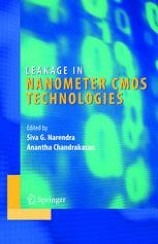
Leakage in Nanometer CMOS Technologies
It is essential for circuit and system designers to understand the components of leakage, sensitivity of leakage to different design parameters, and leakage mitigation techniques in nanometer technologies. This book provides an in-depth treatment of these issues for researchers and product designers.

Le forme spastiche della paralisi cerebrale infantile : Guida all'esplorazione delle funzioni adattive = Spastic forms of cerebral palsy : A guide to exploring adaptive functions
Offers "travel notes" on the topics covered, to spark reflection and comparisons with the readers' experience. The authors address the topics from a pathophysiological perspective that guides their interpretation of the nature of the defect (functional diagnosis), the problems related to prognosis (as a natural history hypothesis), and rehabilitation (as a modification of the architecture of the function in an adaptive sense).The text is accompanied by an extensive glossary of terms used and a DVD with clinical cases, organized according to the authors' classification. This material also highlights the volume's great educational value, both for those already working in this field (physicians, child neuropsychiatrists and physiatrists, rehabilitation therapists) and for students completing their first and second level degrees in rehabilitation and attending postgraduate schools.
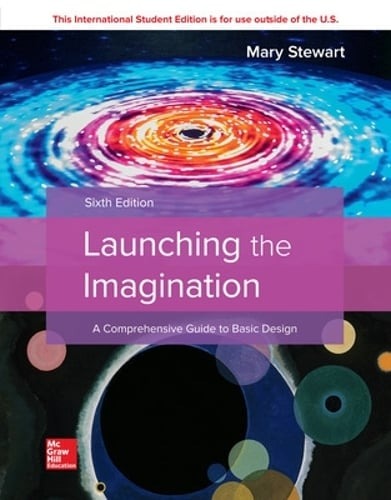
Launching the imagination : A comprehensive guide to two-dimensional design
Launching the Imagination treats design as both a verb and a noun—as both a process and a product. Through an immersion in 2D, 3D, and 4D concepts and possibilities, students develop visual thinking strategies that will serve them throughout their studies and their careers. They discover that design is deliberate—a process of exploring a wide range of solutions and choosing the most promising option for development. They are encouraged to analyze each resulting solution thoughtfully in order to produce the clearest and most inventive solution to each assignment.

Languages and Compilers for Parallel Computing ; 20th International Workshop, LCPC 2007, Urbana, IL, USA, October 11-13, 2007, Revised Selected Papers
This book constitutes the thoroughly refereed post-conference proceedings of the 20th International Workshop on Languages and Compilers for Parallel Computing, LCPC 2007, held in Urbana, IL, USA, in October 2007.The 23 revised full papers presented were carefully reviewed and selected from 49 submissions. The papers are organized in topical sections on reliability, languages, parallel compiler technology, libraries, run-time systems and performance analysis, and general compiler techniques.

Languages and Compilers for High Performance Computing ; 17th International Workshop, LCPC 2004, West Lafayette, IN, USA, September 22-24, 2004, Revised Selected Papers
Cetus is a compiler infrastructure for the source-to-source transformation of programs. Since its creation nearly three years ago, it has grown to over 12,000 lines of Java code, been made available publically on the web, and become a basis for several research projects. We discuss our experience using Cetus for a selection of these research projects. The focus of this paper is not the projects themselves, but rather how Cetus made these projects possible, how the needs of these projects influenced the development of Cetus, and the solutions we applied to problems we encountered with the infrastructure. We believe the research community can benefit from such a discussion, as shown by the strong interest in the mini-workshop on compiler research infrastructures where some of this information was first presented.

Landscape theory in design
Introduces theoretical ideas to students without the use of jargon or an assumption of extensive knowledge in other fields, and in doing so, links these ideas to the processes of design. In five thematic chapters Susan Herrington explains: the theoretic groundings of the theory of philosophy, why it matters to design, an example of the theory in a work of landscape architecture from the twentieth and twenty-first centuries, debates surrounding the theory and primary readings that can be read as companions to her text. An extensive glossary of theoretical terms also adds a vital contribution to students' comprehension of theories relevant to the design of landscapes and gardens.
