



الصفحة 34
الصفحة 34
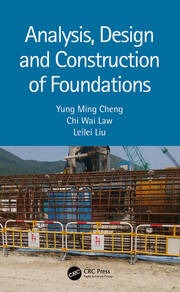
Analysis, design and construction of foundations
Outlines methods for analysis and design the construction of shallow and deep foundations with particular reference to case studies in Hong Kong and China, as well as a discussion of methods used in other countries. It introduces the main approaches used by geotechnical and structural engineers, and the precautions required for planning and designing foundation structures. Some computational methods and computer programs are reviewed to provide tools for performing more realistic analysis of foundation systems.
Analysis of Structures by Matrix Methods
Deals with the analysis of engineering structures made of skeletal members and covers the type of structures that are commonly used in practice. It builds up on the subject matter dealing with matrix algebra, analysis of bar elements, special forms of members, stability and vibration of structures, and pin-connected, rigid-plane, and 3D frames. It treats the important step of formulating the overall stiffness matrix of a structure in a systematic and straightforward manner and uses simple mathematical approaches wherever possible.
Analysis I
Logical thinking, the analysis of complex relationships, the recognition of und- lying simple structures which are common to a multitude of problems — these are the skills which are needed to do mathematics, and their development is the main goal of mathematics education. Of course, these skills cannot be learned ‘in a vacuum’. Only a continuous struggle with concrete problems and a striving for deep understanding leads to success. A good measure of abstraction is needed to allow one to concentrate on the essential, without being distracted by appearances and irrelevancies. The present book strives for clarity and transparency. Right from the beg- ning, it requires from the reader a willingness to deal with abstract concepts, as well as a considerable measure of self-initiative. For these e?orts, the reader will be richly rewarded in his or her mathematical thinking abilities, and will possess the foundation needed for a deeper penetration into mathematics and its applications.
Analysis and Synthesis of Logics : How to Cut and Paste Reasoning Systems
Starting with simple examples showing the relevance of cutting and pasting logics, the monograph develops a mathematical theory of combining and decomposing logics, ranging from propositional and first-order based logics to higher-order based logics as well as to non-truth functional logics. The theory covers mechanisms for combining semantic structures and deductive systems either of the same or different nature (for instance, two Hilbert calculi or a Hilbert calculus and a tableau calculus). The important issue of preservation of properties is extensively addressed. For instance, sufficient conditions are provided for a combined logic to be sound and complete when the original component logics are known to be sound and complete.
An Ottoman Era Town in the Balkans : The Case Study of Kavala
Presents the town of Kavala in Northern Greece as an example of Ottoman urban and residential development, covering the long period of Kavala’s expansion over five centuries under Ottoman rule. Kavala was part of the Ottoman Empire from 1387 to 1912. In the middle of the sixteenth century, Ibrahim Pasha, grand vizier of Suleiman the Magnificent, contributed to the town's prosperity and growth by the construction of an aqueduct. The Ottomans also rebuilt and extended the existing Byzantine fortress.
An Introduction to Structural Optimization
This textbook gives an introduction to all three classes of geometry optimization problems of mechanical structures: sizing, shape and topology optimization. The style is explicit and concrete, focusing on problem formulations and numerical solution methods. The treatment is detailed enough to enable readers to write their own implementations. On the book's homepage, programs may be downloaded that further facilitate the learning of the material covered.
An introduction to law
this book addresses the ways in which rules and the structures of law respond to and impact upon changes in economic and political life. The title has been extensively updated and explores recent high profile developments such as the Civil Partnership Act 2005 and the Racial and Religious Hatred Bill.
An Introduction to Computational Micromechanics
This book presents a comprehensive introduction to computational micromechanics, including basic homogenization theory, microstructural optimization and multifield analysis of heterogeneous materials. "An Introduction to Computational Micromechanics".
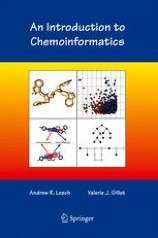
An Introduction To Chemoinformatics
This, the first text written specifically for this field, aims to provide an introduction to the major techniques of chemoinformatics. The first part of the book deals with the representation of 2D and 3D molecular structures, the calculation of molecular descriptors and the construction of mathematical models. The second part describes other important topics including molecular similarity and diversity, the analysis of large data sets, virtual screening, and library design. Simple illustrative examples are used throughout to illustrate key concepts, supplemented with case studies from the literature.
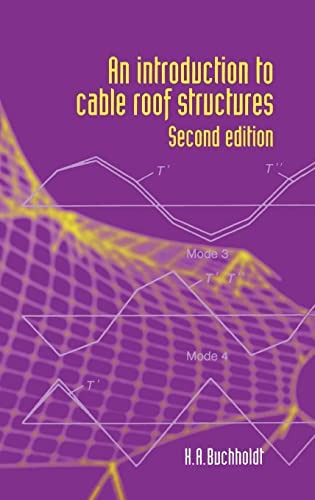
An introduction to cable roof structures ; 2nd ed.
Provides structural engineers with a concise introduction to the architectural, structural and technological aspects of cable roofs, and supplies sufficient information for engineers to carry out their own designs. The improved methods for generating wind and earthquake histories have been included as the trend in modern design codes seem increasingly to require that dynamic response of other forms of non-linear structures such as guyed masts is considered at the design stage.
Algorithms on Trees and Graphs : With Python Code
Introduces graph algorithms on an intuitive basis followed by a detailed exposition using structured pseudocode, with correctness proofs as well as worst-case analyses. Centered around the fundamental issue of graph isomorphism, the content goes beyond classical graph problems of shortest paths, spanning trees, flows in networks, and matchings in bipartite graphs. Advanced algorithmic results and techniques of practical relevance are presented in a coherent and consolidated way. Numerous illustrations, examples, problems, exercises, and a comprehensive bibliography support students and professionals in using the book as a text and source of reference. Furthermore, Python code for all algorithms presented is given in an appendix. Topics and features: Algorithms are first presented on an intuitive basis, followed by a detailed exposition using structured pseudocode / Correctness proofs are given, together with a worst-case analysis of the algorithms / Full implementation of all the algorithms in Python / An extensive chapter is devoted to the algorithmic techniques used in the book / Solutions to all the problems
Algorithms in Bioinformatics ; 8th International Workshop, WABI 2008, Karlsruhe, Germany, September 15-19, 2008. Proceedings
This book constitutes the refereed proceedings of the 8th International Workshop on Algorithms in Bioinformatics, WABI 2008, held in Karlsruhe, Germany, in September 2008 as part of the ALGO 2008 meeting.

Algorithms in Bioinformatics ; 7th International Workshop, WABI 2007, Philadelphia, PA, USA, September 8-9, 2007, Proceedings
All current issues of algorithms in bioinformatics are addressed, ranging from mathematical tools to experimental studies of approximation algorithms and reports on significant computational analyses. Numerous biological problems are dealt with, including genetic mapping, sequence alignment and sequence analysis, phylogeny, comparative genomics, and protein structure. Furthermore the papers feature high-performance computing approaches to computationally hard learning and optimization problems in bioinformatics and cover methods, software and dataset repositories for development and testing of such algorithms and their underlying models.
Algorithms for a New World : When Big Data and Mathematical Models Meet
Algorithms, artificial neural networks, and machine learning help us discover the opportunities and pitfalls of a world governed by mathematics and artificial intelligence.
Algorithms and Programming : Problems and Solutions
This book containing classical and well-known problems supplemented by clear and in-depth explanations. The material covered includes such topics as combinatorics, sorting, searching, queues, grammar and parsing, selected well-known algorithms and much more.
Algorithms and data structures for massive datasets
Learn: Probabilistic sketching data structures for practical problems Choosing the right database engine for your application Evaluating and designing efficient on-disk data structures and algorithms Understanding the algorithmic trade-offs involved in massive-scale systems Deriving basic statistics from streaming data Correctly sampling streaming data Computing percentiles with limited space resources Algorithms and Data Structures for Massive Datasets reveals a toolbox of new methods that are perfect for handling modern big data applications. You'll explore the novel data structures and algorithms that underpin Google, Facebook, and other enterprise applications that work with truly massive amounts of data. These effective techniques can be applied to any discipline, from finance to text analysis. Graphics, illustrations, and hands-on industry examples make complex ideas practical to implement in your projects--and there's no mathematical proofs to puzzle over. Work through this one-of-a-kind guide, and you'll find the sweet spot of saving space without sacrificing your data's accuracy. About the Technology Standard algorithms and data structures may become slow--or fail altogether--when applied to large distributed datasets. Choosing algorithms designed for big data saves time, increases accuracy, and reduces processing cost.
Algorithms and data structures ; 9th international workshop, WADS 2005, Waterloo, Canada, August 15-17, 2005, Proceedings
The papers in this volume were presented at the 9th Workshop on Algorithmsand Data Structures (WADS 2005). at the University of Waterloo, Waterloo, Canada. The workshopalternates with the Scandinavian Workshop on Algorithm Theory (SWAT), con-tinuing the tradition of SWAT and WADS starting with SWAT 1988 and WADS1989. From 90 submissions, the Program Committee selected 37 papers for pre-sentation at the workshop. includ Algorithm Analysis and Problem Complexity Data Structures Discrete Mathematics in Computer Science Computer Graphics Numeric Computing
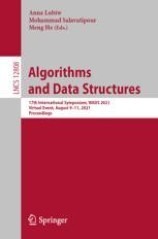
Algorithms and data structures ; 17th International Symposium, WADS 2021, Virtual Event, August 9–11, 2021, Proceedings
This book constitutes the refereed proceedings of the 17th International Symposium on Algorithms and Data Structures, WADS 2021, held in virtually in August 2021. The 47 full papers, presented together with two invited lectures, were carefully reviewed and selected from a total of 123 submissions. They present original research on the theory, design and application of algorithms and data structures.
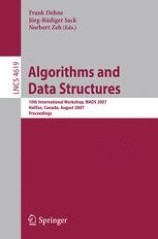
Algorithms and data structures ; 10th International Workshop, WADS 2007, Halifax, Canada, August 15-17, 2007, Proceedings
The book present research on the theory and application of algorithms and data structures in all areas, including combinatorics, computational geometry, databases, graphics, parallel and distributed computing.
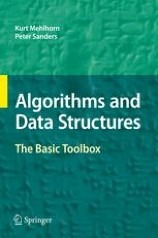
Algorithms and data structures : The Basic Toolbox
This book is a concise introduction addressed to students and professionals familiar with programming and basic mathematical language.
