



الصفحة 34
الصفحة 34
Linear Models for Optimal Test Design
Begins with a reflection on the history of test design--the core activity of all educational and psychological testing. It then presents a standard language for modeling test design problems as instances of multi-objective constrained optimization. The main portion of the book discusses test design models for a large variety of problems from the daily practice of testing, and illustrates their use with the help of numerous empirical examples. The presentation includes models for the assembly of tests to an absolute or relative target for their information functions, classical test assembly, test equating problems, item matching, test splitting, simultaneous assembly of multiple tests, tests with item sets, multidimensional tests, and adaptive test assembly. Two separate chapters are devoted to the questions of how to design item banks for optimal support of programs with fixed and adaptive tests. Linear Models for Optimal Test Design, which does not require any specific mathematical background, has been written to be a helpful resource on the desk of any test specialist.

Lights in the Sky : Identifying and Understanding Astronomical and Meteorological Phenomena
Lights in the Sky is a truly comprehensive guide to observing, identifying, and imaging sky glows and other unusual atmospheric/astronomical phenomena, in both the night and daytime skies.

Lifetime Estimation of Welded Joints
In the paper the author attempts to assess the fatigue life of chosen welded joints. It focuses especially on chosen problems that accompany deter- nation of the fatigue life of welded joints, taking into consideration the strain energy density parameter.

Life in the Universe : Expectations and Constraints
Energy, chemistry, solvents, and habitats -- the basic elements of living systems - define the opportunities and limitations for life on other worlds. This class-tested text examines each of these parameters in crucial depth and makes the argument that life forms we would recognize may be more common in our solar system than many assume. It also considers, however, exotic forms of life that would not have to rely on carbon as basic chemical element, solar energy as a main energy source, or water as primary solvent. Finally the question of detecting bio- and geosignature of such life forms is discussed, ranging from Earth environments to deep space. While speculative considerations in this emerging field of science cannot be avoided, the authors have tried to present their study with the breadth and seriousness that a scientific approach to this issue requires. They seek an operational definition of life and investigate the realm of possibilities that nature offers to realize this very special state of matter and avoid scientific jargon wherever possible to make this intrinsically interdisciplinary subject understandable to a broad range of readers.
Leveraging Data Science for Global Health
Explores ways to leverage information technology and machine learning to combat disease and promote health, especially in resource-constrained settings. It focuses on digital disease surveillance through the application of machine learning to non-traditional data sources.

Leveraging Applications of Formal Methods ; 1st International Symposium, ISoLA 2004, Paphos, Cyprus, October 30 - November 2, 2004, Revised Selected Papers
This book constitutes the thoroughly refereed post-proceedings of the First International Symposium on Leveraging Applications of Formal Methods, ISoLA 2004, held in Paphos, Cyprus in October/November 2004. The 12 revised full papers presented were carefully selected from more than 70 submissions. The papers discuss issues related to the adoption and use of rigorous tools and methods for the specification, analysis, verification, certification, construction, test, and maintenance of systems. In particular, by discussing common problems, requirements, algorithms, methodologies, and practices, ISoLA aims at supporting researchers in their quest to improve the utility, reliability, flexibility, and efficiency of tools for building systems, and users in their search for adequate solutions to their problems.

Les fonctions sphinctériennes = Sphincter functions
This book on Sphincter functions provides an update on a very topical subject, urinary and anal incontinence. Divided into three parts, it first deals with fundamental aspects, whether anatomical, physiological or clinical. The explorations of the various urinary and anorectal functions are described with electrophysiological, manometric, urodynamic tests as well as imaging. The second part is devoted to the pathology with all the dysfunctions that we encounter in daily practice. Urinary and anal incontinence, dysuria and retention, neurological sphincter disorders, dysfunctions in pregnant women and children are discussed. The last part takes stock of treatments, whether pharmacological, rehabilitative or surgical. This work, which contains a considerable amount of information, will undoubtedly be of interest to many medical specialists (physicians in physical medicine and rehabilitation, neurologists, gastroenterologists, gynecologists, general practitioners, pediatricians), surgeons (urologists, gynecological surgeons, surgeons). digestive) whether they are in training or already involved in the management of perineal disability. Other health professionals will find reference material there (nurses, physiotherapists, midwives).

Les douleurs abdominales en questions : Rôle physiopathologique de la sensibilité viscérale = Abdominal pain in question : The pathophysiological role of visceral sensitivity
The gut-brain axis refers to the network of nerve pathways that connect the myenteric plexus, the veritable "gut brain," to the central nervous system. Nearly 80% of these neurons are sensory neurons, and the afferent pathways that transmit information from the digestive tract to the central nervous system play a crucial role in the physiological regulation of digestive functions, as well as in certain pathological conditions. A large majority of these sensations remain unconscious and give rise to reflex responses. Only those requiring a conscious response reach the level of awareness in a normal state (hunger, thirst, the urge to defecate). In pathological situations, the same is true for painful sensations of digestive origin. Functional bowel disorders are a frequent reason for consultation. Their pathophysiology is now based on a model integrating the various etiological factors around the brain-gut axis. These patients frequently present with visceral hypersensitivity, which manifests as an increased perception of digestive sensations, notably the onset of pain in response to stimuli that are not painful in normal subjects. Recognizing the role of visceral hypersensitivity has made it possible to explain the mechanism of action of medications used to treat functional bowel disorders and paves the way for the development of new molecules acting on digestive afferents. In this book, we will describe the anatomical and physiological basis for understanding the concept of visceral sensitivity and the role of digestive afferents in the pathophysiology of acute and chronic abdominal pain, particularly irritable bowel syndrome.
Lectures in Supercomputational Neurosciences : Dynamics in Complex Brain Networks
The present volume is an introduction, largely from the physicists' perspective, to the subject matter with in-depth contributions by system neuroscientists. A conceptual model for complex networks of neurons is introduced that incorporates many important features of the real brain, such as various types of neurons, various brain areas, inhibitory and excitatory coupling and the plasticity of the network. The computational implementation on supercomputers, which is introduced and discussed in detail in this book, will enable the readers to modify and adapt the algortihm for their own research.
Learning Surgery : The Surgery Clerkship Manual
Provides a ready reference to those in third and fourth year residencies. Essential algorithms and case presentations meet with clerkship learning objectives as outlined by the Association of Surgical Education in their ASE Manual. Two sections include Introduction to Clinical Surgery in the Surgical Clerkship Setting and Management of Surgical Diseases During the Clerkship. Chapters include: Stroke, Hypertension, Abdominal Masses, Head Injuries, and Burns. Written by leading clinicians and educators, both surgery residents and medical students will find LEARNING SURGERY indispensible in their rotations and clerkships. Surgeons who train residents will also find the text a valuable ajunct to their teaching.

Learning in cultural context : Family, peers, and school
What events take place at the intersection of cultural identity, education, and experience? How can they be measured, replicated? How can teachers use such personal phenomena to enhance student performance?

Learning from nature how to design new implantable biomaterialsis : From biomineralization fundamentals to biomimetic materials and processing routes ; Proceedings of the NATO Advanced Study Institute, held in Alvor, Algarve, Portugal, 13-24 October 2003
The demands upon the material properties largely depend on the site of application and the function it has to restore. Ideally, a replacement material should mimic the living tissue from a mechanical, chemical, biological and functional point of view.

Learning Design : A Handbook on Modelling and Delivering Networked Education and Training
Put together contributions from members of the "Valkenburg Group", consisting of 33 experts deeply involved in e-learning and more specifically learning design. The result is a rich and lasting source of information for both e-learning course and tool developers, providing information about the specification itself, how to implement it in practice, what tools to use, and what pitfalls to avoid. The book not only reports first experiences, but also goes beyond the current state of the art by looking at future prospects and emerging applications.

Learning Classifier Systems ; International Workshops, IWLCS 2003-2005, Revised Selected Papers
The work embodied in this volume was presented across three consecutive e- tions of the International Workshop on Learning Classi?er Systems that took place in Chicago (2003), Seattle (2004), and Washington (2005). The Genetic and Evolutionary Computation Conference, the main ACM SIGEvo conference, hosted these three editions.

Learning Classifier Systems ; 10th International Workshop, IWLCS 2006, Seattle, MA, USA, July 8, 2006 and 11th International Workshop, IWLCS 2007, London, UK, July 8, 2007, Revised Selected Papers
Constitutes the thoroughly refereed joint post-conference proceedings of two consecutive International Workshops on Learning Classifier Systems that took place in Seattle, WA, USA in July 2006, and in London, UK, in July 2007 - all hosted by the Genetic and Evolutionary Computation Conference, GECCO.The 14 revised full papers presented were carefully reviewed and selected from the workshop contributions. The papers are organized in topical sections on knowledge representation, analysis of the system, mechanisms, new directions, as well as applications.
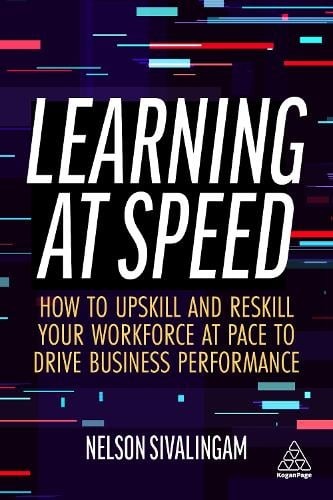
Learning at speed : How to upskill and reskill your workforce at pace to drive business performance
Learning at Speed is a practical book which brings together the best from lean and agile methodologies to show how they can be applied to learning and development (L&D) to improve individual and organizational performance. This provides a people development framework which can be used to deconstruct a learning strategy and optimise each element for improved results. It shows how to identify learning barriers and possible solutions, leverage company data to understand learning needs and how to assess the most effective learning resources and delivery channels.
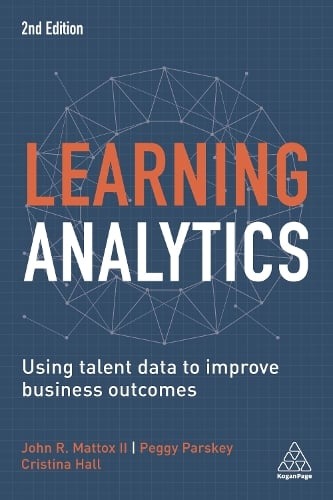
Learning Analytics : Using Talent Data to Improve Business Outcomes
Effective evaluation and measurement of learning and development initiatives is critical to maximise the impact of training, identify gaps for improvement and ensure that efforts are aligned to the business' needs. Learning Analytics outlines how analytical approaches can respond to these challenges, the types and benefits of technological solutions and how to ask the right questions of organizational data in order to build a learning organization that boosts performance and competitive advantage.
Lean Brain Management : More Success and Efficiency by Saving Intelligence
Intelligence is wasted on problems that themselves have been caused by an excess of intelligence. Lean Brain Management strives toward uncompromising Lean Brain Quality. Lean Brain stands for consistent economization of intelligence in all realms of life: Intelligent systems will only be operated by unskilled workers. Education, universities, and schools would become obsolete. A week of training would be enough for virtually any job. ("You are now the physician for the measles in the State of Ohio. In response to phone calls, send this prescription.") Lean Brain is not aimed at dumbing down! Lean Brain can survive on just a very small amount of central intelligence. Potential savings amount to trillions! This is demonstrated using Germany as an example. With this book, Dueck presents a radical suggestion for world improvement. The desire to laugh infinitely about it will eventually segue into a collective rude awakening. The book contains concrete advice for managers to economize on intelligence, and is thus--in keeping with the theme--written in an easy-to-read fashion.

Leadership and management in healthcare: a guide for medical and dental practitioners
A comprehensive guide to leadership in healthcare and the management of complex clinical scenarios in the medical or dental practice. Training in leadership and hospital management is not part of the curriculum and so guidance is often not provided in depth. This book outlines strategies for dealing with the management problems that arise in the healthcare profession, and it prepares the reader for interviews, examinations and the supervision of a team.

Layce (Image data poisoning) = لايس (تسميم بيانات الصور )
The ongoing growth of image generative artificial intelligence models was paved with existing drawings and art pieces by great artists both past and present, and while generative models are very useful and helpful, there is the issue of the origin of the datasets trained on, and the morality of usage regarding copyrights and artistic identity. A novel line of defense that helps artists and visual content creators actively protect their pieces emerged, dubbed Data Poisoning and it works by misleading Artificial Intelligence models that attempt to use a Poisoned Image for training, or as a reference, as the Poisoned Image will appear to the human eye identical to the original art piece, while the Artificial Intelligence model will be seeing a remarkably different image, causing generative models to generate false positive results when given a prompt poisoned by the author or when trained on data poisoned by the original owner. This study aims to study image data poisoning methods and technologies, and build an application containing multiple image models, and poisoning models as well, accompanied by a Community for artists to share art and interact with each other.
