



الصفحة 34
الصفحة 34
NASH and Nutritional Therapy
This collection of research and clinical findings on nonalcoholic steatchepatitis (NASH) and nutritional therapy contains significant new findings in several fields . As NASH frequently causes liver cirrhosis, the nutritional aspects of its treatment are discussed . Other areas covered include nonalcoholic fatty liver, the role of leptin in the pathogenesis of NASH, restricted diets and exercise therapy, mammalian targets of the peptide rapamycin, and genetic factors influencing the development of NASH.

NASAs Scientist-Astronauts
Mounting pressure in the early 1960s from the National Academy of Sciences (NAS) to study ways of expanding the role of astronauts to conduct science on future space missions led to NASA’s conclusion that flying scientifically trained crewmembers would generate greater returns from each mission. NASA and industry studies continued investigating possibilities that could lead to the eventual creation of the first space stations using surplus Apollo hardware, through the Apollo Applications Programme (AAP).

Narrowing the Achievement Gap : Strategies for Educating Latino, Black, and Asian Students
This volume is an important and impressive collection of scholarship that addresses one of the more intractable education problems of our times--ensuring that ALL children receive a quality education." -- Gloria Ladson-Billings, Kellner Family Professor in Urban Education University of Wisconsin at Madison, and 2005-2006 President of AERA "A major contribution to the field, the in-depth analyses provided by the chapter authors should be of substantial appeal to a wide audience because of its interdisciplinary approach and orientation to theory, research, and practice." -- Stanley Sue, Distinguished Professor of Psychology and Asian American Studies University of California at Davis "In considering the broad problems and in recommending solutions, the book provides breadth, concision, and unique organization." -- Edmund W. Gordon, John M.

Narrow Gap Semiconductors 2007 ; Proceedings of the 13th International Conference, 8-12 July, 2007, Guildford, UK
Narrow gap semiconductors have provided an exciting field of research and show a number of extreme physical and material characteristics. They are the established material systems for infrared detectors and emitters, and with new developments in the technology these materials are emerging as a viable route to high speed, low power electronics. New kinds of narrow gap semiconductor, such as graphene and other composite nanocrystals, are also providing renewed interest in the underlying physics.

Narrating China's Governance : Stories in Xi Jinping's Speeches
This book captures and elaborates on the skill of storytelling as one of the distinct leadership features of Xi Jinping, the General Secretary of the Communist Party of China and the President of the People’s Republic of China.

Napoleonic Governance in the Netherlands and Northwest Germany : Conquest, Incorporation, and Integration
This Palgrave Pivot explores the ways in which French Emperor Napoleon tried to integrate the present-day Netherlands and Northwest Germany into his Empire, by replacing traditional institutions and governing practices with French ones ('Napoleonic governance'). The northern periphery of the Napoleonic Empire continues to be overlooked by the bulk of historians; this study shows that a transregional approach can yield important findings. In a broader sense, the study does not deal with these regions alone, but also with the difficulties that are inherent to European integration.

Nanotribology and nanomechanics : An introduction ; 2nd ed.
This volume serves as a timely, practical introduction to the principles of nanotribology and nanomechanics and applications to magnetic storage systems, MEMS/NEMS and BioMEMS/bioNEMS. Assuming some familiarity with macrotribology/mechanics, the book comprises chapters by internationally recognized experts, who integrate knowledge of the field from the mechanics and materials-science perspectives. They cover key measurement techniques, their applications, and theoretical modelling of interfaces, each beginning their contributions with macro- and progressing to microconcepts

Nanotribology and nanomechanics : An introduction ; 1st ed.
This volume serves as a timely, practical introduction to the principles of nanotribology and nanomechanics and applications to magnetic storage systems and MEMS/NEMS. Assuming some familiarity with macrotribology/mechanics, the book comprises chapters by internationally recognized experts, who integrate knowledge of the field from the mechanics and materials-science perspectives. They cover key measurement techniques, their applications, and theoretical modelling of interfaces, each beginning their contributions with macro- and progressing to microconcepts.
Nanotechnology-Enabled Sensors
Nanotechnology provides us with tools to create functional materials, devices, and systems by controlling materials at the atomic and molecular scales, and at the same time make use of novel properties and phenomena. Considering that most chemical and biological sensors, as well as many physical sensors, depend on interactions occurring within the nano scale range, the impact that nanotechnology will have on the sensor world is significant. Nanotechnology enabled sensors find applications in several novel fields such as sensing single molecules, bio-hazards, toxic chemicals, gas sensors, process control and diagnostics.

Nanotechnology in therapeutics : Basics and trends
Nanotechnology delivers a unique approach, which promises higher drug efficacy, targeted drug delivery, on demand delivery, biocompatibility, etc. For example, nanotechnology-based delivery systems can protect drugs from degradation and help reduce the number of doses required, make treatment a better experience and reduce treatment expenses and a number of nano-based systems allow delivery of insoluble drugs, allowing the use of previously rejected drugs or drugs which are difficult to administer.

Nanotechnology in Intelligent Food Packaging
This book is a state-of-the-art exposition of nanotechnology and food packaging which is undergoing rapid advancement. This book is specially designed with an emphasis on the state-of-the-art in nanotechnology and food packaging. It offers fascinating techniques for producing smart and active food packaging and also discusses its toxicity and the role that nanosensors play in detecting different pathogens in food packaging. The concluding chapters also explain recent developments concerning the incorporation of health supplements in food packaging and their future role in producing intelligent food packaging.
Nanotechnology in endodontics : Current and potential clinical applications
Provides detailed information on the emerging applications of nanomaterials and nanoparticles within endodontics, highlighting the exciting potential clinical impact of nanotechnology in the field. The range of applications covered is diverse, encompassing drug and gene delivery, tissue engineering, antibacterial strategies, dentin tissue stabilization, dentin pulp regeneration and use in restorative and endodontic materials. Important scientific background information relating to each application is provided, with clear coverage of basic principles. In addition, potential pitfalls are identified and explained. The cytotoxicity of nanomaterials and nanoparticles is also addressed in a separate chapter. The book will be of value both for endodontic practitioners and for all scientists and graduate students who are interested in the application of nanotechnology in endodontics.
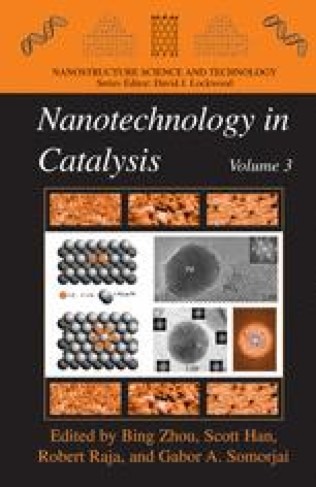
Nanotechnology in Catalysis 3
This book is the third volume of Nanotechnology in Catalysis. Although has been only 2 years since the Volumes 1 and 2 were published, many new contributions and breakthroughs have been made by researchers all over the world, showing the dynamic of nanotechnology in catalysis area. The topics in the book are the most up-to-date information on the forefront of nanotechnology development in catalysis field. They include the new concept and applications of nanotechnology for catalysis, the preparation and characterization of nanoparticle and nanostructure catalysts, and the examples of the superior activity and selectivity achieved by using such nanocatalysts. This book provides an in-depth understanding of how nanotechnology can affect the future generation of catalyst development.

Nanotechnology for Smart Concrete
Nanomaterials can markedly improve the mechanical properties of concrete, as well as reduce the porosity and enhance the durability of concrete. The application of nanotechnology in concrete is still in its infancy. However, an ever-growing demand for ultra-high-performance concrete and recurring environmental pollution caused by ordinary Portland cement has encouraged engineers to exploit nanotechnology in the construction industry. Nanotechnology for Smart Concrete discusses the advantages and applications of nanomaterials in the concrete industry, including high-strength performance, microstructural improvement, self-healing, energy storage, and coatings. The book: Analyses the linkage of concrete materials with nanomaterials and nanostructures / Discusses the applications of nanomaterials in the concrete industry, including energy storage in green buildings, anti-corrosive coatings, and inhibiting pathogens and viruses / Covers self-healing concrete / Explores safety considerations, sustainability, and environmental impact of nanoconcrete / Includes an appendix of solved questions

Nanotechnology for Oral Drug Delivery : From Concept to Applications
Discusses the current challenges of oral drug delivery, broadly revising the different physicochemical barriers faced by nanotechnolgy-based oral drug delivery systems, and highlighting the challenges of improving intestinal permeability and drug absorption. Oral delivery is the most widely used form of drug administration due to ease of ingestion, cost effectiveness, and versatility, by allowing for the accommodation of different types of drugs, having the highest patient compliance.

Nanotechnology for Microfluidics
The book focuses on microfluidics with applications in nanotechnology. The first part summarizes the recent advances and achievements in the field of microfluidic technology, with emphasize on the the influence of nanotechnology. The second part introduces various applications of microfluidics in nanotechnology, such as drug delivery, tissue engineering and biomedical diagnosis.

Nanotechnology for Environmental Remediation
The newly discovered advanced oxidation technology using nanoscale zero-valent iron, which is reported in this book, could be widely used to treat pesticides, herbicides, and industrial chemicals as well as to purify contaminated water for domestic use. In addition, it can contribute to advancing science and technology and providing valuable information to all readers - researchers, scientists, engineers, and students - in this field for their further research and studies.

Nanotechnology based cosmetics
Explores the applications and advantages of nanotechnology-based cosmetic products compared to conventional formulations. It examines the principles and mechanisms of nanotechnology in enhancing cosmetic product efficacy, delivery, and performance. Key applications covered include nanoparticles for sunscreens, nanoencapsulation for controlled release, nanoemulsions, liposomes for targeted delivery, and antimicrobial nanoparticles. Analyzes case studies from major international cosmetic companies utilizing nanotechnology. It also discusses challenges like safety concerns, potential toxicity, regulations, labeling, consumer awareness, and environmental impact.

Nanotechnology applied To pharmaceutical technology
Focuses on devising innovative nanopharmaceutical products and solutions to treat such diseases as cancer, infections, eye diseases, and in tackling multi-drug resistance threats. Nanotechnology Applied to Pharmaceutical Technology consists of four sections that include coverage of biosynthesis of nanoparticles, nano-material based formulations and toxicity, and safety issues.

Nanotechnology and Occupational Health
Nanotechnology is rapidly invading many aspects of modern society - from science, research and engineering to industrial and commercial applications and, inevitably, to man and his environment. One of the biggest challenges, therefore, is managing environmental, health and safety risks of nanomaterials. Yet, the information necessary to assess their longterm effects is scarce. Systematic research into what potentially makes engineered nanomaterials hazardous, how this translates into risk, and how these can be managed will be vital and involves interdisciplinary collaboration.
