



الصفحة 334
الصفحة 334
Adaptive and Natural Computing Algorithms ; 8th International Conference, ICANNGA 2007, Warsaw, Poland, April 11-14, 2007, Proceedings, Part II
The ICANNGA series of conferences has been organized since 1993 and has a long history of promoting the principles and understanding of computational intelligence paradigms within the scientifc community. the ICANNGA series has established itself as a reference for scientists and practitioners in this area. The series has also been of value to young researchers wishing both to extend their knowledge and experience and to meet experienced professionals in their ?elds. In a rapidly advancing world, where technology and engineering change d- matically, new challenges in computer science compel us to broaden the c- ference scope in order to take into account new developments.
Adaptive and Natural Computing Algorithms ; 8th International Conference, ICANNGA 2007, Warsaw, Poland, April 11-14, 2007, Proceedings, Part I
Constitutes the refereed proceedings of the 8th International Conference on Adaptive and Natural Computing Algorithms, ICANNGA 2007, held in Warsaw, Poland, in April 2007. The 178 revised full papers presented were carefully reviewed and selected from a total of 474 submissions. The 94 papers of the first volume are organized in topical sections on evolutionary computation, genetic algorithms, particle swarm optimization, learning, optimization and games, fuzzy and rough systems, just as classification and clustering. The second volume contains 84 contributions related to neural networks, support vector machines, biomedical signal and image processing, biometrics, computer vision, as well as to control and robotics.
Adaptive and Multilevel Metaheuristics
Presents recent advances in the area of adaptativeness in metaheuristic optimization, including up-to-date reviews of hyperheuristics and self-adaptation in evolutionary algorithms, as well as cutting edge works on adaptive, self-adaptive and multilevel metaheuristics, with application to both combinatorial and continuous optimization.
Adaptive agents and multi-agent systems III : Adaptation and multi-Agent learning ; 5th, 6th, and 7th European Symposium, ALAMAS 2005-2007 on Adaptive and Learning Agents and Multi-Agent Systems, Revised Selected Papers
This book contains selected and revised papers of the European Symposium on Adaptive and Learning Agents and Multi-Agent Systems (ALAMAS).
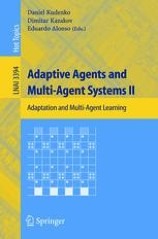
Adaptive agents and multi-agent systems II : Adaptation and multi-agent learning
Adaptive agents and multi-agent systems is an emerging and exciting interdisciplinary area of research and development involving artificial intelligence, software engineering, and developmental biology, as well as cognitive and social science. This book presents 17 revised and carefully reviewed papers taken from two workshops on the topic as well as 2 invited papers by leading researchers in the area. The papers deal with various aspects of machine learning, adaptation, and evolution in the context of agent systems and autonomous agents.
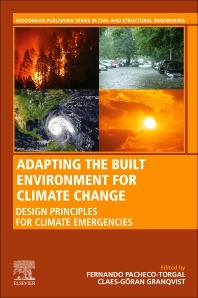
Adapting the built environment for climate change : Design principles for climate emergencies
Adapting the Built Environment for Climate Change: Design Principles for Climate Emergencies analyzes several scenarios and proposes various adaptation strategies for climate emergencies (heat waves, wildfires, floods, and storms). Divided into three themes, the book offers an organized vision of a complex and multi-factor challenge. It covers climatic resilience and building refurbishment, implications for service life prediction and maintainability, and climate adaptation in the maintenance and management of buildings. Sections cover infrastructure materials, climate emergency adaptation and building adaptation to heat waves, wildfires, floods and storms.

Adapting Proofs-as-Programs : The Curry--Howard Protocol
This book nuds new things to do with an old idea. The proofs-as-programs paradigm constitutes a set of approaches to developing programs from proofs in constructive logic. there is increasingly active research in applying constructive techniques to industrial-scale, complex software engineering problems. Thismonographdetailsseveralimportantadvancesinthisdirectionofpr- tical proofs-as-programs. One of the central themes of the book is a general, abstract framework for developing new systems of program synthesis by adapting proofs-as-programs to new contexts. Framework-oriented approaches that facilitate analogous - proaches to building systems for solving particular problems have been popular and successful. Thesemethodsarehelpful asthey providea formal toolbox that enablesa“roll-your-own”approachtodevelopingsolutions.Itishopedthatour framework will have a similar impact. The framework is demonstrated by example. We will give two novel - plications of proofs-as-programs to large-scale, coarse-grain software engine- ing problems: contractual imperative program synthesis and structured p- gram synthesis.

Adaptation to Life at High Salt Concentrations in Archaea, Bacteria, and Eukarya
This book complements “Halophilic Microorganisms”, edited by A. Ventosa and published by Springer-Verlag (2004), “Halophilic Microorganism and their Environments” by A. Oren (2002), published by Kluwer Academic Publishers as volume 5 of “Cellular Origins, Life in Extreme Habitats and Astrobiology” (COLE), and “Microbiology and Biogeochemistry of Hypersaline Environments” edited by A. Oren, and published by CRC Press, Boca Raton (1999).
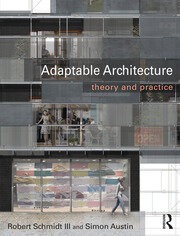
Adaptable Architecture : Theory and practice
provides thought-provoking and inquisitive insights into how we can prolong the useful life of buildings by designing them to be more adaptable, and hence create a more sustainable built environment. The book provides a theoretical foundation counterpointed by the experiences and ideas of those involved in the design and use of buildings. It explains many approaches to designing for change, with lessons from history, and case studies including The Cedar Rapids Public Library, Kentish Town Health Centre and Folkestone Performing Arts Centre, which stretch our thinking beyond the conventional notions of adaptability. The authors reveal the many conditions that make it a complex design phenomenon, by considering the purpose, design and business case of buildings as well as the physical product. Full of summaries, diagrams, reference charts, tables, and photos of exemplar solutions for use as conversational tools or working aids, this book is for any professional or student who wants to research, question, imagine, illustrate - and ultimately design for - adaptation.
Ada 2005 Reference Manual. Language and Standard Libraries : International Standard ISO/IEC 8652/1995(E) with Technical Corrigendum 1 and Amendment 1
The Ada 2005 Reference Manual incorporates these changes in the overall standard text and thus will replace the former versions as an indispensable working companion for anybody using Ada professionally or learning and studying the language systematically. In naming this version, we have chosen the vernacular term Ada 2005 used by the Ada community to refer to the interesting extensions made to the language Ada by the Amendment 1.

Ada 2005 Rationale : The Language, The Standard Libraries
The primary goals for this book were to enhance its capabilities particularly in those areas where its reliability and predictability are of great value. Accordingly, a number of intriguing and attractive ideas have been included and implemented in a coherent manner as appropriate to the level of perfection necessary for the diligent maintenance of a language standard.
Acute Heart Failure
Acute Heart Failure informs cardiology, intensive care, and emergency medicine physicians on the diagnosis and management of severe acute heart failure from epidemiology through to diagnosis and treatment.
Actors and the Art of Performance : Under Exposure
Actors and the Art of Performance: Under Exposure combines the author's two main biographical paths: her professional commitment to the fields of both theatre and philosophy. The art of acting on stage is analysed here not only from the theoretical perspective of a spectator, but also from the perspective of the actor. The author draws on her experience as both a theatre actor and a university professor whose teachings in the art of acting rely heavily on her own experience and also on her philosophical knowledge. The book is unique not only in terms of its content but also in terms of its style. Written in a multiplicity of voices, the text oscillates between philosophical reasoning and narrative forms of writing, including micro-narratives, fables, parables, and inter alia by Carroll, Hoffmann and Kleist. Hence the book claims that a trans-disciplinary dialogue between the art of acting and the art of philosophical thinking calls for an aesthetical research that questions and begins to seek alternatives to traditionally established and ingrained formats of philosophy.

Activity and Sign : Grounding Mathematics Education
Provides new sources of knowledge based on Michael Otte’s fundamental insight that understanding the problems of mathematics education – how to teach, how to learn, how to communicate, how to do, and how to represent mathematics – depends on means, mainly philosophical and semiotic, that have to be created first of all, and to be reflected from the perspectives of a multitude of diverse disciplines.
Active Sensor Planning for Multiview Vision Tasks
Describes some effective strategies to generate a sequence of viewing poses and sensor settings for optimally completing a perception task. Several methods are proposed to solve the problems in both model-based and nonmodel-based vision tasks. For model-based applications, the method involves determination of the optimal sensor placements and a shortest path through these viewpoints for automatic generation of a perception plan.
Active Networks : IFIP TC6 6th International Working Conference, IWAN 2004, Lawrence, KS, USA, October 27-29, 2004, Revised Papers
The proceedings of the sixth Annual International Working Conference on Active Networks, which took place in October 2004 at The Information and Telecommunications Technology Center, The University of Kansas, USA. The proceedings of IWAN 2004 mark a transition between the funded active networking programs in Europe, Japan, and the United States and a strong, continued interest in the architectures of programmable networks.The papers are organized into sections on active network systems and architectures, security in active networking, active network applications, mobile active networks and active network management.
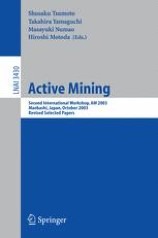
Active mining ; 2nd International workshop, AM 2003, Maebashi, Japan, October 28, 2003, revised selected papers
"This volume contains the papers selected for presentation at the 2nd Inter- tional Workshop on Active Mining (AM 2003) which was organized in conju- tion with the 14th International Symposium on Methodologies for Intelligent Systems (ISMIS 2003), The workshop was organized by the Maebashi Institute of Technology for shed light on the future development of active mining. "This volume contains : Topics Database Management / Artificial Intelligence / Algorithm Analysis and Problem Complexity / Health Informatics / Bioinformatics
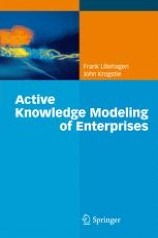
Active Knowledge Modeling of Enterprises
An AKM solution is about exploiting the Web as a knowledge engineering medium, and developing knowledge-model-based families of platforms, model-configured workplaces and services.
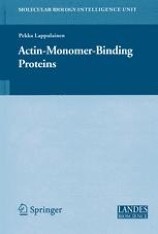
Actin Monomer Binding Proteins
The actin cytoskeleton plays a central role in many cellular processes including cell motility, cytokinesis, endocytosis and phagocytosis. The structure and dynamics of the actin cytoskeleton is regulated by a large number of proteins that interact with monomeric and/or filamentous actin. Actin monomer binding proteins provides a comprehensive view on actin monomer-binding proteins and the mechanisms by which they contribute to actin dynamics and various actin-dependent cellular processes. This new title contains chapters that describe the basic mechanisms of actin dynamics as well as the structural principles by which various actin-binding proteins interact with actin.
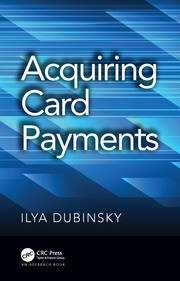
Acquiring card payments
Covers: Payment cards and protocols / EMV contact chip and contactless transactions / Disputes, arbitration, and compliance / Data security standards in the payment card industry / Validation algorithms / Code tables / Basic cryptography / Pin block formats and algorithms
