



الصفحة 33
الصفحة 33

Management of Transboundary Rivers and Lakes
As it circulates in the atmosphere, in the rivers, lakes, soil, rock, and in the oceans, it is the major conveyer of va- ous chemical substances and of energy, and it can also be called as the blood of the ecosystems of this planet. But at the same time water is interwoven in the va- ous functions of the nature and the human society in countless ways which makes water one of the most complicated challenges of the mankind today.Human beings are exploiting and enjoying, but at the same time polluting and deteriorating, the waters in various ways and water is equally important to the - man socio-economic system as it is to the nature. It may sound a bit anecdotal to say that water obeys no borders, but that is true; the hydrologic cycle with its r- ers, river basins, lakes, aquifers, rainfalls, oceans, etc., cross administrational b- ders without any passport control. River and lake basins are in most cases very different from the administrational borders that the human beings have set up.

Management of Multimedia Networks and Services ; 8th International Conference on Management of Multimedia Networks and Services, MMNS 2005, Barcelona, Spain, October 24-26, 2005, Proceedings
We are delighted to present the proceedings of the 8th IFIP/IEEE International Conference on Management of Multimedia Networks and Services (MMNS 2005). The MMNS 2005 conference was held in Barcelona, Spain on October 24–26, 2005. As in previous years, the conference brought together an international audience of researchers and scientists from industry and academia who are researching and developing state-of-the-art management systems, while creating a public venue for results dissemination and intellectual collaboration. This year marked a challenging chapter in the advancement of management systems for the wider management research community, with the growing complexities of the “so-called” multimedia over Internet, the proliferation of alternative wireless networks (WLL, WiFi and WiMAX) and 3G mobile services, intelligent and high-speed networks scalable multimedia services and the convergence of computing and communications for data, voice and video delivery. Contributions from the research community met this challenge with 65 paper submissions; 33 high-quality papers were subsequently selected to form the MMNS 2005 technical program. The diverse topics in this year’s program included wireless networking technologies, wireless network applications, quality of services, multimedia, Web applications, overlay network management, and bandwidth management.

Management of deep carious lesions
Describes the challenges that deep carious lesions pose for dental practitioners, including the risk of endodontic complications and the difficulty of restorative treatment, and identifies options for overcoming these challenges on the basis of the best available evidence. The opening chapter sets the scene by discussing pathophysiology, histopathology, clinical symptomatology, and treatment thresholds. The various treatment options are then systematically presented and reviewed, covering non-selective, stepwise, and selective carious tissue removal and restoration, sealing of lesions using resin sealants or crowns, and non-restorative management approaches. In each case the current evidence with respect to the treatment is carefully evaluated. Advantages and disadvantages are explained and recommendations made on when to use the treatment in question. Illustrative clinical cases and treatment pathways for clinicians are included. This book will be of value for all practitioners who treat dental caries and carious lesions, whether in the permanent or the primary dentition. It will also be of interest to under- and postgraduate students in cariology and restorative, operative, preventive, and pediatric dentistry.
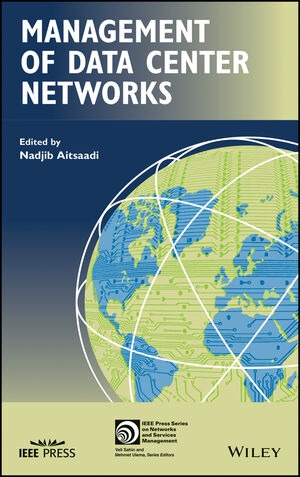
Management of Data Center Networks
Delivers a rigorous and insightful exploration of the network management challenges that present within intra- and inter-data center networks, including reliability, routing, and security. The book also discusses new architectures found in data center networks that aim to minimize the complexity of network management while maximizing Quality of Service, like Wireless/Wired DCNs, server-only DCNs, and more. offers: A thorough overview of the architectures of data center networks, including the classification of switch-centric, server-centric, enhanced, optical, and wireless DCN architectures An exploration of resource management in wired and wireless data center networks, including routing and wireless channel allocation and assignment challenges and criteria Practical discussions of inter-data center networks, including an overview of basic virtual network embedding Examinations of energy and security management in data center networks

Management of atopic dermatitis : Methods and challenges
This new edition builds upon the foundational knowledge covered in the first edition, covering the epidemiology, pathogenesis, and clinical presentation of atopic dermatitis in both pediatric and adult patients. It provides an overview of the mechanism and presentation of atopic dermatitis and focuses on the management methods experienced dermatologists have used to successfully manage atopic dermatitis. The book includes new chapters describing the special considerations for atopic dermatitis in skin of color patients, dedicated chapters on topical and oral prescription management reflected the latest FDA-approved treatments, and also a chapter covering the updated guidelines from the American Academy of Dermatology. A final chapter includes updates on the future of atopic dermatitis treatment.

Management information system
Student registration systems are essential for the efficient management of academic institutions. They allow students to enrol in courses, access their academic records, and communication with administrators. However, many student registration systems are outdated, inefficient, or insecure, posing challenges for both students and staff. Therefore, there is a need to upgrade the web student registration system in our university to improve its functionality, usability, and security
Management and Information Technology after Digital Transformation
With the widespread transformation of information into digital form throughout society – firms and organisations are embracing this development to adopt multiple types of IT to increase internal efficiency and to achieve external visibility and effectiveness – we have now reached a position where there is data in abundance and the challenge is to manage and make use of it fully. This book addresses this new managerial situation, the post-digitalisation era, and offers novel perspectives on managing the digital landscape.

Managed Software Evolution
This book presents the outcomes of the “Design for Future – Managed Software Evolution” .The different lifecycles of software and hardware platforms lead to interoperability problems in such systems. Instead of separating the development, adaptation and evolution of software and its platforms, as well as aspects like operation, monitoring and maintenance, they should all be integrated into one overarching process. Accordingly, the book is split into three major parts, the first of which includes an introduction to the nature of software evolution, followed by an overview of the specific challenges and a general introduction to the case studies used in the project. The second part of the book consists of the main chapters on knowledge carrying software, and cover tacit knowledge in software evolution, continuous design decision support, model-based round-trip engineering for software product lines, performance analysis strategies, maintaining security in software evolution, learning from evolution for evolution, and formal verification of evolutionary changes. In turn, the last part of the book presents key findings and spin-offs. The individual chapters there describe various case studies, along with their benefits, deliverables and the respective lessons learned. An overview of future research topics rounds out the coverage.

Managed Ecosystems and CO2 : Case Studies, Processes, and Perspectives
Managed ecosystems cover a large part of the Earth's land surface, provide almost all of our food and most of our wood and fibre, and are increasingly a source of renewable energy. Forecasting the ability of managed ecosystems to continue these vital roles in a globally changing environment is an inter-disciplinary challenge. To elucidate the complex responses of managed systems to elevated [CO2], several free air carbon dioxide enrichment (FACE) facilities were established. These FACE systems allow large areas to be exposed to the elevated [CO2] we expect by the middle of the century. This volume summarizes the main findings from 13 experiments with annual crops, permanent pastures and plantation forests at 11 sites throughout the world during the past ten years. The results significantly alter our perception of how rising [CO2] will directly affect these managed ecosystems, with implications for policy, plant-breeding objectives and adaptation.

Making Growth Work : How Companies Can Expand and Become More Efficient
Growth is the key goal of management. It's not just an indicator of a company's performance, but also the basis for its future success. But growth doesn't just mean getting bigger – it also means getting better. In other words, growth must be profitable, otherwise it destroys the company's value long term. And this is not the only challenge. Growth must also be made continuous. The traditional V-curve paradigm (first downsize, then grow) no longer applies. Today, companies must follow a parallel strategy of growth coupled with reorganization, in the sense of permanently increasing efficiency.

Making Fisheries Management Work : Implementation of Policies for Sustainable Fishing
This book seeks to widen the perspective taken on implementation in fisheries management. The cases presented in this volume addresses legal, administrative, and political challenges regarding implementation of resource conservation policies. The book addresses problems relating to goal achievement, but also causes of deliberate change of political goals during implementation. Fisheries management systems are embedded in inert social structures and natural conditions that vary among different states. Consequently, the book takes a historical and comparative approach, describing the historical developments of national implementation systems and the conditions that shaped their development. It thus seeks to explain why national fisheries management systems have evolved differently, focusing on Norwegian, Faeroese, and EU/Danish management systems. The descriptive and explanatory outlines are accompanied by qualitative assessments of the systems effectiveness as tools for collective action.

Making Ammonia : Fritz Haber, Walther Nernst, and the Nature of Scientific Discovery
This book discusses the progress of science and the transfer of scientific knowledge to technological application. It also identifies the factors necessary to achieve this progress. Based on a case study of the physical chemist Fritz Haber's discovery of ammonia synthesis between 1903 and 1909, the book places Haber's work in historical and scientific (physicochemical) context. The scientific developments of the preceding century are framed in a way that emphasizes the confluence of knowledge needed for Haber's success. Against this background, Haber's work is presented in detail along with the indispensable contributions of his colleague, the physical chemist, Walter Nernst, and their assistants. The detailed accounts of scientific advancement remind us of the physical basis on which our scientific theories and ideas are built. Without this reminder we often forget how complex, and how beautiful achievements in science can be.

Making a Difference in Teacher Education Through Self-Study : Studies of Personal, Professional and Program Renewal
The book presents research on 15 different teacher education programs and describes individual renewal efforts. The stories -- including both the successes and challenges -- are inspiring and informative. In this age of accountability these teacher educators have used a range of research methods to gather data on their work and in turn used it to guide future decisions. The text includes examples of both large scale research and individual efforts. The common thread among the authors is a commitment to "walking the talk."

Magnetohydrodynamics : Historical Evolution and Trends
Magnetohydrodynamics (MHD) studies the interaction between the flow of an electrically conducting fluid and magnetic fields. It involves such diverse topics as the evolution and dynamics of astrophysical objects, thermonuclear fusion, metallurgy and semiconductor crystal growth, etc. Although the first ideas in magnetohydrodynamics appeared at the beginning of the last century, the "explosion" in theoretical and experimental studies occurred in the 1950s-60s. This state-of-the-art book aims at revising the evolution of ideas in various branches of magnetohydrodynamics (astrophysics, earth and solar dynamos, plasmas, MHD turbulence and liquid metals) and reviews current trends and challenges.

Magnetic Control of Tokamak Plasmas
The main topic of Magnetic Control of Tokamak Plasmas is the design of feedback control systems guaranteeing the stability of plasma equilibrium inside a tokamak and the regulation of the plasma position and shape during plasma pulses. Modelling and control details are presented, allowing the non-expert to understand the control problem. Starting from equations of magneto-hydro-dynamics, all the steps needed for the derivation of plasma state-space models are enumerated. The basics of electromagnetics are frequently recalled. The control problem is then described beginning with control of current and position – vertical and radial – and progressing to the more challenging shape control. The solutions proposed vary from simple PIDs to more sophisticated MIMO controllers.

Macro-Engineering : A Challenge for the Future
Macro-engineering involves the large-scale modification and manipulation of natural systems for the benefit of mankind. The primary goals of some Earth-based macroprojects described in this book are power production, land reclamation, food production, climate change, environment, water, transport and coastal protection. Other Earth or space projects considered here have a more futuristic ring, but our present-day technical skill makes their realization possible. Earth-based macroprojects usually combine different aspects and aims. They have a major impact on the ecology of a region and the inhabitants' means of living (like tourism, fishing, shipping). Its effects may be felt worldwide, like the rise in global sea level after the damming and evaporation of large ocean gulfs for power production, or the change in climate following the regional reduction of solar insolation.
Macroeconomic modelling of R&D and innovation policies
This book encompasses a collection of in-depth analyses showcasing the challenges and ways forward for macroeconomic modelling of R&D and innovation policies. Based upon the proceedings of the EC-DG JRC-IEA workshop held in Brussels in 2017, it presents cutting-edge contributions from a number of leading economists in the field. It provides a comprehensive overview of the current academic and policy challenges surrounding R&D as well as of the state-of-the-art modelling techniques.
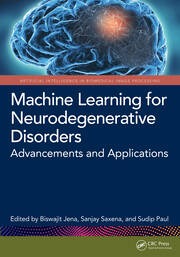
Machine learning for neurodegenerative disorders : advancements and applications
Explores the application of machine learning to the understanding, early diagnosis, and management of neurodegenerative disorders. With a specific focus on its role in ongoing clinical trials, the book covers essential topics such as data collection, pre-processing, feature extraction, model development, and validation techniques. It delves into the applications of neuroimaging techniques like magnetic resonance imaging (MRI), computed tomography (CT), and positron emission tomography (PET) in the diagnosis and understanding of neurodegenerative disorders. Additionally, the book examines various machine-learning algorithms employed for biomarker discovery in neurodegenerative disorders. It highlights the role of neuroinformatics and big data analysis in advancing the understanding and management of neurodegenerative disorders. Furthermore, the book reviews future prospects and presents the ethical considerations and regulatory challenges associated with implementing machine learning approaches in the diagnosis, treatment, and prevention of neurodegenerative disorders.

Machine Learning for Multimedia Content Analysis
Challenges in complexity and variability of multimedia data have led to revolutions in machine learning techniques. Multimedia data, such as digital images, audio streams and motion video programs, exhibit richer structures than simple, isolated data items. A number of pixels in a digital image collectively conveys certain visual content to viewers. A TV video program consists of both audio and image streams that unfold the underlying story. To recognize the visual content of a digital image, or to understand the underlying story of a video program, we may need to label sets of pixels or groups of image and audio frames jointly.

Machine learning challenges : Evaluating predictive uncertainty, Visual Object Classification, and Recognizing Textual Entailment, 1st Pascal Machine Learning Challenges Workshop, MLCW 2005, Southampton, UK, April 11-13, 2005, Revised Selected Papers
Constitutes the refereed post-proceedings of the First PASCAL Machine Learning Challenges Workshop, MLCW 2005. 25 papers address three challenges: finding an assessment base on the uncertainty of predictions using classical statistics, Bayesian inference, and statistical learning theory; second, recognizing objects from a number of visual object classes in realistic scenes; third, recognizing textual entailment addresses semantic analysis of language to form a generic framework for applied semantic inference in text understanding.
