



الصفحة 33
الصفحة 33
Acid Rain - Deposition to Recovery
Acid rain is still with us. Although it is a problem that people have worked diligently to solve, there are still many problem areas throughout the world. In reality the focus of acid rain research has shifted, and this book adds new vision to the topic. It contains papers, selected from Acid Rain 2005, the 7th International Conference on Acid Deposition, that take a broad perspective of the issues, emphasizing a number of themes: - the emission, concentration and deposition of pollutants / - nitrogen and trace elements in ecosystems and their effects on forests, water and soil / - studies of material damage and recovery - critical loads / The book is aimed at scientists and researchers who are working in the area of acid rain and its effects, and on nutrient cycling. This latest research will be of value to those concerned with the mitigation of acid rain effects.
Acid in the Environment : Lessons Learned and Future Prospects
This book is the result of a conference held biannually at the Goodwin-Niering Center for Conservation Biology and Environmental Studies at Connecticut College.is a collection of essays that blends the research findings and the policy analyses of individuals from different academic disciplines with the positions advanced by representatives of NGOs. Acid in the Environment: Lessons Learned and Future Prospects presents a broad approach to the study of acid deposition, exposing readers with a scientific background to significant policy issues and those with a policy orientation to important ecological impacts. The book raises important questions that will serve as a springboard for discussion between diverse groups of teachers and students, concerned citizens and legislators, and scientists and policy makers.

Achieving the Paris Climate Agreement goals ; Part 2 : Science-based target setting for the finance industry — Net-Zero Sectoral 1.5˚C pathways for real economy sectors
Provides an in-depth analysis of industry sectors globally, and its purpose is to present emission reduction targets in 5-year steps (2025 to 2050) for the main twelve finance sectors per the Global Industry Classification System. This scientific analysis aims to support the United Nations Principles for Responsible Investment initiative to give sustainability guidance for the global finance industry. The industry sector pathways presented here are based on the latest global and regional 100% renewable energy and non-energy greenhouse gas Representative Concentration Pathways in order to keep climate change significantly under +1.5 C and thereby achieve the Paris Climate Agreement goals. The heart of this book is three chapters presenting the results of industry scenario modelling. These chapters cover twelve industry and service sectors as well as transportation and buildings. The specific energy demand and specific emissions are presented based on the emission accounting concept of “Scope 1, Scope 2 and Scope 3” emission pathways. This methodology has been developed to measure the climate and sustainability index for companies, and this research project expands the methodology to apply it to entire industry sectors ...
A window on the future of geodesy ; Proceedings of the International Association of Geodesy. IAG General Assembly, Sapporo, Japan June 30 - July 11, 2003
These proceedings represent the worldwide picture of the state of the art of geodesy. The volume comprehensively covers the most recent results and supplies a good review of the new ideas developing in the field, opening a window to the future of geodesy.

A visual atlas for soil micromorphologists
This atlas is an up-to-date visual resource on the features and structures observed in soil thin sections, i.e. soil micromorphology.
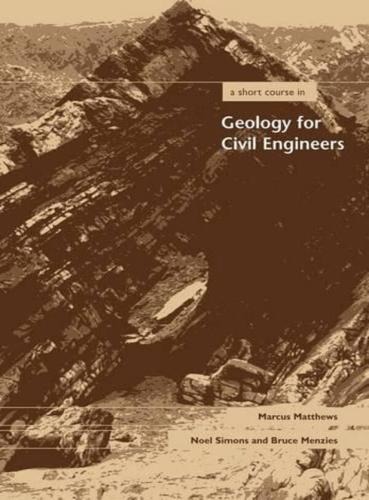
A Short Course in Geology for Civil Engineers
Explains the process of ground formation - what it is made of and how it behaves as an engineering material. This enables the civil engineer to work from a few first principles to determine if the ground is an asset or a hazard. It focuses on the tectonic plate mechanisms that give rise to the geology of our planet and describes the way these create hazards such as volcanic eruptions, earthquakes and tsunamis. The authors state that groundwater can be both a resource and a hazard and through this book they provide an overview of the origins of geomaterials.
A Sea Change: The Exclusive Economic Zone and Governance Institutions for Living Marine Resources
A Sea Change in a Changing Sea The oceans, seas and coastal areas encompass over 70% of the earth’s surface. They are a critical driver of the earth’s hydrologic cycle and climate system, important for c- merce, transport, and tourism, a source of economically important living marine resources, minerals such as hydrocarbons, as well as new pharmaceutical compounds. The marine environment provides essential habitats for thousands of marine living 1 2 resources, which in turn contribute significantly to global food security, employment, 3 and trade. Overall, the sea’s contribution to human welfare, in terms of market and non-market resources and environmental services, has been estimated at US$21 trillion/year (Costanza, 2000). However, despite the importance of the ocean realm to humans, there is a growing sense that human impacts are destabilizing this system. Some experts believe that current fishing levels are approaching or exceeding the total 4 productivity of the ocean ecosystem (National Research Council, 1999).
A primer on theoretical soil mechanics
A Primer to Theoretical Soil Mechanics is about adapting continuum mechanics to granular materials. The field of continuum mechanics offers many fruitful concepts and methods, however there is declining interest in the field due to its complex and fragmented nature. This book's purpose is therefore to facilitate the understanding of the theoretical principles of soil mechanics, as well as introducing the new theory of barodesy.
A Primer on Environmental Decision-Making: an integrative quantitative approach
Integrates decision-making and environmental science. For ecologists it will bridge the gap to economics. For practitioners in environmental economics and management it will be a major reference book. It probably contains the largest collection available of expressions and basic equations that are used in environmental sciences. Applying these expressions as "rules-of-thumb" will give participants in a decision-making process a common platform for discussion and arbitration.
A life cycle for clusters? : The dynamics of agglomeration, change, and adaption
The phenomenon of non-random spatial concentrations of firms in one or few related sectors (clusters) is intensively debated in economic theory and policy. The euphoria about successful clusters however neglects that historically, many thriving clusters did deteriorate into old industrial areas. This book studies the determinants of cluster survival by analyzing their adaptability to change in the economic environment. Linking theoretic knowledge with empirical observations, a simulation model (based in the N/K method) is developed, which explains when and why the cluster's architecture assists or hampers adaptability. It is found that architectures with intermediate degrees of division of labour and more collective governance forms foster adaptability. Cluster development is thus path dependent as architectures having evolved over time impact on the likelihood of future survival.
A History of Atmospheric CO2 and Its Effects on Plants, Animals, and Ecosystems
The authors address the future role of atmospheric CO2 and its likely effects on ecosystems. This book incorporates the advances of various earth science, environmental, and ecological fields into an overall account of global change and the changing dynamics of life on Earth.
A companion to astronomy and astrophysics : Chronology and glossary with data tables
Astronomy and Astrophysics is a comprehensive, fundamental, up-to-date reference book. It is filled with vital information and basic facts for amateur astronomers and professional astrophysicists, and for anyone interested in the Universe, from the Earth and other planets to the stars, galaxies and beyond. Although serious and thorough, the language, and ideas will attract the general reader, as well as students and professionals. Astronomy and Astrophysics consists of two main parts, a Timeline and a Dictionary. The Timeline is a concise history, arranged chronologically, which provides the complete story of cosmic discovery from early Chinese and Greek astronomy to the latest findings of modern astrophysics and robotic spacecraft.
A Climate of Justice : An Ethical Foundation for Environmentalism
This book helps readers combine history, politics, and ethics to address the most pressing problem facing the world today: environmental survival. In A Climate of Justice, Marvin Brown connects the environmental crisis to basic questions of economic, social, and racial justice. Brown shows how our current social climate maintains systemic injustices, and he uncovers resources for change through a civic ethics of repair and reciprocity.

A City in Blue and Green : The Singapore Story
Highlights Singapore’s development into a city in which water and greenery, along with associated environmental, technical, social and political aspects have been harnessed and cultivated into a liveable sustainable way of life. It is also a story about a unique and thoroughgoing approach to large-scale and potentially transferable water sustainability, within largely urbanized circumstances, which can be achieved, along with complementary roles of environmental conservation, ecology, public open-space management and the greening of buildings, together with infrastructural improvements.
A Biomass Future for the North American Great Plains : Toward Sustainable Land Use and Mitigation of Greenhouse Warming
The Great Plains of North America is a major global breadbasket but its agriculture is stressed by drought, heat spells, damaging winds, soil erosion and declining ground water resources. This book explores the possibility that the ecology and economy of the Plains region (and similar regions) would benefit from the introduction of perennial biomass crops. Biomass production and processing on the Plains (possibly aided by genetic engineering) would partially restore a perennial vegetative cover and create new employment opportunities. Biomass also offers a means of reducing fossil fuel use, providing fuel to local power plants and a feedstock for production of cellulosic ethanol, a gasoline substitute. Interest in biofuels is growing rapidly in public, political and business circles with rising fossil fuel prices and because of a growing recognition of the need for energy independence in petroleum importing countries.
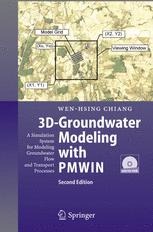
3D-groundwater modeling with PMWIN : A simulation system for modeling groundwater flow and transport processes
Along with a companion full-version software (PMWIN), this text offers an integrated simulation system. PMWIN comes with a professional graphical user-interface, supported models and programs and several other useful modeling tools. The graphical user-interface allows one to create and simulate models.
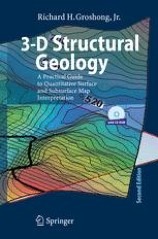
3-D Structural Geology : A Practical Guide to Quantitative Surface and Subsurface Map Interpretation
This book provides an overview of techniques for constructing structural interpretations in 2-D, 2½-D and 3-D environments; for interpolating - tween and extrapolating beyond the control points; and for validating the final int- pretation. The underlying philosophy is that structures are three-dimensional solid bodies and that data from throughout the structure, whether in 2-D or 3-D format, should be integrated into an internally consistent 3-D interpretation. It is assumed that most users of this book will do their work on a computer. C- sequently, the book provides quantitative structural methods and techniques that are designed for use with spreadsheets, mapping software, and three-dimensional c- puter-graphics programs. The book is also intended to provide the background for understanding what interpretive software, for example, a computer contouring p- gram, does automatically. Most techniques are presented in both a traditional format appropriate for paper, pencil, and a pocket calculator, and in quantitative format for use with spreadsheets and computer-graphics or computer-aided-design programs.
3D Recording and Interpretation for Maritime Archaeology
Includes recording and analysis of maritime archaeology through emerging technologies, including both practical and theoretical contributions. Topics include photogrammetric recording, laser scanning, marine geophysical 3D survey techniques, virtual reality, 3D modelling and reconstruction, data integration and Geographic Information Systems. This convergence of digital technologies such as underwater photography and photogrammetry, 3D sonar, 3D virtual reality, and 3D printing has highlighted a pressing need for these new methodologies to be considered together, both in terms of defining the state-of-the-art and for consideration of future directions.
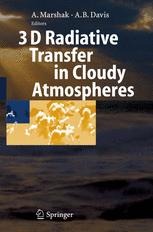
3D Radiative Transfer in Cloudy Atmospheres
Assessing developments in three-dimensional cloud radiation, this volume treats two main application areas: the impact of clouds on the Earth's radiation budget, and remote observation of clouds. It is suitable for graduate students, researchers, and also for those interested in cloud-radiation processes in the solar and infrared spectral regions.
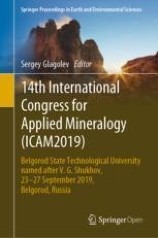
14th International Congress for Applied Mineralogy (ICAM2019) ; Belgorod State Technological University named after V. G. Shukhov, 23–27 September 2019, Belgorod, Russia
This proceedings of the 14th International Council for Applied Mineralogy Congress (ICAM) in Belgorod, Russia cover a wide range of topics including applied mineralogy, advanced and construction materials, ore and industrial minerals, mineral exploration, cultural heritage, etc. It includes contributions to geometallurgy, industrial minerals, oil and gas reservoirs as well as stone artifacts and their preservation. The International Congress on Applied Mineralogy strengthens the relation between the research on applied mineralogy and the industry.
