



الصفحة 323
الصفحة 323
Advances in information systems ; 3rd International Conference, ADVIS 2004, Izmir, Turkey, October 20-22, 2004. Proceedings
This volume contains the proceedings of the 3rd International Conference on AdvancesinInformationSystems (ADVIS)heldinIzmir,Turkey, 2004. The conference covered many of the topics of the second one: databases and data warehouses, information systems development and management, - formation retrieval, distributed and parallel data processing, and evolutionary algorithms. Besides them some of the hot topics related to information systems were included in the scope of this conference, such as data mining and kno- edge discovery, Web information systems development, information privacy and security, multimedia information systems, and network management.
Advances in information system development : New methods and practice for the networked society ; Vol. 2
These volume on Information Systems Development examine the exchange of ideas between academia and industry and aims to explore new solutions. The field of Information Systems Development (ISD) progresses rapidly, continually creating new challenges for the professionals involved. New concepts, approaches and techniques of systems development emerge constantly in this field.
Advances in information system development : New methods and practice for the networked society ; Vol. 1
Advances in Information Systems Development: Bridging the Gap between Academia and Industry, Volumes 1 and 2, are the collected proceedings of the Fourteenth International Conference on Information Systems Development. These latest volumes on Information Systems Development examine the exchange of ideas between academia and industry and aims to explore new solutions.

Advances in information retrieval ; 29th European Conference on IR Research, ECIR 2007, Rome, Italy, April 2-5, 2007, Proceedings
This book presented evaluation, recommendation, optimization, semantics, aggregation, queries, mining social media, digital libraries, efficiency, and information retrieval theory. Also included are 3 tutorial and 4 workshop presentations.

Advances in Information and Computer Security ; 1st International Workshop on Security, IWSEC 2006, Kyoto, Japan, October 23-24, 2006, Proceedings
this year in Kyoto and to publish the proceedings as a volume of the Lecture Notes in Computer Science series. The workshop was our ?rst trial in that two major academic society groups on security in Japan, viz. ISEC and CSEC, jointly organized it; ISEC is a te- nical group on information security of the Institute of Electronics, Information and Communication Engineers (IEICE), and CSEC is a special interest group on computer security of the Information Processing Society of Japan (IPSJ). It was Ryoichi Sasaki, the former head of CSEC, who proposed holding such an international workshop in Japan for the ?rst time, two years ago. The two groups supported his idea and started organizing the workshop. CSEC has its annual domestic symposium, the Computer Security Symposium (CSS), in - tober for three days, and we decided to organize the workshop prior to CSS this year.
Advances in informatics ; 10th Panhellenic Conference on informatics, PCI 2005, Volas, Greece, November 11-13, 2005, Proceedings
This volume contains a subset of the papers presented at the 10th Panhellenic Conference in Informatics (PCI 2005), which took place at the , Greece, Of the submitted papers, 81 were accepted for inclusion in this volume, papers are classi?ed into 17 thematic sections as follows: – data bases and data mining – algorithms and theoretical foundations – cultural and museum information systems – Internet-scale software/information systems – wearable and mobile computing – computer graphics, virtual reality and visualization – AI, machine learning and knowledge bases – languages, text and speech processing – bioinformatics – software engineering – educational technologies – e-business – computer and sensor hardware and architecture – computer security – image and video processing – signal processing and telecommunications – computer and sensor networks
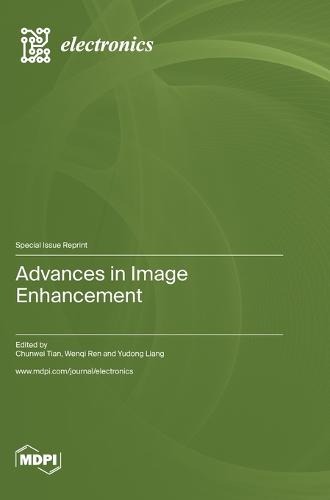
Advances in image enhancement
In the era of the internet of things, images have played important roles in human–computer interactions, and with the arrival of big data technology, people have higher requirements regarding image quality, especially for images collected in dark light. This can be addressed through the development of camera hardware quality, i.e., the resolution and exposure time of cameras, which may require high computational costs. As an alternative, image enhancement techniques can exact salient features to improve the quality of captured images according to the differences in diverse features, although they suffer from some challenges, i.e., a low contrast, artifacts, and overexposure, thus making it decidedly necessary to determine how to use advanced image enhancement techniques.
Advances in Image and Video Technology ; 2nd Pacific Rim Symposium, PSIVT 2007 Santiago, Chile, December 17-19, 2007 Proceedings
The aim of the symposium was to promote and disseminate ongoing research on multi- dia hardware and image sensor technologies, graphics and visualization, image analysis, multiple view imaging and processing, computer vision applications, image and video coding, and multimedia processing. The volume is a realization of the ongoing success of the Pacific Rim Symposium on Video and Image Te- nology
Advances in Image and Video Technology ; 1st Pacific Rim Symposium, PSIVT 2006, Hsinchu, Taiwan, December 10-13, 2006, Proceedings
The conference of the 1st IEEE Pacisc-Rim Symposium on Image and Video Technology (PSIVT 2006) was held at Hsinchu, Taiwan, Republic of China, on December 11–13, 2006. This volume contains papers selected for presentation at this conference. The aim of this conference was to bring together theoretical advances and practical implementations contributing to, or being involved in, image and video technology. PSIVT 2006 featured a comprehensive program including tutorials, keynote and invited talks, oral paper presentations, and posters. We received 450 s- missions from 22 countries and accepted 141 papers among those (i.e., de?ning an acceptance rate of 31.3%). The intention was to establish PSIVT as a t- quality series of symposia. Decisions were discult sometimes, but we hope that the ?nal result is acceptable to all involved.
Advances in Hybrid Information Technology ; 1st International Conference, ICHIT 2006, Jeju Island, Korea, November 9-11, 2006, Revised Selected Papers
As information technologies (IT) become specialized and fragmented, it is easy to lose sight that many topics in IT have common threads and because of this, advances in one sub-discipline may transmit to another. The presentation of results between di?erent sub-disciplines of IT encourages this interchange for the advancement of IT as a whole. Of particular interest is the hybrid approach or combining ideas from one discipline with those of another to achieve a result that is more signi?cant than the sum of the individual parts. Through this hybrid philosophy, a new or common principle can be discovered which has the propensity to propagate throughout this multifaceted discipline.
Advances in Human-Robot Interaction
The book addresses key issues of human-robot interaction concerned with perception, modelling, control, planning and cognition, covering a wide spectrum of applications. This includes interaction and communication with robots in manufacturing environments and the collaboration and co-existence with assistive robots in domestic environments. Among the presented examples are a robotic bartender, a new programming paradigm for a cleaning robot, or an approach to interactive teaching of a robot assistant in manufacturing environment. This carefully edited book reports on contributions from leading German academic institutions and industrial companies brought together within MORPHA, a 4 year project on interaction and communication between humans and anthropomorphic robot assistants
Advances in Healthcare Technology : Shaping the Future of Medical Care
This book describes valued contributions of technology for improving hospital and home healthcare, and gives a perspective on how they will influence critical aspects of future medical care. It provides an overview and discussion of trends, presents the state-of-the-art of important research areas, and highlights recent breakthrough results in selected fields, giving an outlook on game-changing developments in the coming decades.

Advances in grid and pervasive computing ; 2nd International Conference, GPC 2007, Paris, France, May 2-4, 2007, Proceedings
This book address all aspects of grid and pervasive computing and focus on topics such as cluster computing, high performance computing, grid computing, semantic Web and semantic grid, service-oriented computing, peer-to-peer computing, pervasive computing, mobile computing, network storage, as well as grid and pervasive related applications.

Advances in gingival diseases and conditions
Offers a comprehensive overview of the latest research and clinical innovations in periodontology. Divided into two sections, the book explores the etiology, clinical aspects, and diagnosis of gingival diseases, including biomarkers, metalloproteinases, and the impact of stress. The second section presents cutting-edge treatments, from curcumin therapy and muco-gingival surgery to guided tissue engineering and peri-implant disease management.
Advances in Geometric Modeling and Processing ; 5th International Conference, GMP 2008, Hangzhou, China, April 23-25, 2008. Proceedings
This book constitutes the refereed proceedings of the 5th International Conference on Geometric Modeling and Processing, GMP 2008, held in Hangzhou, China, in April 2008.

Advances in Geoinformatics : VIII Brazilian Symposium on Geoinformatics, GEOINFO 2006, Campos do Jordão (SP), Brazil, November 19-22, 2006
The GeoInfo series of scientific conferences is an annual forum for exploring research, development and innovative applications in geographic information science and related areas. This book provides a privileged view of what is currently happening in the field of geoinformatics, and a preview of what could be the hotter developments and research topics a few years from now. Additionally, it includes recent research results on spatial databases, spatial ontologies, computational geometry and visualization for geographic information systems, geostatistics and spatial statistics, spatial analysis, interoperability, and innovative applications of geotechnologies.

Advances in fuzzy logic systems
Fuzzy logic systems have been a hot topic in the scientific and academic community for more than half a century. The idea of making machines behave and make decisions like humans do is astounding. The development and implementation of fuzzy logic systems can be seen in various real physical applications in daily human life. The methods employed using fuzzy logic have resulted in innovative technologies. This book provides insights into understanding the principles and concepts behind the advances of fuzzy logic systems. It presents ideas concerning fuzzy logic systems and their technological applications. The book is arranged into two sections on theories and foundations of fuzzy logic systems and implementations of fuzzy logic systems in service to the community.

Advances in Fracture Research : Honour and plenary lectures presented at the 11th International Conference on Fracture (ICF11), held in Turin, Italy, on March 20-25, 2005
Biological materials are bottom-up designed systems formed from billions of years of natural evolution. In the long course of Darwinian competition for survival, nature has evolved a huge variety of hierarchical and multifunctional systems from nucleic acids, proteins, cells, tissues, organs, organisms, animal communities to ecological s- tems. Multilevel hierarchy a rule of nature. The complexities of biology provide an opportunity to study the basic principles of hierarchical and multifunctional s- tems design, a subject of potential interest not only to biomedical and life sciences, but also to nanosciences and nanotechnology. Systematic studies of how hierarchical structures in biology are related to their functions and properties can lead to better understanding of the effects of aging, diseases and drugs on tissues and organs, and may help developing a scienti?c basis for tissue engineering to improve the standard of living.
Advances in Evolutionary Computing for System Design
Evolutionary computing paradigms offer robust and powerful adaptive search mechanisms for system design. This book includes thirteen chapters covering a wide area of topics in evolutionary computing and applications including: -Introduction to evolutionary computing in system design - Evolutionary neuro-fuzzy systems - Evolution of fuzzy controllers - Genetic algorithms for multi-classifier design -Evolutionary grooming of traffic -Evolutionary particle swarms -Fuzzy logic systems using genetic algorithms - Evolutionary algorithms and immune learning for neural network-based controller design - Distributed problem solving using evolutionary learning -Evolutionary computing within grid environment -Evolutionary game theory in wireless mesh networks - Hybrid multiobjective evolutionary algorithms for the sailor assignment problem - Evolutionary techniques in hardware optimization
Advances in Evolutionary Algorithms : Theory, Design and Practice
The goal of this book is to provide effective optimization algorithms for solving a broad class of problems quickly, accurately, and reliably by employing evolutionary mechanisms. In this regard, five significant issues have been investigated: Bridging the gap between theory and practice of GEAs, thereby providing practical design guidelines. Demonstrating the practical use of the suggested road map. Offering a useful tool to significantly enhance the exploratory power in time-constrained and memory-limited applications. Providing a class of promising procedures that are capable of scalably solving hard problems in the continuous domain. Opening an important track for multiobjective GEA research that relies on decomposition principle.
