



الصفحة 32
الصفحة 32
Model-Driven Development and Operation of Multi-Cloud Applications : The MODAClouds Approach
In this book readers will find technological discussions on the existing and emerging technologies across the different stages of the big data value chain. They will learn about legal aspects of big data, the social impact, and about education needs and requirements. And they will discover the business perspective and how big data technology can be exploited to deliver value within different sectors of the economy. The book is structured in four parts: Part I "The Big Data Opportunity" explores the value potential of big data with a particular focus on the European context. It also describes the legal, business and social dimensions that need to be addressed, and briefly introduces the European Commission's BIG project.
Model-Driven Design Using Business Patterns
This book takes exactly this step: it shows you how to apply the pattern ideas in business applications and presents more than 20 structural and behavioral business patterns that use the REA (resources, events, agents) pattern as a common backbone. If you are a developer working on business frameworks, you can use the patterns presented to derive the right abstractions (e.g., business objects) and to design and ensure that the meta-rules (e.g., process patterns) are followed by the developers of the actual applications. And if you are an application developer, you can use these patterns to design your business application, to ensure that it does not violate the domain rules, and to adapt the application to changing requirements without the need to change the overall architecture. As with patterns in general, this approach allows for both more flexible and more solid software architectures and hence better software quality.
Model-driven architecture in practice ; A Software Production Environment Based on Conceptual Modeling
This book introduces all the relevant information required to understand and put Model Driven Architecture (MDA) into industrial practice. The book combines a sound theoretical approach based on more than 10 years' research.

Model-Driven Architecture - Foundations and Applications ; 2nd European Conference, ECMDA-FA 2006, Bilbao, Spain, July 10-13, 2006, Proceedings
The goal of the European Conference on Model-Driven Architecture — Foundations and Applications (ECMDA-FA) is to bring together industry and academia to tackle the problems in model-driven development. This volume includes 18 foundation papers and 12 application papers, which is a fine balance between both worlds. ECMDA-FA 2006 also hosted six workshops on both theoretical and practical aspects of MDA. Furthermore, the keynote speakers, David Frankel and Bran Selic, from some of the world’s largest IT companies proved that industry is very much involved in MDA. This second ECMDA-FA conference is the result of the work of the authors who submitted a total of 78 papers, the Program Committee members who took the effort to review the papers, the people organizing the workshops, and of course the Steering Committee. All in all, several hundreds of people have worked hard to make this conference a success.

Model-Based Testing of Reactive Systems : Advanced Lectures
This book is based on a seminar held in Dagstuhl Castle, Germany, in January 2004. It presents 19 carefully reviewed and revised lectures given at the seminar in a well-balanced way ensuring competent complementary coverage of all relevant aspects. An appendix provides a glossary for model-based testing and basics on finite state machines and on labelled transition systems. The lectures are presented in topical sections on testing of finite state machines, testing of labelled transition systems, model-based test case generation, tools and case studies, standardized test notation and execution architectures, and beyond testing.

Model-based Process Supervision : A Bond Graph Approach
Model-based fault detection and isolation requires a mathematical model of the system behaviour. Modelling is important and can be difficult because of the complexity of the monitored system and its control architecture. The authors use bond-graph modelling, a unified multi-energy domain modelling method, to build dynamic models of process engineering systems by composing hierarchically arranged sub-models of various commonly encountered process engineering devices. The structural and causal properties of bond-graph models are exploited for supervisory systems design.

Model-based Fault Diagnosis Techniques : Design Schemes, Algorithms, and Tools
The objective of this book is to introduce basic model-based FDI schemes, advanced analysis and design algorithms and the needed mathematical and control theory tools at a level for graduate students and researchers as well as for engineers.
Model-Based Engineering of Collaborative Embedded Systems : Extensions of the SPES Methodology
This book presents the results of the "Collaborative Embedded Systems" (CrESt) project, aimed at adapting and complementing the methodology underlying modeling techniques developed to cope with the challenges of the dynamic structures of collaborative embedded systems (CESs) based on the SPES development methodology.

Model Reduction and Coarse-Graining Approaches for Multiscale Phenomena
Model reduction and coarse-graining are important in many areas of science and engineering. How does a system with many degrees of freedom become one with fewer? How can a reversible micro-description be adapted to the dissipative macroscopic model? These crucial questions, as well as many other related problems, are discussed in this book. Specific areas of study include dynamical systems, non-equilibrium statistical mechanics, kinetic theory, hydrodynamics and mechanics of continuous media, (bio)chemical kinetics, nonlinear dynamics, nonlinear control, nonlinear estimation, and particulate systems from various branches of engineering. The generic nature and the power of the pertinent conceptual, analytical and computational frameworks helps eliminate some of the traditional language barriers, which often unnecessarily impede scientific progress and the interaction of researchers between disciplines such as physics, chemistry, biology, applied mathematics and engineering. All contributions are authored by experts, whose specialities span a wide range of fields within science and engineering.

Model Order Reduction : Theory, Research Aspects and Applications
The goal of this book is three-fold: it describes the basics of model order reduction and related aspects. In numerical linear algebra, it covers both general and more specialized model order reduction techniques for linear and nonlinear systems, and it discusses the use of model order reduction techniques in a variety of practical applications. The book contains many recent advances in model order reduction, and presents several open problems for which techniques are still in development. It will serve as a source of inspiration for its readers, who will discover that model order reduction is a very exciting and lively field.
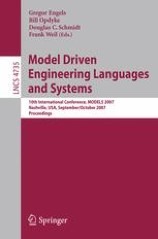
Model driven Engineering Languages and Systems; 10th International Conference, MoDELS 2007, Nashville, USA, September 30 - October 5, 2007, Proceedings
This book constitutes the refereed proceedings of the 10th International Conference on Model Driven Engineering Languages and Systems (formerly the UML series of conferences), MODELS 2007, held in Nashville, USA, September 30 - October 5, 2007. The 45 revised full papers were carefully reviewed and selected from 158 initial submissions.
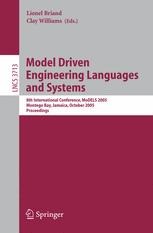
Model Driven Engineering Languages and Systems ; Vol. 3713 : 8th International Conference, MoDELS 2005, Montego Bay, Jamaica, October 2-7, 2005, Proceedings
Constitutes the proceedings of the 8th International Conference on Model Driven Engineering Languages and Systems, MoDELS 2005, held in Montego Bay, Jamaica, in October 2005. This book includes 52 papers and 2 keynote abstracts. It covers such topics as process modelling, product families, state/behavioral modeling, design strategies and more.
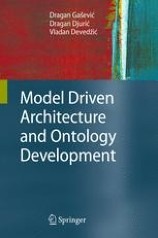
Model Driven Architecture and Ontology Development
Gaševic and his co-authors try to fill this gap by covering the subject of MDA application for ontology development on the Semantic Web. Part I of their book describes existing technologies, tools, and standards like XML, RDF, OWL, MDA, and UML. Part II presents the first detailed description of OMG’s new ODM (Ontology Definition Metamodel) initiative, a specification which is expected to be in the form of an OMG language like UML. Finally, Part III is dedicated to applications and practical aspects of developing ontologies using MDA-based languages.
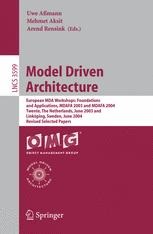
Model Driven Architecture ; European MDA Workshops : Foundations and Applications, MDAFA 2003 and MDAFA 2004, Twente, The Netherlands, June 26-27, 2003, and Linköping, Sweden, June 10-11, 2004, Revised Selected Papers
Model-Driven Architecture (MDA) is an initiative proposedby the Object M- agement Group (OMG) for platform-generic software development. MDA s- arates the specification of system functionality from the implementation on a specific platform. It is aimed at making software assets more resilient to changes caused by emerging technologies. While stressing the importance of modeling, the MDA initiative covers a wide spectrum of research areas. Further efforts are required to bring them into a coherent approach based on open standards and supported by matured tools and techniques. This volume contains the selected papers of two workshops on “Model-Driven Architecture – Foundations and Applications” (MDAFA): MDAFA 2003 held at the University of Twente, Twente, The Netherlands, June 26–27, 2003, and MDAFA 2004 held at Linko ¨ping University, Link¨ oping, Sweden, June 10–11, 2004. The goal of the workshops was to understand the foundations of MDA, to share experience in applying MDA techniques and tools, and to outline future research directions. The workshops organizers encouraged authors of accepted papers to re-submit their papers to a post-workshop reviewing process; 15 of these papers were accepted to appear in this volume on MDA.

Model Based Learning and Instruction in Science
This book describes new, model based teaching methods for science instruction. It presents research that describes these new methods in a very diverse group of settings: middle school biology, high school physics, and college chemistry classrooms. Mental models in these areas such as understanding the structure of the lungs or cells, molecular structures and reaction mechanisms in chemistry, or causes of current flow in electricity are notoriously difficult for many students to learn. Yet these lie at the core of conceptual understanding in these areas. The studies focus on a variety of teaching strategies such as discrepant questioning, analogies, animations, model competition, and hands on activities.

Model and Design of Improved Current Mode Logic Gates : Differential and Single-ended
This book presents MOSFET-based current mode logic (CML) topologies, which increase the speed, and lower the transistor count, supply voltage and power consumption. The improved topologies modify the conventional PDN, load, and the current source sections of the basic CML gates.

Model and Design of Bipolar and MOS Current-Mode Logic : CML, ECL and SCL Digital Circuits
many works and results have been published which reinforce the importance of Current-Mode digital circuits. In the topic of Current-Mode digital circuits, the authors properly exploited classical paradigms developed and used in the analog circuit domain (a topic in which one of the authors maturated a great experience).

Model Abstraction in Dynamical Systems : Application to Mobile Robot Control
The subject of this book is model abstraction of dynamical systems. The p- mary goal of the work embodied in this book is to design a controller for the mobile robotic car using abstraction. Abstraction provides a means to rep- sent the dynamics of a system using a simpler model while retaining important characteristics of the original system. A second goal of this work is to study the propagation of uncertain initial conditions in the framework of abstraction. The summation of this work is presented in this book.

Modalities and Multimodalities
In the last two decades modal logic has undergone an explosive growth, to thepointthatacompletebibliographyofthisbranchoflogic,supposingthat someone were capable to compile it, would ?ll itself a ponderous volume. What is impressive in the growth of modal logic has not been so much the quick accumulation of results but the richness of its thematic dev- opments. In the 1960s, when Kripke semantics gave new credibility to the logic of modalities? which was already known and appreciated in the Ancient and Medieval times? no one could have foreseen that in a short time modal logic would become a lively source of ideas and methods for analytical philosophers,historians of philosophy,linguists, epistemologists and computer scientists.
mODa 8 - Advances in Model-Oriented Design and Analysis ; Proceedings of the 8th International Workshop in Model-Oriented Design and Analysis held in Almagro, Spain, June 4–8, 2007
The volume contains the proceedings of the 8th Workshop on Model-Oriented Design and Analysis. This book offers leading and pioneering work on optimal experimental designs, both from a mathematical/statistical point of view and with regard to real applications. Scientists from all over the world, from Eastern and Western Europe, the USA, Latin-America, Asia and Africa, have contributed to this volume. Primary topics are designs for nonlinear models and applications to experimental medicine.
