



الصفحة 32
الصفحة 32

Dynamic Inventory Management in Reverse Logistics
The integration of product recovery into regular production processes enables new opportunities for cost savings. In case of a dynamic planning situation, for instance when dealing with seasonality or the product life cycle, new motives for keeping stock arise.

Dynamic General Equilibrium Modelling : Computational Methods and Applications
Modern business cycle theory and growth theory uses stochastic dynamic general equilibrium models. Many mathematical tools are needed to solve these models. The book presents various methods for computing the dynamics of general equilibrium models. In part I, the representative-agent stochastic growth model is solved with the help of value function iteration, linear and linear quadratic approximation methods, parameterised expectations and projection methods. In order to apply these methods, fundamentals from numerical analysis are reviewed in detail. Part II discusses methods for solving heterogeneous-agent economies. In such economies, the distribution of the individual state variables is endogenous. This part of the book also serves as an introduction to the modern theory of distribution economics. Applications include the dynamics of the income distribution over the business cycle or the overlapping-generations model.

Dynamic Games : Theory and Applications
Dynamic games continue to attract strong interest from researchers interested in modelling competitive as well as conflict situations exhibiting an intertemporel aspect. Applications of dynamic games have proven to be a suitable methodology to study the behaviour of players (decision-makers) and to predict the outcome of such situations in many areas including engineering, economics, management science, military, biology and political science. Dynamic Games: Theory and Applications collects thirteen articles written by established researchers.

Dynamic Fleet Management : Concepts, Systems, Algorithms & Case Studies
Dynamic Fleet Management will focus on real time management of a distribution system. The book will integrate the latest results in system design, algorithm development and system implementation, to capture the state-of-the art research and application trends.

Dynamic Capabilities and Relationships : Discourses, Concepts, and Reflections
Building on the seminal work of David Teece, Kathleen Eisenhardt, Jeffrey Martin, and others, this volume applies the concept of dynamic capabilities to help readers understand how organizations can be successful in highly dynamic environments. The contributions, written by researchers who participated in the research program "Dynamic Capabilities and Relationships" and international researchers who participated in the program’s international conference (both funded by the Dieter Schwarz Foundation), highlight state-of-the-art research on dynamic capabilities and relationships. They also put forward an integrated management approach for the purpose of understanding, analyzing, and managing the successful creation and adaptation of capabilities and relationships.

Dynamic business law : The essentials
The importance and excitement of the law. We want them to be aware that business resides in an atmosphere of legal rights and responsibilities. The more they have an understanding of relevant law, the more their business activities will flourish. We tried to construct a book that contains the basics of business law but does not get bogged down in the kind of details that would be more appropriate in an upper-level law class.

Dynamic Asset Allocation with Forwards and Futures
DYNAMIC ASSET ALLOCATION WITH FORWARD AND FUTURES is an advanced text on the theory of forward and futures markets which aims at providing readers with a comprehensive knowledge of how prices are established and evolve over time, what optimal strategies one can expect from the participants, what characterizes such markets, and what major theoretical and practical differences distinguish futures from forward contracts. The book proposes an approach of these markets from the perspective of dynamic asset allocation and asset pricing theory within an inter-temporal framework. The main ingredients that are used are the assumed absence of frictions and arbitrage opportunities in financial and real markets, the uniqueness of the economic general equilibrium, when such an equilibrium is required and the tools of continuous time finance, namely martingale theory and stochastic dynamic programming. The scope of DYNAMIC ASSET ALLOCATION WITH FORWARD AND FUTURES is essentially theoretical, with emphasis on economic meaning and financial interpretation. Regarding investment and/or hedging, focus is on optimal strategies rather than on actual practice. Simulations, however, are performed when important insights can be delivered as to the practical relevance of some theoretical results. Also, optimal strategies using futures are shown to differ markedly from those using forwards. The following issues are examined: pure hedging, investment and hedging in complete or incomplete markets, currency risk, optimal spreading, presence of stochastic dividend or convenience yields, pricing of non-redundant futures or forwards by means of general equilibrium analysis, and revisiting of existing Capital Asset Pricing Models.

Dual Income Tax : A Proposal for Reforming Corporate and Personal Income Tax in Germany
In its Annual Report 2003/2004, the German Council of Economic Experts launched a dual income tax as an option for a fundamental tax reform in Germany. In February 2005, the German government appointed the Council to prepare a detailed report on economic effects of a business tax reform, with special emphasis on a dual income tax. With regard to the latter, conceptual problems of tax law and of tax administration were to be addressed as well as possible transitional problems when implementing a dual income tax. This book presents an English version of the original report completed in April 2006.

Drug discovery and development
Presents up-to-date scientific information for maximizing the ability of a multidisciplinary research team to discover and bring new drugs to the marketplace. It explores many scientific advances in new drug discovery and development for areas such as screening technologies, biotechnology approaches, and evaluation of efficacy and safety of drug candidates through preclinical testing. This book also greatly expands the focus on the clinical pharmacology, regulatory, and business aspects of bringing new drugs to the market and offers coverage of essential topics for companies involved in drug development. Historical perspectives and predicted trends are also provided.

Driving digital transformation through data and AI : A practical guide to delivering data science and machine learning products
Explains how to build the organizational capability to deliver Data and AI products and drive immediate business results as new digital technologies significantly disrupt business Provides best practices, tools and templates for managing the organizational and technological change process to become an AI-driven enterprise Includes a variety of international case studies across several industries such as insurance, fashion, consumer goods, finance, technology and automotive Outlines how to develop a product strategy, build teams and design the platform and architecture Provides key principles for sharing knowledge, educating staff on data and AI, and effectively engaging top executives

Domain-driven design with Java, a practitioner's guide : create simple, elegant, and valuable software solutions for complex business problems
Helps you as a developer and architect to put your knowledge to work in order to create elegant software designs that are enjoyable to work with and easy to reason about. You'll begin with an introduction to the concepts of domain-driven design and discover various ways to apply them in real-world scenarios. You'll also appreciate how DDD is extremely relevant when creating cloud native solutions that employ modern techniques such as event-driven microservices and fine-grained architectures. As you advance through the chapters, you'll get acquainted with core DDD's strategic design concepts such as the ubiquitous language, context maps, bounded contexts, and tactical design elements like aggregates and domain models and events. You'll understand how to apply modern, lightweight modeling techniques such as business value canvas, Wardley mapping, domain storytelling, and event storming, while also learning how to test-drive the system to create solutions that exhibit high degrees of internal quality.
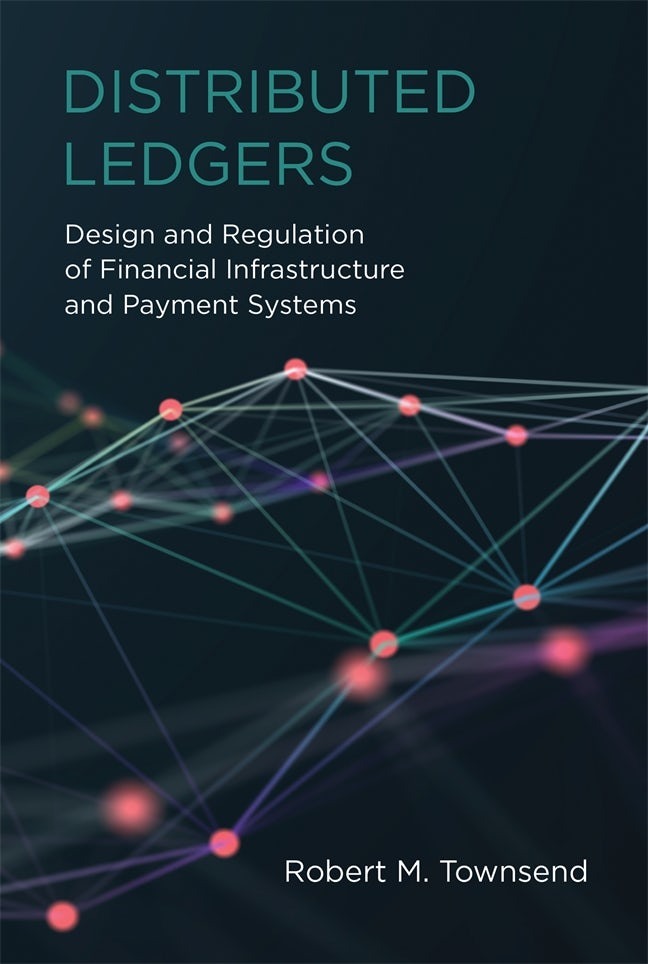
Distributed Ledgers : Design and Regulation of Financial Infrastructure and Payment Systems
In this book, Robert Townsend steps back from the hype and controversy surrounding DLT (and the related, but not synonymous, innovations of blockchain and Bitcoin) to offer an economic analysis of what distributed ledgers can do and a blueprint for the optimal design and regulation of financial systems. He analyzes four crucial components of distributed ledgers—ledgers as accounts, e-messages and e-value transfers, cryptography, and contracts—assessing each in terms of both economics and computer science, and forges some middle ground. Relatedly, Townsend highlights hybrid systems in which some of these components allow useful innovation while legacy or alternative pieces deal with the problem of scale.

Distributed and parallel computing ; 6th International conference on algorithms and architectures for parallel processing, ICA3PP, Melbourne, Australia, October 2-3, 2005, Proceedings
There are many applications that require parallel and distributed processing to allow complicated engineering, business and research problems to be solved in a reasonable time. Parallel and distributed processing is able to improve company profit, lower costs of design, production, and deployment of new technologies, and create better business environments. The major lesson learned by car and aircraft engineers, drug manufacturers, genome researchers and other specialist is that a computer system is a very powerful tool that is able to help them solving even more complicated problems. That has led computing specialists to new computer system architecture and exploiting parallel computers, clusters of clusters, and distributed systems in the form of grids.

Disseminative Capabilities : A Case Study of Collaborative Product Development in the Automotive Industry
Nowadays, cooperating in Product Development seems to be a dominant strategy to lower costs and risks, to fully utilize capacities, and to gain access to lacking knowledge assets. Oppat analyzes cooperations in Product Development with a special focus on the automotive industry. He seeks answers to the question of how knowledge transfer between involved partners takes place. Although knowledge transfer and its success levers (e.g. absorptive capacity) are well-researched phenomena, equivalent investigations of the sender and her capabilities (DiC - Disseminative Capabilities) impacting inter-organizational transfer success are lacking. The in-depth case studies conducted concentrate on joint car development projects between Magna Steyr, an Austrian-based company, and German-based BMW, Mercedes Benz, and Audi. The research results clearly indicate that DiC have an impact on the knowledge transfer process and can explain why the analyzed projects differ in terms of transfer success. Based on the research findings, this work provides managerial implications for all eight dimensions of DiC and, by deploying insights from the empirical investigations, outlines ways to develop them successfully.

Dissecting Discrimination : Identifying Its Various Faces and Their Sources
This book examines the phenomenon of discrimination using a descriptive approach. Discrimination is omnipresent, whether it is people who discriminate against other people or, more recently, also machines that discriminate against people. The first part of the analysis employs decision theory on discrimination, leading to two fundamental subtypes: taste-based discrimination and statistical discrimination. The second part links taste-based discrimination to social identity theory, demonstrates that not all taste-based discrimination is ultimately statistical discrimination, and reveals the evolutionary origins of our tastes.

Disrupting Finance : FinTech and Strategy in the 21st Century
This Pivot demonstrates how a variety of technologies act as innovation catalysts within the banking and financial services sector. Traditional banks and financial services are under increasing competition from global IT companies such as Google, Apple, Amazon and PayPal whilst facing pressure from investors to reduce costs, increase agility and improve customer retention. Technologies such as blockchain, cloud computing, mobile technologies, big data analytics and social media therefore have perhaps more potential in this industry and area of business than any other. This book defines a fintech ecosystem for the 21st century, providing a state-of-the art review of current literature, suggesting avenues for new research and offering perspectives from business, technology and industry.

Discrete Dynamical Systems
This book provides an introduction to discrete dynamical systems -- a framework of analysis commonly used in the fields of biology, demography, ecology, economics, engineering, finance, and physics.

Discontinuous Galerkin Methods for Viscous Incompressible Flow
Guido Kanschat reviews several discontinuous Galerkin schemes for elliptic and viscous flow problems. Setting out from Nitsche's method for weak boundary conditions, he studies the interior penalty and LDG methods. Combined with a stable advection discretization, they yield stable DG methods for linear flow problems of Stokes and Oseen type which are applied to the Navier-Stokes problem. The author not only presents the analytical techniques used to study these methods but also devotes a major discussion to the efficient numerical solution of discrete problems.

Digitalization and the Future of Financial Services : Innovation and Impact of Digital Finance
The aim of this book is to extend our understandings on how digitalization and the future of financial services can be helpful in different business circumstances in many cross-functional financial areas, such as financial markets, financial risk management, financial technologies, investment finance, etc. Thus, the book aims at addressing the relevance of digital finance for different players, highlighting differences in tools and processes as well as identifying innovative practices in financial digitalization.
Digital transformation management : Challenges and futures in the Asian digital economy
Addresses key topics related to organization design and knowledge management in the digital economy with organizational context, particularly in Asia. the book conceptualizes organization design into three dimensions, people, information, and technology, and offers readers a unique valued insight, bringing new perspectives to understanding emerging business opportunities and challenges in Asia. it presents a valuable collection of 14 chapters with empirical studies from leading researchers. the book addresses digital transformation in companies and organizations in Asia, analysing how disruptive technologies can help them to have more efficient organization processes, create innovative products and services, be more resilient and achieve sustainable goals in post-pandemic time.
