



الصفحة 32
الصفحة 32
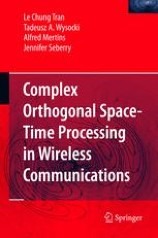
Complex Orthogonal Space-Time Processing in Wireless Communications
Complex Orthogonal Space-Time Processing in Wireless Communications incorporates orthogonal space-time processing using STBCs in MIMO wireless communication systems. Complex Orthogonal STBCs (CO STBCs) are given emphasis because they can be used for PSK/QAM modulation schemes and are more practical than real STBCs. The overall coverage provides general knowledge about space-time processing and its applications for broad audiences. It also includes the most up-to-date review of the literature on space-time processing in general, and space-time block processing in particular.

Complex Numbers from A to … Z
It is impossible to imagine modern mathematics without complex numbers. Complex Numbers from A to . . . Z introduces the reader to this fascinating subject that, from the time of L. Euler, has become one of the most utilized ideas in mathematics.The exposition concentrates on key concepts and then elementary results concerning these numbers. The reader learns how complex numbers can be used to solve algebraic equations and to understand the geometric interpretation of complex numbers and the operations involving them.The theoretical parts of the book are augmented with rich exercises and problems at various levels of difficulty. A special feature of the book is the last chapter, a selection of outstanding Olympiad and other important mathematical contest problems solved by employing the methods already presented.The book reflects the unique experience of the authors. It distills a vast mathematical literature, most of which is unknown to the western public, and captures the essence of an abundant problem culture.
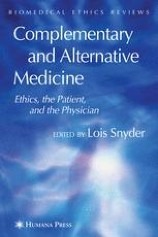
Complementary and Alternative Medicine : Ethics, the Patient, and the Physician
Complementary and Alternative Medicine examines the real-life implications of patient issues and the healthcare system in which care is delivered. Because complementary and alternative medicine (CAM) are not presently considered to be a part of conventional medicine, this book discusses the effect that CAM has on patients, physicians, healthcare, and policymakers. Also included are the implications that CAM has on traditional patient-physician relationships as well as the physician's ethical obligations on this subject.
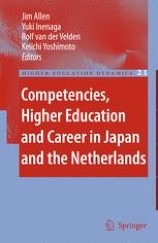
Competencies, Higher Education and Career in Japan and the Netherlands
This book investigates how social and cultural factors affect the education, training and career development of graduates of higher education in Japan and the Netherlands. Despite their different historical paths, both countries are now subject to the common pressure of globalization. As a result, the higher education sector in both countries is becoming more universal and available to a larger population, and the economy and society are becoming increasingly knowledge-intensive. The aim of this book is to explore how Dutch and Japanese graduates choose and develop their careers in reference to the above-mentioned challenges. It is based on a unique data set consisting of surveys held among graduates 3 and 8 years after leaving higher education.
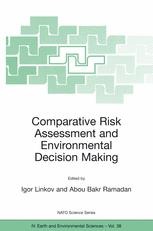
Comparative risk assessment and environmental decision making
Decision making in environmental projects is typically a complex and confusing process characterized by trade-offs between socio-political, environmental, and economic impacts. Comparative Risk Assessment (CRA) is a methodology applied to facilitate decision making when various activities compete for limited resources. CRA has become an increasingly accepted research tool and has helped to characterize environmental profiles and priorities on the regional and national level. CRA may be considered as part of the more general but as yet quite academic field of multi-criteria decision analysis (MCDA). Considerable research in the area of MCDA has made available methods for applying scientific decision theoretical approaches to multi-criteria problems, but its applications, especially in environmental areas, are still limited. The papers show that the use of comparative risk assessment can provide the scientific basis for environmentally sound and cost-efficient policies, strategies, and solutions to our environmental challenges.
Comparative genomics ; Vol.15 : Using Fungi as Models
Fungal comparative genomics started in 2000 by the genome sequencing of several yeast species other than the canonical Saccharomyces cerevisiae. Since then, over 30 fungal genome sequences have become available. This set represents a total evolutionary divergence comparable to that between vertebrates and arthropods, but also contains closely related genomes. This volume describes how we can use this set of genomes to trace large and small-scale events in genome evolution, to extract information about highly conserved and less conserved sequence elements, and to develop novel methods in genomics that will have an impact on genomics at large.
Community schools : Designing for sustainability, wellbeing and inclusion
Reconsiders what is required from physical school environments, building on the learning gathered from the sector over the past two decades. To meet the new social, environmental and economic challenges it advocates designing differently, both in terms of the form that buildings take and the evaluation of their impact and performance. By calling for a reframing of the way that schools are regarded as community-wide amenities, this book explores the potential for architects to deliver design in a manner that supports healthy lifestyles and promotes wellbeing. Through encouraging social connections, new possibilities open up for educational facilities to become open, welcoming and inclusive. Featuring: Over 12 international case studies from practices including: Architype, Argyll + Bute, Bogle Architects, DRMM, Revaerk, Scott Brownrigg and XDGA. Key themes of wellbeing, connectivity, inclusion, indicators and evaluation. Practical guidance and learning points throughout. A new design brief for community schools
Community Health Cares O-Process for Evaluation : A Participatory Approach for Increasing Sustainability
Community Health Care’s O-Process for Evaluation offers step-by-step assistance in achieving these goals, from determining areas for assessment to disseminating the results. The steps can be conducted in-house or adapted for use with outsiders, laying a solid foundation for a cycle of continuous evaluation and continued improvement for long-term sustainability.

Communication research into the digital society : Fundamental insights from the Amsterdam School of Communication Research
Media and communication have become ubiquitous in today’s societies andaffect all aspects of life. On an individual level, they impact how we learnabout the world, how we entertain ourselves, and how we interact withothers. On an organisational level, the interactions between media andorganisations, such as political parties, NGOs, businesses and brands, shapeorganisations’ reputation, legitimacy, trust and (financial) performance, aswell as individuals’ consumer, political, social and health behaviours. Atthe societal level, media and communication are crucial for shaping publicopinion on current issues such as climate change, sustainability, diversity,and well-being.

Communicating European Research 2005 ; Proceedings of the Conference, Brussels, 14-15 November 2005
The book covers the main aspects of science and technology communication today and addresses topical questions such as: Is science journalism necessary at all? Should communication become one of the basic skills of scientists, as compulsory as thinking, testing and experimenting? Should our schools of the future put scientific literacy at the top of the science curriculum? Do we need science critics? Does the coverage of science in the media reflect the choice of the editors or does it accurately mirror the public’s interest? How does one capture the public’s attention when promoting science on local, commercial or entertainment radio? Why would we need standards in science communication? How can we remove any obstacles to communication among researchers and between researchers?

Common Law, Civil Law, and Colonial Law : Essays in Comparative Legal History from the Twelfth to the Twentieth Centuries
This volume is a selection of essays taken from the excellent range of papers presented at the British Legal History Conference hosted by the Institute for Legal and Constitutional Research at the University of St Andrews, 10-13 July 2019. The theme of the conference gives this book its title: 'comparative legal history'. The topic came easily to the organisers because of their association with the St Andrews-based European Research Council Advanced grant project 'Civil law, common law, customary law: consonance, divergence and transformation in Western Europe from the late eleventh to the thirteenth centuries'.

Common Chinese materia medica ; Vol.7
Describes 247 species of 9 families of medicinal plants, which are commonly used in Chinese medicine. The most important species are Adina rubella, Gardenia jasminoides, Hedyotis diffusa, Morinda officinalis, Rubia cordifolia, Uncaria hirsuta, Uncaria macrophylla, Uncaria rhynchophylla, Uncaria sessilifructus, Uncaria sinensis of Rubiaceae; Lonicera confusa, Lonicera hypoglauca, Lonicera macranthoides, Lonicera japonica of Caprifoliaceae; Patrinia scabiosaefolia, Patrinia villosa, Nardostachys jatamansi of Valerianaceae; Dipsacus asperoides of Dipsacaceae; Arctium lappa, Artemisia annua, Artemisia argyi, Artemisia capillaris, Artemisia scoparia, Atractylodes lancea, Atractylodes macrocephala, Dendranthema indicum, Dendranthema morifolium, Eupatorium chinense, Eupatorium fortunei, Inula helenium, Saussurea costus, Saussurea involucrata, Senecio scandens, Serratula chinensis, Siegesbeckia orientalis, Solidago decurrens, Taraxacum mongolicum, Tussilago farfara、Xanthium sibiricum of Compositae; Gentiana crassicaulis, Gentiana manshurica, Gentiana rigescens, Gentiana scabra, Swertia pseudochinensis of Valerianaceae; Lysimachia christinae of Primulaceae and Plantago asiatica of Plantaginaceae.
Common Chinese materia medica ; Vol.6
Describes 226 species of 32 families of medicinal plants, which are commonly used in Chinese medicine. The most important species are Aquilaria sinensis and Daphne genkwa of Thymelaeaceae; Benincasa hispida, Siraitia grosvenorii, Trichosanthes kirilowii and Trichosanthes rosthornii of Cucurbitaceae; Camellia sinensis of Theaceae; Cleistocalyx operculatus, Eugenia caryophyllata and Rhodomyrtus tomentosa of Myrtaceae; Osbeckia chinensis of Melastomataceae; Quisqualis indica and Terminalia chebula of Combretaceae; Hypericum japonicum of Hypericaceae; Microcos paniculata of Tiliaceae; Hibiscus mutabilis of Malvaceae; Croton crassifolius, C. lachnocarpus, C. tiglium, Euphorbia humifusa, E. lathyris, E. pekinensis, Phyllanthus emblica and Sauropus spatulifolius of Euphorbiaceae. In each specie, it introduces the scientific names, medicinal names, morphologies, habitats, distributions, acquisition and processing methods of these medicinal plants, the content of medicinal properties, therapeutic effects, usage and dosage of these medicinal plants, and attaches unedited color pictures and pictures of part herbal medicines of each species.

Commodity marketing : Strategies, concepts, and cases
Commoditization is a major challenge for companies in a wide range of industries, and commodity marketing has become a priority for many top managers. This book tackles the key issues associated with the marketing of commodities and the processes of commoditization and de-commoditization. It summarizes the state of the art on commodity marketing, providing an overview of current debates. It also offers managerial insights, case studies, and guidance to help manage and market commodity goods and services.

Clinical evaluation of medical devices : Principles and case studies
It include the many innovations and clinical research methods that have developed since the first edition, as well as current information on the regulatory, legal, and reimbursement environment for medical devices. The book's deeply experienced authors summarize the key principles and approaches employed in medical device clinical trials and illustrate their uses in a revealing series of detailed, real-world case studies.

Clinical decision support systems : Theory and practice
Writes the editor, "If used properly, CDSS have the potential to change the way medicine has been taught and practiced." As clinical decision support systems (CDSS) gain an increasingly central role in the delivery of high quality health care, it becomes more important for the health care community to understand their use. This text is designed as a resource for practicing clinicians, informaticians, teachers and students alike, and provides the most current, comprehensive look a the development and evaluation of clinical decision support systems.

Clinical Cardiac MRI
MRI has become the preferred noninvasive imaging modality for the heart and great vessels. The substantial technological progress achieved in recent years has provided the user with state of the art MRI systems, but their optimal use can be limited by restricted awareness of the potential patient benefit and the necessity for teaching. This extensively illustrated volume, has been specifically compiled to meet these needs. Essential theoretical background information is provided, and imaging acquisition and potential pitfalls are considered in detail. Most importantly, structured guidelines are provided on the interpretation of clinical data in the wide range of cardiac pathology that can be encountered. Throughout, the emphasis is on the implementation of cardiac MRI in clinical practice.

Classifying madness : A philosophical examination of the diagnostic and statistical manual of mental disorders
Classifying Madness examines the conceptual foundations of the D.S.M., the main classification of mental disorders used by psychiatrists world-wide. It will be of interest to both mental health professionals and to philosophers interested in classification in science. The D.S.M. has become extremely controversial, and the possibility that there may be philosophical difficulties with it has become a commonplace in the mental health literature. Classifying Madness offers mental health professionals an opportunity to explore suspicions that there might be conceptual problems with the D.S.M. For philosophers, this book aims to contribute to debates in the philosophy of science concerning natural kinds, the theory-ladenness of classification, and the effect of sociological factors in science. These issues are normally approached via a consideration of the natural sciences and, as will be seen, approaching them via a consideration of psychiatry helps shed new light on old problems.

Classification of covid-19 in lung images
The novel coronavirus 2019 (COVID-2019), which first appeared in Wuhan city of China in December 2019, spread rapidly around the world and became a pandemic. It has caused a devastating effect on both daily lives, public health, and the global economy. It is critical to detect the positive cases as early as possible so as to prevent the further spread of this epidemic and to quickly treat affected patients. The need for auxiliary diagnostic tools has increased as there are no accurate automated toolkits available. Recent findings obtained using radiology imaging techniques suggest that such images contain salient information about the COVID-19 virus. Application of advanced artificial intelligence (AI) techniques coupled with radiological imaging can be helpful for the accurate detection of this disease, and can also be assistive to overcome the problem of a lack of specialized physicians in remote villages.
Classification and Modeling with Linguistic Information Granules : Advanced Approaches to Linguistic Data Mining
Many approaches have already been proposed for classification and modeling in the literature. These approaches are usually based on mathematical mod els. Computer systems can easily handle mathematical models even when they are complicated and nonlinear (e.g., neural networks). On the other hand, it is not always easy for human users to intuitively understand mathe matical models even when they are simple and linear. This is because human information processing is based mainly on linguistic knowledge while com puter systems are designed to handle symbolic and numerical information. A large part of our daily communication is based on words. We learn from various media such as books, newspapers, magazines, TV, and the Inter net through words. We also communicate with others through words. While words play a central role in human information processing, linguistic models are not often used in the fields of classification and modeling. If there is no goal other than the maximization of accuracy in classification and modeling, mathematical models may always be preferred to linguistic models. On the other hand, linguistic models may be chosen if emphasis is placed on interpretability.
