



الصفحة 30
الصفحة 30
Managing the Digital Transformation : Aligning Technologies, Business Models, and Operations
Provides the key technologies involved in an organization’s digital transformation. It offers a deep understanding of the key technologies (Blockchain, AI, Big Data, IoT, etc.) involved and details the impact, the decision-making process, and the interplay between technologies, business models, and operations.
Managing the Complexity of Critical Infrastructures : A Modelling and Simulation Approach
This book summarizes work being pursued in the context of the CIPRNet (Critical Infrastructure Preparedness and Resilience Research Network) research project, co-funded by the European Union under the Seventh Framework Programme (FP7). The project is intended to provide concrete and on-going support to the Critical Infrastructure Protection (CIP) research communities, enhancing their preparedness for CI-related emergencies, while also providing expertise and technologies for other stakeholders to promote their understanding and mitigation of the consequences of CI disruptions, leading to enhanced resilience.
Managing Sustainability : Perspectives From Retailing and Services
Companies and policy makers are prioritizing environmental, social, and governance goals as part of their strategies. Academic research has started to focus on these issues, but many important matters require deeper investigation and reflection, especially in specific sectors. This book focuses on the sustainability issues within the retailing and services sectors.

Managing Socio-ecological Production Landscapes and Seascapes for Sustainable Communities in Asia : Mapping and Navigating Stakeholders, Policy and Action
This book presents up-to-date analyses of community-based approaches to sustainable resource management of SEPLS (socio-ecological production landscapes and seascapes) in areas where a harmonious relationship between the natural environment and the people who inhabit it is essential to ensure community and environmental well-being as well as to build resilience in the ecosystems that support this well-being.
Managing Risk and Information Security : Protect to Enable
Examine the evolving enterprise security landscape and discover how to manage and survive risk. While based primarily on the author’s experience and insights at major companies where he has served as CISO and CSPO, the book also includes many examples from other well-known companies and provides guidance for a management-level audience. Managing Risk and Information Security provides thought leadership in the increasingly important area of enterprise information risk and security. It describes the changing risk environment and why a fresh approach to information security is needed. Because almost every aspect of an enterprise is now dependent on technology not only for internal operations but increasing as a part of product or service creation, the focus of IT security must shift from locking down assets to enabling the business while managing and surviving risk. This edition discusses business risk from a broader perspective, including privacy and regulatory considerations. It describes the increasing number of threats and vulnerabilities and offers strategies for developing solutions. These include discussions of how enterprises can take advantage of new and emerging technologies—such as social media and the huge proliferation of Internet-enabled devices—while minimizing risk.
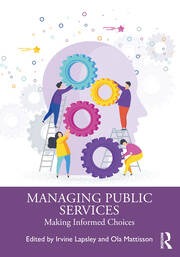
Managing public services : Making informed choices
Chapters provide a valuable frame of reference for the 21st-century manager of public services by assessing the renewal of existing practices such as strategic costing, performance management, digitization and procurement and innovations in management practices, including branding, Lean Management, resilience and risk management. The book suggests that, as the management of public services is imbued with financial, social, economic and political uncertainties, management needs to be flexible and responsive to new ideas and practices to fulfil its purpose. This book ultimately supports the reflective manager, those who think about their job and are open to new ideas on how their job can be done better, by revisiting existing practices and examining innovations in public management.

Managing Protected Areas in Central and Eastern Europe Under Climate Change
Addresses the need for sharing knowledge and experience in the field of biodiversity conservation and climate change. There is an urgent need to build capacity in protected areas to monitor, assess, manage and report the effects of climate change and their interaction with other pressures. The contributors identify barriers to the adaptation of conservation management, such as the mismatch between planning reality and the decision context at site level. Short and vivid descriptions of case studies, drawn from investigation areas all over Central and Eastern Europe, illustrate both the local impacts of climate change and their consequences for future management.

Managing product life cycle in a supply Chain Context : A prescription based on empirical research
The aim of this book is to provide a better understanding with as to how to coordinate and improve decisions about product life cycle, process and supply chain design to improve new product development.

Managing Next Generation Networks and Services ; 10th Asia-Pacific Network Operations and Management Symposium, APNOMS 2007, Sapporo, Japan, October 10-12, 2007, Proceedings
The 48 revised full papers and 30 revised short papers cover management of distributed networks, network configuration and planning, network security management, sensor and ad-hoc networks, network monitoring, routing and traffic engineering, management of wireless networks and security on wireless networks.

Managing Nano-Bio-Info-Cogno Innovations : Converging Technologies in Society
Tremendous human progress is becoming possible through the development of converging technologies stimulated by advances in four core fields: Nanotechnology, Biotechnology Information technology, and new technologies based in Cognitive science (NBIC). This book provides a unique review of technical developments related to the unification that is rapidly taking place today among these fields.

Managing Multiple Projects : How Project Managers Can Balance Priorities, Manage Expectations and Increase Productivity
Develop the skills and knowledge to juggle multiple projects, deal with conflicting priorities and manage expectations while avoiding burnout.

Managing Measurement Risk in Building and Civil Engineering
Managing Measurement Risk in Building and Civil Engineering will help all those who use measurement in their work or deal with the output from the measurement process, to understand not only the ‘ins and outs’ of measuring construction work but also the relationship that measurement has with contracts, procurement, claims and post-contract control in construction. The book is for quantity surveyors, engineers and building surveyors but also for site engineers required to record and measure events on site with a view to establishing entitlement to variations, extras and contractual claims.
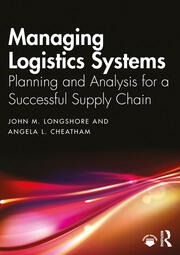
Managing logistics systems : Planning and analysis for a successful supply chain
Introduces logistics from a broad perspective to include all activities throughout the product and service life cycle pertaining to supply chain and logistics management, the physical supply and distribution of products, and the corresponding maintenance and support. It recognizes the mutual interdependence of the major functional areas of the organization including marketing, production, and finance. The emphasis throughout the text is on logistics in the context of a total business system design process. It views the business as a "system", managing logistics within that system, and thus transforming their Supply Chain. Pedagogy to aid learning is incorporated throughout every chapter, with chapter objectives, case studies, and concept checks. This text is intended for both upper-level undergraduate and lower-level graduate students in both Business and Engineering on logistics and supply chain tracks. It can also serve as a reference for practitioners actively engaged in day-to-day management of logistics and supply chain activities.

Managing Large-Scale Service Deployment ; 19th IFIP/IEEE International Workshop on Distributed Systems : Operations and Management, DSOM 2008, Samos Island, Greece, September 22-26, 2008. Proceedings
Contains all papers accepted for presentation at the 19th IFIP/IEEE International Workshop on Distributed Systems: Operations and Management (DSOM 2008),which was held September 25-26, 2008 on the island of Samos, Greece. DSOM 2008 was the 19th event in a series of annual workshops. It followed in the footsteps of previous s- cessful meetings, the most recent of which were held in San Jos´ e, California, USA (DSOM 2007), Dublin, Ireland (DSOM 2006), Barcelona, Spain (DSOM 2005), Davis, California, USA (DSOM 2004), Heidelberg, Germany (DSOM 2003), and Montreal, Canada (DSOM 2002).

Managing innovative projects and programs : Using the ISO 56000 standards for guidance and implementation
Provides a step-by-step procedure on how to process a medium- or large-size project, program, or product using an already-established IMS that considers the guidance given in ISO 56002:2019 – Innovation Management Systems Standard. Often the most complicated, complex, difficult, and challenging system used in an organization is the IMS. At the same time, it usually is the most important system because it is the one that generates most of the value-adding products for the organization, and it involves most of the key functions within the organization.
Managing innovation in organisations : ostering an entrepreneurial approach
Explores how organisations need to manage their innovation processes in order to compete in the global marketplace. Innovation is essential to the ongoing competitiveness of organisations but can be difficult to capture and disseminate. This book states that there needs to be guidelines about how to manage innovation in an organisational context. This includes focusing on different types of innovation from incremental to radical. This book will focus on ways to manage innovation from incorporating it into organisational practices to implementing it into beneficial partnerships.

Managing Innovation and Standards : A Case in the European Heating Industry
This book provides an in-depth study of the management of standards and regulation in sustainable and radical innovation development. It considers the case of micro Combined Heat and Power (mCHP) technology. The developers of this radical innovation in the European heating sector encountered major conflicts when attempting to create or adapt standards when bringing the technology to market. Utilising rich research data and interviews with key actors, the author uses this case to derive a grounded theory on the management of standards and regulation during an innovation process. The results also have important implications for innovators, which are reflected in clear advice for practice.

Managing Information Systems Security and Privacy
The book deals with the management of information systems security and privacy, based on a model that covers technological, organizational and legal views. This is the basis for a focused and methodologically structured approach that presents "the big picture" of information systems security and privacy, while targeting managers and technical profiles. The book addresses principles in the background, regardless of a particular technology or organization. It enables a reader to suit these principles to an organization's needs and to implement them accordingly by using explicit procedures from the book. Additionally, the content is aligned with relevant standards and the latest trends.
Managing Information Quality : Increasing the Value of Information in Knowledge-intensive Products and Processes
It still holds true: information is not always the answer. Information is often part of the problem. While the main goal of information in the business place is to - able adequate decisions and actions, it can also lead to numerous negative effects: it can confuse, block creativity, or it can lead to hectic activism, stress and fatigue. Information can distract and divert attention, and it may even delay important - cisions – the paralysis by analysis. Strategies to avoid these dysfunctional effects of information can be divided into sender-based strategies and receiver-based strategies.
Managing in the Information Economy : Current Research Issues
Managing in the Information Economy: Current Research Issues presents the recent research directions that address the issue of management in this economy. The contributors include leading researchers with interests in a diverse set of topics. While the volume cannot give a complete and comprehensive picture, it can provide introductions to important areas, and point to some important topics for future research. Therefore the book begins with perspectives at the level of the economy as a whole and then progressively addresses industrial structure, sectors, functions (e-commerce) and business practices. Introductions to the main sections and the papers in each section are provided. The volume is organized around six sections: The Information Economy; Structure and the Organization of the Information Economy; Marketing and Ecommerce
