



الصفحة 30
الصفحة 30

Nanomaterials in clinical therapeutics : Synthesis and applications
Nanotechnology-based applications is a rapidly growing field encompassing a diverse range of disciplines that impact our daily lives. Nanotechnology is being used to carry out large-scale reactions in practically every field of biotechnology and healthcare. The incredible progress being made in these applications is particularly true for the healthcare sector, where they are used in cancer detection and treatment, medical implants, tissue engineering, and so forth. Expansions in this discipline are expected to continue in the future, resulting in the creation of a variety of life-saving medical technology and treatment procedures.

Nanoformulations in Human Health: Challenges and Approaches
This book is an amalgamation of knowledge, experience, and expertise in various aspects of nanotechnology, by experts who are proficient in designing novel nanoformulations that are used in the treatment of various challenging and prevalent diseases. It is an exhaustive compilation of the multi-faceted arena of nanoformulations and the healthcare system that caters to the needs of academicians, scholars, researchers, etc. The most important aspect of the book covers various types of nanoformulations and their applications in the treatment of communicable and non-communicable diseases. Each chapter focuses on a particular nanoformulation as well as a disease including the pathophysiology of the disease, the current treatment modalities of diseases, the role of nanoformulation in treatment and other future aspects and directions for further work. Coverage includes neuropathic pain, colon targeting, nose-to-brain drug delivery, cancer, arthritis and tuberculosis.

Mycotoxins in Foodstuffs
Due to the serious spoilage and health issues the presence of mycotoxins can cause, it’s imperative that the food industry has a basic understanding fungi and their corresponding mycotoxins. An indispensable resource, Mycotoxins in Foodstuffs gives an in depth overview by listing the degree of contamination, concentration and country of origin/detection for each case of mycotoxin contamination for each commodity. In addition, the book shows whether or not food is predisposed for mycotoxin contamination.

Musculoskeletal disorders : The fatigue failure mechanism
Experts delivers an essential and incisive discussion of how musculoskeletal disorders (MSDs) develop and progress, as well as how they can be prevented and controlled. Offering a novel, evidence-based approach to this costly problem, the book has broad implications for employers, insurers, and other stakeholders in workplace health and safety.

Multivariate Statistical Machine Learning Methods for Genomic Prediction
This book brings together the latest genome base prediction models currently being used by statisticians, breeders and data scientists. It provides an accessible way to understand the theory behind each statistical learning tool, the required pre-processing, the basics of model building, how to train statistical learning methods, the basic R scripts needed to implement each statistical learning tool, and the output of each tool. To do so, for each tool the book provides background theory, some elements of the R statistical software for its implementation, the conceptual underpinnings, and at least two illustrative examples with data from real-world genomic selection experiments.

Multivariate and Mixture Distribution Rasch Models : Extensions and Applications
This volume covers extensions of the Rasch model, one of the most researched and applied models in educational research and social science. This collection contains 22 chapters by some of the most recognized international experts in the field. They cover topics ranging from general model extensions to applications in fields as diverse as cognition, personality, organizational and sports psychology, and health sciences and education.
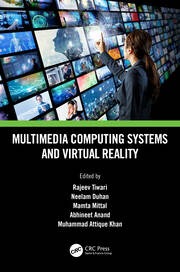
Multimedia computing systems and virtual reality
Presents recent advancements in multimedia systems as they relate to various application areas such as healthcare services and agriculture-related industries. The authors also discuss human-machine interface design, graphics modelling, rendering/animation, image/graphics techniques/systems and visualization. They then go on to explore multimedia content adaptation for interoperable delivery. Finally, the book covers cultural heritage, philosophical/ethical/societal/international issues, standards-related virtual technology and multimedia uses. This book is intended for computer engineers and computer scientists developing applications for multimedia and virtual reality and professionals working in object design and visualization, transformation, modelling and animation of the real world.

Multilevel Modelling for Public Health and Health Services Research : Health in Context
This book is a practical introduction to multilevel modelling or multilevel analysis (MLA) – a statistical technique being increasingly used in public health and health services research.

Mortality and Maldevelopment : Part I : Congenital cardiovascular malformations
The most frequent of them all are the many types of malformations of the cardiovascular system, the heart and its blood vessels.Study of these conditions during the twentieth century took many forms, revolving about examination and analysis of their causes, genetic, nongenetic, and complex. To aid in unraveling the complexities of this causation, various influences on their frequency are considered, among them social conditions, maternal health, birthweight, newborn maturity. And of course the known and possible environmental bases of their occurrence are fully described.

Molecular Pain
This book focus on molecular and synaptic mechanisms for pain transmission, modulation and plasticity. Unlike traditional textbooks about pain, this book covers recent progress in neuroscience and relates these developments to the basic mechanisms of chronic pain. The book also discusses current pain medicine and alternative pain treatments such as acupuncture.
Molecular Mechanisms of Plant and Microbe Coexistence
Molecular Mechanisms of Plant and Microbe Coexistence presents studies on the complex and manifold interactions of plants and microbes at the population, genomics and proteomics level. The role of soil microbial diversity in enhancing plant health and plant microbe beneficial symbioses is discussed. Microbial communities are shown in the light of evolution. Main topics include genome coexistence and the functional genomics and proteomics of plant-associated microbes, which could form the basis for new environmentally benign strategies to combat infectious plant diseases and regulate plant growth. Further chapters focus on the role of signaling during the different stages of plant microbe coexistence, in symbiotic or pathogenic relationships, in quorum sensing and plant viral infections. Methods for studying the interactions in the root zone complement the book, which will certainly be of relevance in the practical application to agriculture, food security and for maintaining the balance of our ecosystems.

Molecular mechanisms of functional food
Provides information on the development and validation of functional foods towards their market and industrial application. It covers the available information on developments, efficacy, and testing and safety, while demonstrating the proven or potential effects of food on health and disease.

Molecular Mechanisms of Basal Cell and Squamous Cell Carcinomas
apid progress in the understanding of carcinogenesis and pathology of epitheUal skin cancer has led to new strategies for the prevention Rand treatment of these malignancies. The goal of this volume is to comprehensively cover in a highly readable overview our present knowledge of pathogenetic mechanisms and molecular biology of Basal Cell and Squamous Cell Carcinomas. Topics that are discussed in-depth by leading researchers and clinicians range from the newest findings in epidemiology, histology, photobiology, immunology, cytogenetics, and molecular pathol ogy to new concepts for prophylaxis and treatment. Experts in the field as well as health care professionals not intimately involved in these specialized areas are provided with the most significant and timely information related to these topics. It is the aim of this book to summarize essential up-to-date information for clinicians and scientists interested in the biology of Basal Cell and Squamous Cell Carcinomas. The chapters are written by authors who are experts in their respective research areas, and I am gratefixl for their willingness to contribute to this book.
Molecular genetics, structures, mechanisms, and functions : Principles of gene manipulation and genomics ; Vol.1
Provides an overview of the future of genetic engineering and delves into the role of biotechnology and its applications in genetic engineering. It discusses the tools of recombinant technology, which have brought about revolution in our understanding of various complex biological phenomena. Chapters cover mutagenesis, construction, and sequencing of DNA libraries along with applications of genetic engineering for improving health, preventing genetic diseases, enhancing food resources, managing environmental bioremediation, and more. Topics include genetic engineering tools for restriction enzymes and vectors, gene and cell division, mutation detection and screening in plants, population genetics, sexuality in bacteria, and more. Several chapters focus on the tools of recombinant technology, such as restriction enzymes, vectors, etc., that have paved the way for creating organisms of choice and opened new horizons in the field of medicine, agriculture, and industry for human welfare.

Molecular Chaperones in Health and Disease
Molecular chaperones are involved in a wide variety of essential cellular processes in living cells. A subset of molecular chaperones have been initially described as heat shock proteins protecting cells from stress damage by keeping cellular proteins in a folding competent state and preventing them from irreversible aggregation. Later it became obvious that molecular chaperones are also expressed constitutively in the cell and are involved in complex processes such as protein synthesis, intracellular protein transport, post-translational modification and secretion of proteins as well as receptor signalling. Hence, it is not surprising that molecular chaperones are implicated in the pathogenesis of many relevant diseases and could be regarded as potential pharmacological targets. Starting with the analysis of the mode of action of chaperones at the molecular, cellular and organismic level, this book will then describe specific aspects where modulation of chaperone action could be of pharmacological and therapeutic interest.

Modern tools and methods of water treatment for improving living standards ; Proceedings of the NATO Advanced Research Workshop on modern tools and methods of water treatment for improving living standards, Dnepropetrovsk, Ukraine, November 19-22, 2003
In 2001, one in seven of the water samples taken from Ukrainian industrial and drinking water supply systems did not meet sanitary-hygienic standards, and one in twelve did not meet microbiological standards.

Modern medicine : biomedical devices, medical gases, radiopharmaceuticals, new drug discovery, Vol.2
Discusses the procedures of drug approval and regulatory requirements that must be met according to the United States Food and Drug Administration (FDA), the European Medical Agency (EMA), and the Central Drug Standard Control Organization (CDSCO). In the rapidly evolving landscape of modern medicine, groundbreaking innovations have emerged that are reshaping the way we approach healthcare. Modern Medicine delves into the cutting-edge realms of medical devices, medical gases, radiopharmaceuticals, and new drug discovery, offering a comprehensive exploration of these transformative fields that are revolutionizing patient care and medical practices.

Modern hospice design : The architecture of palliative and social care
Takes cognisance of the new conditions of social care in the 21st century, principally in the UK, Europe and North America. It does so with regard to the development of new building types, but also in response to new philosophies of palliative care and the status of the elderly and the dying. At its core is a public discussion of a philosophy of design for providing care for the elderly and the vulnerable, taking the importance of architectural aesthetics, the use of quality materials, the porousness of design to the wider world, and the integration of indoor and outdoor spaces as part of the overall care environment.

Modern clinic design : strategies for an era of change
A comprehensive guide to optimizing patient experience through the design of the built environment. Written by a team of veteran healthcare interior designers, architects, and engineers, this book addresses the impacts of evolving legislation, changing technologies, and emerging nontraditional clinic models on clinic design, and illustrates effective design strategies for any type of clinic. Readers will find innovative ideas about lean design, design for flexibility Understand how recent industry developments impact facility design Learn how design strategies can help create a positive patient experience Examine emerging clinic models that are becoming increasingly prevalent Analyze the impact of technology on clinic design

Modeling Solar Radiation at the Earth’s Surface : Recent Advances
Solar radiation data is important for a wide range of applications, e.g. in engineering, agriculture, health sector, and in many fields of the natural sciences. A few examples showing the diversity of applications may include: architecture and building design e.g. air conditioning and cooling systems; solar heating system design and use; solar power generation; weather and climate prediction models; evaporation and irrigation; calculation of water requirements for crops; monitoring plant growth and disease control; skin cancer research.
