



الصفحة 30
الصفحة 30

Concepts and Semantics of Programming Languages 2 : Modular and Object-oriented Constructs with OCaml, Python, C++, Ada and Java
Explores the syntactical constructs of the most common programming languages, and sheds a mathematical light on their semantics, providing also an accurate presentation of the material aspects that interfere with coding. Presents an original semantic model, collectively taking into account all of the constructs and operations of modules and classes: visibility, import, export, delayed definitions, parameterization by types and values, extensions, etc. The model serves for the study of Ada and OCaml modules, as well as C header files. It can be deployed to model object and class features, and is thus used to describe Java, C++, OCaml and Python classes.

Concepts and Semantics of Programming Languages 1 : A Semantical Approach with OCaml and Python
Explores the syntactical constructs of the most common programming languages, and sheds a mathematical light on their semantics, while also providing an accurate presentation of the material aspects that interfere with coding. It is dedicated to functional and imperative features. Included is the formal study of the semantics of typing and execution; their acquisition is facilitated by implementation into OCaml and Python, as well as by worked examples. Data representation is considered in detail: endianness, pointers, memory management, union types and pattern-matching, etc., with examples in OCaml, C and C++. The second volume introduces a specific model for studying modular and object features and uses this model to present Ada and OCaml modules, and subsequently Java, C++, OCaml and Python classes and objects.

Concepts and Results in Chaotic Dynamics : A Short Course
The book is a good introduction to the field of dynamical systems with a particular emphasis on statistical properties and applications. In particular, the relations both with real experiments with numerical simulations are discussed. The book contains many figures that really help the understanding of the text. The book can be used as a text for an introductory course in dynamical systems

Concepts and Practice of Humanitarian Medicine
As major events like war, epidemics, and climate change continue to push global health issues to the fore, the international medical community is called upon more than ever to address the needs of the most vulnerable. Concepts and Practice of Humanitarian Medicine brings public health and human rights concerns together, uniting medical, scientific, sociopolitical, and historical perspectives to reaffirm this vision.

Concepts and Controversies in Obsessive-Compulsive Disorder
Few syndromes in psychopathology generate as much popular curiosity and clinical exploration as does obsessive-compulsive disorder (OCD). Speci?c advances include an improved grasp of the heterogeneity of the disorder, identi?cation of putative subtyping schemes, and the development of increasingly sophisticated theoretical models of the etiology and maintenance.
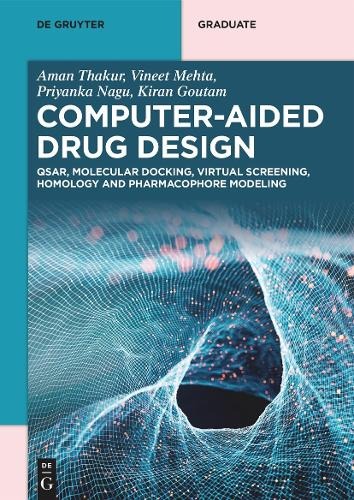
Computer-aided drug design
Computer-Aided Drug Design (CADD) is a comprehensive guide designed for both beginners and experienced users in CADD. Covers the fundamental principles and gradually delves into more advanced concepts and techniques, making it an invaluable resource to anyone interested in CADD. It begins by establishing a solid foundation, explaining the core concepts of CADD, the user interface and essential tools. It covers QSAR, molecular docking, homology modeling, virtual screening, pharmacophore modeling, ensuring that the reader can quickly become proficient in CADD. Provides in-depth insights into 3D modeling, rendering, and parametric design. The style of the book is simple, every topic begins from the very basics and explores advanced levels with clarity. Practical examples, step-by-step tutorials and hands-on exercises, are included for better understanding.

Computer Vision Systems ; 2nd International Workshop, ICVS 2001 Vancouver, Canada, July 7-8, 2001 Proceedings
Computer Vision has reached a level of maturity that allows us not only to p- form research on individual methods and system components but also to build fully integrated computer vision systems of signi cant complexity. This opens a number of new problems related to system architecture, methods for system synthesis and veri cation, active vision systems, control of perception and - tion, knowledge and system representation, context modeling, cue integration, etc. By focusing on methods and concepts for the construction of fully integrated vision systems, ICVS aims to bring together researchers interested in computer vision systems. Similar to the previous event in Las Palmas, ICVS 2001 was organized as a single-track workshop consisting of high-quality.

Computer Science : Theory and Applications ; 2nd International Symposium on Computer Science in Russia, CSR 2007, Ekaterinburg, Russia, September 3-7, 2007, Proceedings
This book covers theory track deals with algorithms, protocols, and data structures; complexity and cryptography; formal languages, automata and their applications to computer science; computational models and concepts; proof theory; and applications of logic to computer science. Many applications are presented.

Computer networking : A top-down approach ; 8th ed.
The text works its way from theapplication layer down toward the physical layer, motivating students by exposing them to important concepts early in their study of networking. Focusing on the Internet and the fundamentally important issues of networking, This text provides an excellent foundation for students in computer science and electrical engineering, without requiring extensive knowledge of programming or mathematics. The 8th Edition, Global Edition, has been updated to reflect the most important and exciting recent advances in networking, including the importance of software-defined networking (SDN) and the rapid adoption of 4G/5G networks and the mobile applications they enable.

Computer networking : A top-down approach ; 7th ed.
The text works its way from the application layer down toward the physical layer, motivating students by exposing them to important concepts early in their study of networking. Focusing on the Internet and the fundamentally important issues of networking, this text provides an excellent foundation for students in computer science and electrical engineering, without requiring extensive knowledge of programming or mathematics. The Seventh Edition has been updated to reflect the most important and exciting recent advances in networking.

Computer Graphics for Artists : An Introduction
Far too often artists, even professionals, lack a basic understanding of the principles of computer graphics resulting in inefficiency and a lower quality of work. This book addresses these issues by providing fundamental information in a university course format, with theoretical material, detailed illustrations, and projects to test the reader’s understanding of the concepts covered.

Computer graphics and geometric modelling : Implementation & algorithms
Possibly the most comprehensive overview of computer graphics as seen in the context of geometric modelling, this two volume work covers implementation and theory in a thorough and systematic fashion. Computer Graphics and Geometric Modelling: Implementation and Algorithms, covers the computer graphics part of the field of geometric modelling and includes all the standard computer graphics topics. The first part deals with basic concepts and algorithms and the main steps involved in displaying photorealistic images on a computer. The second part covers curves and surfaces and a number of more advanced geometric modelling topics including intersection algorithms, distance algorithms, polygonizing curves and surfaces, trimmed surfaces, implicit curves and surfaces, offset curves and surfaces, curvature, geodesics, blending etc. The third part touches on some aspects of computational geometry and a few special topics such as interval analysis and finite element methods. The volume includes two companion programs.

Computer Aided Pharmaceutics and Drug Delivery : An Application Guide for Students and Researchers of Pharmaceutical Sciences
Examines the role of computer-assisted techniques for discovering, designing, optimizing and manufacturing new, effective, and safe pharmaceutical formulations and drug delivery systems. The book discusses computational approaches, statistical modeling and molecular modeling for the development and safe delivery of drugs in humans. The application of concepts of QbD (Quality by Design), DoE (Design of Experiments), artificial intelligence and in silico pharmacokinetic assessment/simulation have been made a lot easier with the help of commercial software and expert systems. This title provides in-depth knowledge of such useful software with illustrations from the latest researches. The book also fills in the gap between pharmaceutics and molecular modeling at micro, meso and maro scale by covering topics such as advancements in computer-aided Drug Design (CADD), drug-polymer interactions in drug delivery systems, molecular modeling of nanoparticles and pharmaceutics/bioinformatics.

Computer Aided Engineering Design
This book goes into mathematical foundations and the core subjects of CAED without allowing itself to be overshadowed by computer graphics. It is written in a logical and thorough manner for use mainly by senior and graduate level students as well as users and developers of CAD software. The book covers (a) The fundamental concepts of geometric modeling so that a real understanding of designing synthetic surfaces and solid modeling can be achieved. (b) A wide spectrum of CAED topics such as CAD of linkages and machine elements, finite element analysis, optimization. (c) Application of these methods to real world problems.

Computational Techniques for Voltage Stability Assessment and Control
The key concepts of both saddle node and Hopf bifurcation are covered. These are illustrated with the differential-algebraic equation (DAE) model of the system. The model is complex enough to include Load Tap-Changing transformers as well as HVDC models. The dynamic model of the generating unit includes the exciter since it plays a crucial role in voltage stability. A promising decoupled dynamic simulation technique is introduced for time domain analysis. Computational Techniques for Voltage Stability Assessment and Control provides the computational tools and algorithms needed for development of on-line voltage security assessment

Computational intelligence based on lattice theory
The emergence of lattice theory within the field of computational intelligence (CI) is partially due to its proven effectiveness in neural computation. Moreover, lattice theory has the potential to unify a number of diverse concepts and aid in the cross-fertilization of both tools and ideas within the numerous subfields of CI. The compilation of this eighteen-chapter book is an initiative towards proliferating established knowledge in the hope to further expand it. This edited book is a balanced synthesis of four parts emphasizing, in turn, neural computation, mathematical morphology, machine learning, and (fuzzy) inference/logic. The articles here demonstrate how lattice theory may suggest viable alternatives in practical clustering, classification, pattern analysis, and regression applications.

Computational intelligence and bioinspired systems ; 8th International Work-conference on artificial neural networks, IWANN 2005, Vilanova i la Geltrú, Barcelona, Spain, June 8-10, 2005, Proceedings
We present in this volume the collection of finally accepted papers of the eighth edition of the “IWANN” conference (“International Work-Conference on Artificial Neural Networks”). This biennial meeting focuses on the foundations, theory, models and applications of systems inspired by nature (neural networks, fuzzy logic and evolutionary systems). For scientists, engineers and professionals working in the area, this is a very good way to get solid and competitive applications. We are facing a real revolution with the emergence of embedded intelligence in many artificial systems (systems covering diverse fields: industry, domotics, leisure, healthcare, … ). So we are convinced that an enormous amount of work must be, and should be, still done. Many pieces of the puzzle must be built and placed into their proper positions, offering us new and solid theories and models (necessary tools) for the application and praxis of these current paradigms. The above-mentioned concepts were the main reason for the subtitle of the IWANN 2005 edition: “Computational Intelligence and Bioinspired Systems.” papers was addressing the following topics: 1. Mathematical and theoretical methods in computational intelligence.

Computational Electronic Circuits : Simulation and Analysis with MATLAB®
This textbook teaches in one, coherent presentation the three distinct topics of analysis of electronic circuits, mathematical numerical algorithms and coding in a software such as MATLAB®. By combining the capabilities of circuit simulators and mathematical software, the author teaches key concepts of circuit analysis and algorithms, using a modern approach. The DC, Transient, AC, Noise and behavioral analyses are implemented in MATLAB to study the complete characteristics of a variety of electronic circuits, such as amplifiers, rectifiers, hysteresis circuits, harmonic traps and passes, polyphaser filters, directional couplers, electro-static discharge and piezoelectric crystals. This book teaches basic and advanced circuit analysis, by incorporating algorithms and simulations that teach readers how to develop their own simulators and fully characterize and design electronic circuits.

Collective Phenomena in Synchrotron Radiation Sources : Prediction, Diagnostics, Countermeasures
This book helps to dispel the notion that collective phenomena, which have become increasingly important in modern storage rings, are an obscure and inaccessible topic. Despite an emphasis on synchrotron light sources, the basic concepts presented here are valid for other facilities as well. Graduate students, scientists and engineers working in an accelerator environment will find this to be a systematic exposition of the principles behind collective instabilities and lifetime-limiting effects. Experimental methods to identify and characterize collective effects are also surveyed. Among other measures to improve the performance of a projected or existing facility, a detailed account of feedback control of instabilities is given.

Collective Dynamics of Nonlinear and Disordered Systems
Phase transitions in disordered systems and related dynamical phenomena are a topic of intrinsically high interest in theoretical and experimental physics. This book presents a unified view, adopting concepts from each of the disjoint fields of disordered systems and nonlinear dynamics. Special attention is paid to the glass transition, from both experimental and theoretical viewpoints, to modern concepts of pattern formation, and to the application of the concepts of dynamical systems for understanding equilibrium and nonequilibrium properties of fluids and solids. The content is accessible to graduate students, but will also be of benefit to specialists, since the presentation extends as far as the topics of ongoing research work.
