



الصفحة 3
الصفحة 3

Functional Molecular Nanostructures
in This book some recent advances in the structural design of nanoscale assemblies are shown, along with examples from the following areas: supramolecular catalysis, photoactive assemblies, molecular recognition and switches, and electroactive assemblies.The last decade has witnessed an unprecedented pursuit of discrete, nanoscale supramolecular aggregates, built by modern methods of self-assembly strategies. Several efficient new synthetic methods have been developed for engineering spectacular multicomponentsupramolecular aggregates.

Fluorescence of supermolecules, polymers, and nanosystems
The field of fluorescence continues to steadily grow, both in its fundamental aspects and in applications in highly interdisciplinary areas including analytical, physical and organic chemistry, molecular sciences, biology, biomedicine and medical research. The 4th volume in the Springer Series on Fluorescence focuses on the fluorescence of nanosystems, polymers and supermolecules, and the development and application of fluorescent probes. Special emphasis is placed on the fluorescence of artificial and biological nanosystems, single molecule fluorescence and the luminescence of polymers, micro- and nanoparticles and nanotubes. Fluorescence microscopy and fluorescence correlation spectroscopy are covered as well. Historical aspects of this growing field and an overview of fluorescence applications are also provided.

Esterification of Polysaccharides
Polysaccharide esters (cellulose and starch) are among the first polymeric materials applied commercially. The way of producing these technically relevant derivatives, mainly the carboxylic acid esters of C2 to C4 acids, have not been changed significantly during their history of manufacture. The investigation of new acylation methods and strategies of analysis was revived during the last decade by the search for tailored, biocompatible, material for specific fields of application, e.g., biotechnology, sensor technique and medicine. Unconventional solvents were developed for completely homo-geneous acylation reaction applying state of the art techniques of modern organic chemistry for polysaccharide modification. This book will provide a first comprehensive summary of acylation methods in a very practical manner. Detailed structure analysis is indispensable for the evaluation of structure-property-relationships. Spectroscopic methods in particular FTIR- and NMR spectroscopy including two dimensional methods are of increasing importance.

Enzyme-Based Organic Synthesis
In Enzyme-Based Organic Synthesis, expert chemist Dr. Cheanyeh Cheng delivers a comprehensive discussion of the principles, methods, and applications of enzymatic and microbial processes for organic synthesis. The book thoroughly explores this growing area of green synthetic organic chemistry, both in the context of academic research and industrial practice.

Encyclopedic Dictionary of Polymers
The editor offers scientists, engineers, academia, and others interested in adhesives, coatings, elastomers, inks, plastics, and textiles a valuable communication tool within this book. In addition, the more recent innovations and biocompatible polymers and adhesives products have necessitated inclusion into any lexicon that addresses polymeric materials. Communication among scientific and engineering personnel has always been of critical importance, andas in any technical field, the terms and descriptions of materials and processes lag the availability of a manual or handbook that would benefit individuals working and studying in scientific and engineering disciplines.

Electron transfer : Mechanisms and applications
Written by one of the top scientists in this field, this is a systematic overview of the fundamental concepts and powerful applications. The author presents the central theories and mechanisms in electron transfer, followed by several systems in nature where this is important, while also covering modern green applications.

Electrochemical Dictionary
The Electrochemical Dictionary provides up-to-date, broad and authoritative coverage of the specific terms most used in electrochemistry and its related fields, including relevant areas of physics and engineering. This modern compendium will be an indispensable source of information for scientists, engineers, and technical staff active in all fields of electrochemistry. The more than 2.770 entries have been written by a distinguished panel of eminent electrochemists. Each entry supplies a clear and precise explanation of the term and provides references to the most useful reviews, books and original papers to enable readers to pursue a deeper understanding if so desired.

Efficiency in Natural Product Total Synthesis
Uniting the key organic topics of total synthesis and efficient synthetic methodologies, this book clearly overviews synthetic strategies and tactics applied in total synthesis, demonstrating how the total synthesis of natural products enables scientific and drug discovery. • Focuses on efficiency, a fundamental and important issue in natural products synthesis that makes natural product synthesis a powerful tool in biological and pharmaceutical science • Describes new methods like organocatalysis, multicomponent and cascade reactions, and biomimetic synthesis

Deep eutectic polvents : Synthesis, properties, and applications
Deep Eutectic Solvents contains a comprehensive review of the use of deep eutectic solvents (DESs) as an environmentally benign alternative reaction media for chemical transformations and processes. The contributors cover a range of topics including synthesis, structure, properties, toxicity and biodegradability of DESs. The book also explores myriad applications in various disciplines, such as organic synthesis and (bio)catalysis, electrochemistry, extraction, analytical chemistry, polymerizations, (nano)materials preparation, biomass processing, and gas adsorption.

Creative Chemical Sensor Systems
Schrader has compiled an excellent set of articles that present a current snapshot of chemical sensing utilizing state-of-the-art approaches ranging from combinatorial receptor libraries to artificial membrane pores. This volume is an excellent read for the budding and seasoned bioorganic chemist, chemical biologist, or supramolecular chemist as well as for those in allied fields who wish to apply emerging chemical techniques to solve current problems in chemical sensing.This book provides an overview of recent creative new approaches which use chemical means of detection and quantification of important analytes. Creative chemical sensor systems is a rapidly growing subject.

Contemporary Metal Boron Chemistry I : Borylenes, Boryls, Borane Sigma-Complexes, and Borohydrides
With information that will remain valid for years, this series presents critical reviews of the present position and future trends in modern research into chemical structure and bonding. It features concise reports, each written by world-renowned experts.

Comets and the Origin and Evolution of Life
Nine years after the publication of Comets and the Origin and Evolution of Life, one of the pioneering books in Astrobiology, this second edition revisits the role comets may have played in the origins and evolution of life. Recent analyses of Antarctic micrometeorites and ancient rocks in Australia and South Africa, the continuing progress in discovering complex organic macromolecules in comets, protostars and interstellar clouds, new insights into organic synthesis in comets, and numerical simulations of comet impacts on the Earth and other members of the solar system yield a spectacular wealth of new results.

Collagen : Primer in Structure, Processing and Assembly
This volume of Topics in Current Chemistry is an attempt to update and compile the biochemical, molecular knowledge of the still growing family of collagenous proteins. Its intention is to provide a comprehensive summary of all mechanisms known to be involved in synthesis, processing and deposition of collagen molecules, all of which are apparently shared by any known collagen type as part of a common biosynthetic route. From the intracellular initiation of protein translation to the extracellular deposition of mature molecules into the scaffold of the preformed tissue texture, collagen biosynthesis exhibits a profile of mechanisms absolutely unique when compared to other proteins
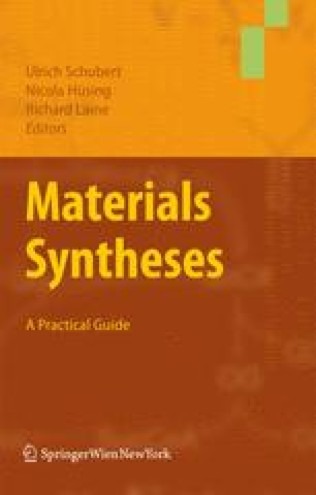
Materials Syntheses : A Practical Guide
Materials syntheses are generally more complex than syntheses of inorganic or organic compounds, and specific characterization methods play a more important role. Materials synthesis protocols often suffer from unclarities, irreproducibility, lack in detail and lack in standards. The need to change this situation is the main motivation for this book. A number of detailed protocols has been collected, ranging from organic polymers to carbonaceous and ceramic materials, from gels to porous and layered materials and from powders and nanoparticles to films. Preparation methods include intercalation and flux methods, sol-gel processing, templating methods for porous materials, sonochemistry or spray pyrolysis.

Materials Fundamentals of Gate Dielectrics
This book presents materials fundamentals of novel gate dielectrics that are being introduced into semiconductor manufacturing to ensure the continuous scalling of the CMOS devices. This is a very fast evolving field of research so we choose to focus on the basic understanding of the structure, thermodunamics, and electronic properties of these materials that determine their performance in device applications. Most of these materials are transition metal oxides. Ironically, the d-orbitals responsible for the high dielectric constant cause sever integration difficulties thus intrinsically limiting high-k dielectrics. Though new in the electronics industry many of these materials are wel known in the field of ceramics, and we describe this unique connection. The complexity of the structure-property relations in TM oxides makes the use of the state of the art first-principles calculations necessary. Several chapters give a detailed description of the modern theory of polarization, and heterojunction band discontinuity within the framework of the density functional theory. Experimental methods include oxide melt solution calorimetry and differential scanning calorimetry, Raman scattering and other optical characterization techniques, transmission electron microscopy, and x-ray photoelectron spectroscopy.
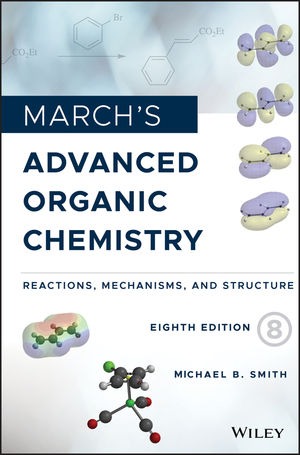
March's Advanced Organic Chemistry : Reactions, Mechanisms, and Structure
The opening chapters of March's Advanced Organic Chemistry deal with the structure of organic compounds and discuss important organic chemistry bonds, fundamental principles of conformation, and stereochemistry of organic molecules, and reactive intermediates in organic chemistry. Further coverage concerns general principles of mechanism in organic chemistry, including acids and bases, photochemistry, sonochemistry and microwave irradiation. The relationship between structure and reactivity is also covered.

Magnetic Functions Beyond the Spin-Hamiltonian
Using the spin-Hamiltonian formalism the magnetic parameters are introduced through the components of the Lambda-tensor involving only the matrix elements of the angular momentum operator. The energy levels for a variety of spins are generated and the modeling of the magnetization, the magnetic susceptibility and the heat capacity is done. Theoretical formulae necessary in performing the energy level calculations for a multi-term system are prepared with the help of the irreducible tensor operator approach. The goal of the programming lies in the fact that the entire relevant matrix elements (electron repulsion, crystal field, spin-orbit interaction, orbital-Zeeman, and spin-Zeeman operators) are evaluated in the basis set of free-atom terms. The modeling of the zero-field splitting is done at three levels of sophistication. The spin-Hamiltonian formalism offers simple formulae for the magnetic parameters by evaluating the matrix elements of the angular momentum operator in the basis set of the crystal-field terms. The magnetic functions for dn complexes are modeled for a wide range of the crystal-field strengths.
Low Molecular Mass Gelators : Design, Self-Assembly, Function
Chapter 1 presents the physical principles of the growth mechanism of fiber and fiber network with LMGs, as treated on the basis of the heterogeneous nucleation model. in Chaps. 2 and 3, respectively. These chapters are intended to outline useful synthetic guidelines for the generation of an ever-increasing variety of molecular architectures within these two families of gelators. Recent developments in the chemistry of nucleobase-containing LMGs are described in Chap. 4. Hydrogen-bonding within these molecular systems involves complementary base pair formation, a process relevant to DNA double-helix formation The self-assembly of chiral organo- or hydrogelators is the subject of Chap. 5. result from the orthogonal self-assembly of liquid crystals and LMGs are presented in Chap. 6. The volume concludes with Chap. 7, a review of the emerging field of dendritic gels.

Liquid Crystalline Functional Assemblies and Their Supramolecular Structures
This book presents critical reviews of the present position and future trends in modern chemical research concerned with chemical structure and bonding. It contains short and concise reports, each written by the world's renowned experts.
Layered Double Hydroxides
Both experimental and theoretical studies of nearly every aspect of the LDH structure are discussed, including the range of metal cations and interlayer anions, M 3+ /M 2+ ratios, LDH polytypes, arrangement of the "interlayer" anions and water molecules, molecular modeling and molecular dynamics simulations, and the long- and short-range order in both the layers and interlayer galleries. Of especial value is the treatment of the more detailed aspects of the LDH structure that are still unresolved.
