



الصفحة 3
الصفحة 3
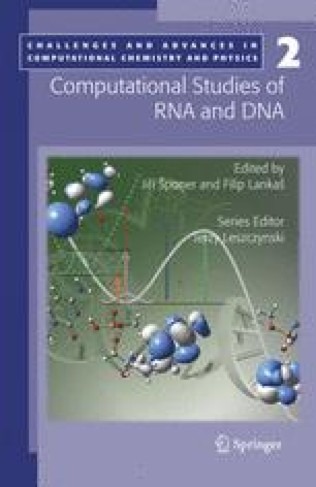
Computational studies of RNA and DNA
Computational Studies of RNA and DNA includes, in an integrated way, modern computational studies of nucleic acids, ranging from advanced electronic structure quantum chemical calculations through explicit solvent molecular dynamics (MD) simulations up to mesoscopic modelling, with the main focus given to the MD field. It gives an equal emphasis to the leading methods and applications while successes as well as pitfalls of the computational techniques are discussed.The systems and problems studied include: Accurate calculations of base pairing energies / Electronic properties of nucleic acids and electron transfer, through various types of nucleic acid / Calculating DNA elasticity

Mathematical Methods in Electro-Magneto-Elasticity
The mechanics of Coupled Fields is a discipline at the edge of modern research connecting Continuum Mechanics with Solid State Physics. It integrates the Mechanics of Continuous Media, Heat Conductivity and the theory of Electromagnetism that are usually studied seperately. For an accurate description of the influence of static and dynamic loadings, high temperatures and strong electromagneticfields in elastic media and constructive installations, a new aproach is required; an approach that has the potential to establish a synergism between the above-mentioned fields. Throughout the book a vast number of problems are considered: two-dimensional problems of electro-magneto-elasticity as well as static and dynamical problems for piecewise homogenous compound piezoelectric plates weakened by cracks and openings. The boundary conditions, the constuctive equations and the mathematical methods for their solution are thoroughly presented, so that the reader can get a clear quantative and qualitative understnding of the phenomena taking place.

Mathematical Foundation of Geodesy : Selected Papers of Torben Krarup
This volume contains selected papers by Torben Krarup, one of the most important geodesists of the 20th century. His writings are mathematically well founded and scientifically relevant. In this impressive collection of papers he demonstrates his rare innovative ability to present significant topics and concepts. Modern students of geodesy can learn a lot from his selection of mathematical tools for solving actual problems. The collection contains the famous booklet "A Contribution to the Mathematical Foundation of Physical Geodesy" from 1969, the unpublished "Molodenskij letters" from 1973, the final version of "Integrated Geodesy" from 1978, "Foundation of a Theory of Elasticity for Geodetic Networks" from 1974, as well as numerous trend setting papers on the theory of adjustment.
Material Modeling in Finite Element Analysis
Presents some specific problems including the metal-forming process, combustion room, Mullins effect of rubber tires, viscoelasticity of liver soft tissues, small punch test, tunnel excavation, slope stability, concrete slump test, orthodontic wire, and piezoelectric microaccelerometer.
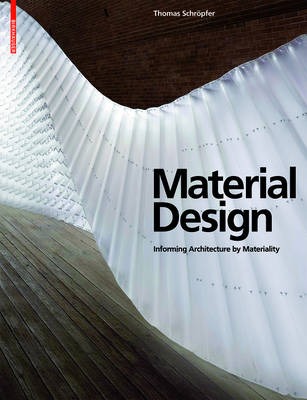
Material Design : Informing Architecture by Materiality
The approach of Material Design opens the way to an innovative use of materials in the design professions. Taking material qualities and properties such as texture, elasticity and transparency as a point of departure, the book describes a multitude of material operations, like folding and bending, carving and cutting, weaving and knitting, mirroring and screening.
Magnetism and Structure in Functional Materials
Magnetism and Structure in Functional Materials addresses three distinct but related topics: (i) magnetoelastic materials such as magnetic martensites and magnetic shape memory alloys, (ii) the magnetocaloric effect related to magnetostructural transitions, and (iii) colossal magnetoresistance (CMR) and related magnanites. The goal is to identify common underlying principles in these classes of materials that are relevant for optimizing various functionalities. The emergence of apparently different magnetic/structural phenomena in disparate classes of materials clearly points to a need for common concepts in order to achieve a broader understanding of the interplay between magnetism and structure in this general class of new functional materials exhibiting ever more complex microstructure and function. The topic is interdisciplinary in nature and the contributors correspondingly include physicists, materials scientists and engineers. Likewise the book will appeal to scientists from all these areas.

IUTAM symposium on size effects on material and structural behavior at micron- and nano-scales ; Proceedings of the IUTAM Symposium held in Hong Kong, China, 31 May - 4 June, 2004
A collection of twenty five written contributions by distinguished invited speakers from seven countries to the IUTAM Symposium on Size Effects on Material and Structural Behavior at Micron- and Nano-scales. It contains basic theoretical and experimental aspects of the recent advances in the mechanics research of various size effects.

IUTAM symposium on elastohydrodynamics and micro-elastohydrodynamics ; Proceedings of the IUTAM Symposium held in Cardiff, UK, 1-3 September 2004
This volume contains the proceedings of the IUTAM Symposium on Ela- ohydrodynamics and Microelastohydrodynamics held in Cardiff from 1st to 3rd September 2004. The symposium focused on theoretical, experimental and computational issues in elastohydrodynamic lubrication (EHL) both in relation to smooth surfaces and in situations where the?lm is of the same order or th- ner than the surface roughness (micro-EHL).
Composite Materials : Properties as Influenced by Phase Geometry
This book deals with the mechanical and physical behavior of composites as influenced by composite geometry. This monograph provides a comprehensive introduction for researchers and students to modern composite materials research with a special emphasis on the influence of geometry to materials properties. Composite Materials enables the reader to a better understanding of the behavior of natural composites, improvement of such materials, and design of new materials with prescribed properties.
Compatible Spatial Discretizations
Compatible spatial discretizations are those that inherit or mimic fundamental properties of the PDE such as topology, conservation, symmetries, and positivity structures and maximum principles. It offer a snapshot of the current trends and developments in compatible spatial discretizations. The reader will find valuable insights on spatial compatibility from several different perspectives and important examples of applications compatible discretizations in computational electromagnetics, geosciences, linear elasticity, eigenvalue approximations and MHD. The contributions collected in this volume will help to elucidate relations between different methods and concepts and to generally advance our understanding of compatible spatial discretizations for PDEs.
Classical and Advanced Theories of Thin Structures : Mechanical and Mathematical Aspects
The book presents an updated state-of-the-art overview of the general aspects and practical applications of the theories of thin structures, through the interaction of several topics, ranging from non-linear thin-films, shells, junctions, beams of different materials and in different contexts (elasticity, plasticity, etc.).
Boundary Integral Equations
This book is devoted to the basic mathematical properties of solutions to boundary integral equations and presents a systematic approach to the variational methods for the boundary integral equations arising in elasticity, fluid mechanics, and acoustic scattering theory. It may also serve as the mathematical foundation of the boundary element methods. The latter have recently become extremely popular and efficient computational tools in applications. The authors are well known for their fundamental work on boundary integral equations and related topics. This book is a major scholarly contribution to the modern theory of boundary integral equations and should be accessible and useful to a large community of mathematical analysts, applied mathematicians, engineers and scientists.
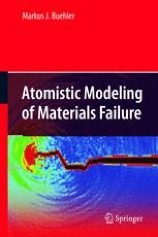
Atomistic modeling of materials failure
Atomistic Modeling of Materials Failure is an introduction to molecular and atomistic modeling techniques applied to solid deformation and fracture. Focusing on a variety of brittle, ductile and geometrically confined materials, this detailed overview includes computational methods at the atomic scale, and describes how these techniques can be used to model the dynamics of cracks, dislocations and other deformation mechanisms.

Applied scanning probe methodsVII : Biomimetics and industrial applications
The present volumes cover three main areas: novel probes and techniques (Vol. V), charactarization (Vol. VI), and biomimetics and industrial applications (Vol. VII). Volume V includes an overview of probe and sensor technologies including integrated cantilever concepts, electrostatic microscanners, low-noise methods and improved dynamic force microscopy techniques, high-resonance dynamic force - croscopy and the torsional resonance method, modelling of tip cantilever systems, scanning probe methods, approaches for elasticity and adhesion measurements on the nanometer scale as well as optical applications of scanning probe techniques based on near?eld Raman spectroscopy and imaging.

Applied scanning probe methods V : Scanning probe microscopy techniques
The scanning probe microscopy ?eld has been rapidly expanding. It is a demanding task to collect a timely overview of this ?eld with an emphasis on technical dev- opments and industrial applications. It became evident while editing Vols. I–IV that a large number of technical and applicational aspects are present and rapidly - veloping worldwide. Considering the success of Vols. I–IV and the fact that further colleagues from leading laboratories were ready to contribute their latest achie- ments, we decided to expand the series with articles touching ?elds not covered in the previous volumes. The response and support of our colleagues were excellent, making it possible to edit another three volumes of the series.

Analytical Methods in Anisotropic Elasticity : with Symbolic Computational Tools
This comprehensive textbook /reference focuses on the mathematical techniques and solution methodologies required to establish the foundations of anisotropic elasticity and provides the theoretical background for composite material analysis. Specific attention is devoted to the potential of modern symbolic computational tools to support highly complex analytical solutions and their contribution to the rigor, analytical uniformity and exactness of the derivation.

An Introduction to the Theory of Piezoelectricity
This volume is intended to provide researchers and graduate students with the basic aspects of the continuum modeling of electroelastic interactions in solids. A concise treatment of linear, nonlinear, static and dynamic theories and problems is presented. The emphasis on formulation and understanding of problems useful in device applications rather than solution techniques of mathematical problems. The mathematics used in this book is minimal.
An Introduction to Scientific Computing : Twelve Computational Projects Solved with MATLAB
This book provides twelve computational projects aimed at numerically solving problems from a broad range of applications including Fluid Mechanics, Chemistry, Elasticity, Thermal Science, Computer Aided Design, Signal and Image Processing. For each project the reader is guided through the typical steps of scientific computing from physical and mathematical description of the problem, to numerical formulation and programming and finally to critical discussion of numerical results. Considerable emphasis is placed on practical issues of computational methods. The last section of each project contains the solutions to all proposed exercises and guides the reader in using the MATLAB scripts.
An introduction to differential geometry with applications to elasticity
Interestingly, notions that pertain to di?erential geometry per se,suchas covariant derivatives of tensor ?elds, are also introduced in Chapters 3 and 4, where they appear most naturally in the derivation of the basic boundary value problems of three-dimensional elasticity and shell theory.
Advances in Mechanics of Materials for Environmental and Civil Engineering
Deals with both mathematical modeling and experimental studies related to systems relevant for various civil engineering fields. The book addresses several key topics, including artificial intelligence applied to the control and monitoring of construction site personnel, finite element models for endplate beam-to-column connections under various load conditions, random functionally graded micropolar beams, and many others. The book explores the design and study of microstructures aimed at increasing the toughness and durability of novel materials in building and construction, based also on the re-utilization of residues and wastes of metallurgical industry produces.
