



الصفحة 3
الصفحة 3

Electronic Irradiation of Foods : An Introduction to the Technology
Electronic Irradiation of Foods describes all the key aspects of electron accelerator technology in detail. It emphasizes the physical science and technology aspects of food irradiation using machine sources of ionizing radiation. The book provides significant technical depth for interested workers and present descriptive, introductory material that should help demystify technology for businessmen to make informed choices regarding important investments decisions.Introductory chapters summarize the effects of ionizing radiation on biological organisms and the organic compounds comprising foods, and give an overview of the food irradiation process. Subsequent chapters cover the details of the electron beam and x-ray energy deposition, electron accelerator technologies, beam scanning systems, material handling systems, shielding design, and process control considerations. Important appendices cover radiation dosimetry, induced radioactivity, and ozone generation.

Electromagnetic Technologies in Food Science
Electromagnetic Technologies in Food Science examines various methods employed in food applications that are based on the entire electromagnetic (EM) spectrum. Focusing on recent advances and challenges in food science and technology, this is an up-to-date volume that features vital contributions coming from an international panel of experts who have shared both fundamental and advanced knowledge of information on the dosimetry methods, and on potential applications of gamma irradiation, electron beams, X-rays, radio and microwaves, ultraviolet, visible, pulsed light, and more.

Dual Source CT Imaging
This book provides an introduction to DSCT technology and to the basics of contrast media administration followed by 25 in-depth clinical scan and contrast media injection protocols. All were developed in consensus by selected physicians on the Dual Source CT Expert Panel.

DNA Binders and Related Subjects
advances in technology and the application of new methods to outstanding problems have played a major part in the development of ideas about drug-nucleic acid recognition. The field has undergone an explosive diversification as wider and wider problems became accessible to study using the new ideas and techniques. This volume reflects that diversification by offering accounts of selected areas that illustrate recent advances in the study of ligand–nucleic acid binding over disparate areas of the subject. There are chapters dealing specifically with the invention and application of new methodology, and a particularly thoughtful essay on the interpretation of X-ray diffraction data which may not be as straightforward as is often imagined. Other chapters illustrate the diversity and complexity of drug-DNA binding from several perspectives, referring to particular groups of related compounds or the potential attractions of the less-preferred DNA major groove as a target for nucleotide sequence recognition by ligands.

Diseases of the Heart, Chest & Breast : Diagnostic Imaging and Interventional Techniques
This book deals with imaging of diseases of heart, chest and breast. These fields have substantially advanced during the last few years, driven by both clinical developments and advances in imaging technology.لإheir chapters are disease-oriented and cover all the relevant imaging modalities, including standard radiography, CT, nuclear medicine with PET, ultrasound and magnetic resonance imaging, as well as imaging-guided interventions. As a result, this book presents a comprehensive review of current knowledge in imaging of the heart and chest , as well as thoracic interventions and a selection of "hot topics" of breast imaging.

Diseases of the Abdomen and Pelvis 2018-2021 : Diagnostic Imaging - IDKD Book
This open access book deals with imaging of the abdomen and pelvis, an area that has seen considerable advances over the past several years, driven by clinical as well as technological developments. The respective chapters, written by internationally respected experts in their fields, focus on imaging diagnosis and interventional therapies in abdominal and pelvic disease; they cover all relevant imaging modalities, including magnetic resonance imaging, computed tomography, and positron emission tomography. As such, the book offers a comprehensive review of the state of the art in imaging of the abdomen and pelvis. It will be of interest to general radiologists, radiology residents, interventional radiologists, and clinicians from other specialties who want to update their knowledge in this area.

Diseases of the abdomen and Pelvis : Diagnostic Imaging and Interventional Techniques
This volume is a collection of chapters dealing with imaging diagnosis and interventional therapies in abdominal and pelvic disease. The different topics are disease-oriented and encompass all the relevant imaging modalities including X-ray technology, nuclear medicine, ultrasound and magnetic resonance, as well as image-guided interventional techniques.

Dental Image Processing for Human Identification
This book presents an approach to postmortem human identification using dental image processing based on dental features and characteristics, and provides information on various identification systems based on dental features using image processing operations.

Dental Image Analysis for Disease Diagnosis
This book provides an overview of computational approaches to medical image examination and analysis in oral radiology utilizing dental radiograph to detect and diagnose dental caries in cases of decayed teeth. The book also presents a novel multiphase level set method for automatic segmentation of dental radiographs.

Crystalline cellulose and derivatives : Characterization and structures
Constitutes a valuable, concise and up-to-date guide for the materials and life science community interested in cellulose and related materials. Reliable crystal structures of all cellulose polymorphs and cellulose derivatives determined are critically reviewed and discussed. Models are represented in graphs together with a collection of geometrical data as well as the atomic coordinates for further use. The background for fiber diffraction, computer-aided modeling and spectroscopic investigations is briefly introduced and also included are the necessary molecular data from oligosaccharides as a basis for structure evaluations. X-ray diffraction patterns and spectroscopic diagrams are presented as references to characterize cellulosic materials and to serve as fingerprint tools for the exploration of unknown specimens of cell walls and of industrially processed films and fibers as well as solid-state materials.

Cryocoolers 13
The last two years have witnessed a continuation in the breakthrough shift toward pulse tube cryocoolers for long-life, high-reliability cryocooler applications. New this year are papers de scribing the development of very large pulse tube cryocoolers to provide up to 1500 watts of cooling for industrial applications such as cooling the superconducting magnets of Mag-lev trains, coolmg superconducting cables for the power mdustry, and liquefymg natural gas. Pulse tube coolers can be driven by several competing compressor technologies. One class of pulse tube coolers is referred to as "Stirling type" because they are based on the linear Oxford Stirling-cooler type compressor; these generally provide coolmg m the 30 to 100 K temperature range and operate ^t frequencies from 30 to 60 Hz. A second type of pulse tube cooler is the so-called "Gifford-McMahon type. " Pulse tube coolers of this type use a G-M type compressor and lower frequency operation (~1 Hz) to achieve temperatures in the 2 to 10 K temperature range. The third type of pulse tube cooler is driven by a thermoacoustic oscillator, a heat engine that functions well in remote environments where electricity is not readily available. All three types are described, and in total, nearly half of this proceedings covers new developments in the pulse tube arena. Complementing the work on low-temperature pulse tube and Gifford-McMahon cryocoolers is substantial continued progress on rare earth regenerator materials.

Contrast Agents III : Radiopharmaceuticals - From Diagnostics to Therapeutics
The series Topics in Current Chemistry presents critical reviews of the present and future trends in modern chemical research. The scope of coverage includes all areas of chemical science including the interfaces with related disciplines such as biology, medicine and materials science. The goal of each thematic volume is to give the nonspecialist reader, whether at the university or in industry, a comprehensive overview of an area where new insights are emerging that are of interest to a larger scientific audience.This volume on radiopharmaceutical contrast agents, which also covers new developments on radiopharmaceuticals used as therapeutic drugs is the third of a series on diagnostics following a volume that was exclusively dedicated to magnetic resonance imaging and a “mixed” volume on optical, ultrasound, X-ray and radiopharmaceutical agents

Cone beam computed tomography : Oral and maxillofacial diagnosis and applications
Cone Beam Computed Tomography helps the reader understand how CBCT machines operate, perform advanced diagnosis using CT data, have a working knowledge of CBCT-related treatment planning for specific clinical tasks, and integrate these new technologies in daily practice.
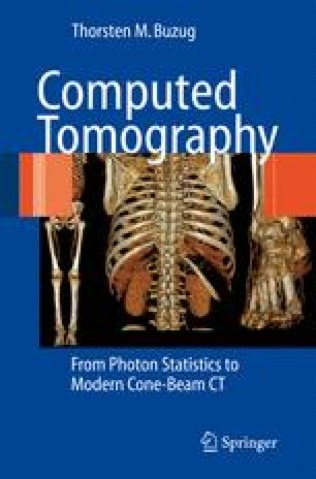
Computed Tomography : From Photon Statistics to Modern Cone-Beam CT
Tis book provides an overview of X-ray technology, the historic developmental milestones of modern CT systems, and gives a comprehensive insight into the main reconstruction methods used in computed tomography.

Coherent sources of XUV radiation : Soft X-ray lasers and high-order harmonic generation
Extreme ultraviolet radiation, also referred to as soft X-rays or XUV, offers very special optical properties. The X-UV refractive index of matter is such that normal reflection cannot take place on polished surfaces whereas beam transmission through one micrometer of almost all materials reduces to zero. Therefore, it has long been a difficult task to imagine and to implement devices designed for complex optics experiments in this wavelength range. Thanks to new sources of coherent radiation - XUV-lasers and High Order Harmonics - the use of XUV radiation, for interferometry, holography, diffractive optics, non-linear radiation-matter interaction, time-resolved study of fast and ultrafast phenomena and many other applications, including medical sciences, is ubiquitous.

Clusters of Galaxies : Beyond the Thermal View
Clusters of galaxies are the largest structures in the Universe. Most of the visible matter is in the form of hot gas permeating the volume of the cluster. The bulk of this gas is in thermal equilibrium in the dark matter-dominated potential. This book discusses all aspects of cluster physics beyond this thermal view. It covers topics such as the warm-hot intergalactic medium outside the clusters, non-thermal radiation components, shocks, equilibration processes and the chemical evolution of these structures. The topics are covered from an observational, theoretical and numerical point of view.

Materials Fundamentals of Gate Dielectrics
This book presents materials fundamentals of novel gate dielectrics that are being introduced into semiconductor manufacturing to ensure the continuous scalling of the CMOS devices. This is a very fast evolving field of research so we choose to focus on the basic understanding of the structure, thermodunamics, and electronic properties of these materials that determine their performance in device applications. Most of these materials are transition metal oxides. Ironically, the d-orbitals responsible for the high dielectric constant cause sever integration difficulties thus intrinsically limiting high-k dielectrics. Though new in the electronics industry many of these materials are wel known in the field of ceramics, and we describe this unique connection. The complexity of the structure-property relations in TM oxides makes the use of the state of the art first-principles calculations necessary. Several chapters give a detailed description of the modern theory of polarization, and heterojunction band discontinuity within the framework of the density functional theory. Experimental methods include oxide melt solution calorimetry and differential scanning calorimetry, Raman scattering and other optical characterization techniques, transmission electron microscopy, and x-ray photoelectron spectroscopy.

Magnetism and Accelerator-Based Light Sources : Proceedings of the 7th International School ‘‘Synchrotron Radiation and Magnetism’’, Mittelwihr (France), 2018
Collects the contributions of the seventh school on Magnetism and Synchrotron Radiation held in Mittelwihr, France, from 7 to 12 October 2018. It starts with an introduction to the physics of modern X-ray sources followed by a general overview of magnetism.

Magnetism : A Synchrotron Radiation Approach
Contains the edited lectures of the fourth Mittelwihr school on "Magnetism and Synchrotron Radiation". This series of events introduces graduate students and nonspecialists from related disciplines to the field of magnetism and magnetic materials with emphasis on synchrotron radiation as an experimental tool of investigation. These lecture notes present in particular the state of the art regarding the analysis of magnetic properties of new materials.

Magnetic Microscopy of Nanostructures
Contains a comprehensive collection of overview articles on novel microscopy methods for imaging magnetic structures on the nanoscale. Written by leading scientists in the field the book covers synchrotron based methods, spin polarized electron methods, and scanning probe techniques. It will be a valuable source of reference for graduate students and newcomers to the field.
